

NGC 7789 from my backyard
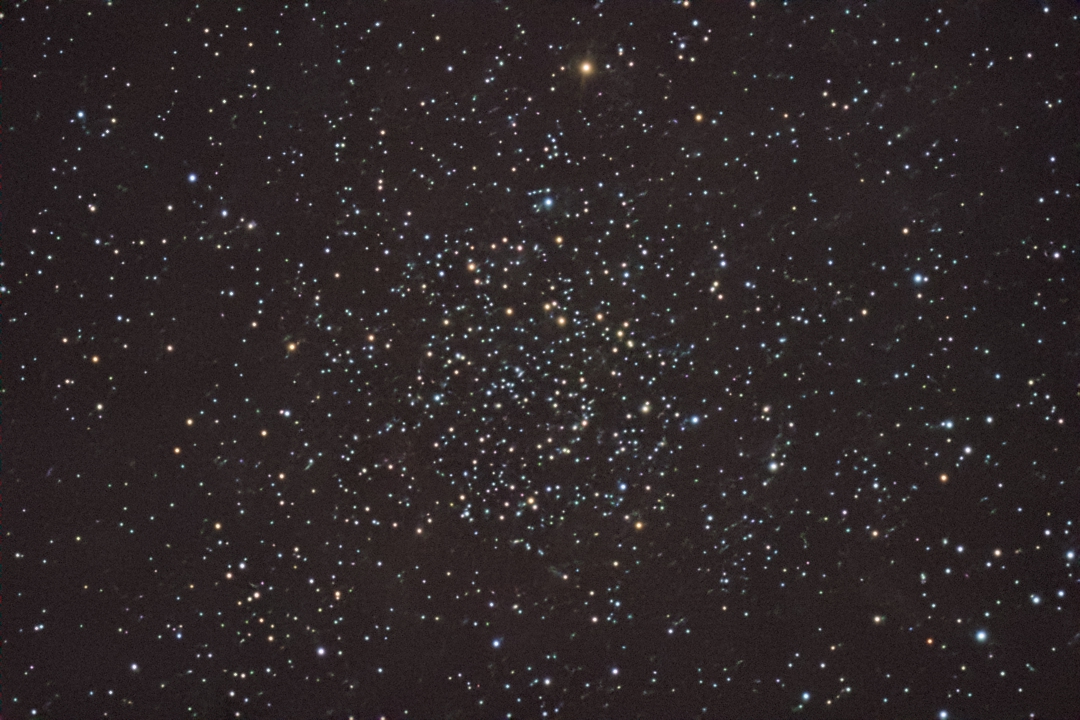
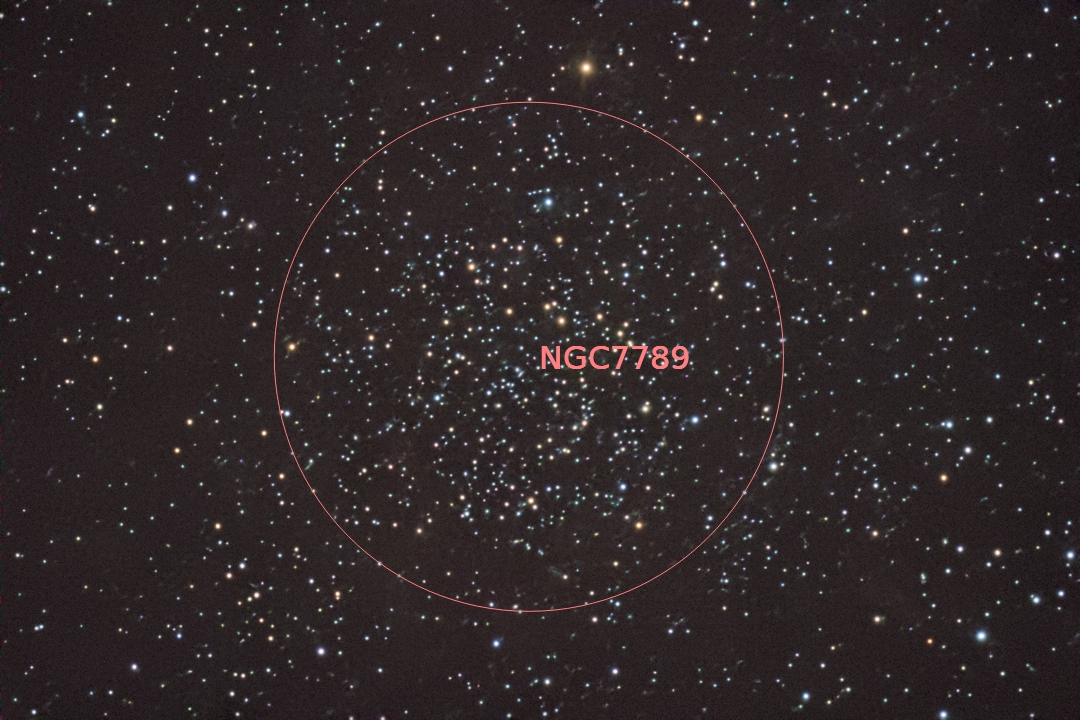
In 2005, I imaged the beautiful open cluster NGC 7789 using my DSLR equipment. At that time, digital astrophotography was still relatively new to me, making this rich star cluster an ideal target for experimenting with long-exposure imaging. Even with the modest equipment available, the image successfully captured the cluster’s dense concentration of stars and hinted at the intricate patterns that have fascinated observers for more than two centuries. Looking back, it represents one of the early milestones in my astrophotographic journey.
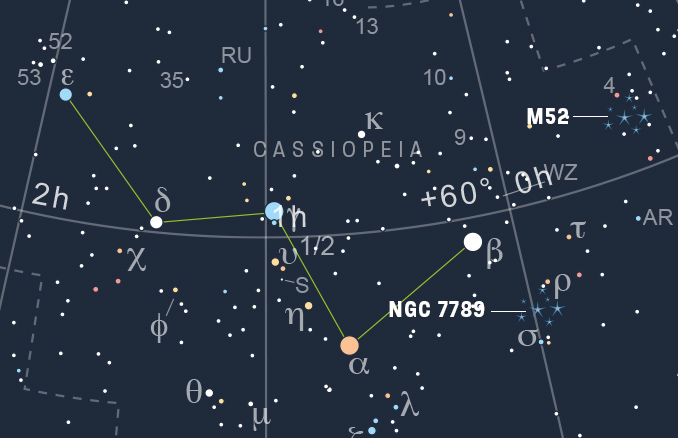
NGC 7789 is located in the constellation Cassiopeia, approximately 7,600 light-years from Earth. It was discovered in 1783 by the renowned astronomer Caroline Herschel, sister of William Herschel. Because of the elegant arrangement of its stars, the 19th-century astronomer John Herschel gave it the poetic nickname „Caroline’s Rose,“ noting that its looping chains of stars resemble the petals of a fully opened rose.
The cluster is estimated to be about 1.6 billion years old, making it one of the older open clusters in the Milky Way. Unlike younger open clusters dominated by hot blue stars, NGC 7789 contains a rich population of evolved yellow and red giant stars, which add warm colors and provide valuable information about stellar evolution. Astronomers frequently study the cluster because its stars formed at roughly the same time and from the same molecular cloud, yet have now reached different evolutionary stages depending on their masses.
NGC 7789 contains well over 1,000 member stars spread across a region nearly 20 light-years in diameter. Its unusually high stellar density makes it one of the richest open clusters visible in the northern sky. At low magnification, the countless unresolved stars blend into a soft, granular glow, while higher-resolution images gradually resolve the cluster into intricate chains and arcs of individual stars.
From a scientific perspective, Caroline’s Rose is an important laboratory for testing models of stellar evolution. Its intermediate age bridges the gap between young open clusters such as the Pleiades and much older globular clusters. Observations of its red giants and variable stars help astronomers refine theories describing how stars evolve after exhausting the hydrogen in their cores.
The surrounding field is exceptionally rich because the cluster lies close to the plane of the Milky Way. Countless foreground and background stars create a spectacular backdrop, while careful inspection of deep images reveals subtle differences in stellar color, reflecting the wide range of temperatures and evolutionary stages present within the field.
Although my 2005 DSLR image could not resolve the faintest stars visible with today’s modern astronomical cameras, it successfully captured the beauty and richness of one of the finest open clusters in the northern sky. It remains an important part of my astrophotographic archive, illustrating both the timeless appeal of Caroline’s Rose and the progress I have made in astrophotography over the years.
The data calibration, registration and the final processing of the Telescope Live data was done with PixInsight. The result was as follows:
Here is an overview of the used equipment and the exposure times:
- Date: 2005
- Location: Krefeld
- Telescope/Lense: 8″ GSO Newton
- Focal length [mm]: 800
- Focal ratio: 4
- Mount: Vixen GP-DX
- Camera: Canon 300Da
- Autoguiding: no
- Filter: OSC
- Exposure time [min]: 3.5
- Resolution: 1.88″/px



Leave a reply