

NGC 7023 (Iris Nebula) and LBN 468
I imaged the beautiful reflection nebula NGC 7023 four times over the years, documenting both my personal progress in astrophotography and the remarkable advances in imaging technology. My first image was captured in 2007 during a stay at the Emberger Alm using my DSLR equipment. Under the dark alpine skies, I was able to record the bright blue reflection nebula together with the surrounding dust clouds. In 2010, during another astrophotography trip to Banon, I revisited the object with a newer DSLR camera, benefiting from improved sensitivity and image quality.
In 2018, I received a professional two-panel mosaic dataset from Deep Sky West, covering not only the Iris Nebula itself but also the extensive surrounding dust complex, including LBN 468. Most recently, in 2026, I imaged the region once again from my backyard observatory using a Seestar smart telescope. Although acquired with a compact instrument, the wide-field image beautifully places the Iris Nebula within its rich environment of interstellar dust.
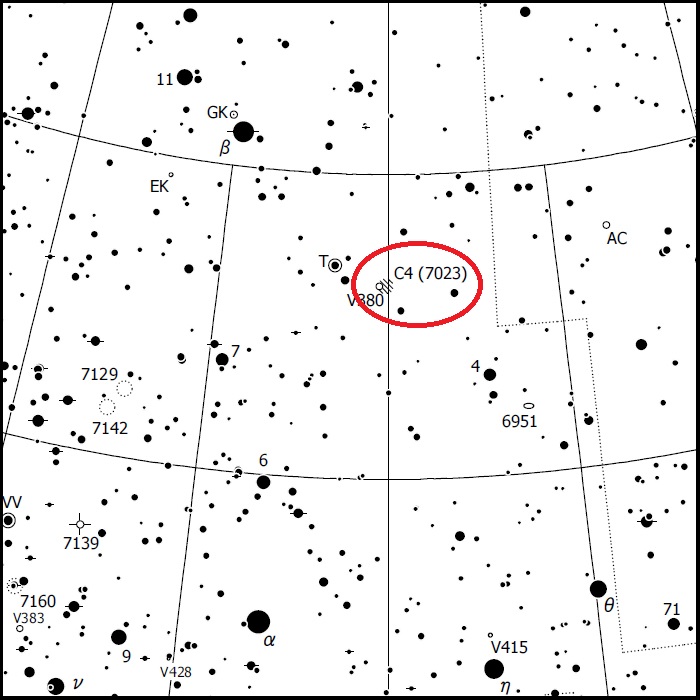
NGC 7023 is located in the constellation Cepheus, approximately 1,300 light-years from Earth. Better known as the Iris Nebula, it is one of the finest reflection nebulae visible in the northern sky. Unlike emission nebulae, which glow because hydrogen gas is ionized by energetic ultraviolet radiation, reflection nebulae shine by scattering the light of nearby stars. Tiny dust particles preferentially scatter shorter blue wavelengths, giving the nebula its characteristic bluish appearance.
The illuminating star at the center of the nebula is HD 200775, a young and massive Herbig Be star. This stellar system is only about 100,000 years old and is still embedded within the molecular cloud from which it formed. Its radiation illuminates the surrounding dust while stellar winds gradually carve cavities into the dense cloud, producing the intricate filamentary structures visible in deep images.
Surrounding the bright central reflection nebula is an extensive network of dark molecular clouds, many of which belong to the Cepheus Flare complex. These cold dust clouds obscure the background stars and represent regions where future generations of stars may eventually form. The wider Deep Sky West mosaic beautifully reveals these subtle dust structures extending far beyond the bright core of NGC 7023.
One particularly interesting feature included in the wide-field mosaic is LBN 468, also catalogued as LBN 102.67+15.42. It is part of the extensive Cepheus Flare molecular cloud complex and consists primarily of faint dust illuminated by nearby stars. Unlike the bright central Iris Nebula, LBN 468 is a diffuse reflection nebula with a very low surface brightness, making it an ideal target for deep wide-field astrophotography. Together with the surrounding dark nebulae, it demonstrates that NGC 7023 is only the brightest condensation within a much larger interstellar cloud complex.
From a scientific perspective, NGC 7023 is an important laboratory for studying interstellar dust and the interaction between young stars and their natal molecular clouds. Infrared observations have detected complex carbon-based molecules known as polycyclic aromatic hydrocarbons (PAHs) within the nebula. These molecules fluoresce under ultraviolet radiation and provide valuable insight into the chemistry of the interstellar medium and the processes that eventually lead to the formation of stars and planetary systems.
The images acquired in 2007, 2010, 2018, and 2026 beautifully document nearly two decades of astrophotographic progress. From early DSLR photographs under the dark skies of Austria and southern France to a professional remote-observatory mosaic and finally a modern smart telescope image, each version reveals another aspect of this remarkable reflection nebula and its surrounding dust complex. Together they demonstrate how improvements in equipment and imaging techniques have made it possible to capture ever finer details of one of the most beautiful and scientifically fascinating nebulae in the northern sky.
For the Seestar data the calibration, registration and the final processing was done with PixInsight. The result was as follows:
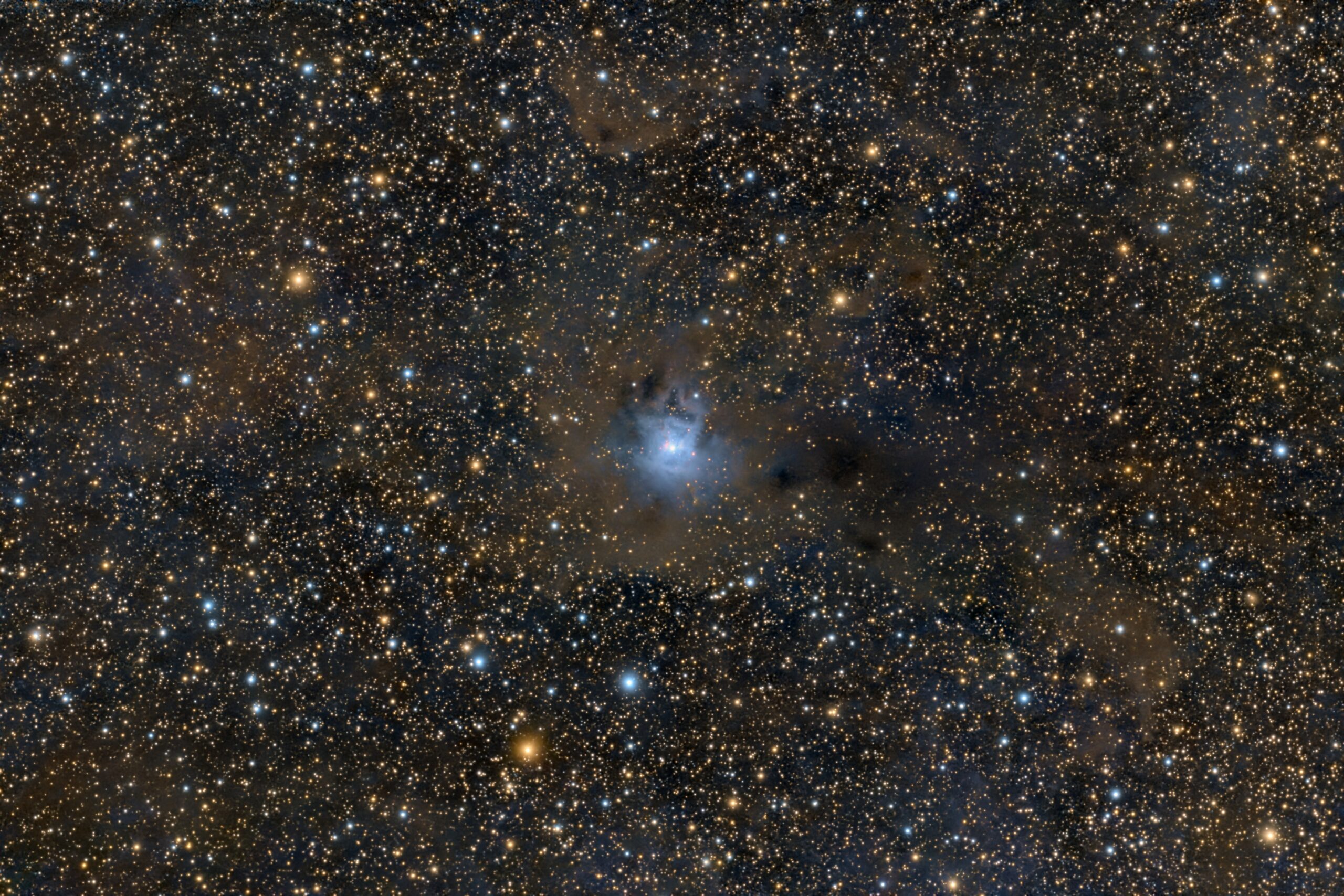
The images were taken with the following eqipment:
- Date: 2026
- Location: Varel, Germany
- Telescope/Lense: Seestar S30 Pro
- Focal length [mm]: 160
- Focal ratio: 5.3
- Mount: Seestar, EQ Mode
- Camera: Seestar Tele
- Filter: OSC
- Exposure time: 360
- Resolution: 3.67″/px
For the DSW data the calibration, registration and the final processing was done with PixInsight. The result was as follows:
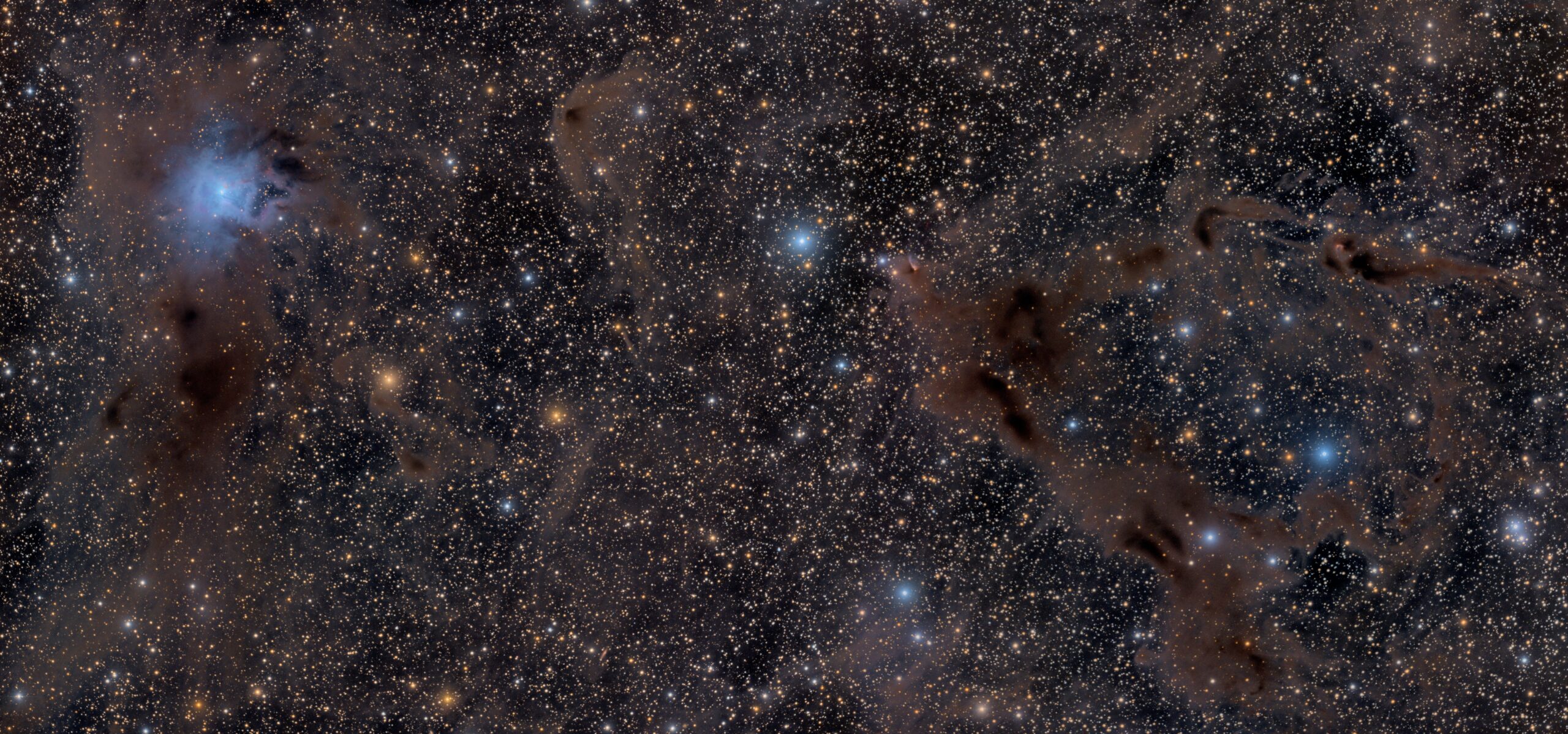
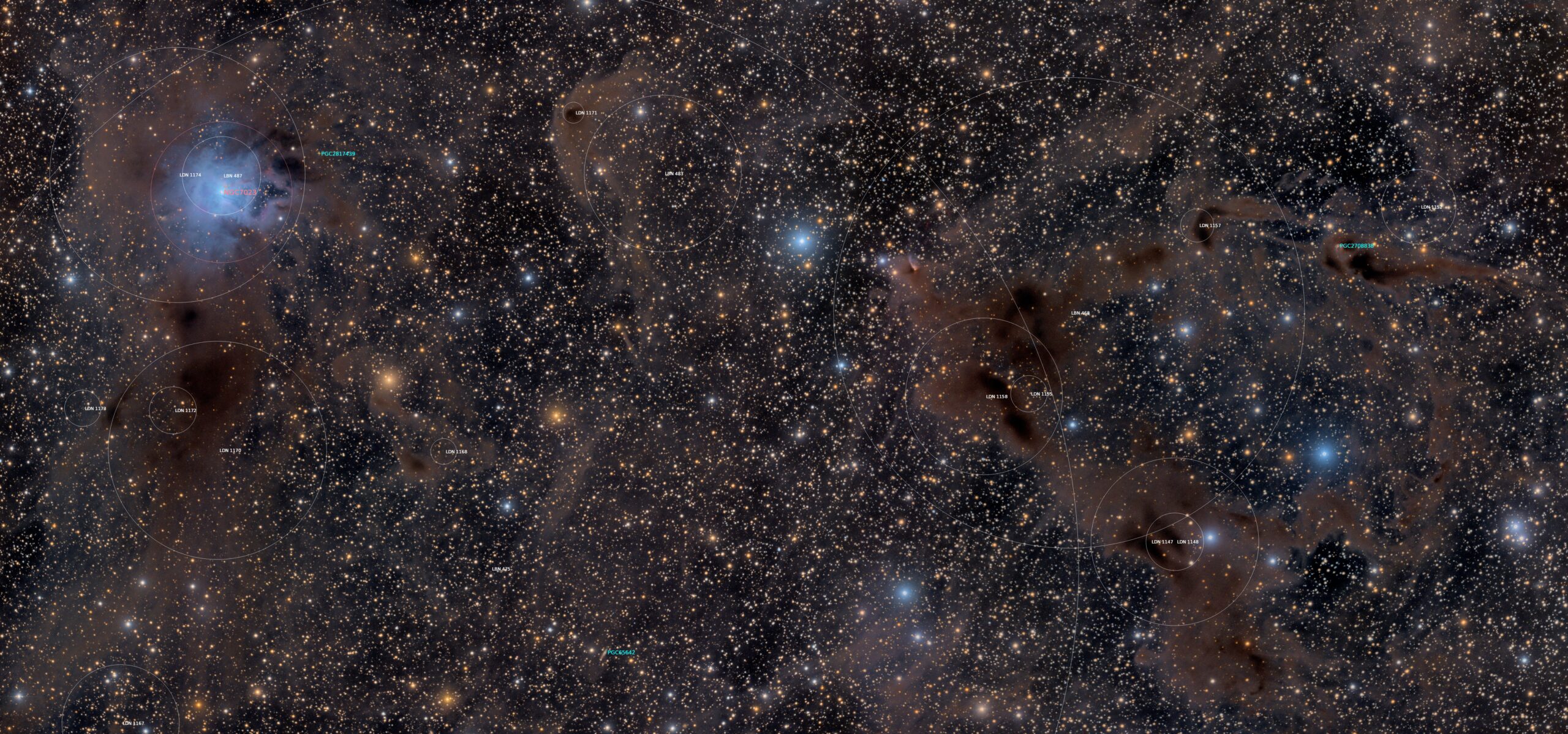
The images were taken with the following equipment:
- Date: 2022
- Location: Rowe, New Mexico
- Telescope/Lense: Astrophysics RH305
- Focal length [mm]: 1118
- Focal ratio: 3.8
- Mount: Paramount ME
- Camera: SBIG STX-16803
- Filter:LRGB
- Exposure time: NGC 7023: 190:220:180:170 – LBN 468: 230:230:210:210
- Resolution: 1.66″/px
For the 2010 data the calibration and registration was done with DeepSkyStacker, the final processing was done with PixInsight. The result was as follows:
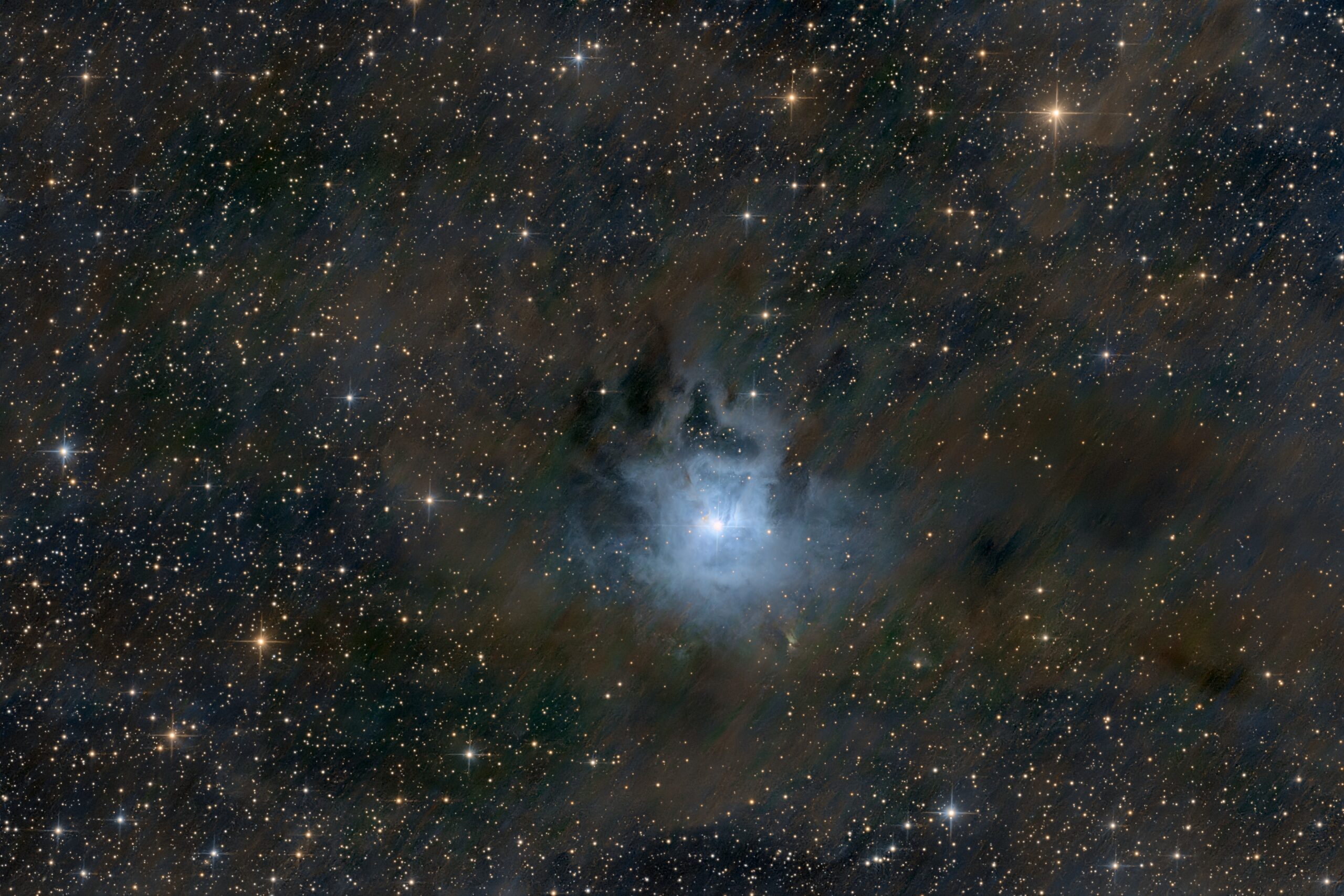
The images were taken with the following eqipment:
- Date: 2010
- Location: Banon, France
- Telescope/Lense: 8″ GSO Newton
- Focal length [mm]: 800
- Focal ratio: 4
- Mount: Skywatcher NEQ6
- Camera: Canon 500Da
- Filter: OSC
- Exposure time: 170
- Resolution: 1,19″/px
For the 2007 data the calibration and registration was done with DeepSkyStacker, the final processing was done with PixInsight. The result was as follows:
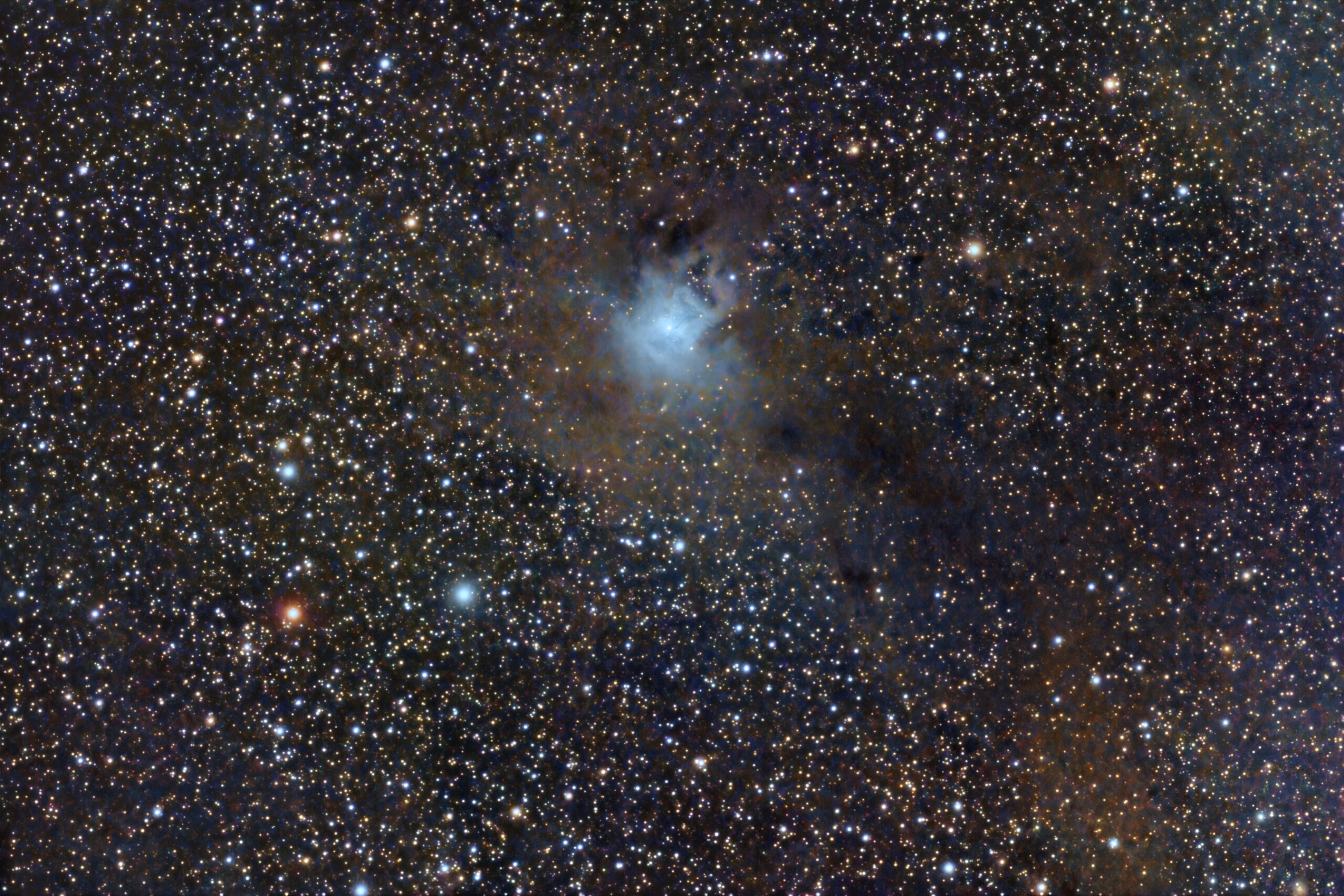
The images were taken with the following eqipment:
- Date: 2007
- Location: Emberger Alm, Austria
- Telescope/Lense: Pentax 75
- Focal length [mm]: 500
- Focal ratio: 6.7
- Mount: Vixen GP-DX
- Camera: Canon 300Da
- Filter: OSC
- Exposure time: 60
- Resolution: 3.04″/px



Leave a reply