

NGC 7000 with IC 5070 from my backyard, abroad and remote
I imaged the magnificent NGC 7000 together with its neighboring IC 5070 several times over the years, documenting more than two decades of progress in both my astrophotography and the available imaging technology. My first image was taken in 2005 during a stay at the Hakos Guest Farm under the pristine southern skies of Namibia.
Using my DSLR equipment, I recorded a short-exposure wide-field image that already revealed the impressive outlines of these enormous emission nebulae. In 2009, I revisited the region from my backyard observatory in Krefeld, this time using an inexpensive telephoto lens. Despite the limitations of the optics and the light-polluted suburban sky, the image successfully captured the characteristic shape of the North America Nebula and its close companion.
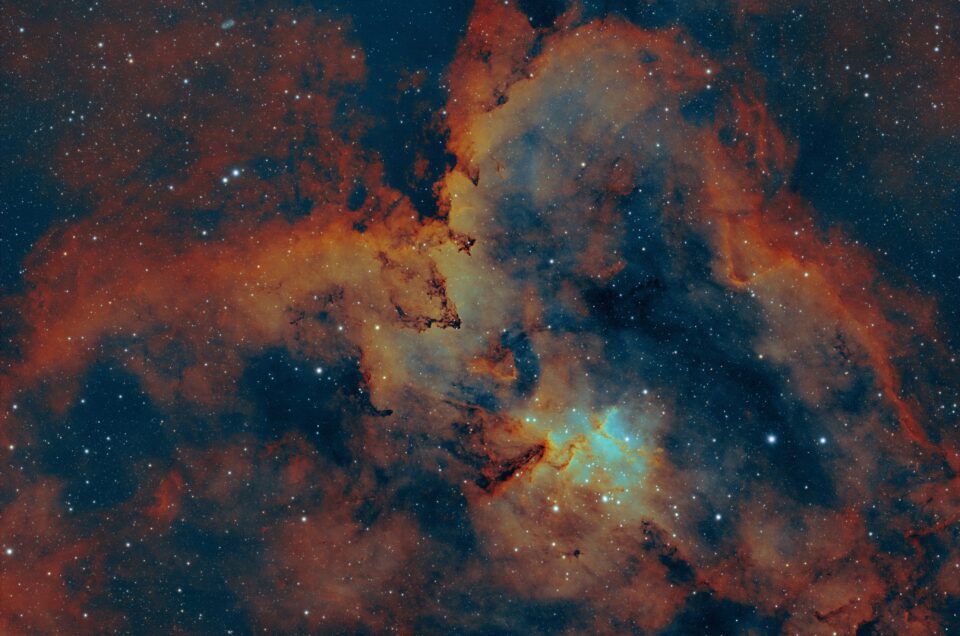
In 2023, I received a professional HSO dataset from Telescope Live, acquired with a telescope in Spain. The narrowband data revealed an extraordinary wealth of fine detail within the glowing hydrogen, sulfur, and oxygen emissions, producing my most detailed image of the complex. Most recently, in 2026, I photographed the region once again from my observatory in Varel using a Seestar smart telescope. Although much smaller than my previous imaging systems, the Seestar produced an attractive wide-field image that beautifully framed the entire nebular complex and demonstrated the remarkable capabilities of modern smart telescopes.
Located in the constellation Cygnus, the North America and Pelican Nebulae lie at a distance of approximately 2,000 light-years and are part of the same enormous H II region, spanning nearly 100 light-years across space. Both nebulae are ionized by the intense ultraviolet radiation of young, massive stars belonging to the nearby Cygnus OB2, one of the richest associations of O- and B-type stars in our Galaxy.
The dark lane separating the two nebulae is the prominent molecular cloud LDN 935. Rather than representing empty space, this dense cloud of gas and dust obscures the glowing hydrogen behind it and serves as an active stellar nursery where new stars continue to form. The familiar coastline of the North America Nebula, including the well-known „Gulf of Mexico,“ is created by this foreground dust cloud silhouetted against the bright emission nebula.
The Pelican Nebula (IC 5070) is equally fascinating. Its intricate network of dark pillars, bright ionization fronts, and compact globules is being sculpted by the intense radiation from nearby massive stars. Deep narrowband images reveal countless fine filaments and shock fronts that illustrate the dynamic interaction between stellar winds and the surrounding interstellar medium.
The HSO dataset beautifully separates the different emission mechanisms within the nebulae. Hydrogen (Hα) traces the widespread ionized gas, sulfur ([S II]) highlights cooler regions behind shock fronts, while oxygen ([O III]) emphasizes areas of particularly energetic radiation. Together these emission lines reveal the physical complexity of one of the Milky Way’s largest and most spectacular star-forming regions.
The images acquired in 2005, 2009, 2023, and 2026 illustrate more than twenty years of astrophotographic development. From a simple DSLR wide-field image under the Namibian sky to a backyard telephoto photograph, a professional narrowband remote-observatory dataset, and finally a modern smart telescope image, each version captures the timeless beauty of the North America and Pelican Nebulae while reflecting the remarkable advances in astronomical imaging technology over the years.
For the Seestar data the calibration, registration and the final processing was done with PixInsight. The result was as follows:
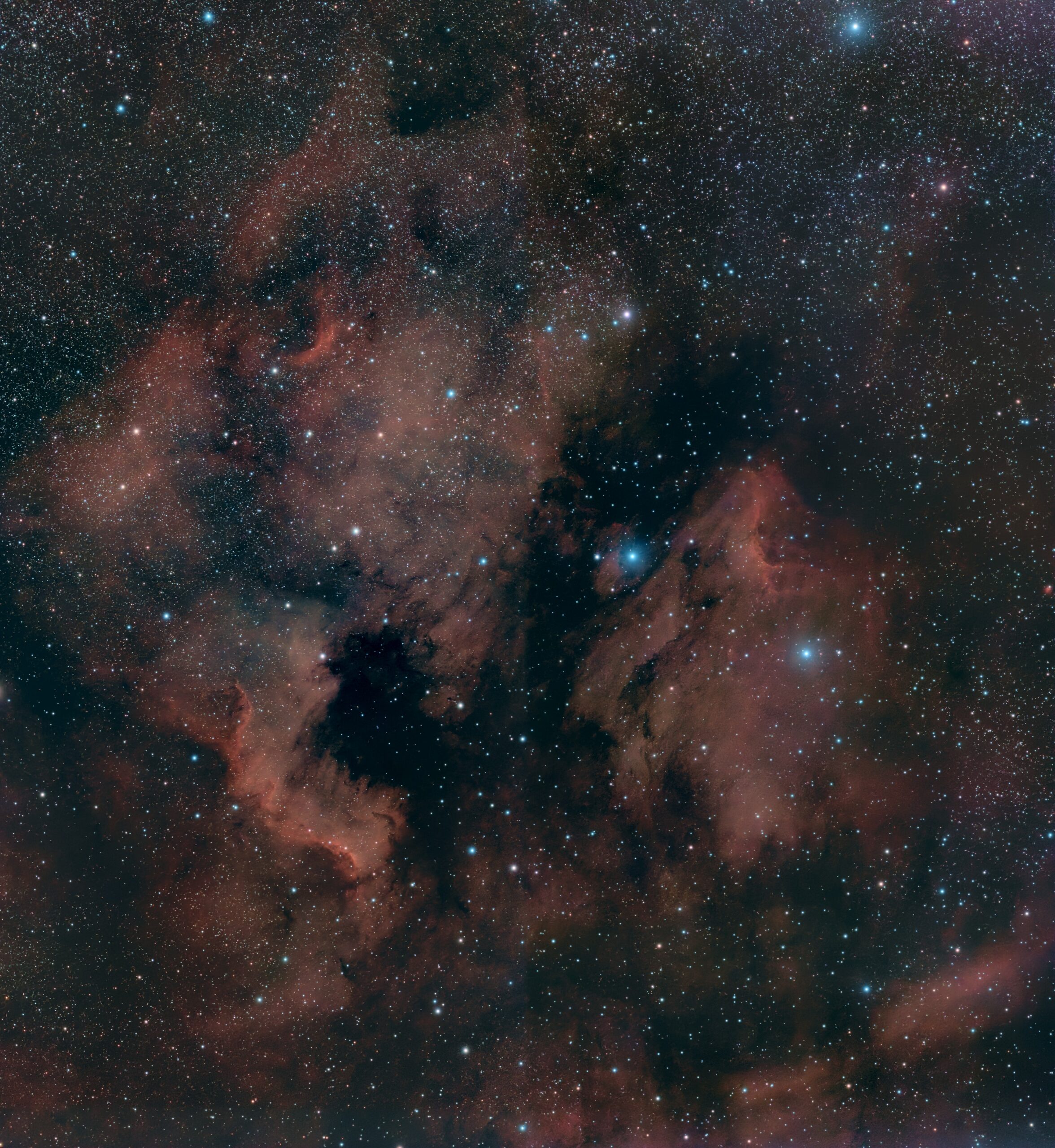
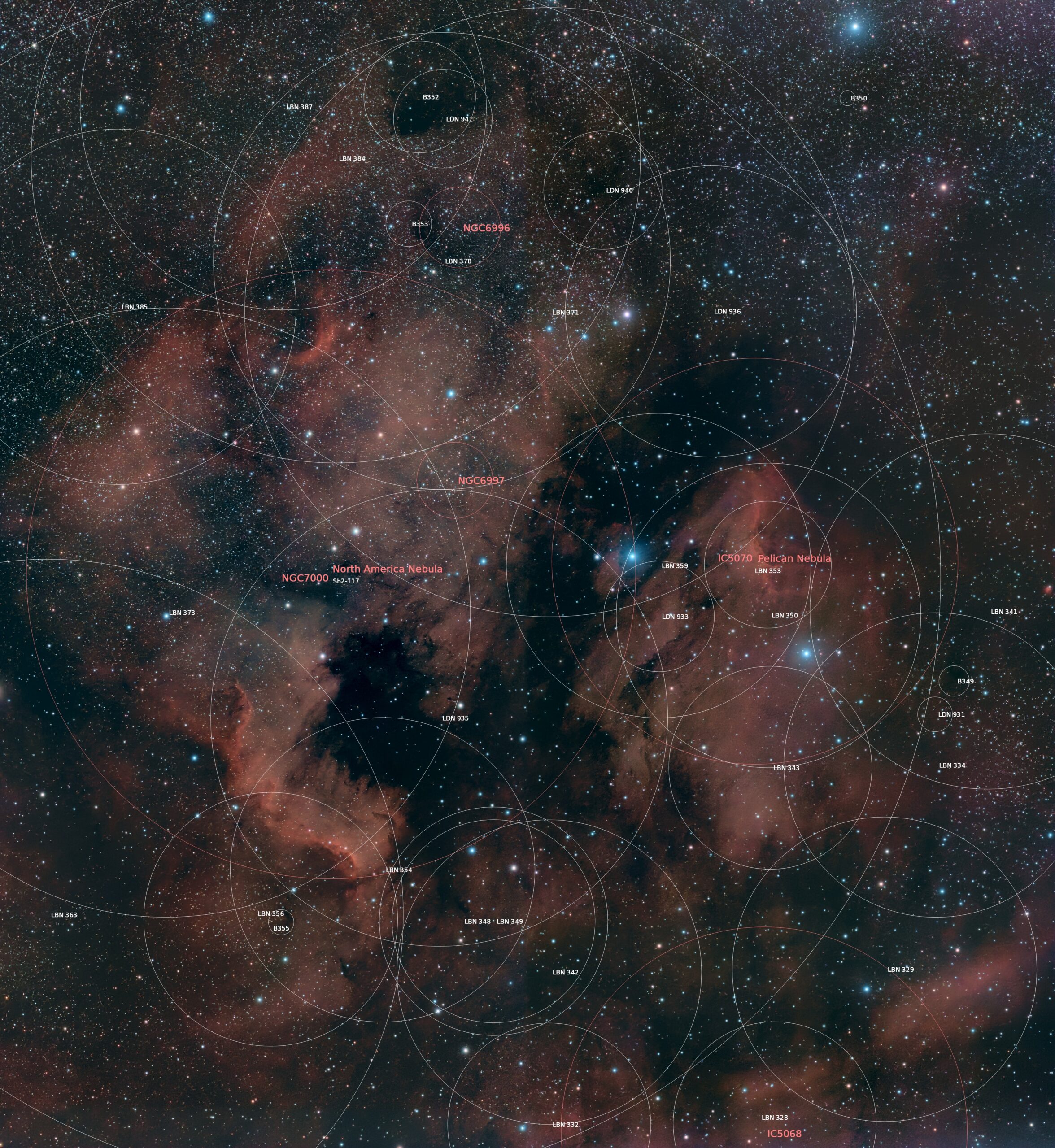
The images were taken with the following equipment:
- Date: 2026
- Location: Varel, Germany
- Telescope: Seestar S30 Pro
- Focal length [mm]: 160
- Focal ratio: 5.3
- Mount: Seestar S30 Pro
- Camera: Seestar Tele
- Filter: OSC (LP)
- Exposure time [min]: 187
- Resolution: 3.67″/px
For the Telescope Live data the calibration, registration and the final processing was done with PixInsight. The result was as follows:


The images were taken with the following equipment (Telescope Live, SPA-1):
- Date: 2023
- Location: IC Astronomy Observatory, Spain
- Telescope: Takashi FSQ-106 EDX4
- Focal length [mm]: 385
- Focal ratio: 3.6
- Mount: Paramount MX+
- Camera: QHY 600M Pro
- Filter: H:O:S
- Exposure time [min]: 195:215:180
- Resolution: 2.02″/px
For the 2009 data the calibration and registration was done With DeepSkyStacker and the final processing was done with PixInsight. The result was as follows:
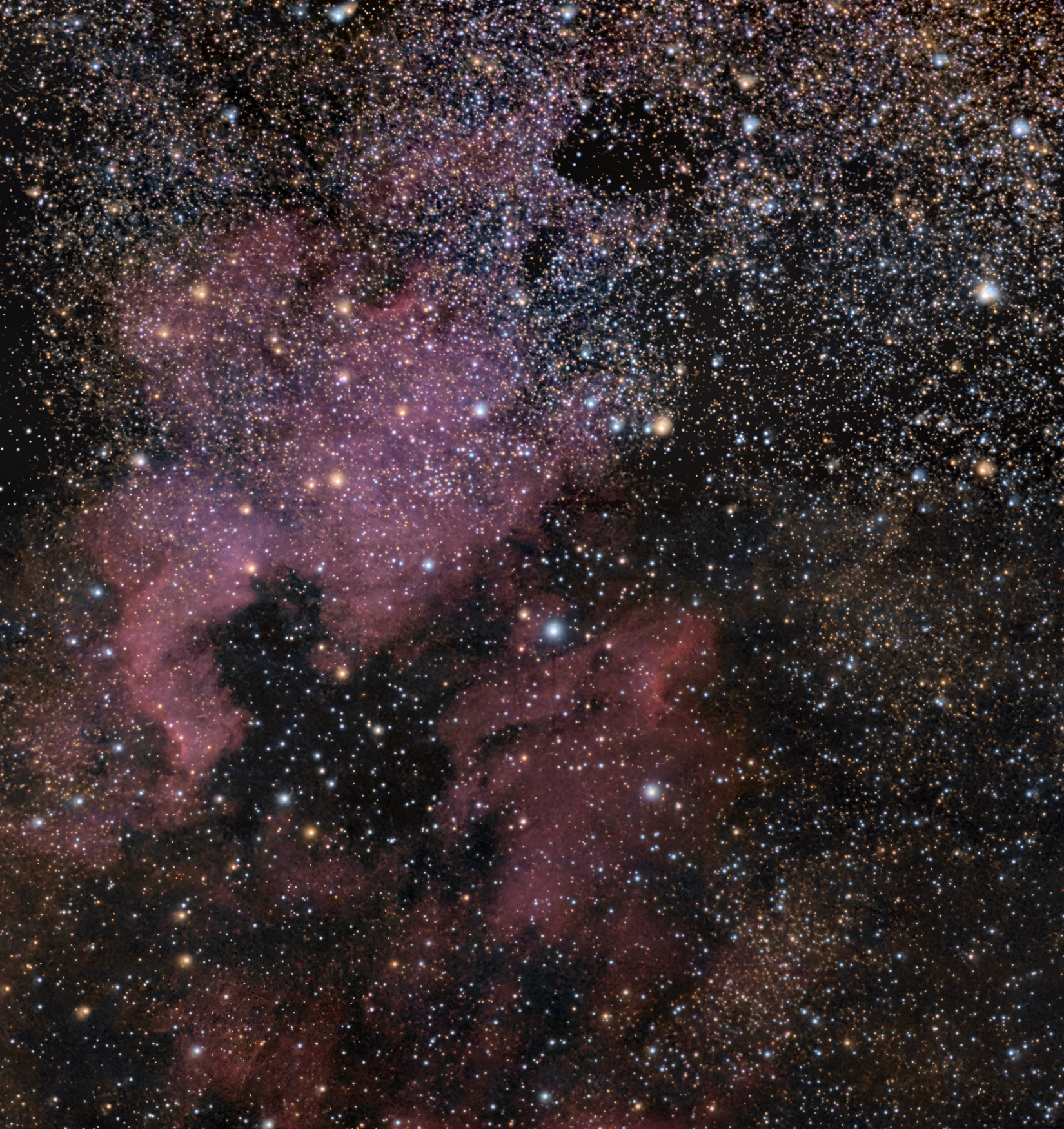
The images were taken with the following equipment:
- Date: 2009
- Location: Krefeld
- Telescope/Lens: Pentacon Lens
- Focal length [mm]: 200
- Focal ratio: 5.6
- Mount: Skywatcher NEQ6
- Camera: Canon 300Da
- Filter: OSC
- Exposure time [min]: 120
- Resolution: 8″/px
For the 2005 data the calibration and registration was done With DeepSkyStacker and the final processing was done with PixInsight. The result was as follows:
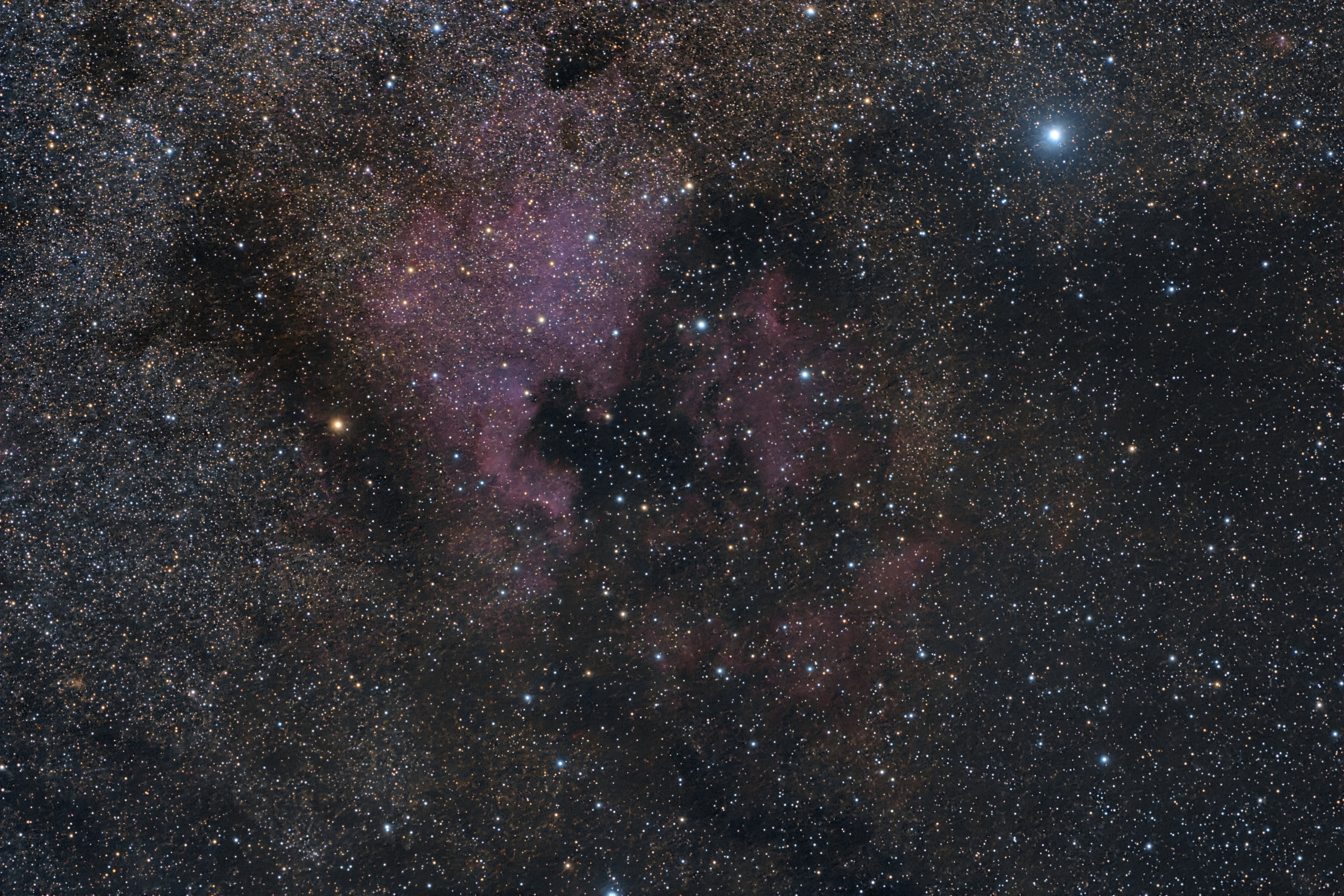
The images were taken with the following equipment:
- Date: 2005
- Location: Hakos, Namibia
- Telescope/Lens: Tamron 28-300mm lens
- Focal length [mm]: 135
- Focal ratio: 5.6
- Mount: Liebscher
- Camera: Canon 300Da
- Filter: OSC
- Exposure time [min]: 10
- Resolution: 11.4″/px


Leave a reply