

NGC 5907 from my own „Sterntaucher“ observatory
I imaged the spiral galaxy NGC 5907 three times over the years, documenting both my growing experience in astrophotography and the advances in imaging technology. My first image was acquired in 2019 using my dual-rig setup, producing a detailed LRGB image of the galaxy. In 2020, I returned to the target with the same equipment and accumulated significantly more exposure time, resulting in my deepest image of NGC 5907.
For this project, I was inspired by the ongoing discussion surrounding the existence of a second loop in the remarkable stellar tidal stream system around NGC 5907. Recent studies and images by astronomers such as (van Dokkum, Müller, Martinez-Delgado) have reignited interest in this faint structure. At the same time, deep images produced by my colleagues in the group „Tief belichtete Galaxien (Long exposed galaxies)“ (TBG) were unable to confirm the existence of this second loop. My own objective was more modest: I wanted to determine whether I could detect any part of the known stellar tidal stream at all from my light-polluted observing site on the outskirts of a major city.
The resulting dataset exceeded my expectations. Not only did it reveal the galaxy’s delicate dust lane and remarkably thin stellar disk, but it also showed the brightest portions of the famous tidal stream. Although the faintest and most controversial structures remained beyond reach, the detection of the main stream demonstrated that careful acquisition and processing can reveal extremely low-surface-brightness features even under less-than-ideal sky conditions.
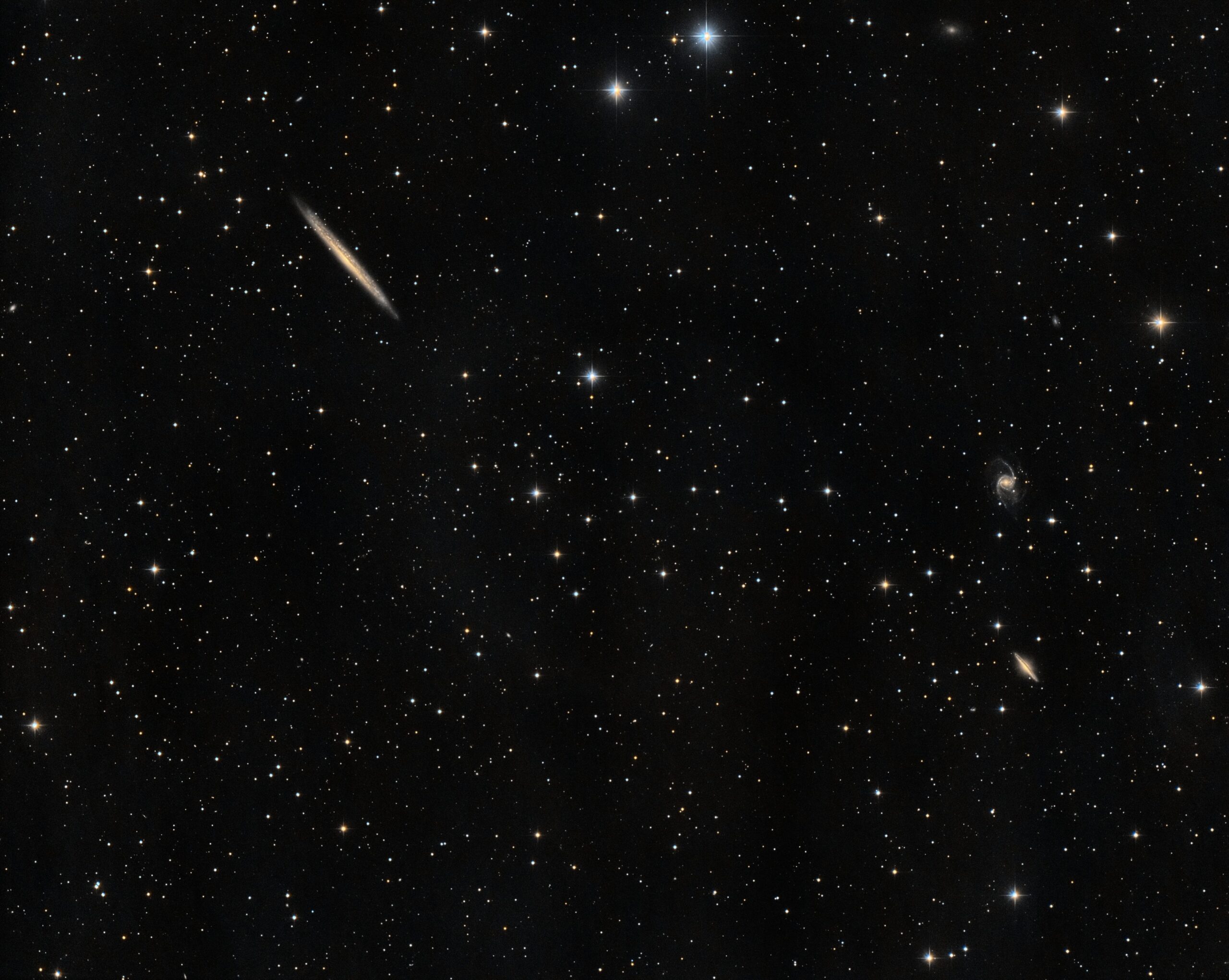
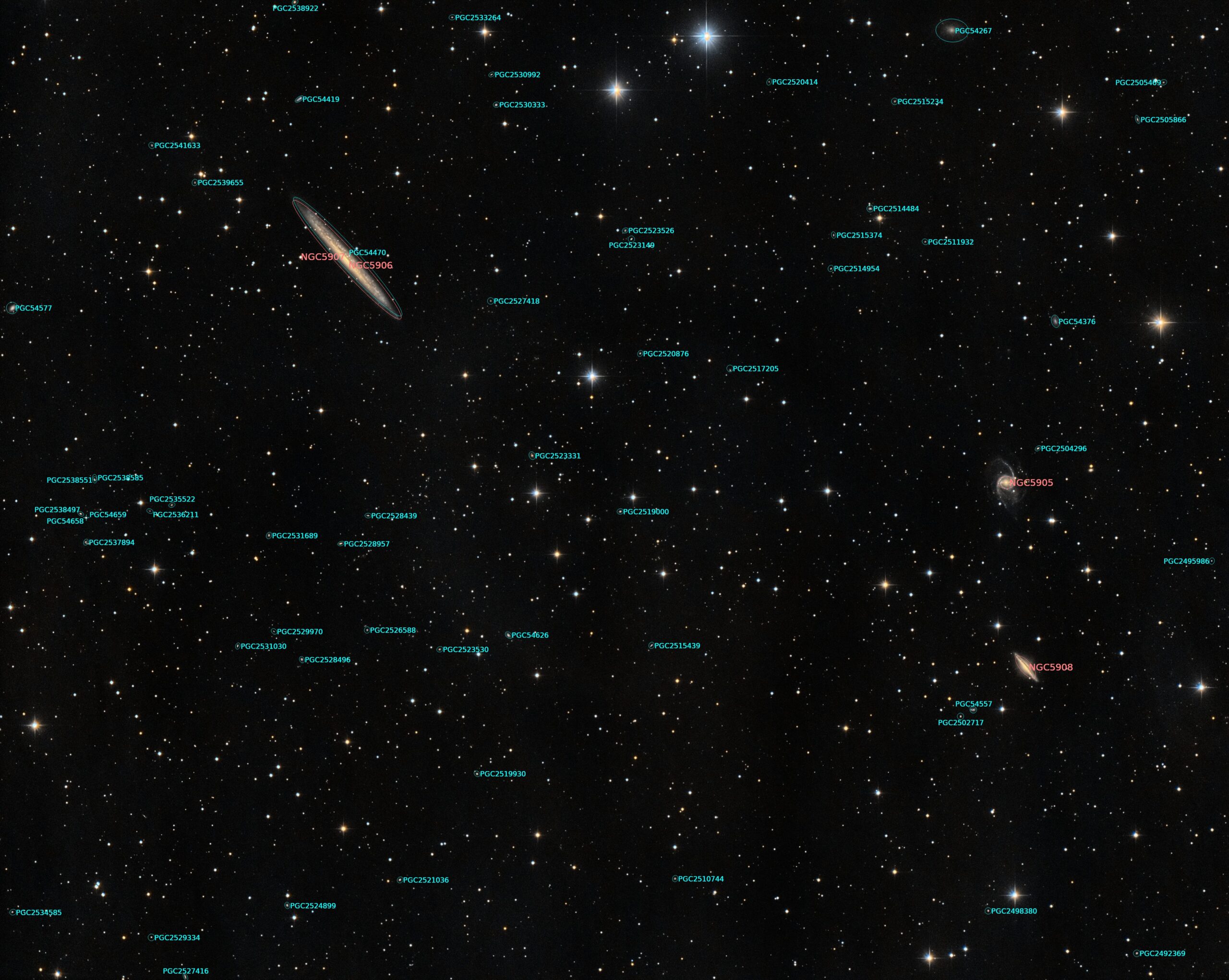
My most recent image was obtained in 2026 using my Seestar S30 Pro smart telescope. Although captured with a much shorter focal length and a significantly smaller instrument, the resulting wide-field image placed NGC 5907 into its larger celestial environment and showcased the surrounding star field in an attractive
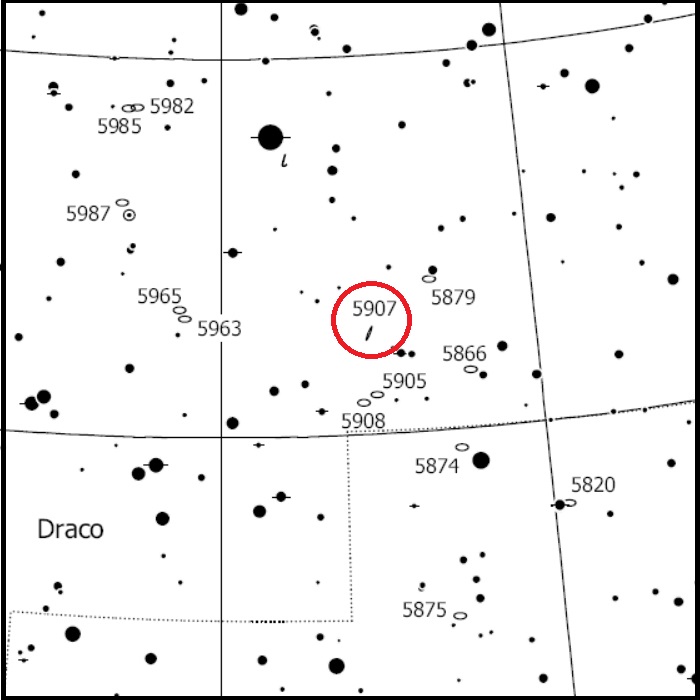
NGC 5907 is located in the constellation Draco at a distance of approximately 50 million light-years. Often referred to as the Splinter Galaxy, it is one of the finest edge-on spiral galaxies visible in the northern sky. Its thin, elongated appearance is the result of our nearly edge-on viewing angle, which allows the galaxy’s prominent dust lane and flattened stellar disk to be observed in exquisite detail.
For many years, NGC 5907 was considered a relatively isolated and undisturbed spiral galaxy. However, deep imaging changed this view dramatically. Long-exposure photographs revealed an enormous system of stellar tidal streams looping around the galaxy. These faint structures are believed to be the remnants of one or more dwarf galaxies that were gravitationally disrupted and absorbed by NGC 5907 over billions of years. The tidal stream forms a spectacular, looping structure that extends far beyond the visible disk and provides direct evidence of the hierarchical growth of galaxies through mergers and accretion.
From a scientific perspective, these tidal streams are of particular importance because they allow astronomers to study the distribution of dark matter within the galaxy. The shape and extent of the streams are influenced by the galaxy’s gravitational potential, making them valuable tracers of both visible and invisible mass. NGC 5907 has therefore become one of the most famous examples of galactic cannibalism in the nearby universe.
The galaxy itself contains a relatively small central bulge and a remarkably thin disk, suggesting a comparatively quiet evolutionary history aside from the accretion events that produced the tidal streams. Deep images also reveal numerous dust clouds and subtle star-forming regions embedded within the disk, while the surrounding field contains many faint background galaxies.
The three images from 2019, 2020, and 2026 provide complementary views of this remarkable object. The 2019 LRGB image emphasizes the galaxy’s structure and color, the 2020 dataset reveals the brightest portions of the spectacular tidal stream system, and the 2026 wide-field Seestar image places the Splinter Galaxy within its broader cosmic surroundings. Together, they illustrate both the scientific fascination and visual beauty of one of the most extraordinary edge-on galaxies in the sky.
For the 2026 data the calibration, registration and the final processing was done with PixInsight. The result was as follows:
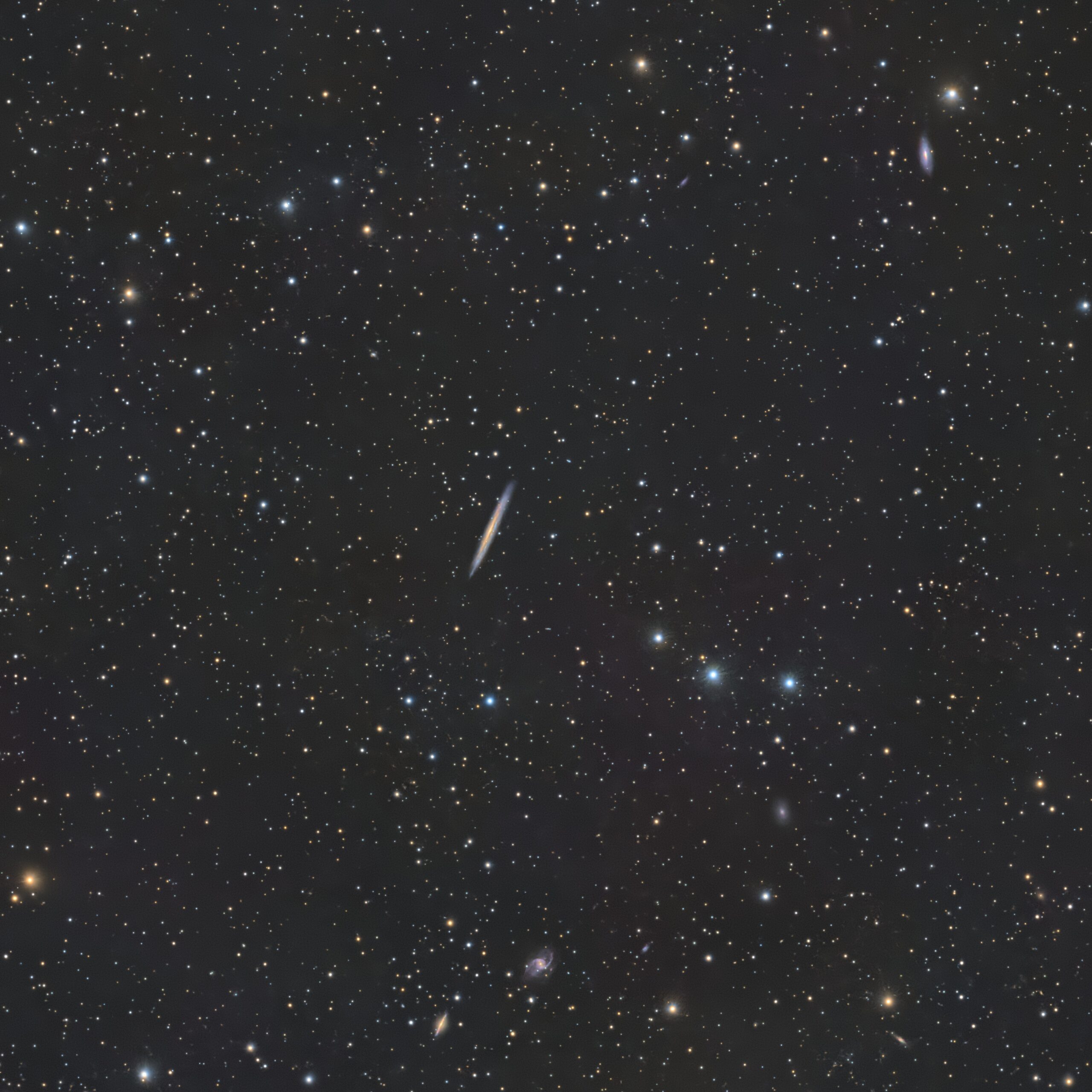
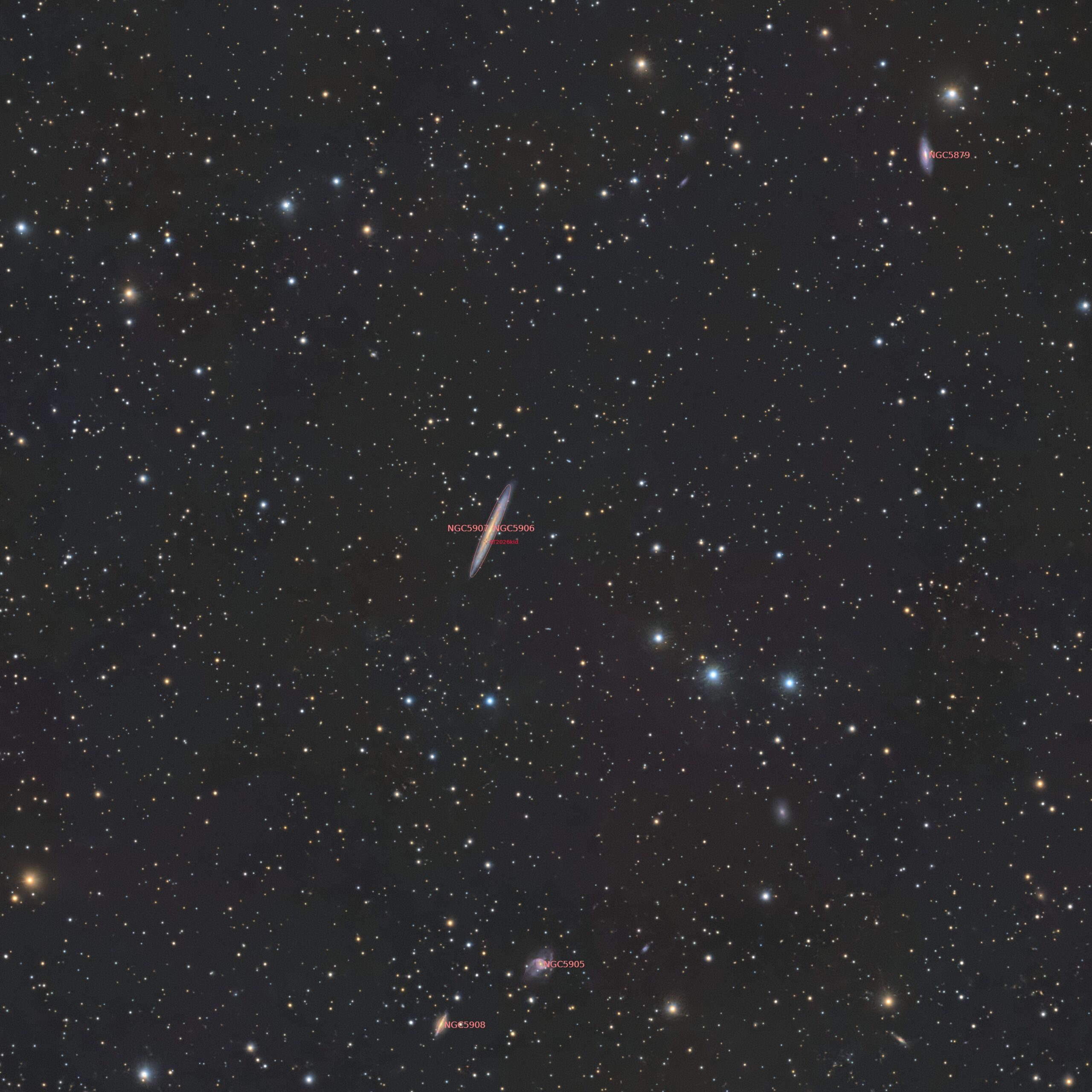
Here is an overview of the used equipment and the exposure times:
- Date: 2026
- Location: Varel
- Telescope/Lens: Seestar S30Pro
- Focal length [mm]: 160
- Focal ratio: 5.3
- Mount: EQ-Mode
- Camera: Internal Tele
- Filter: OSC
- Exposure time [min]: 258
- Resolution: 3.67″/px
For the 2020 data the calibration and registration and the final processing was done with PixInsight. The RGB Data was upscaled to the luminance data. The result was as follows:

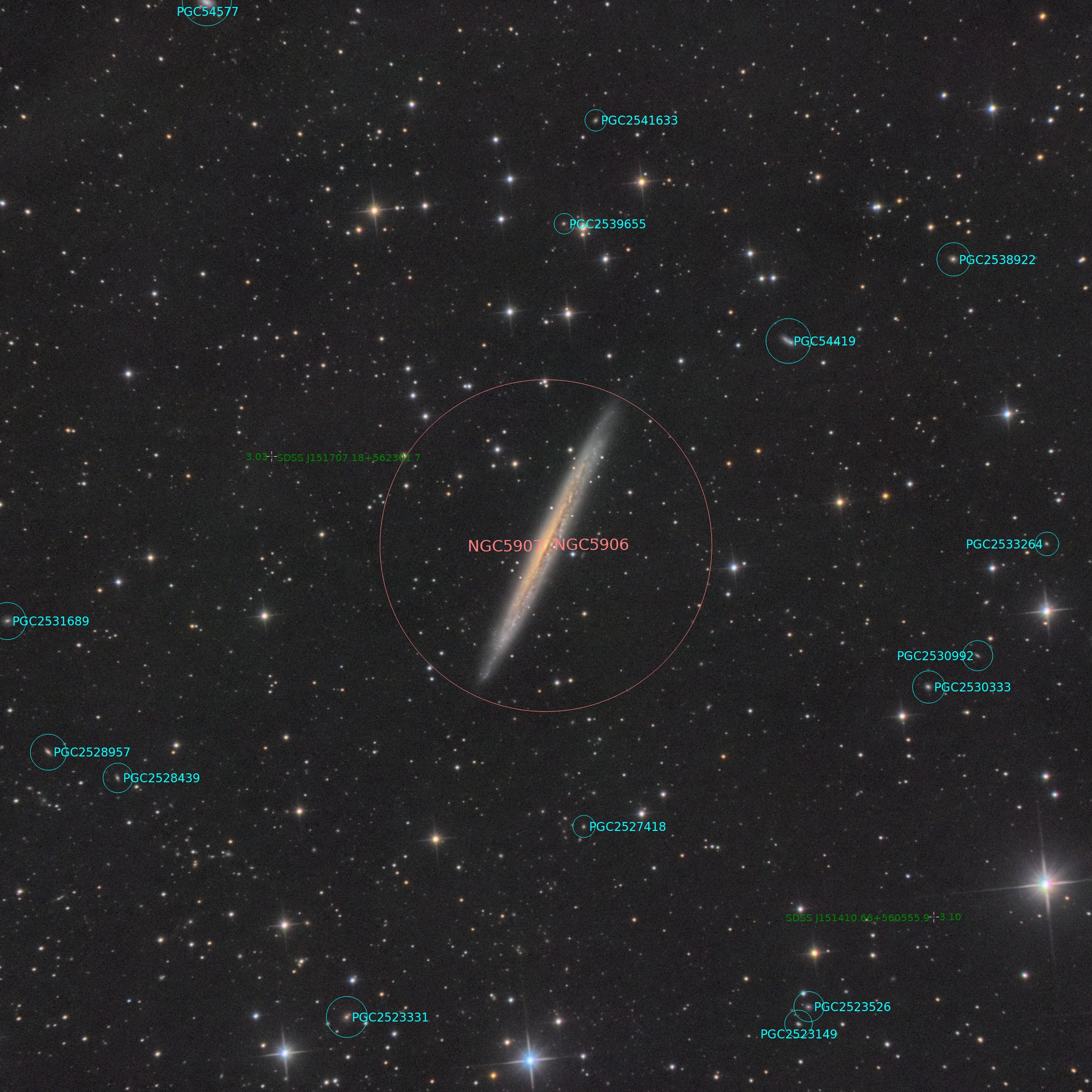
The faintest star in my image has an apparent magnitude of 22.3 magG (SDSS DR5).
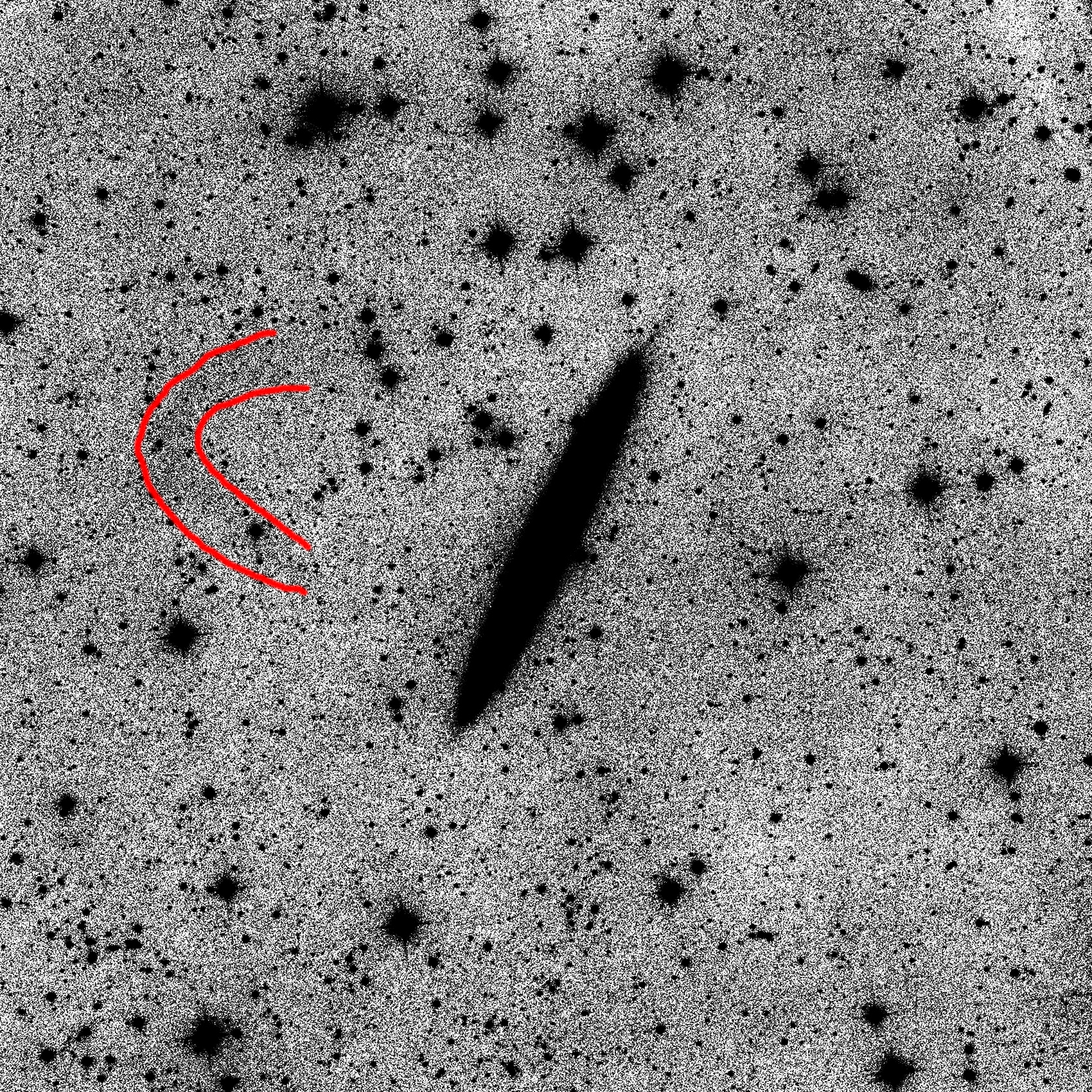
The sections of the tidal stream that could be reliably detected in the data are highlighted in the image.
Here is an overview of the used equipment and the exposure times:
- Date: 2020
- Location: Krefeld
- Telescope/Lens: 10″ Newton ohne Namen – TSQ-65ED Apo
- Focal length [mm]: 1000 – 420
- Focal ratio: 3.9 – 6.5
- Mount: Skywatcher EQ8
- Camera: Moravian G2 8300 FW – Moravian G3 16200 FW
- Filter: L – RGB
- Exposure time [min]: 910 – 235:240:425
- Resolution: 1.11″/px – 2.95″/px
For the 2019 data the calibration and registration and the final processing was done with PixInsight. The RGB Data was upscaled to the luminance data. The result was as follows:



Leave a reply