

NGC 7635 from my backyard
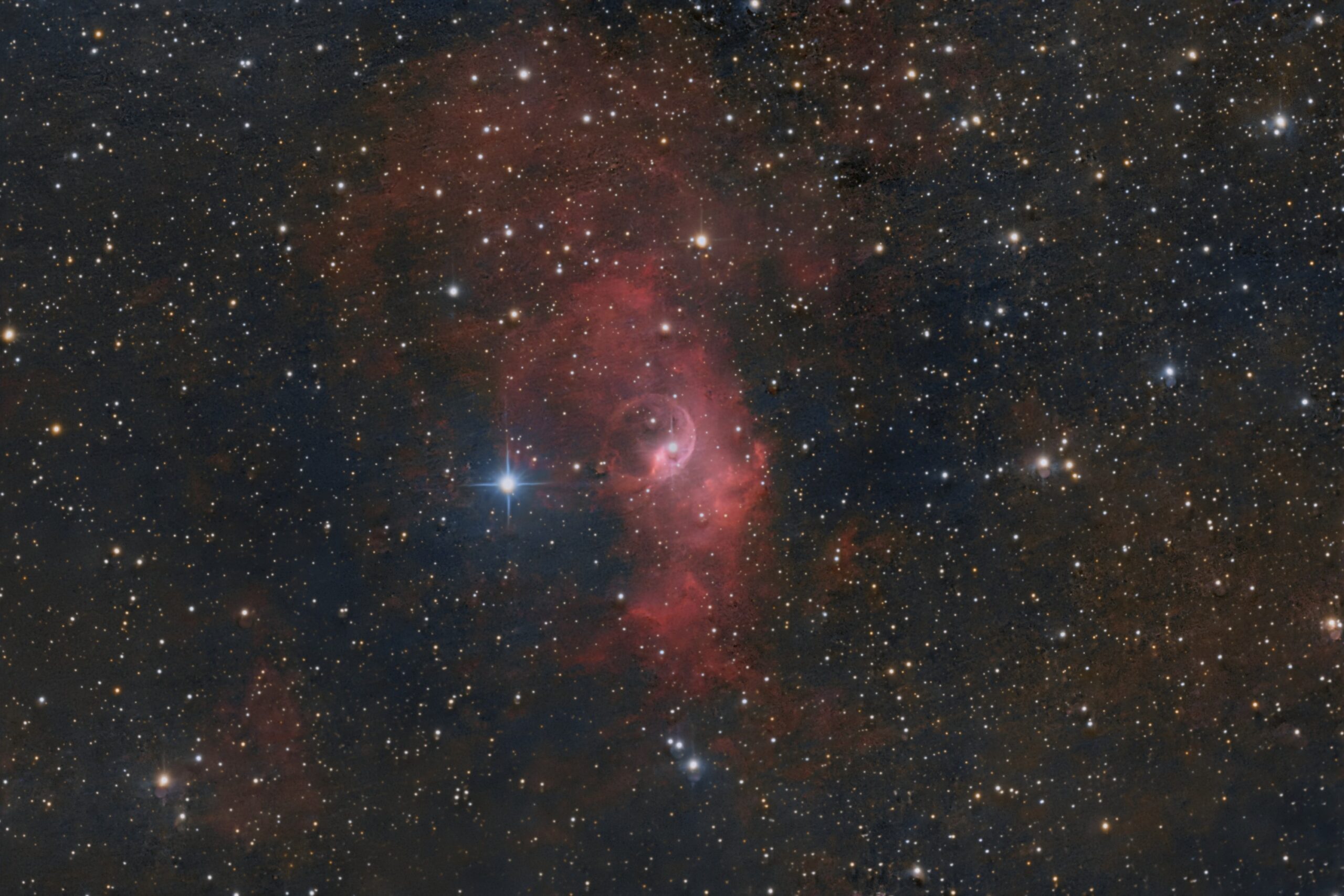
I imaged the emission nebula NGC 7635 several times over the years, documenting both my growing experience in astrophotography and the evolution of my equipment. My first images were captured in 2009, 2010, and 2011, each time from my backyard observatory using my DSLR equipment. With every new attempt, improvements in acquisition techniques and image processing allowed progressively more of the nebula’s faint surrounding emission to be revealed. In 2015, I revisited the Bubble Nebula with a CCD camera, acquiring deep Hα data from the same location. These narrowband exposures were later combined with the 2011 DSLR RGB image, producing a significantly enhanced final result that highlights both the colorful stars and the intricate hydrogen emission surrounding the nebula.
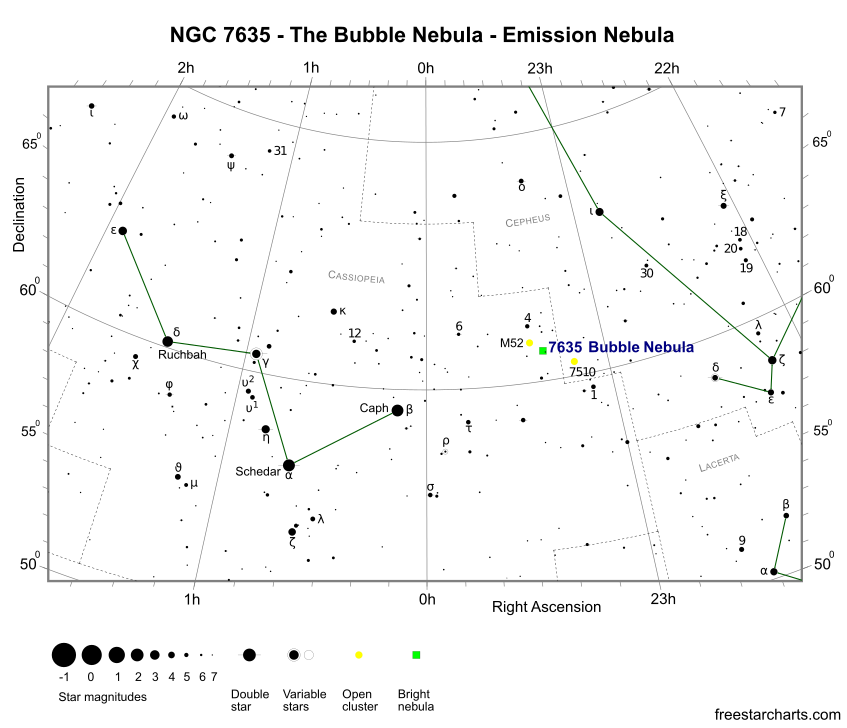
NGC 7635 is located in the constellation Cassiopeia, approximately 7,100 light-years from Earth. Better known as the Bubble Nebula, it is one of the most recognizable emission nebulae in the northern sky. The nebula owes its name to the nearly spherical bubble of glowing gas that appears to float within a much larger cloud of ionized hydrogen.
The bubble itself was created by the powerful stellar wind of the massive BD+60°2522, an extremely hot O-type star located near its center. This star is estimated to be more than 40 times the mass of the Sun and emits an intense stream of charged particles traveling at several million kilometers per hour. Over hundreds of thousands of years, this stellar wind has swept up the surrounding interstellar gas into a thin expanding shell, creating the characteristic bubble approximately 10 light-years in diameter.
One of the most intriguing aspects of the Bubble Nebula is that the central star is noticeably offset from the geometric center of the bubble. Astronomers believe this asymmetry results from variations in the density of the surrounding molecular cloud. As the stellar wind expands more rapidly into regions of lower density and more slowly into denser material, the bubble becomes distorted rather than perfectly spherical.
The Bubble Nebula is embedded within a much larger H II region, where ultraviolet radiation from BD+60°2522 ionizes the surrounding hydrogen gas. This extensive emission extends far beyond the well-known bubble itself and is especially prominent in Hα images. The addition of deep Hα data greatly enhances the visibility of these faint structures, revealing delicate filaments, shock fronts, and diffuse hydrogen clouds that are barely detectable in broadband RGB images alone.
The surrounding field is exceptionally rich, containing numerous dark dust lanes, faint emission clouds, and countless stars of the Milky Way. Deep images also reveal many distant background galaxies scattered between the foreground stars, emphasizing the enormous depth captured within a single field of view.
The images acquired in 2009, 2010, 2011, and the additional Hα data from 2015 beautifully illustrate the progress of my astrophotography over several years. By combining the high-quality 2011 DSLR RGB image with the deep narrowband hydrogen data acquired in 2015, I was able to produce a final image that preserves the natural star colors while dramatically enhancing the faint emission surrounding the Bubble Nebula. The result demonstrates the power of combining broadband and narrowband imaging techniques and remains one of my favorite representations of this iconic stellar nursery.
The 2015 data were calibrated, registered and finally processed in Pixinsight.
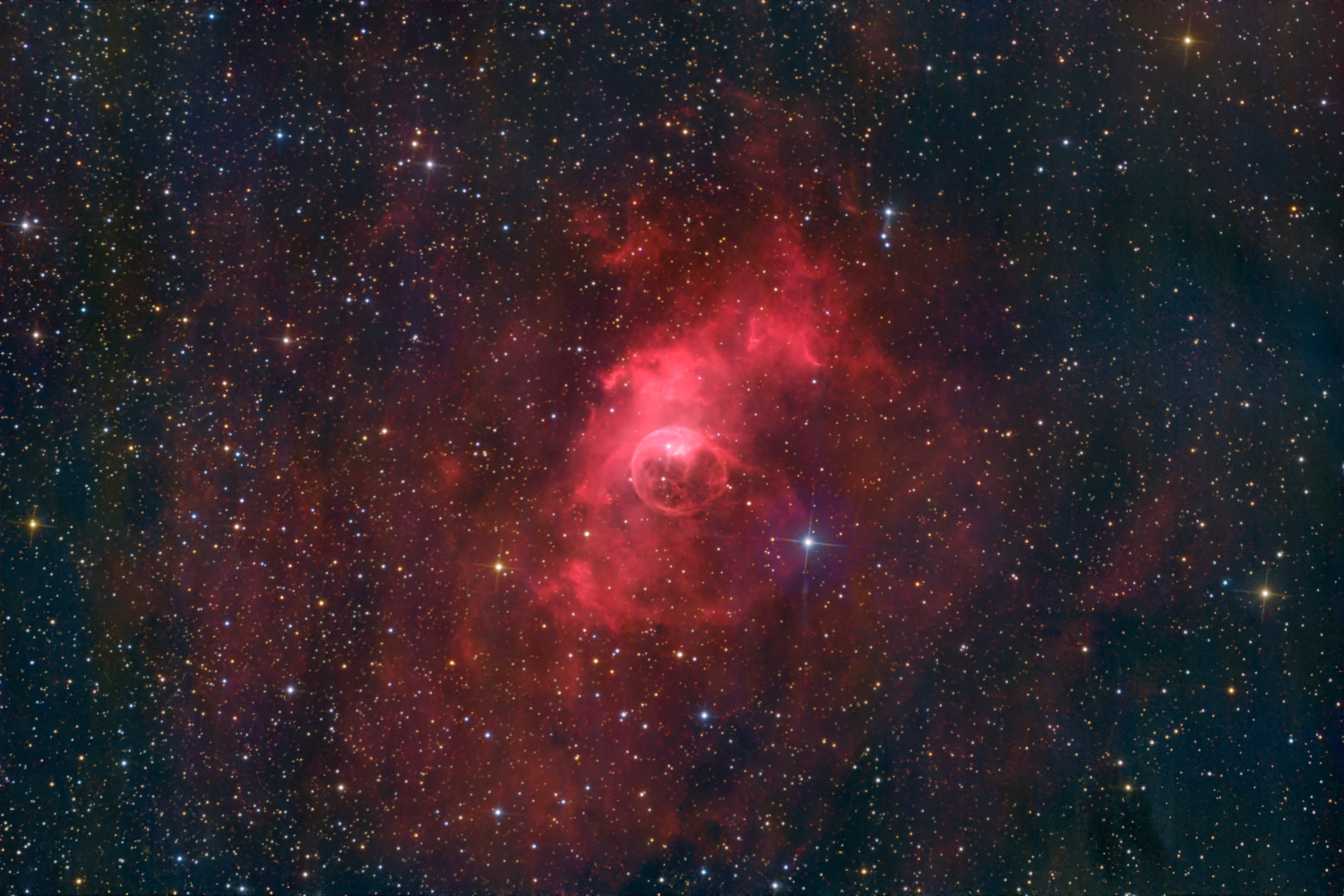
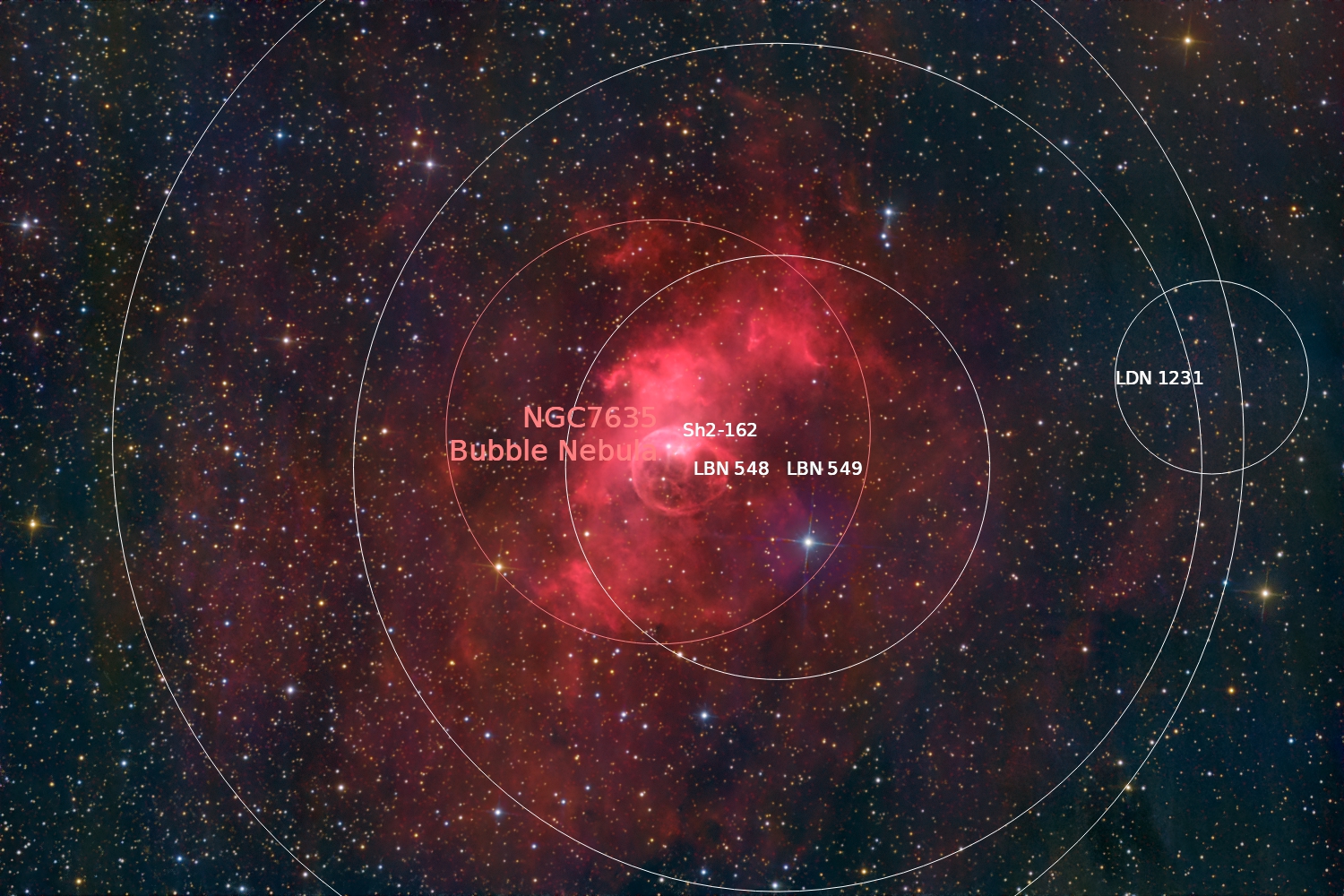
Here is an overview of the used equipment and the exposure times:
- Date: 2011 -2015
- Location: Krefeld
- Telescope/Lense: 10″ TS Newton – 10″ Newton ohne Namen
- Focal length [mm]: 1140 – 1000
- Focal ratio: 4.5 – 4
- Mount: Skywatcher NEQ6 – Losmandy G11
- Camera: Canon 500Da – Moravian 8300FW
- Filter: OSC – [Hα]
- Exposure time [min]: 517:190
- Resolution: 1.9″/px
For the 2011 data the calibartion and registration was performed with DeepSkyStacker and the final processing was done with PixInsight.
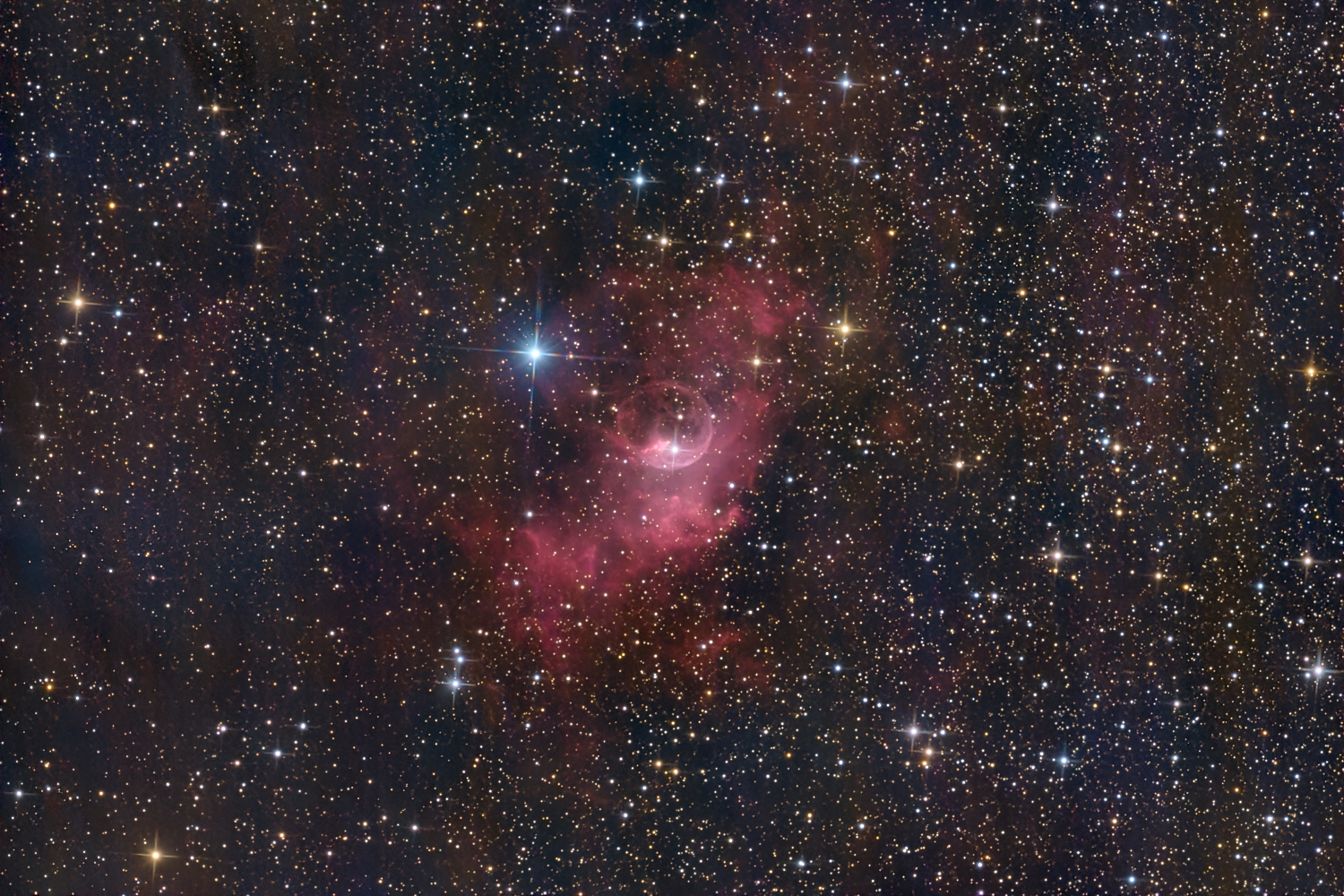
Here is an overview of the used equipment and the exposure times:
- Date: 2011
- Location: Krefeld
- Telescope/Lense: 10″ TS Newton
- Focal length [mm]: 1140
- Focal ratio: 4.5
- Mount: Skywatcher NEQ6
- Camera: Canon 500Da
- Filter: OSC
- Exposure time [min]: 517
- Resolution: 1.9″/px
For the 2010 data the calibartion and registration was performed with DeepSkyStacker and the final processing was done with PixInsight.
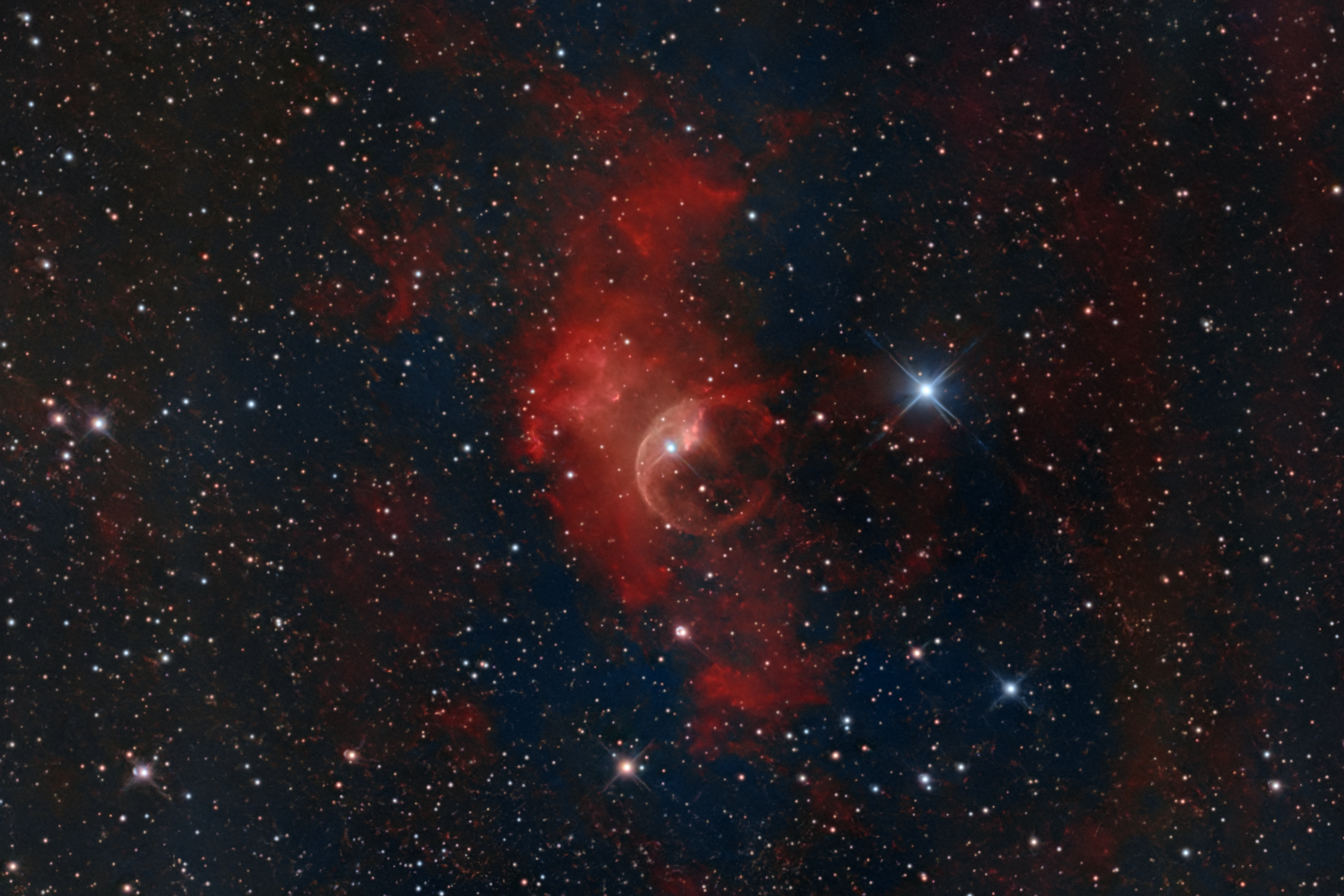
Here is an overview of the used equipment and the exposure times:
- Date: 2010
- Location: Krefeld
- Telescope/Lense: 10″ Orion Newton
- Focal length [mm]: 1200
- Focal ratio: 4.8
- Mount: Skywatcher NEQ6
- Camera: Canon 500Da
- Filter: OSC
- Exposure time [min]: 179
- Resolution: 0.81″/px
For the 2009 data the calibartion and registration was performed with DeepSkyStacker and the final processing was done with PixInsight.
Here is an overview of the used equipment and the exposure times:
- Date: 2009
- Location: Krefeld
- Telescope/Lense: 8″ GSO Newton
- Focal length [mm]: 800
- Focal ratio: 4
- Mount: Skywatcher NEQ6
- Camera: Canon 300Da
- Filter: OSC
- Exposure time [min]: 168
- Resolution: 0.94″/px (Drizzle 2)



Leave a reply