

NGC 2805 from my backyard and „Sterntaucher“ observatory
I imaged the spiral galaxy NGC 2805 twice over the years using very different imaging setups. My first observations date back to 2012, when I captured the galaxy from my backyard using my DSLR equipment together with a modest Meade DSI Pro II CCD camera. Even with relatively simple equipment, the galaxy’s asymmetric spiral structure and bright star-forming regions were already visible in the final image.
In 2020, I revisited the object with a much more advanced dual-rig setup. The luminance data were recorded with a 10″ Newtonian telescope, while the RGB color data were simultaneously captured with a small apochromatic refractor. Both systems used CCD cameras. For the final LRGB image, the RGB data were carefully matched and integrated with the higher-resolution luminance frames, allowing the detailed structure captured by the Newtonian to define the final image while preserving accurate color information from the APO setup.
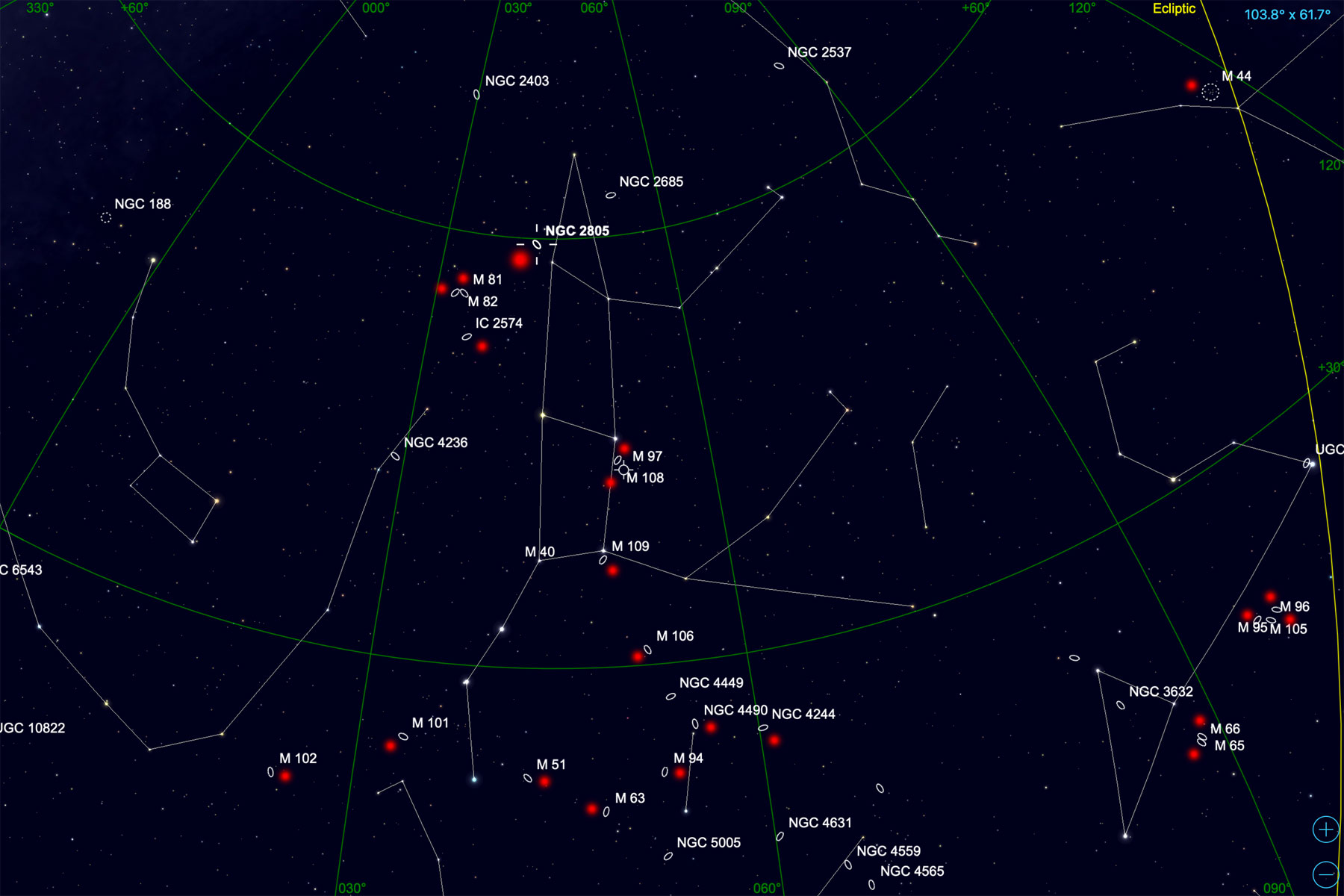
Scientifically, NGC 2805 is located in the constellation Ursa Major at a distance of roughly 80–90 million light-years. It is a large and somewhat asymmetric barred spiral galaxy, classified as SABd, and is the dominant member of the small interacting galaxy group Holmberg 124. This group also includes galaxies such as NGC 2820, NGC 2814, and Mrk 108.
NGC 2805 shows clear signs of gravitational interaction, including distorted spiral arms, uneven brightness distribution, and enhanced star formation across parts of its disk. Deep images reveal numerous bluish H II regions scattered along the spiral arms, where young massive stars ionize the surrounding hydrogen gas. The galaxy’s asymmetric appearance is likely caused by tidal forces within the Holmberg 124 group, making it an interesting laboratory for studying how galaxy interactions influence morphology and star formation activity.
Comparing the 2012 DSLR/early CCD image with the much deeper and higher-resolution dual-rig dataset from 2020 beautifully illustrates the technological and methodological progress achieved over the years, while continuing to highlight the fascinating structure of this interacting spiral galaxy.
Data calibration and registration and the final processing was done with PixInsight.
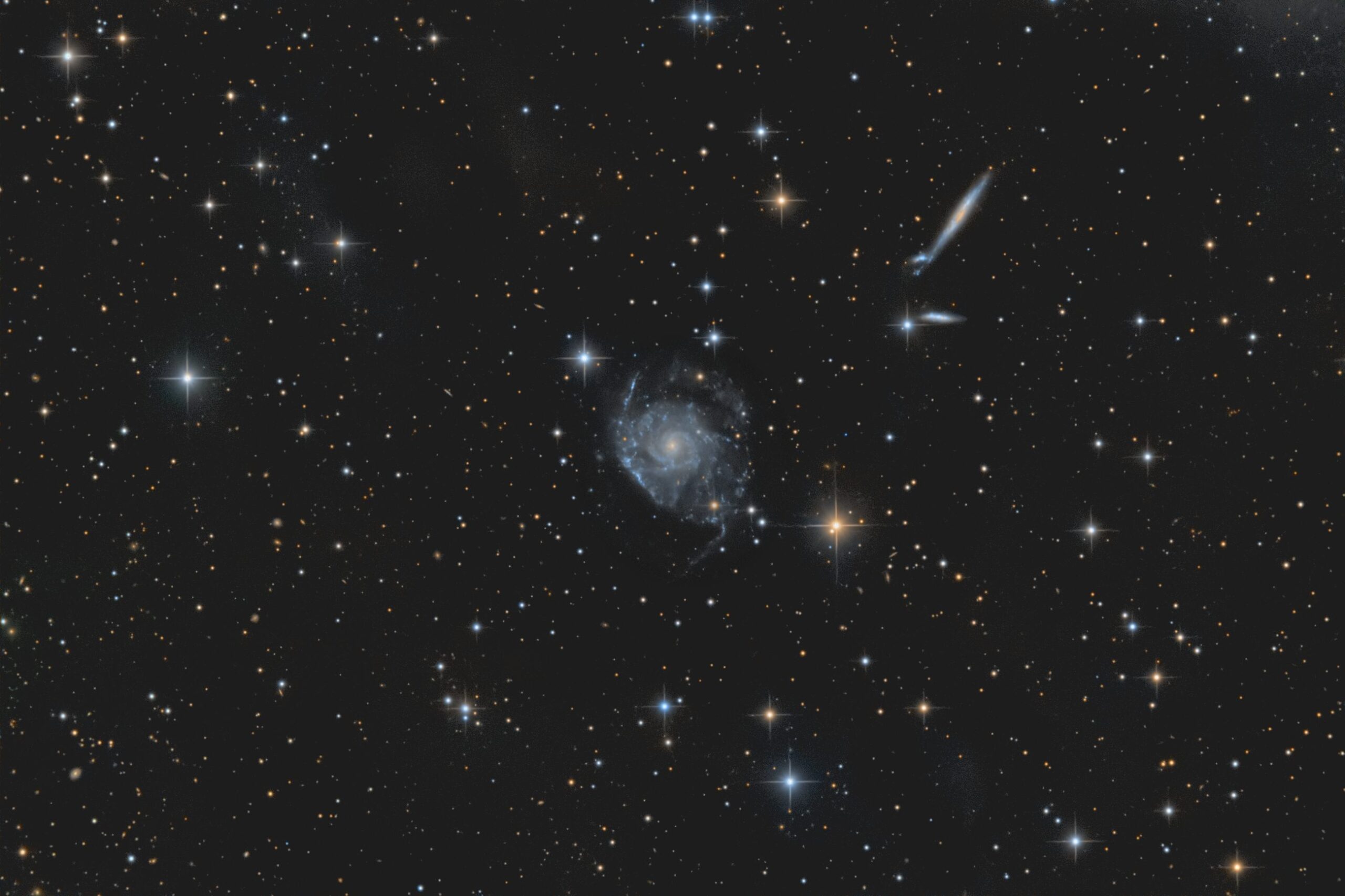
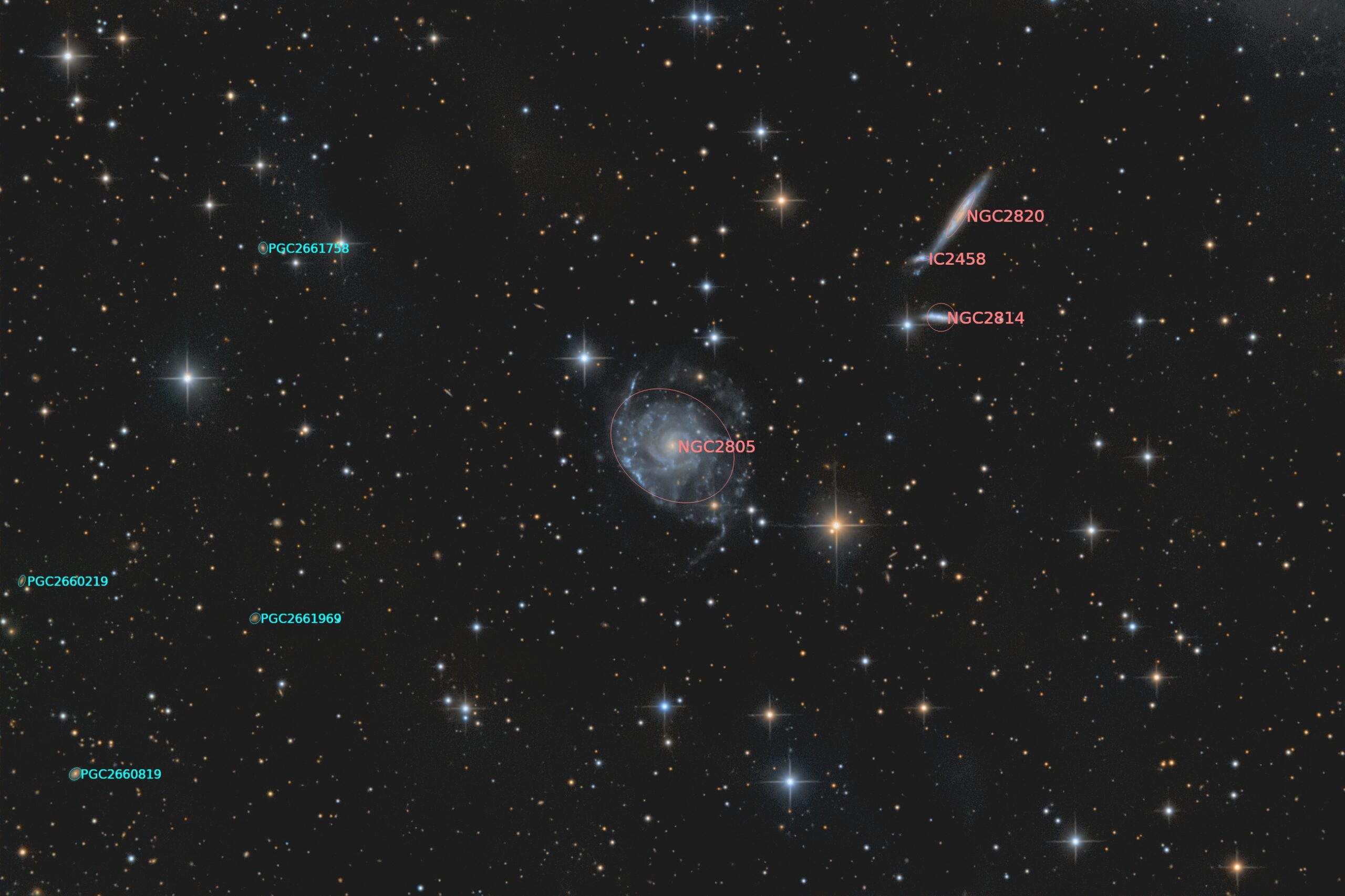
Here is an overview of the used equipment and the exposure times:
- Date: 2020
- Location: Krefeld
- Telescope/Lens: 10″ Newton ohne Namen – TSQ-65ED Apo
- Focal length [mm]: 1000 – 420
- Focal ratio: 3.9 – 6.5
- Mount: Skywatcher EQ8
- Camera: Moravian 8300 FW – Moravian 16200 FW
- Filter: L – RGB
- Exposure time [min]: 822 – 240:330:235
- Resolution: 1.11″/px – 2.95″/px
For the 2012 data the calibration and registration was done with DeepSkyStacker and the final processing was performed with PixInsight.
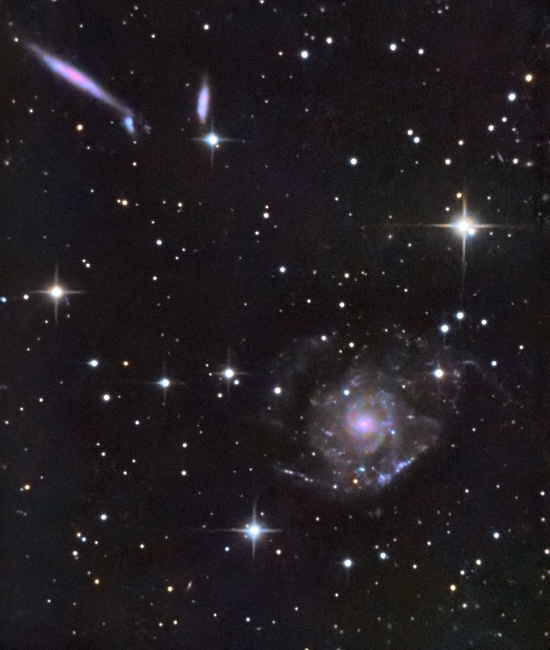
Here is an overview of the used equipment and the exposure times:
- Date: 2012
- Location: Krefeld
- Telescope/Lens: 10″ TS Newton
- Focal length [mm]: 1140
- Focal ratio: 4.5
- Mount: Skywatcher NEQ6
- Camera: Canon 500 Da – Meade DSI 2 Pro
- Filter: OSC – L
- Exposure time [min]: 392 – 292
- Resolution: 0.43″/px -1.74″/px



Leave a reply