

IC 1396 from France, my own backyard and remote
I imaged the remarkable emission nebula IC 1396 four times over the years, documenting both my development as an astrophotographer and the rapid advances in imaging technology. My first image was captured in 2009 using a modified DSLR and an inexpensive telephoto lens from my backyard observatory. Although the equipment was relatively modest, the image successfully recorded the vast hydrogen cloud and hinted at the complex structures hidden within this enormous star-forming region.
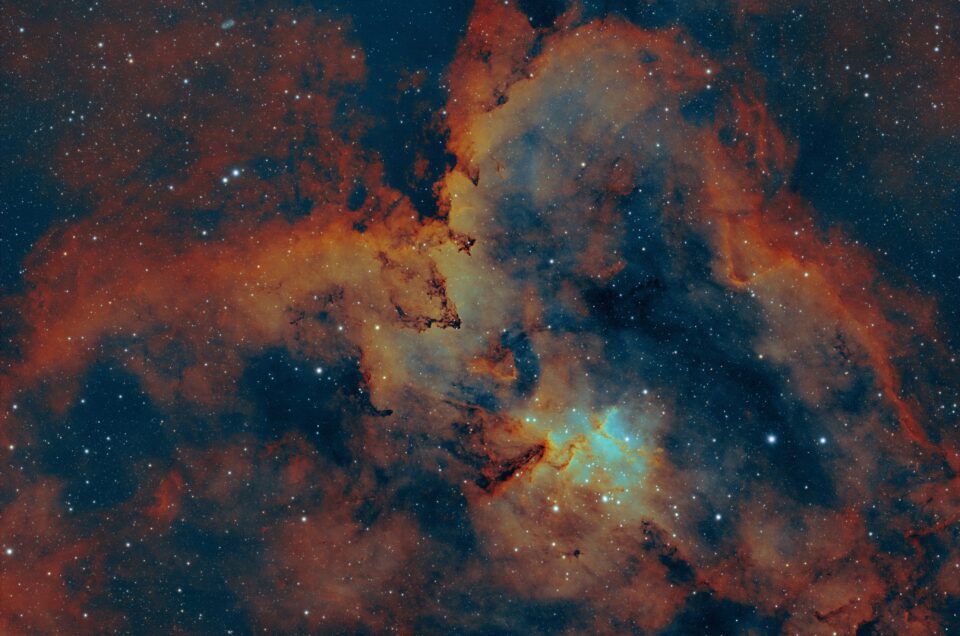
In 2019, during a stay in Banon, I revisited IC 1396 with my portable DSLR setup, again using a telephoto lens. The significantly darker skies of Haute-Provence allowed much fainter nebulosity to be captured and revealed the region in considerably greater detail. My most detailed image followed in 2021, when I received a professional SHO dataset from Telescope Live, acquired with a telescope in Spain. The combination of sulfur, hydrogen, and oxygen narrowband data produced an exceptionally rich image of this fascinating stellar nursery.
My latest image was taken in 2026 with my Seestar S30 Pro from my backyard in Varel.
IC 1396 is located in the constellation Cepheus at a distance of approximately 2,400 light-years. Covering nearly three degrees on the sky, it is one of the largest emission nebulae visible from the northern hemisphere and spans more than 100 light-years in diameter. The nebula consists of an enormous cloud of ionized hydrogen surrounding a young stellar association whose massive stars illuminate the surrounding gas with intense ultraviolet radiation.
At the heart of the nebula lies the young open cluster Trumpler 37, whose hot O- and B-type stars are responsible for ionizing the vast cloud. These massive stars are only a few million years old and continue to shape their environment through powerful stellar winds and intense radiation. Their influence has carved cavities into the surrounding molecular cloud while simultaneously compressing nearby gas, triggering the formation of a new generation of stars.
Perhaps the most famous feature within IC 1396 is the IC 1396A, commonly known as the Elephant’s Trunk Nebula. This spectacular dark globule extends several light-years into the surrounding emission nebula and consists of dense gas and dust that remain largely opaque at visible wavelengths. Inside this cloud, infrared observations have revealed numerous protostars that are still in the process of forming, making the Elephant’s Trunk one of the best-known examples of active star formation in our Galaxy.
The SHO dataset beautifully separates the different emission components of the nebula. Hydrogen (Hα) traces the widespread ionized gas, sulfur ([S II]) emphasizes cooler regions and shock fronts, while oxygen ([O III]) highlights areas exposed to the most energetic ultraviolet radiation. Together, these narrowband filters reveal an intricate network of bright ionization fronts, delicate filaments, and dark dust pillars that remain largely invisible in broadband images.
Deep images also reveal countless faint background stars shining through gaps in the nebula, together with numerous compact Bok globules—small, dense clouds of gas and dust that may eventually collapse to form new stars. These structures illustrate the ongoing cycle of stellar birth within one of the Milky Way’s largest star-forming complexes.
The images acquired in 2009, 2019, and 2021 beautifully document more than a decade of astrophotographic progress. From a simple DSLR image taken with an inexpensive telephoto lens to a portable wide-field photograph under the dark skies of southern France and finally a professional narrowband dataset from a remote observatory, each version reveals increasingly subtle details within this magnificent nebula. Together they illustrate not only the evolution of my imaging techniques but also the extraordinary beauty and scientific importance of one of the northern sky’s most spectacular stellar nurseries.
For the Seestar data the calibration, registration and final processing were performed with PixInsight. The result was as follows:
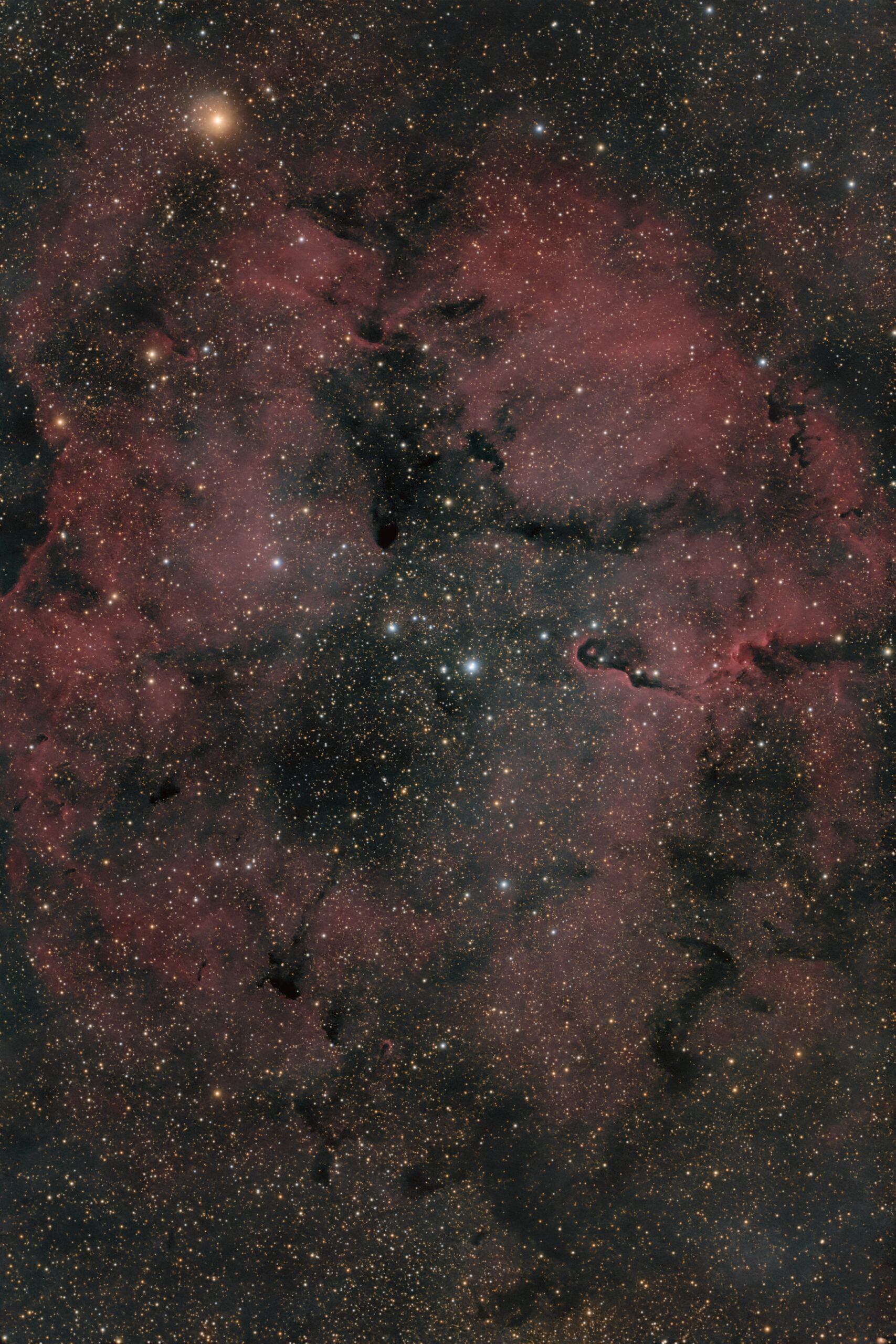
The images were taken with the following equipment:
- Date: 2026
- Location: Varel
- Telescope: Seestar S30 Pro
- Focal length [mm]: 160
- Focal ratio: 5.3
- Mount: EQ Mode
- Camera: Seestar Tele
- Filter: LP
- Exposure time [min]: 410
- Resolution: 3.67″/px
For the Telescope Live data the calibration, registration and final processing were performed with PixInsight. The result was as follows:
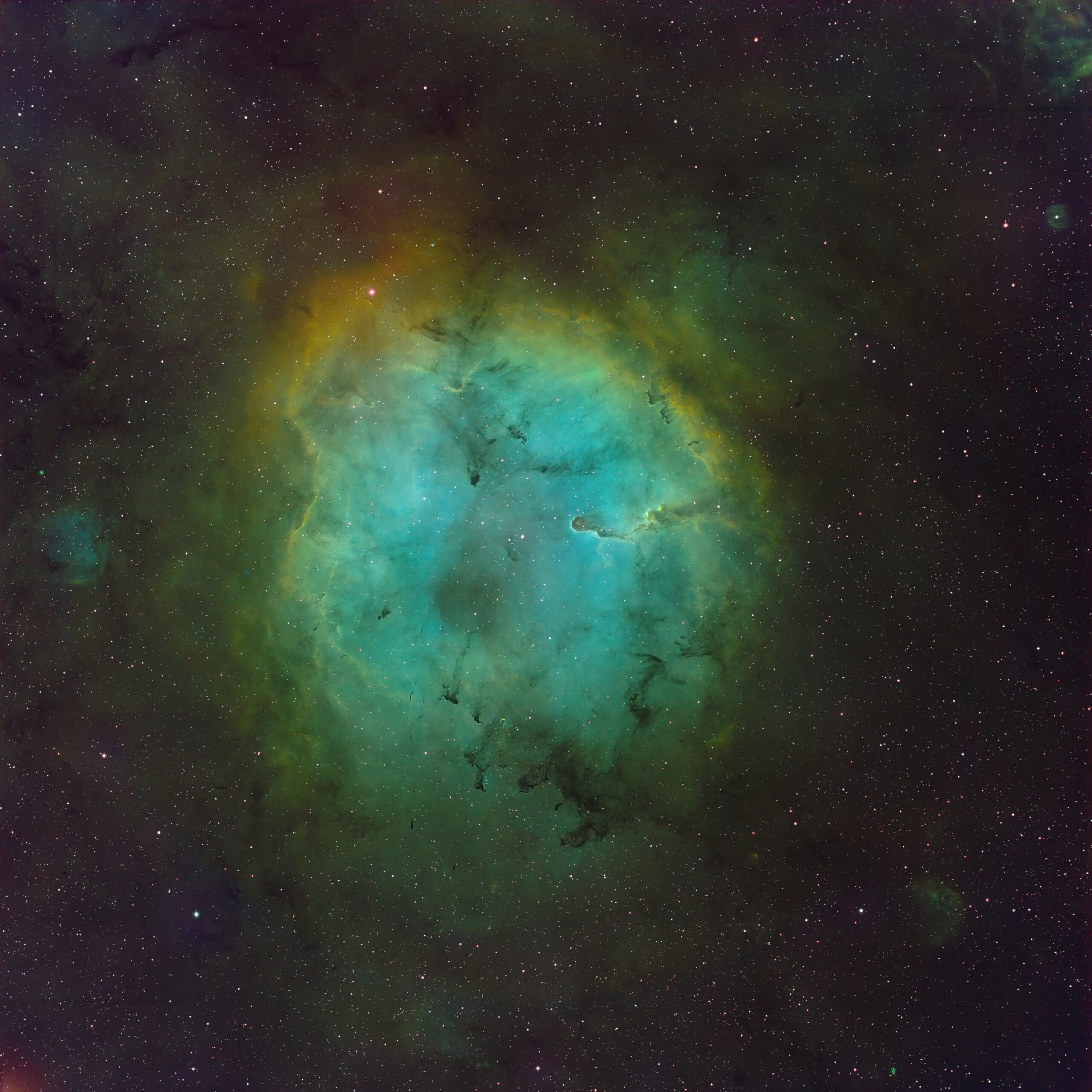
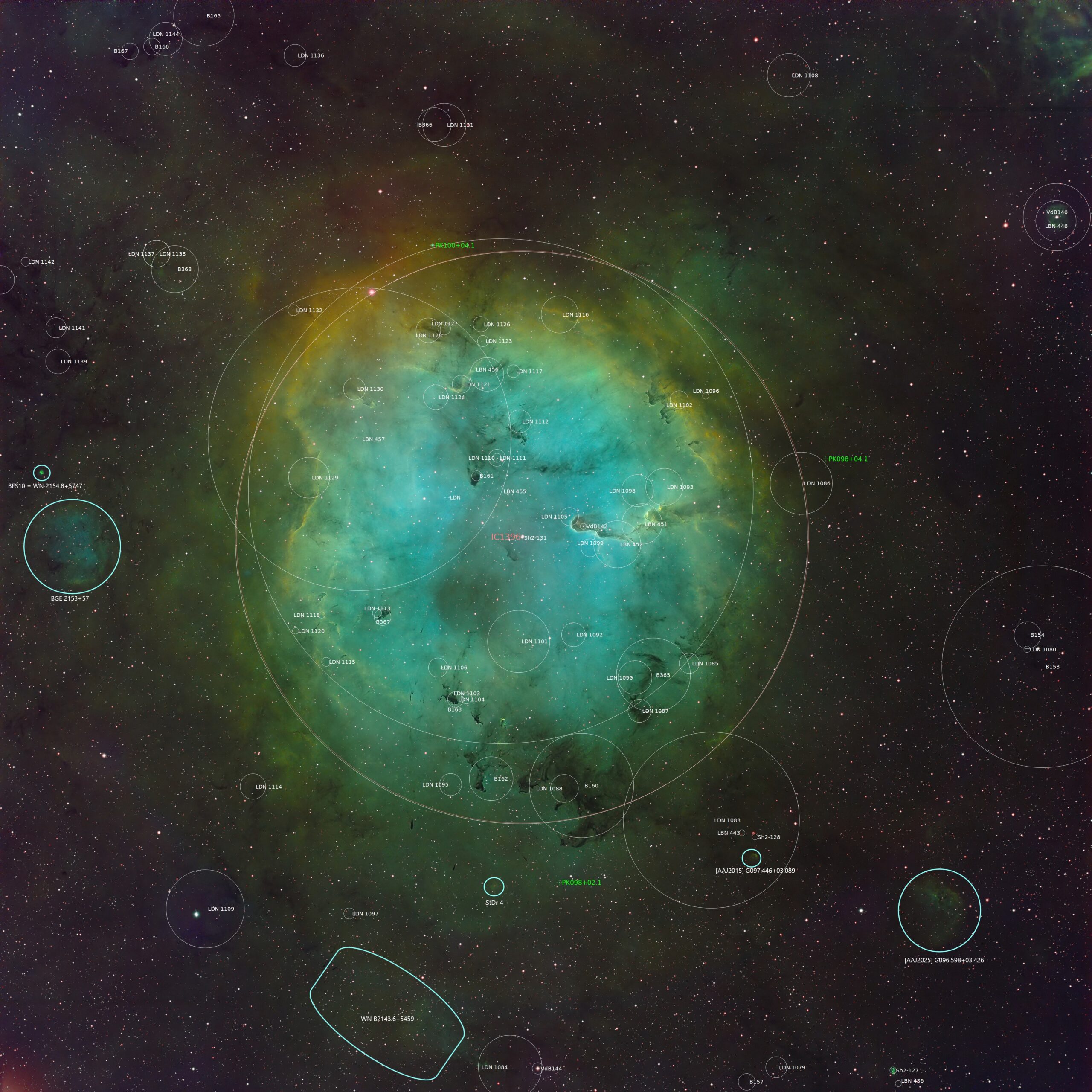
The images were taken with the following equipment:
- Date: 2021
- Location: IC Observatory Spain
- Telescope: FSQ 106
- Focal length [mm]: 390
- Focal ratio: 3.6
- Mount: Paramount MX+
- Camera: FLI Proline 16803
- Filter: Hα:[OIII]:[SII]
- Exposure time [min]: 470:450:460
- Resolution: 4.75″/px
For the 2019 data the calibration, registration and the final processing was done with PixInsight. The result was as follows:
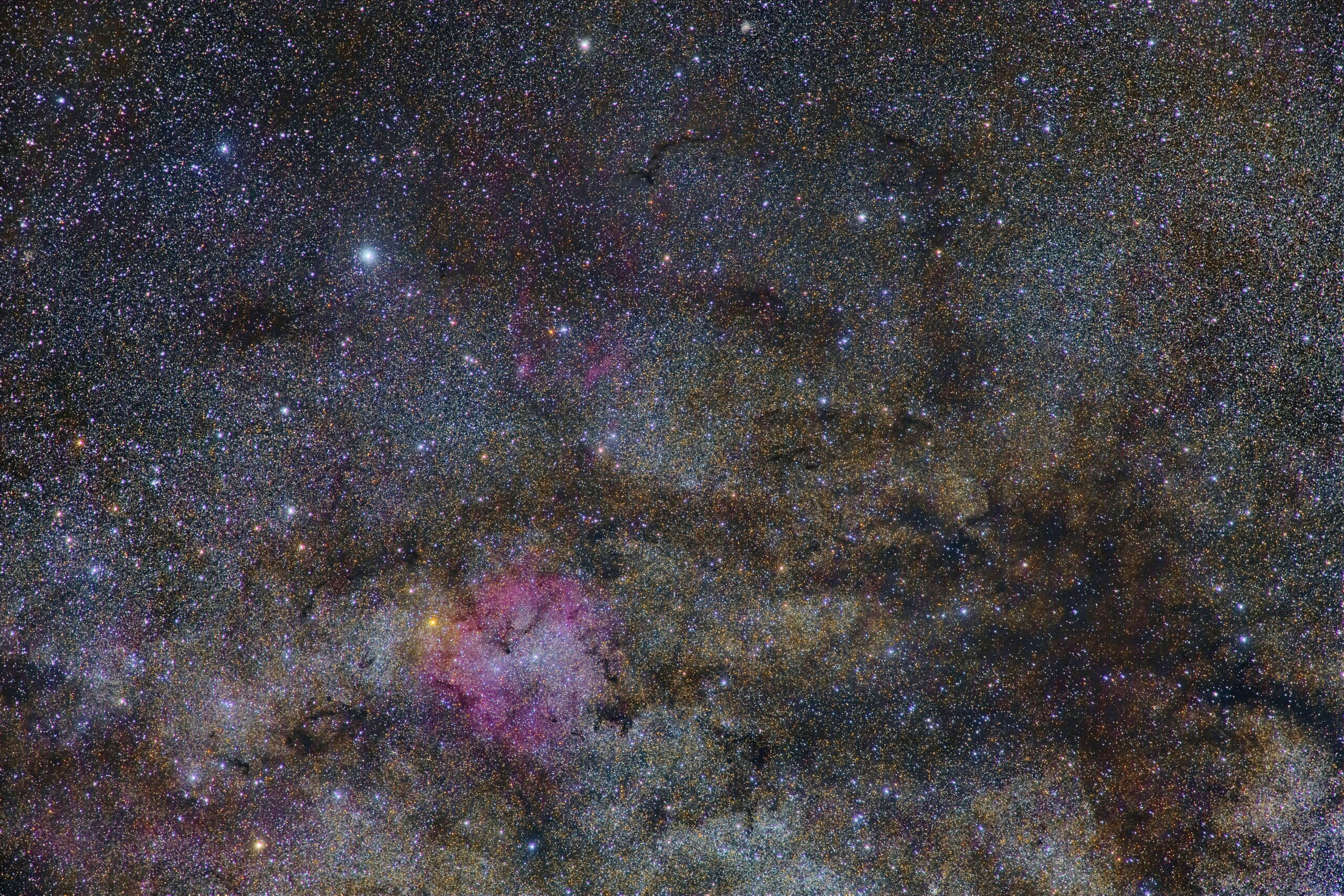
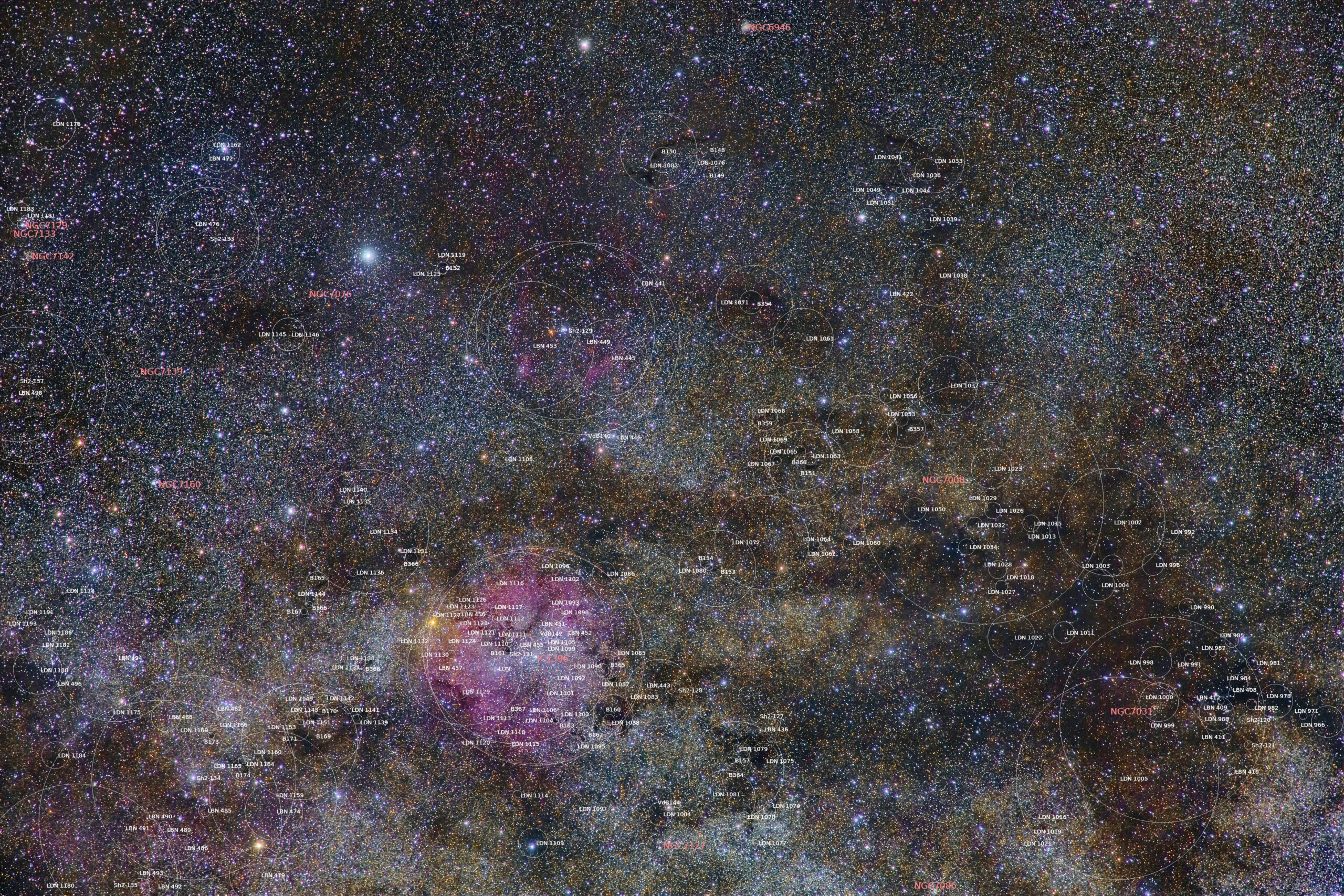
The images were taken with the following equipment:
- Date: 2019
- Location: Banon, France
- Telescope: Canon 24-105mm lens
- Focal length [mm]: 102,5
- Focal ratio: 4
- Mount: Vixen Skywatcher Star Adventurer
- Camera: Canon 6D
- Filter: OSC
- Exposure time [min]: 200
- Resolution: 13.2″/px
In 2009 I took some images of this object from my backyard.
For the 2009 data the calibration and registration was done with DeepSkyStacker, the final processing was done with PixInsight. The result was as follows:
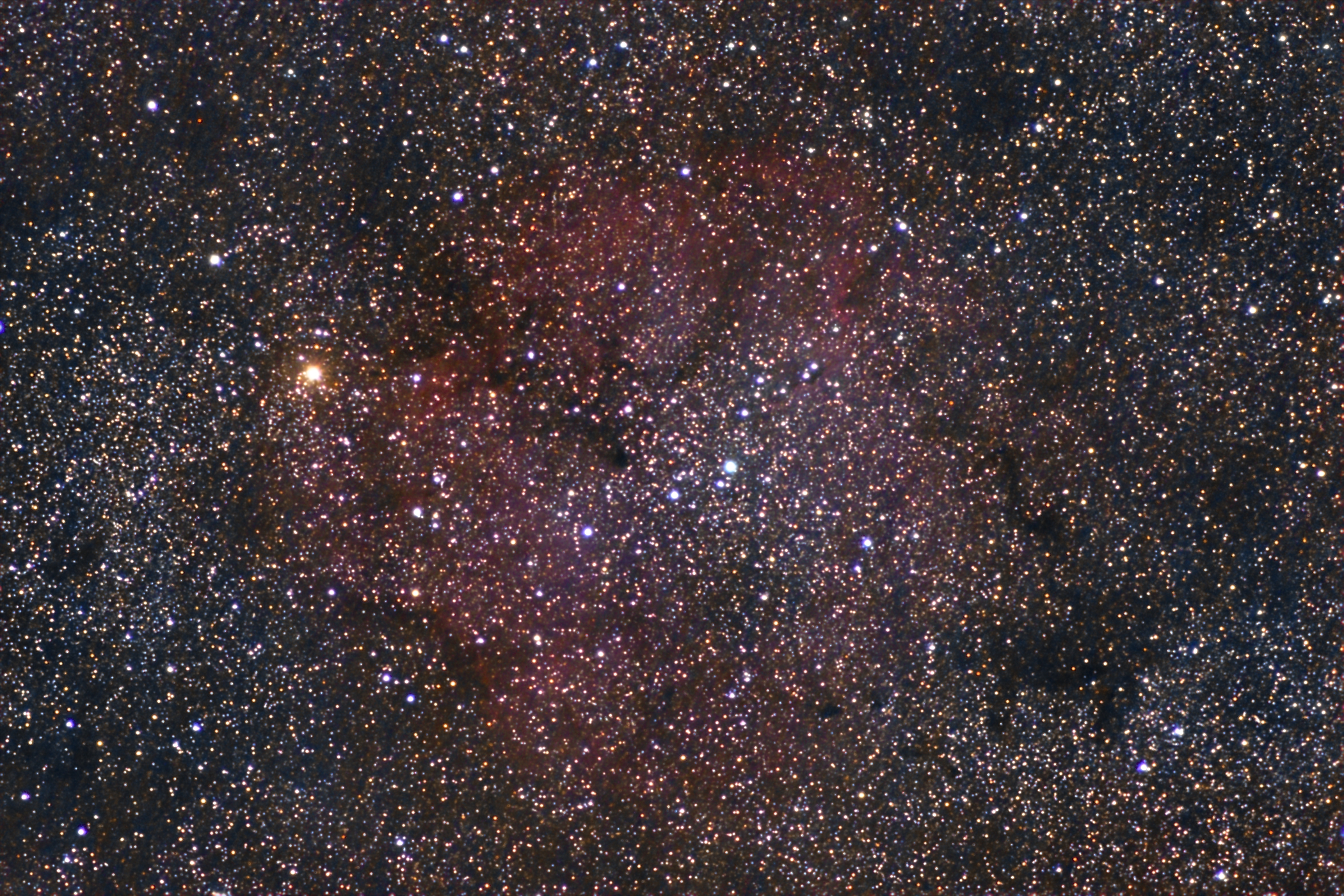
The images were taken with the following equipment:
- Date: 2009
- Location: Krefeld, Germany
- Telescope: Pentacon 200mm lens
- Focal length [mm]: 200
- Focal ratio: 4
- Mount: Skywatcher NEQ6
- Camera: Canon 300Da
- Filter: OSC
- Exposure time [min]: 180
- Resolution: 11.5″/px



Leave a reply