

Scutum Star Cloud
I imaged the magnificent Scutum Star Cloud twice over the years, both times using a DSLR camera with a telephoto lens to capture its immense richness and beauty. My first image was taken in 2008 during a stay at the Tivoli Astrofarm in Namibia, where the exceptionally dark southern skies revealed the dense star fields of the inner Milky Way in extraordinary detail. In 2014, I revisited the region during a stay at Banon, once again using my mobile DSLR setup. Although photographed from the Northern Hemisphere, the excellent observing conditions in southern France allowed me to record the spectacular star cloud and its surrounding nebulae with improved image quality and greater experience in wide-field astrophotography.
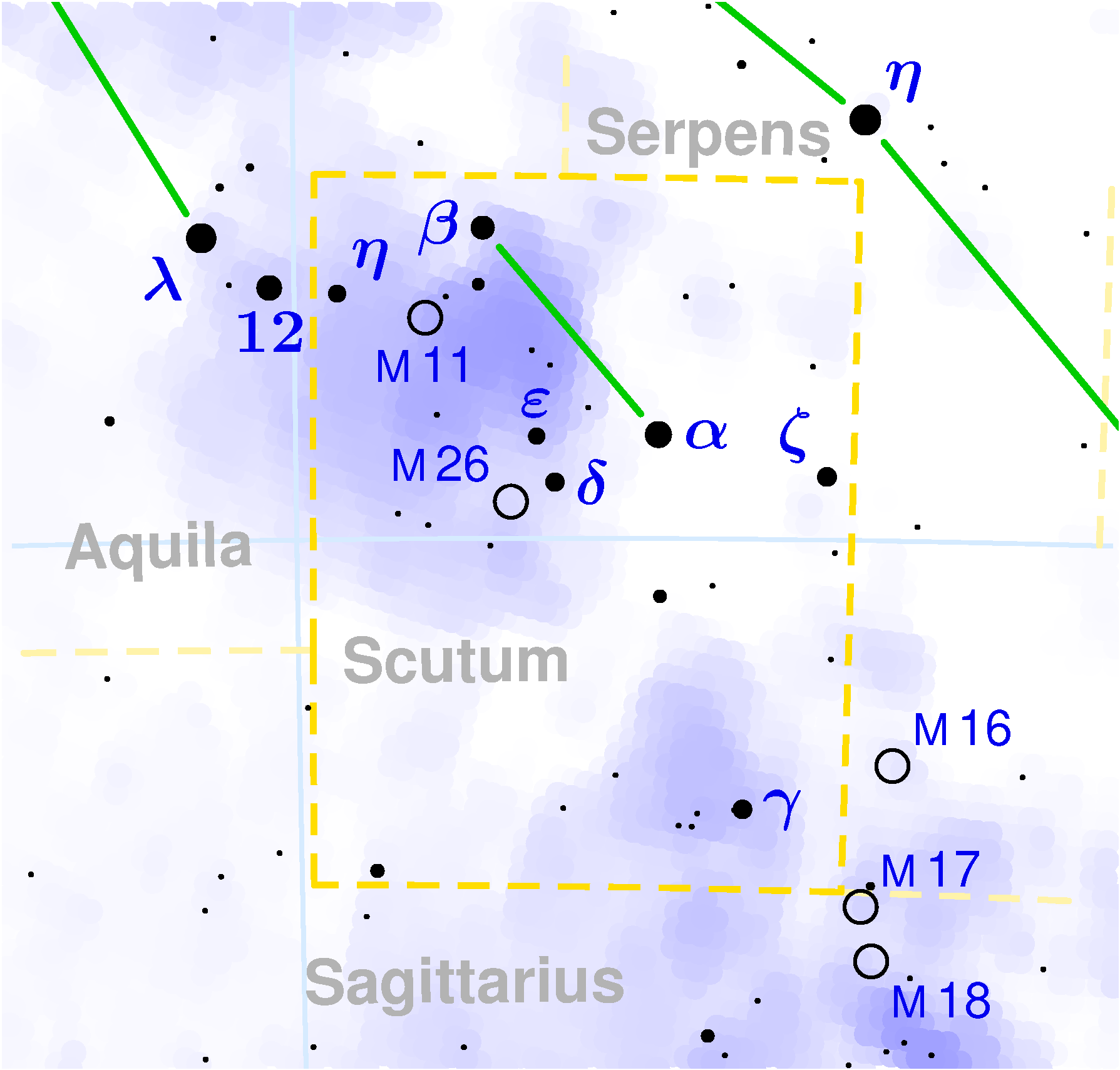
The Scutum Star Cloud is one of the brightest and richest sections of the Milky Way, located in the constellation Scutum. Unlike a star cluster or nebula, it is an extensive concentration of millions of stars belonging to the Scutum–Centaurus Arm of our Galaxy. The region is particularly impressive because our line of sight follows one of the Milky Way’s spiral arms, allowing us to observe an exceptionally dense stellar population extending many thousands of light-years into space.
The Scutum Star Cloud surrounds one of the Milky Way’s most spectacular deep-sky objects, the Messier 11, one of the richest and most compact open clusters known. The surrounding field is also populated with numerous smaller open clusters, dark dust clouds, and faint emission nebulae, creating an extraordinarily rich panorama of the Galactic plane.
Because the region lies close to the Galactic equator, countless foreground and background stars overlap in the field of view. Dark molecular clouds weave intricate patterns through the dense stellar background, partially obscuring more distant stars and emphasizing the three-dimensional structure of the Milky Way. Wide-field photographs beautifully capture this interplay between brilliant star clouds and absorbing dust.
The Scutum Star Cloud is therefore one of the finest regions for wide-field astrophotography. A telephoto lens provides the ideal field of view to record both the dense stellar concentrations and the surrounding dark nebulae, producing an image that conveys the immense richness of the inner Milky Way.
For the 2014 data the raw conversion, calibration and registration was done with Fitswork, while the final processing was done with PixInsight. The result was as follows:
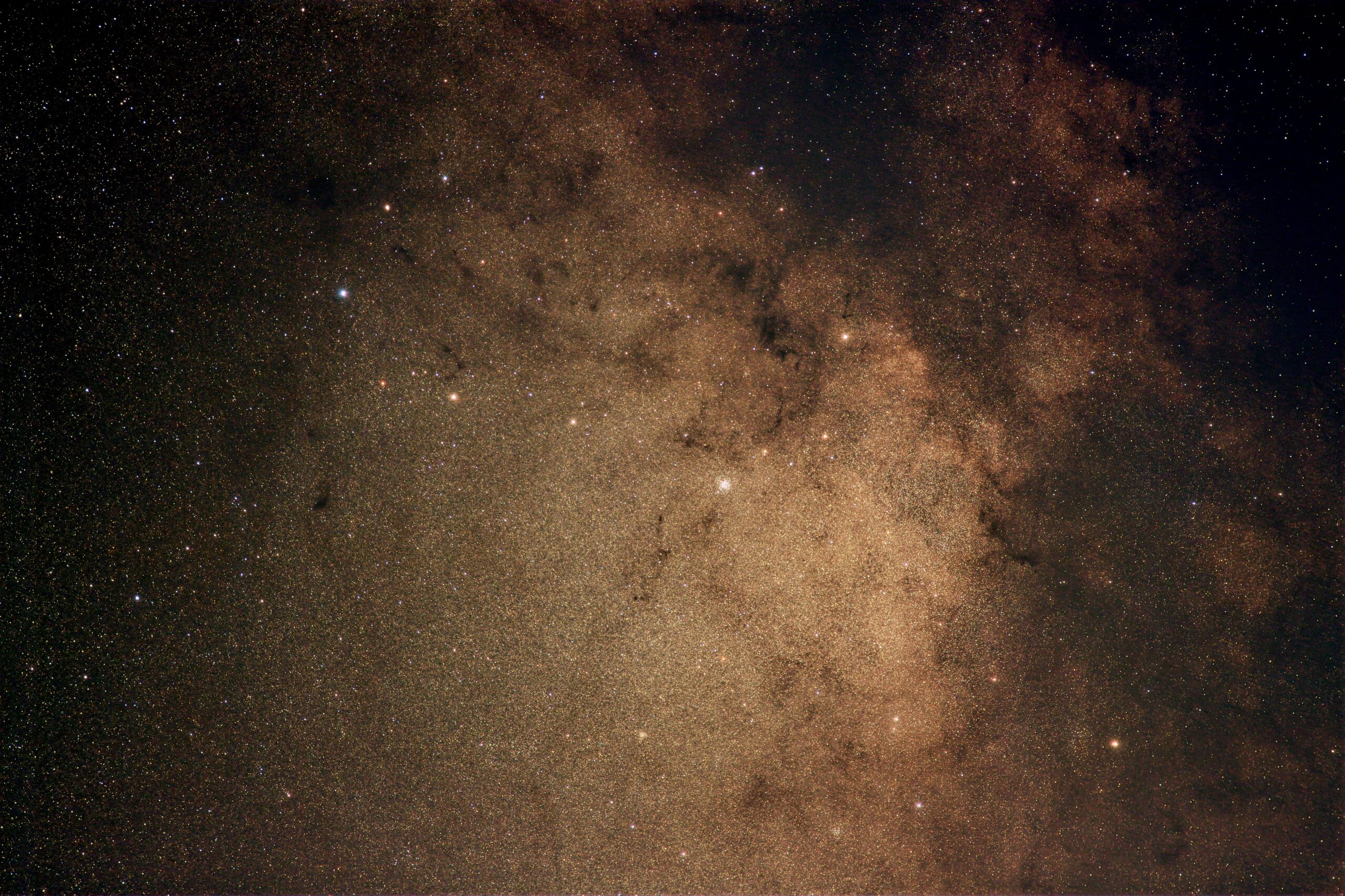
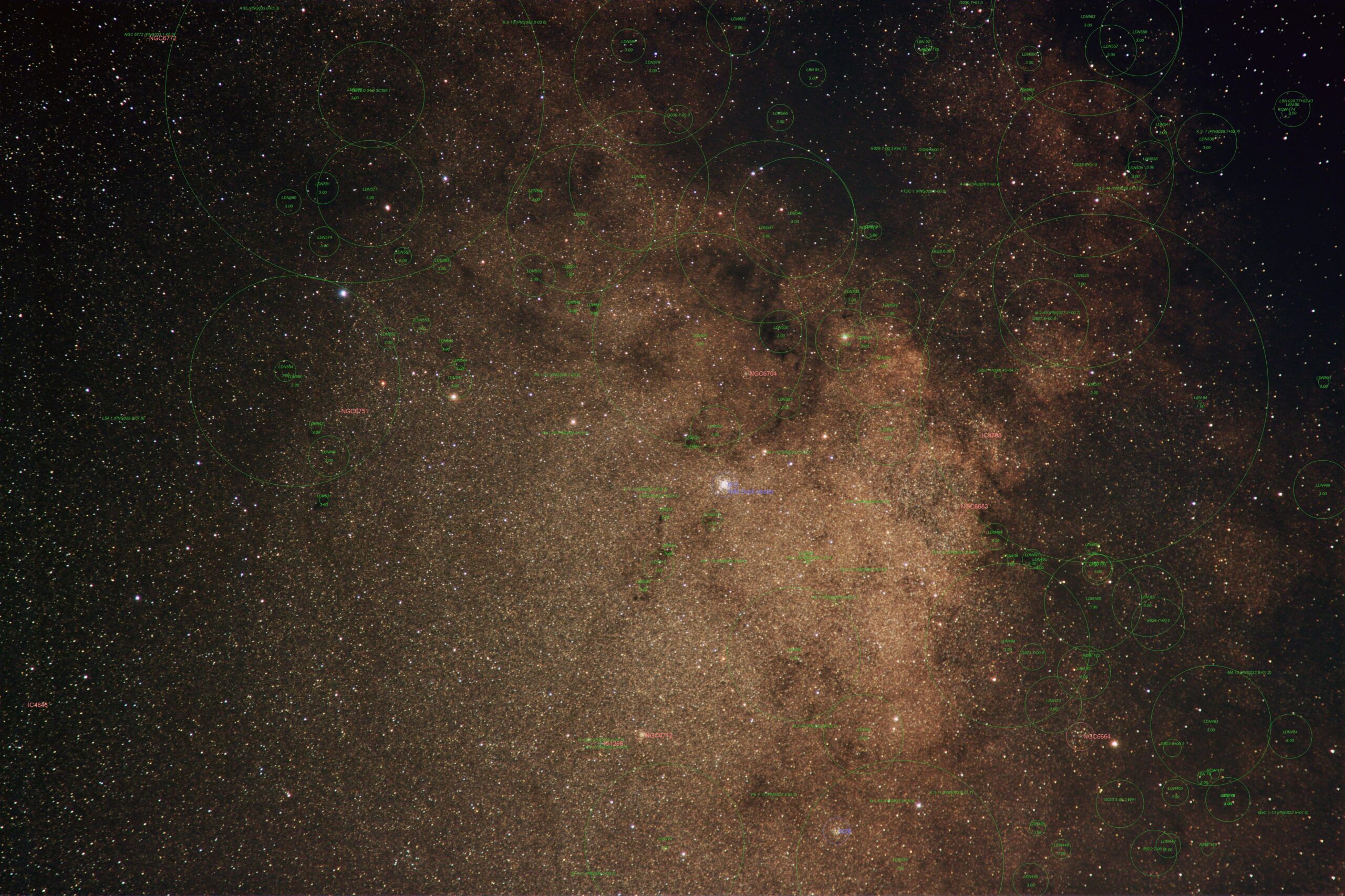
The images were taken with the following equipment:
- Date 2014
- Location: Banon, France
- Telescope: Canon 24-105mm lens
- Focal length [mm]: 105
- Focal ratio: 4
- Mount: Skywatcher Star Adventurer
- Camera: Canon 500 Da
- Filter: OSC
- Exposure time [min]: 90
- Resolution: 9.56″/px
For the 2008 data the calibration and registration was done with DeepSkyStacker and the final processing was done with PixInsight. The result was as follows:
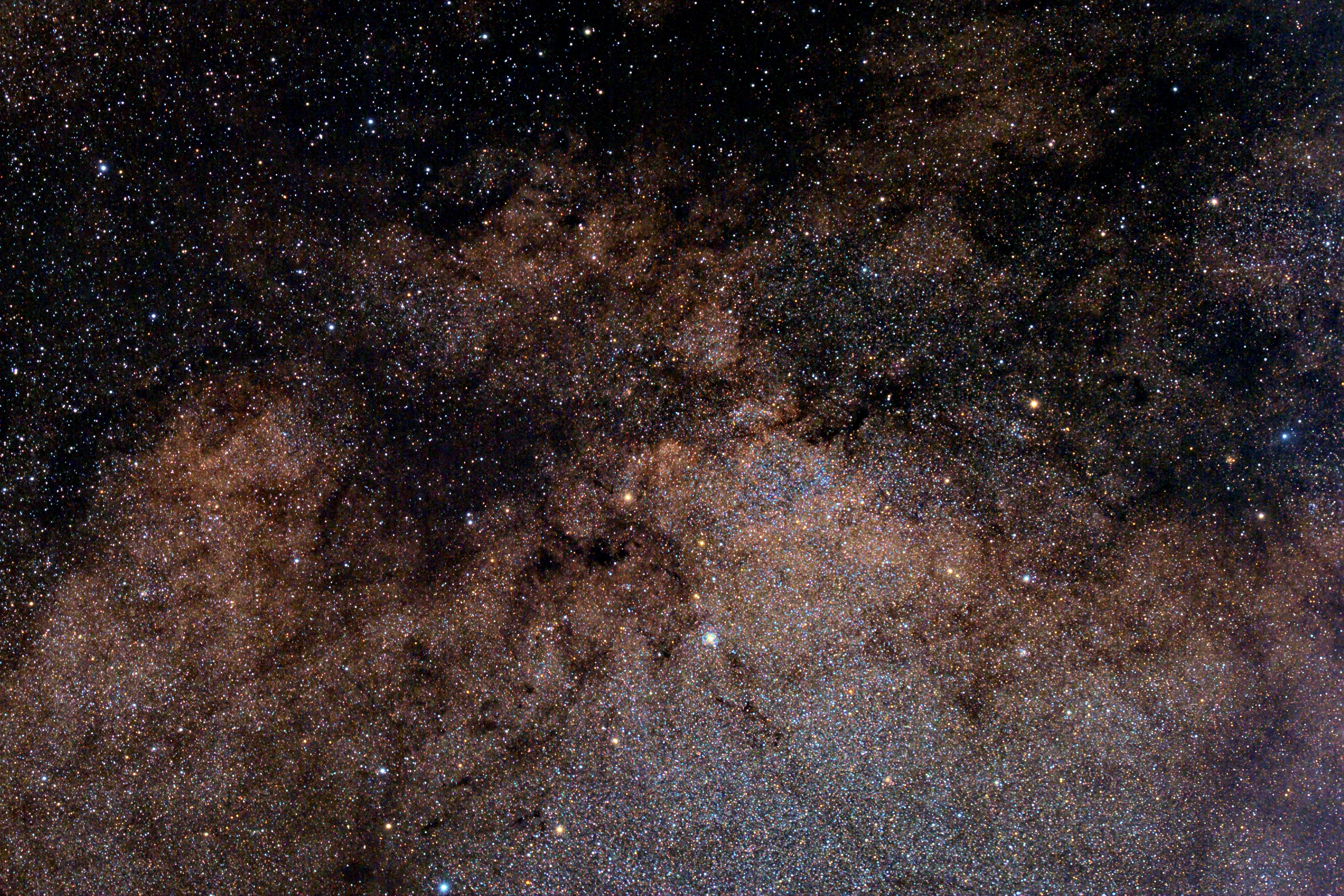
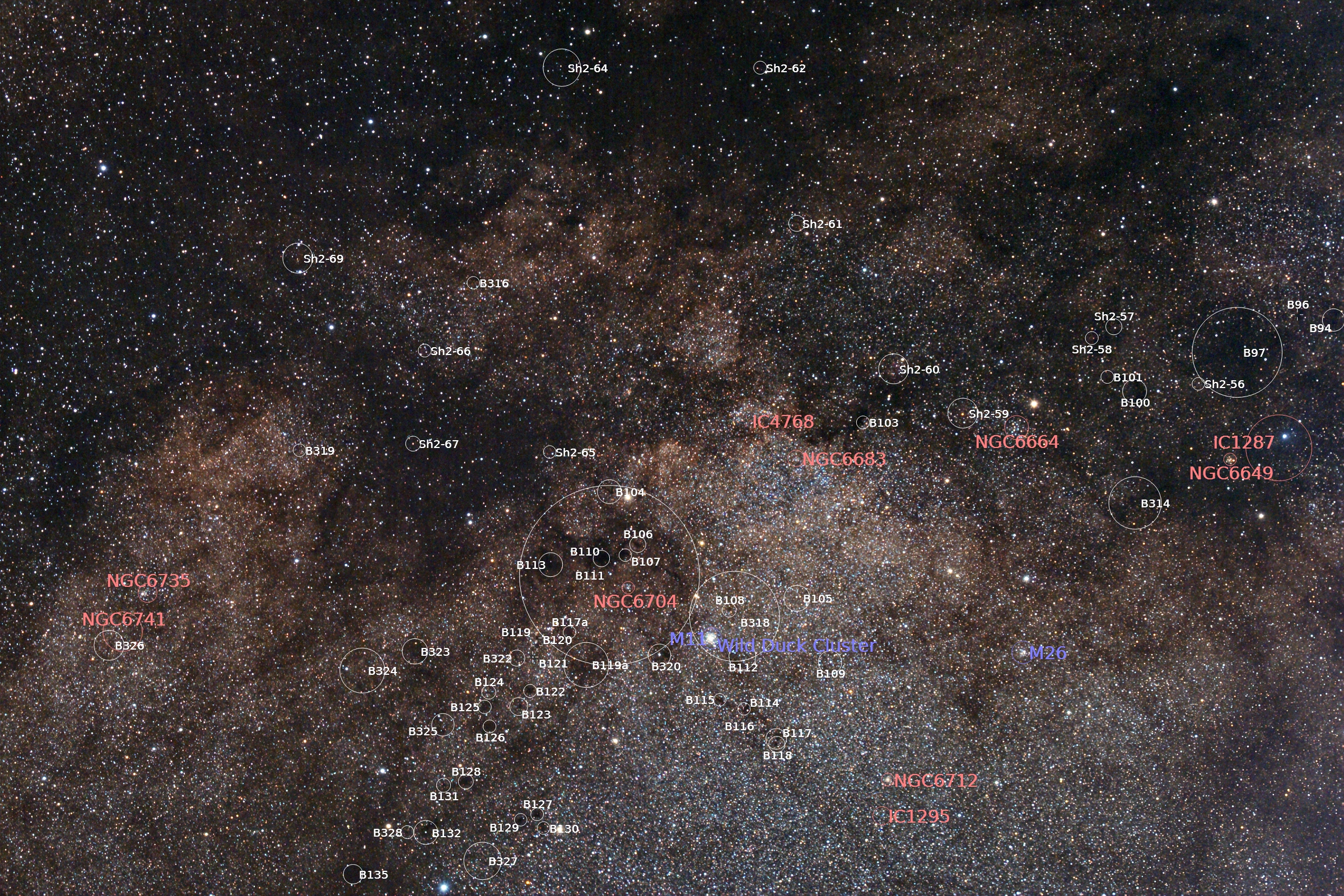
The images were taken with the following equipment:
- Date 2008
- Location: Tivoli, Namibia
- Telescope: Tamron 28-300 mmm lens
- Focal length [mm]: 70
- Focal ratio: 7.1
- Mount: Vixen Atlux
- Camera: Canon 300 Da
- Filter: OSC
- Exposure time [min]: 88
- Resolution: 22.4″/px



Leave a reply