• Home
  • Blog
  • Astrophotography
    • Deep Sky
      • Galaxies (Galaxien)
      • Nebulae (Nebel)
      • Planetary Nebulae (Planetarische Nebel)
      • Globular Clusters (Kugelsternhaufen)
      • Open Clusters (Offene Sternhaufen)
      • Miscellaneous (Verschiedenes)
    • Solar System (Sonnensystem)
      • Comets (Kometen)
      • Moon (Mond)
      • Planets (Planeten)
      • Sun (Sonne)
  • Archiv

    • Juli 2026
    • Juni 2026
    • Mai 2026
    • April 2026
    • Dezember 2025
    • November 2025
    • Oktober 2025
    • September 2025
    • August 2025
    • Juli 2025
    • Juni 2025
    • Mai 2025
    • April 2025
    • März 2025
    • Januar 2025
    • Dezember 2024
    • November 2024
    • Oktober 2024
    • September 2024
    • Juli 2024
    • Juni 2024
    • Mai 2024
    • April 2024
    • März 2024
    • Februar 2024
    • Januar 2024
    • November 2023
    • Oktober 2023
    • September 2023
    • August 2023
    • Juli 2023
    • Juni 2023
    • Mai 2023
    • April 2023
    • März 2023
    • Februar 2023
    • Januar 2023
    • Dezember 2022
    • November 2022
    • Oktober 2022
    • September 2022
    • August 2022
    • Juni 2022
    • Mai 2022
    • April 2022
    • März 2022
    • Februar 2022
    • Januar 2022
    • Dezember 2021
    • November 2021
    • September 2021
    • August 2021
    • Juli 2021
    • März 2021
    • Februar 2021
    • November 2020
    • September 2020
    • August 2020
    • April 2020
    • März 2020
    • Februar 2020
    • Januar 2020
    • Dezember 2019
    • November 2019
    • Oktober 2019
    • September 2019
    • August 2019
    • Mai 2019
    • April 2019
    • März 2019
    • Dezember 2018
    • November 2018
    • September 2018
    • Juni 2018
    • Mai 2018
    • April 2018
    • März 2018
    • Februar 2018
    • Januar 2018
    • Oktober 2017
    • Juli 2017
    • Juni 2017
    • Januar 2017
    • September 2016
    • Mai 2016
    • März 2016
    • November 2015
    • Oktober 2015
    • September 2015
    • Mai 2015
    • März 2015
    • Februar 2015
    • September 2014
    • August 2014
    • März 2014
    • Februar 2014
    • Oktober 2013
    • September 2013
    • August 2013
    • April 2013
    • März 2013
    • November 2012
    • August 2012
    • Juli 2012
    • Mai 2012
    • März 2012
    • Januar 2012
    • November 2011
    • Oktober 2011
    • September 2011
    • August 2011
    • April 2011
    • März 2011
    • Oktober 2010
    • September 2010
    • August 2010
    • Juli 2010
    • April 2010
    • Juli 2009
    • Juli 2008
    • Januar 2008
    • Oktober 2007
    • Juli 2007
    • Februar 2007
    • Juni 2006
    • Oktober 2005
    • September 2005
    • August 2005
    • Januar 2005
  • Kategorien

    • Asterism
    • Astrophotography
    • Barnard
    • Comet
    • Galaxies
    • Globular Cluster
    • IC
    • Messier
    • Moon
    • Nebula
    • NGC
    • Open cluster
    • Photography
    • Planetary Nebula
    • Travel
  • Meta

    • Anmelden
    • Eintrags-Feed
    • Kommentar-Feed
    • WordPress.org
  • Privacy Policy
  • Impressum
  • Haftungsausschluss
  • Cookie-Richtlinie
  • Datenschutzerklärung

wonderfuluniverse.de
  • Home
  • Blog
  • Astrophotography
    • Deep Sky
      • Galaxies (Galaxien)
      • Nebulae (Nebel)
      • Planetary Nebulae (Planetarische Nebel)
      • Globular Clusters (Kugelsternhaufen)
      • Open Clusters (Offene Sternhaufen)
      • Miscellaneous (Verschiedenes)
    • Solar System (Sonnensystem)
      • Comets (Kometen)
      • Moon (Mond)
      • Planets (Planeten)
      • Sun (Sonne)

RCW 38 (GUM 23) from remote


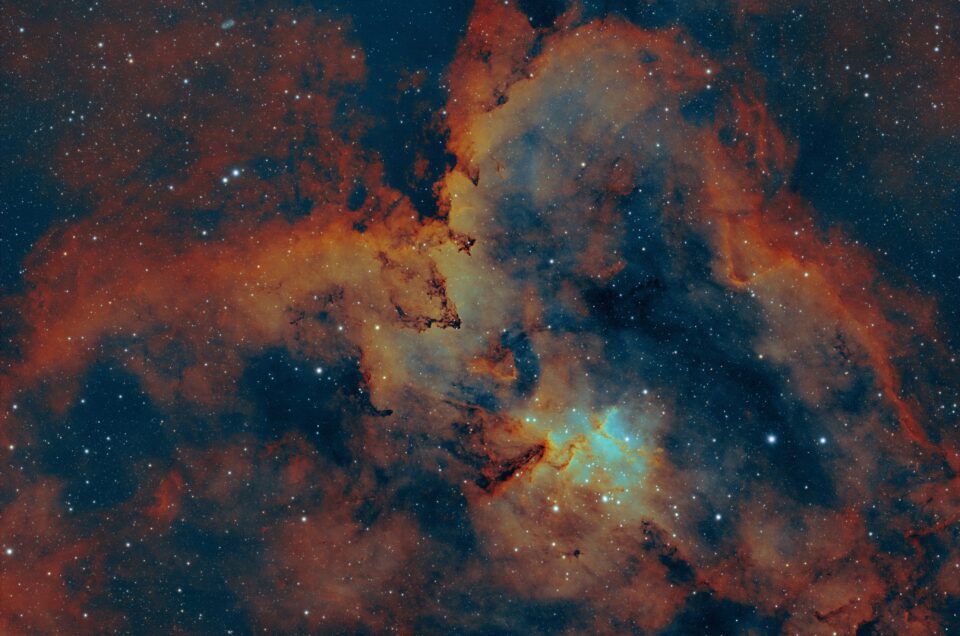
From time to time, I obtain datasets from remote observatories around the world. One of my favorite providers is Telescope Live, which operates telescopes at world-class observing sites in Chile, Australia, and Spain. One of the datasets I received in 2025 was of the spectacular emission nebula RCW 38, acquired with a telescope in Australia. The excellent observing conditions and the high-quality data allowed me to process a detailed image of one of the youngest and most active massive star-forming regions in the Milky Way.

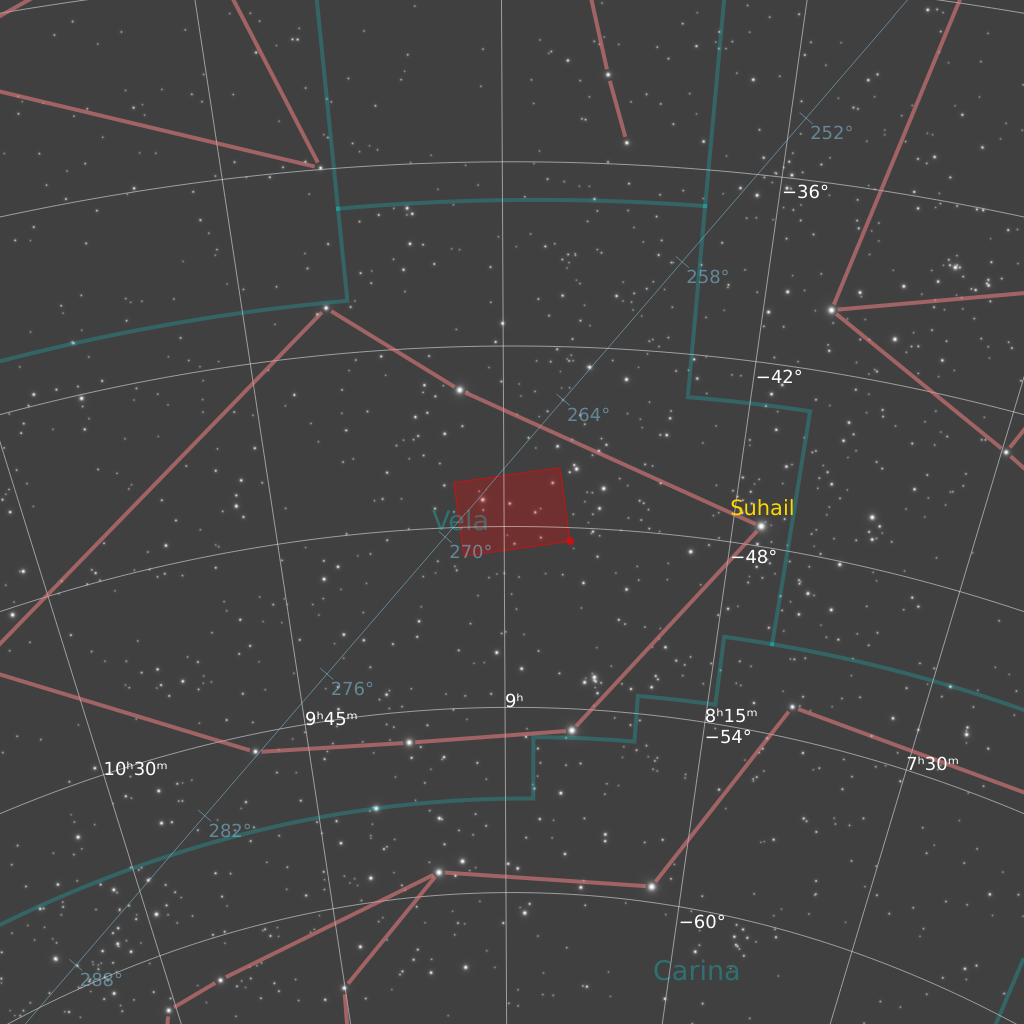
RCW 38 is located in the constellation Vela, at a distance of approximately 5,500 light-years from Earth. It is a compact H II region embedded within a giant molecular cloud and is home to one of the youngest known massive star clusters in our Galaxy. The cluster is estimated to be less than one million years old, meaning its stars have formed only recently on astronomical timescales.

At the heart of the nebula lies a dense cluster of hundreds of young stars, including several extremely massive O-type stars. Their intense ultraviolet radiation ionizes the surrounding hydrogen gas, producing the brilliant emission that characterizes RCW 38. Powerful stellar winds from these massive stars continue to sculpt the surrounding cloud, creating bright ionization fronts, cavities, and intricate filamentary structures visible in deep images.

One of the most fascinating aspects of RCW 38 is that star formation is still actively taking place throughout the region. Infrared observations have revealed numerous protostars, young stellar objects, and dense molecular cores hidden within the dust clouds. Many of these newborn stars remain invisible at optical wavelengths because they are still deeply embedded within their natal cocoons of gas and dust.

The nebula is also rich in dark dust lanes and compact Bok globules, which appear silhouetted against the glowing hydrogen background. These dense condensations represent the raw material from which future generations of stars and planetary systems may eventually form. Together with the bright emission, they create a striking contrast that makes RCW 38 one of the most photogenic star-forming regions in the southern sky.

From a scientific perspective, RCW 38 is an important laboratory for studying the earliest stages of massive star formation. Because of its young age and compact structure, astronomers use the region to investigate how massive stars influence their surroundings through radiation, stellar winds, and feedback processes that can both trigger and suppress further star formation within the parent molecular cloud.

The 2025 Telescope Live dataset from Australia provided an excellent opportunity to process professional-quality data obtained under exceptionally dark southern skies. The resulting image beautifully captures the brilliant central star cluster surrounded by glowing hydrogen clouds, intricate dust structures, and countless foreground stars. It is a striking portrait of one of the Milky Way’s youngest stellar nurseries and another outstanding addition to my collection of remote-observatory images.

The data calibration, registration and final processing were all performed in PixInsight. The result was as follows:
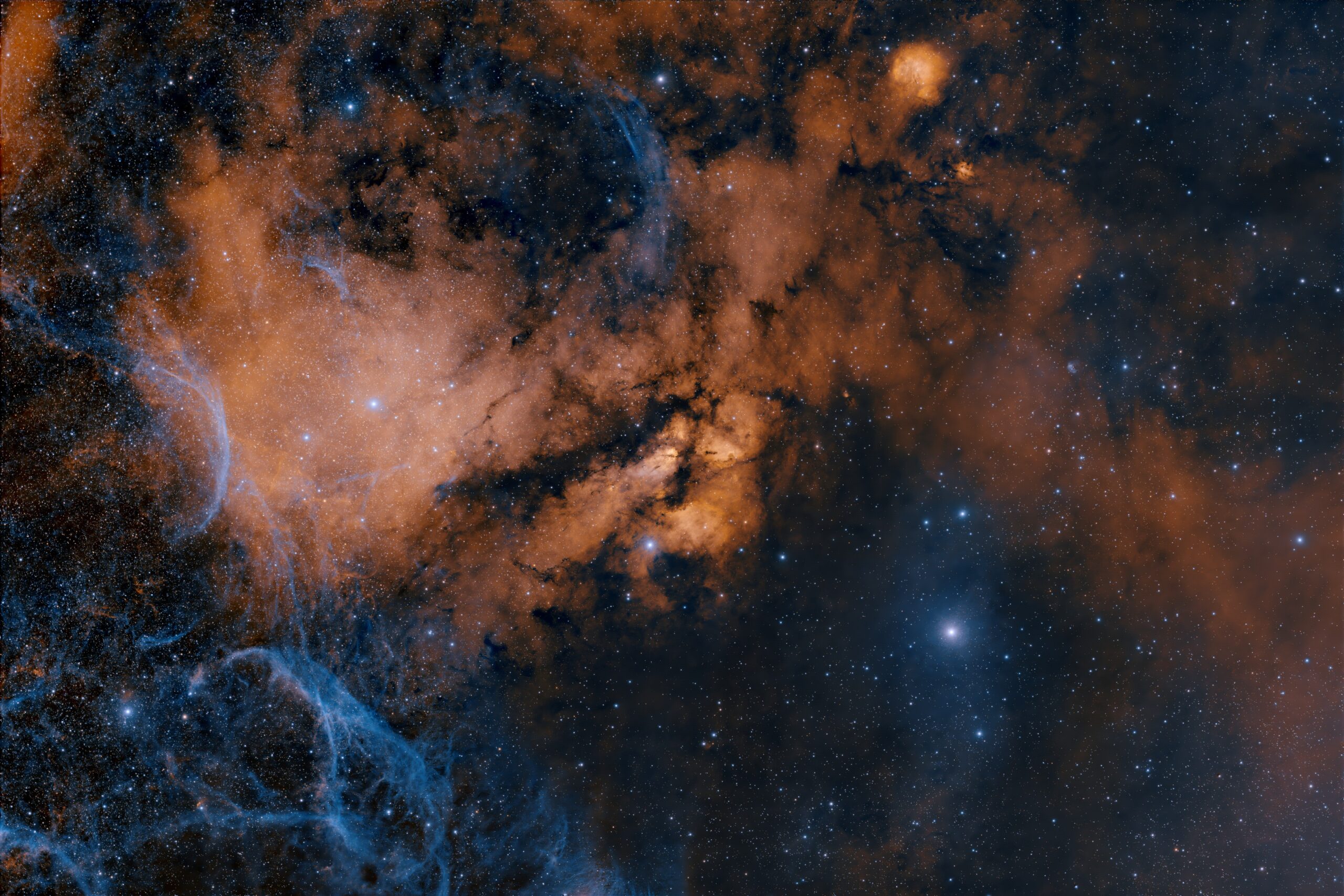
RCW 38, Telescope Live, Australia, 2025
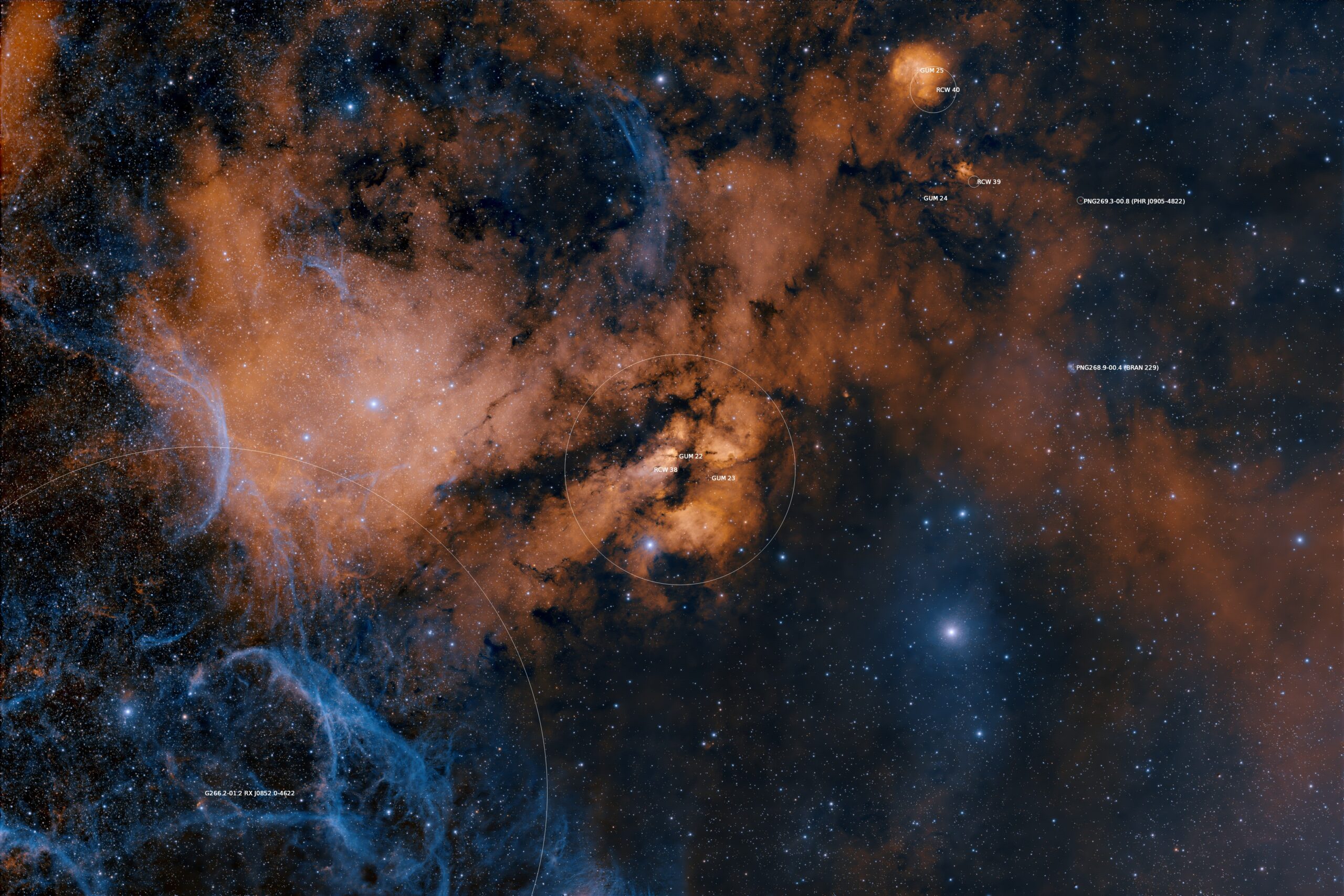
RCW 38 annotated
RCW 38 annotated


The images were taken with the following equipment (Telescope Live AUS-2):

  • Date: 2025
  • Location: Heaven’s Mirror Observatory, Australia
  • Telescope: Takahashi FSQ 106
  • Focal length [mm]: 530
  • Focal ratio: 3.6
  • Mount: Paramount MX+
  • Camera: Moravian QHY 600M Pro
  • Filter: Hα:[OIII][SII]
  • Exposure time [min]: 160:135:140
  • Resolution: 1.46″/px


RCW 38 Finder Chart
RCW 38 Finder Chart

Stephan Küppers


You might also like
IC 1318
15. Juli 2026
NGC 7000 with IC 5070
24. Juni 2026
NGC 7023 (Iris Nebula) and LBN 468
25. Mai 2026

Leave a reply

Schreibe einen Kommentar Antwort abbrechen

Deine E-Mail-Adresse wird nicht veröffentlicht. Erforderliche Felder sind mit * markiert


© Stephan Küppers 2020-2022

Cookie-Zustimmung verwalten
Wir verwenden Cookies, um unsere Website und unseren Service zu optimieren.
Funktional Immer aktiv
Die technische Speicherung oder der Zugang ist unbedingt erforderlich für den rechtmäßigen Zweck, die Nutzung eines bestimmten Dienstes zu ermöglichen, der vom Teilnehmer oder Nutzer ausdrücklich gewünscht wird, oder für den alleinigen Zweck, die Übertragung einer Nachricht über ein elektronisches Kommunikationsnetz durchzuführen.
Vorlieben
Die technische Speicherung oder der Zugriff ist für den rechtmäßigen Zweck der Speicherung von Präferenzen erforderlich, die nicht vom Abonnenten oder Benutzer angefordert wurden.
Statistiken
Die technische Speicherung oder der Zugriff, der ausschließlich zu statistischen Zwecken erfolgt. Die technische Speicherung oder der Zugriff, der ausschließlich zu anonymen statistischen Zwecken verwendet wird. Ohne eine Vorladung, die freiwillige Zustimmung deines Internetdienstanbieters oder zusätzliche Aufzeichnungen von Dritten können die zu diesem Zweck gespeicherten oder abgerufenen Informationen allein in der Regel nicht dazu verwendet werden, dich zu identifizieren.
Marketing
Die technische Speicherung oder der Zugriff ist erforderlich, um Nutzerprofile zu erstellen, um Werbung zu versenden oder um den Nutzer auf einer Website oder über mehrere Websites hinweg zu ähnlichen Marketingzwecken zu verfolgen.
  • Optionen verwalten
  • Dienste verwalten
  • Verwalten von {vendor_count}-Lieferanten
  • Lese mehr über diese Zwecke
Einstellungen anzeigen
  • {title}
  • {title}
  • {title}