

NGC 7793
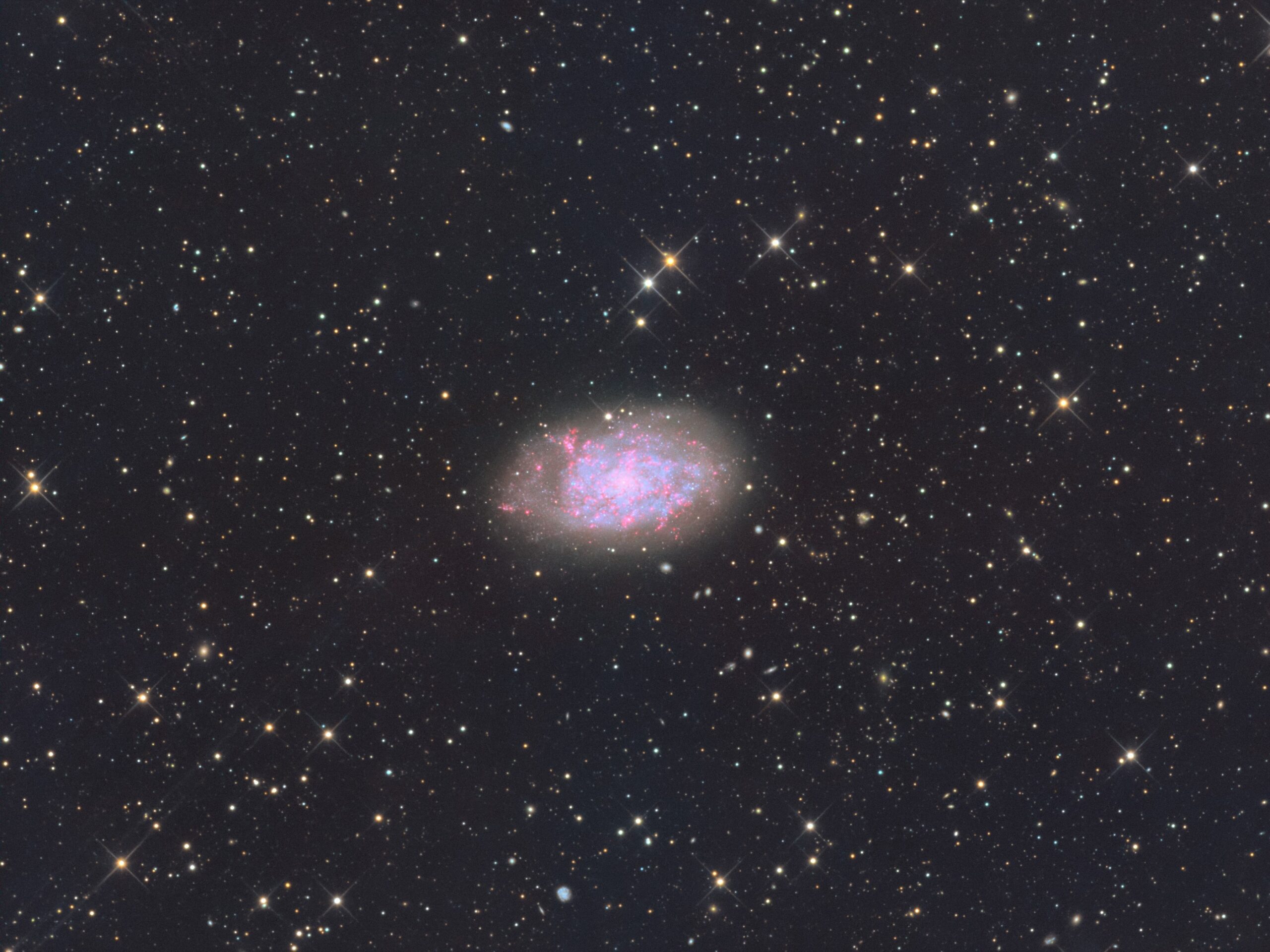
In 2017, during a stay at the Tivoli Astrofarm in Namibia, I imaged the beautiful spiral galaxy NGC 7793 using the equipment of a rented observatory. The image was acquired in LRGBHα, combining high-resolution luminance with broadband color and additional Hα data to enhance the galaxy’s numerous star-forming regions. The exceptionally dark Namibian skies and excellent atmospheric conditions made it possible to record the galaxy’s delicate spiral structure, intricate dust lanes, and faint outer disk in remarkable detail.
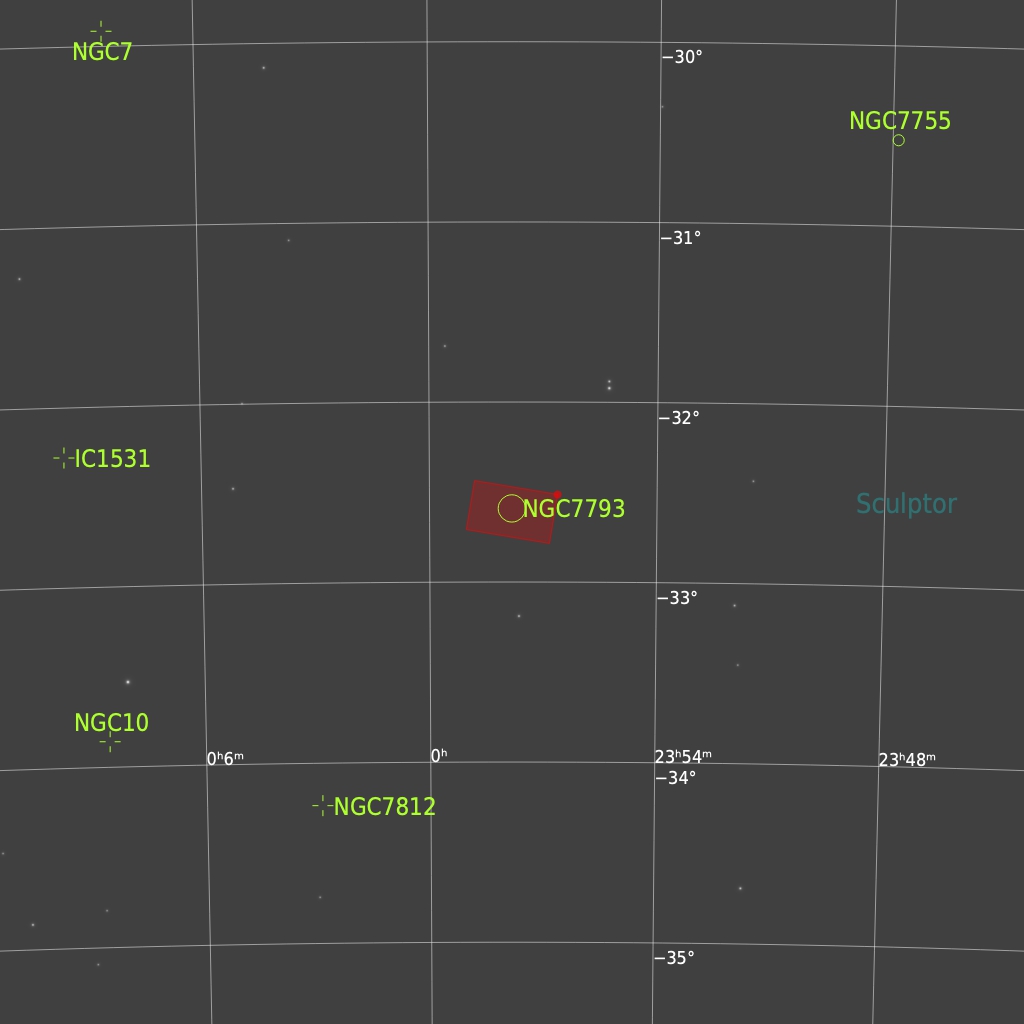
NGC 7793 is located in the constellation Sculptor, approximately 12 million light-years from Earth. It is a member of the Sculptor Group, one of the nearest galaxy groups beyond our Local Group. Classified as a flocculent spiral galaxy, NGC 7793 lacks the prominent, well-defined spiral arms seen in grand-design spirals such as Messier 51. Instead, its disk is composed of numerous fragmented spiral segments and patchy star-forming regions, giving it a delicate and irregular appearance.
One of the most striking characteristics of NGC 7793 is its widespread star formation. Bright H II regions, where massive young stars ionize the surrounding hydrogen gas, are scattered throughout the galaxy’s disk. The additional Hα exposures beautifully emphasize these regions, revealing glowing clouds of ionized hydrogen that trace the galaxy’s active stellar nurseries. Interwoven with these bright emission regions are intricate dark dust lanes, which contain the cold molecular gas from which future generations of stars will eventually form.
NGC 7793 has also attracted scientific interest because it hosts one of the brightest known ultraluminous X-ray sources (ULXs), designated P13. This remarkable object consists of a stellar-mass black hole or neutron star accreting material from a massive companion star, producing X-ray luminosities far exceeding those of ordinary X-ray binaries. Such systems provide valuable insight into extreme accretion processes and the evolution of massive binary stars.
The galaxy has been the site of several observed supernovae, demonstrating that massive stars continue to form, evolve, and end their lives within its spiral arms. These explosions enrich the surrounding interstellar medium with heavy elements, contributing to the ongoing cycle of stellar birth and death that drives the evolution of spiral galaxies.
Deep images also reveal numerous faint background galaxies scattered across the field, emphasizing the enormous depth contained within a single astronomical exposure. The contrast between the nearby member of the Sculptor Group and these distant island universes adds both scientific interest and visual appeal to the image.
The LRGBHα image obtained in 2017 beautifully captures the subtle structure and vibrant star-forming activity of NGC 7793. Combining broadband and narrowband data under the pristine skies of Namibia resulted in a detailed portrait of one of the finest southern spiral galaxies. It remains one of my favorite galaxy images from the Tivoli Astrofarm and is an excellent example of what can be achieved with professional equipment under one of the world’s darkest skies.
The data calibration and registration, as well as the final image processing, were all done with PixInsight.
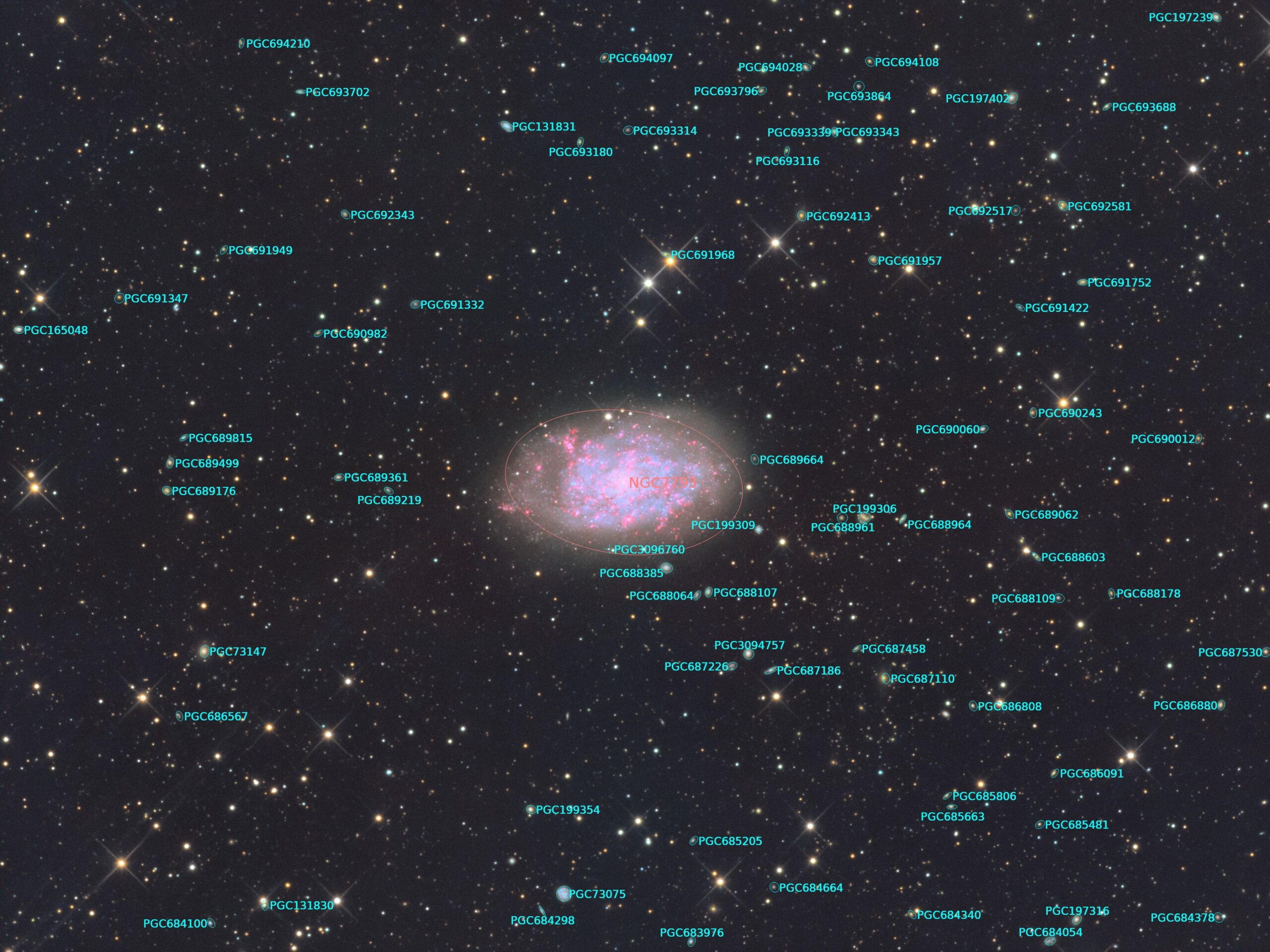
The images were taken with the following equipment:
- Location: Tivoli, Namibia
- Telescope: 12″ ASA Astrograph
- Focal length [mm]: 1076
- Focal ratio: 3.6
- Mount: ASA DDM85
- Camera: FLI Microline ML16200
- Filter: L:R:G:B:Hα
- Exposure time [min]: 185:60:60:60:120
- Resolution: 1.14″/px



Leave a reply