

NGC 7094 from my backyard
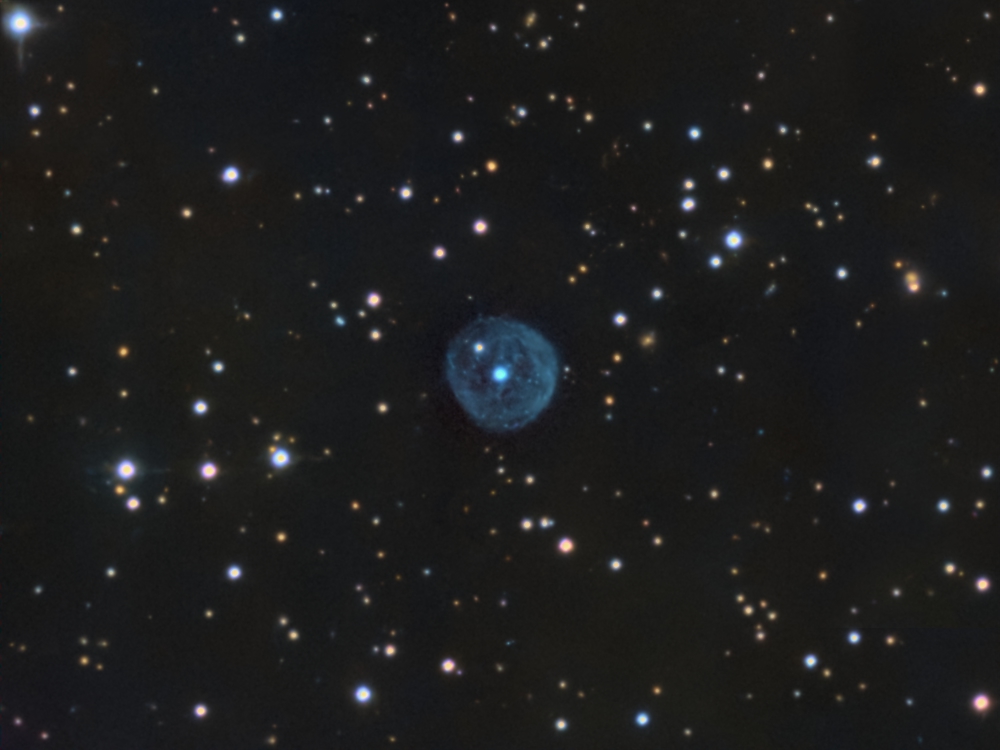
In 2011, I imaged the planetary nebula NGC 7094 from my backyard observatory in Krefeld using my DSLR equipment. Although relatively small and faint, the nebula proved to be an interesting target for long-exposure astrophotography. Despite the limitations of a DSLR camera and suburban light pollution, careful image acquisition and processing revealed the nebula’s characteristic circular shell embedded within the rich star field of Pegasus. Looking back, this image represents another milestone in my early astrophotographic work with modest equipment.
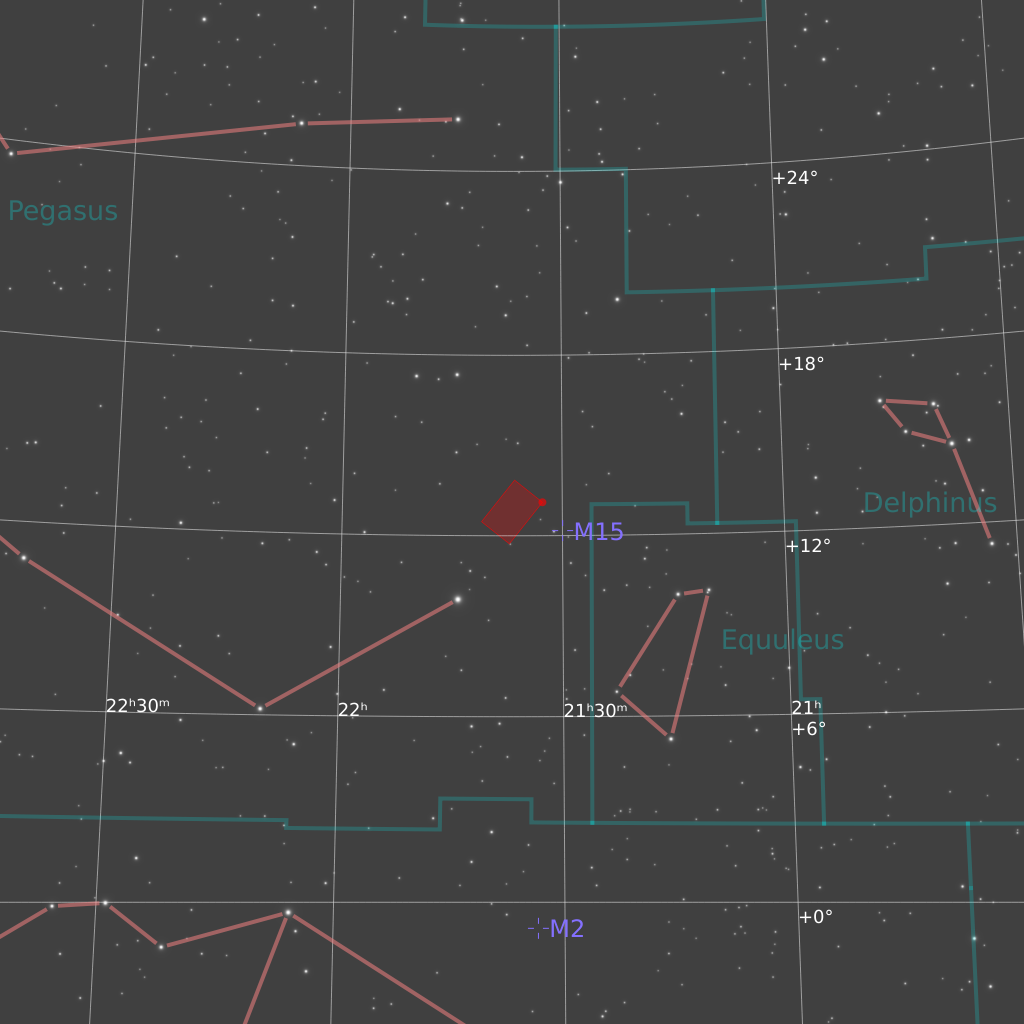
NGC 7094 is located in the constellation Pegasus, approximately 7,000 light-years from Earth. It is an evolved planetary nebula, formed when a Sun-like star reached the end of its life and expelled its outer layers into space. The hot stellar remnant at its center has evolved into a white dwarf, whose intense ultraviolet radiation ionizes the expanding shell of gas, causing it to glow in emission lines such as Hα, [O III], and He II.
One of the most remarkable aspects of NGC 7094 is its unusual central star, which belongs to the rare class of hybrid PG 1159 stars. These extremely hot stars represent a brief transitional phase between the central stars of planetary nebulae and cooling white dwarfs. Their atmospheres are largely hydrogen-deficient but still retain measurable amounts of hydrogen, making them particularly valuable for studying the final stages of stellar evolution.
The nebula itself has a nearly circular appearance with a brighter inner shell surrounded by a much fainter outer envelope. High-resolution observations reveal subtle filamentary structures and irregular brightness variations caused by interactions between successive stellar winds during the progenitor star’s late evolutionary stages. As the nebula continues to expand at several tens of kilometers per second, it gradually disperses into the surrounding interstellar medium, enriching it with elements such as carbon, nitrogen, and oxygen.
NGC 7094 is also noteworthy because it belongs to a small group of high-excitation planetary nebulae, where the extremely hot central star produces strong ionization throughout the gaseous shell. Spectroscopic studies of the nebula provide valuable information about stellar nucleosynthesis, mass loss, and the physical conditions within planetary nebulae during their final evolutionary phases.
Although not among the brightest planetary nebulae, NGC 7094 is a rewarding object for deep imaging because of its delicate structure and scientific importance. Long exposures reveal the faint outer halo surrounding the brighter central shell, illustrating the multiple episodes of mass loss that occurred before the progenitor star reached the white dwarf stage.
The image obtained in 2011 demonstrates what could already be achieved with a DSLR camera from a suburban backyard. While modern astronomical cameras are capable of revealing significantly finer detail, this early photograph successfully captured one of the more unusual planetary nebulae in the northern sky and remains an important part of my astrophotographic archive, documenting both the beauty of NGC 7094 and my own development as an astrophotographer.
Data calibration and registration was done with DeepSkyStacker and the final processing was done with PixInsight. The result was as follows:
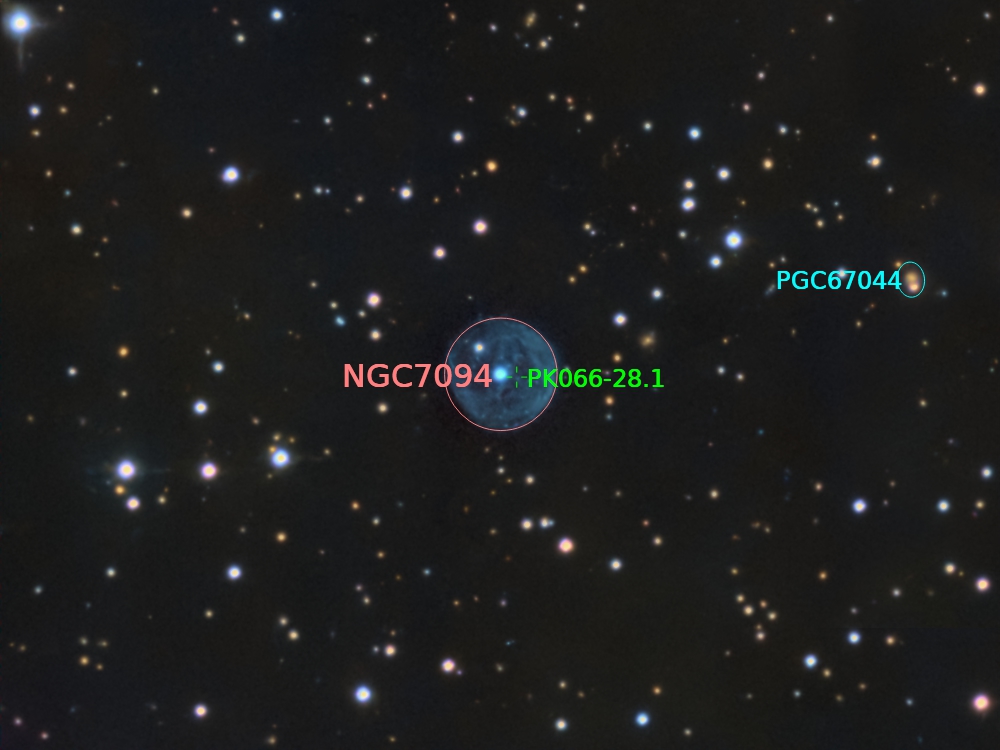
The images were taken with the following equipment:
- Date: 2011
- Location: Krefeld
- Telescope: TS 10″ Newton
- Focal length [mm]: 1140
- Focal ratio: 4.5
- Mount: Skywatcher NEQ6 Synscan
- Camera: Canon 500Da
- Filter: OSC
- Exposure time [min]: 130
- Resolution: 0.85″/px



Leave a reply