

Messier 106 (NGC 4258) from my backyard
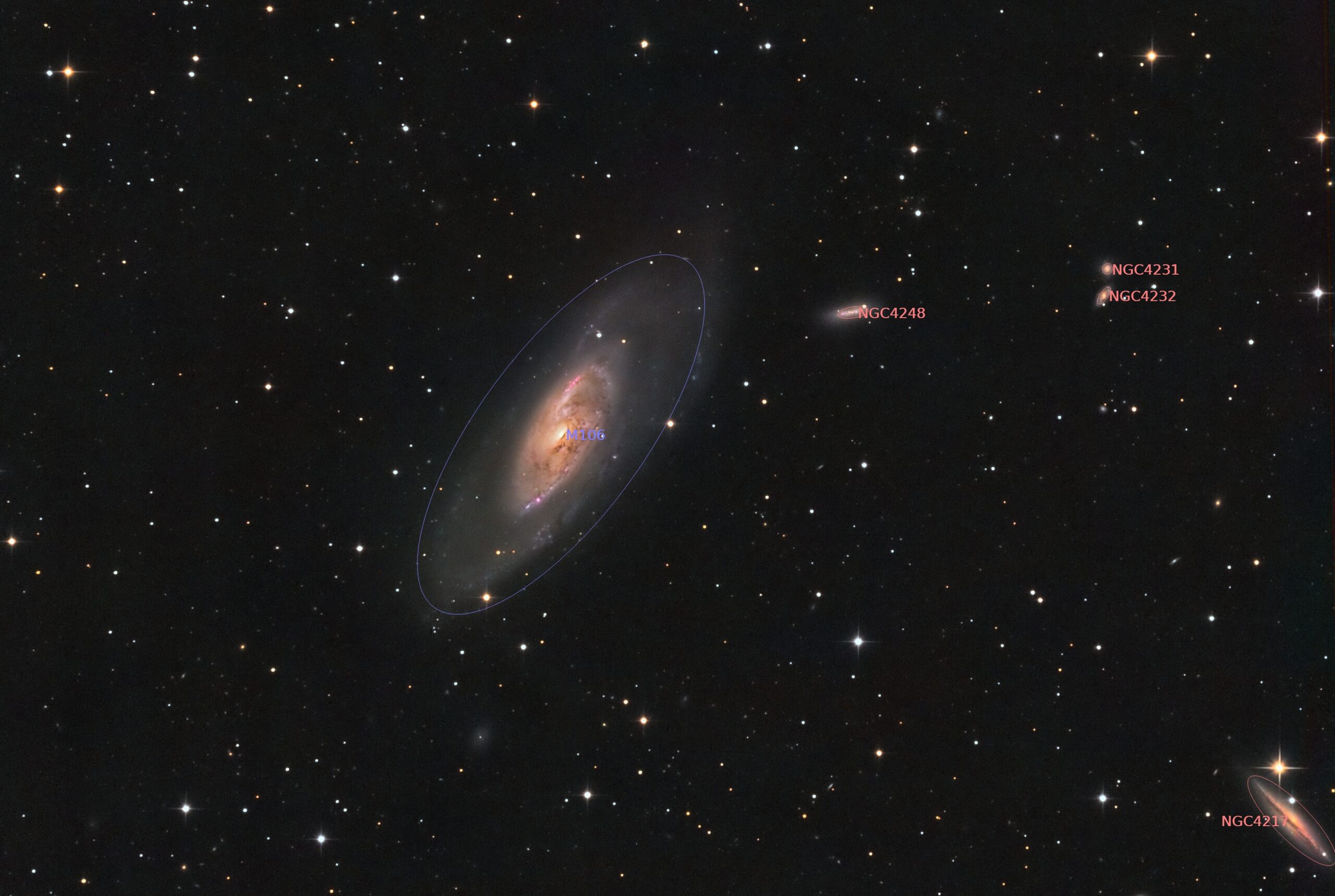
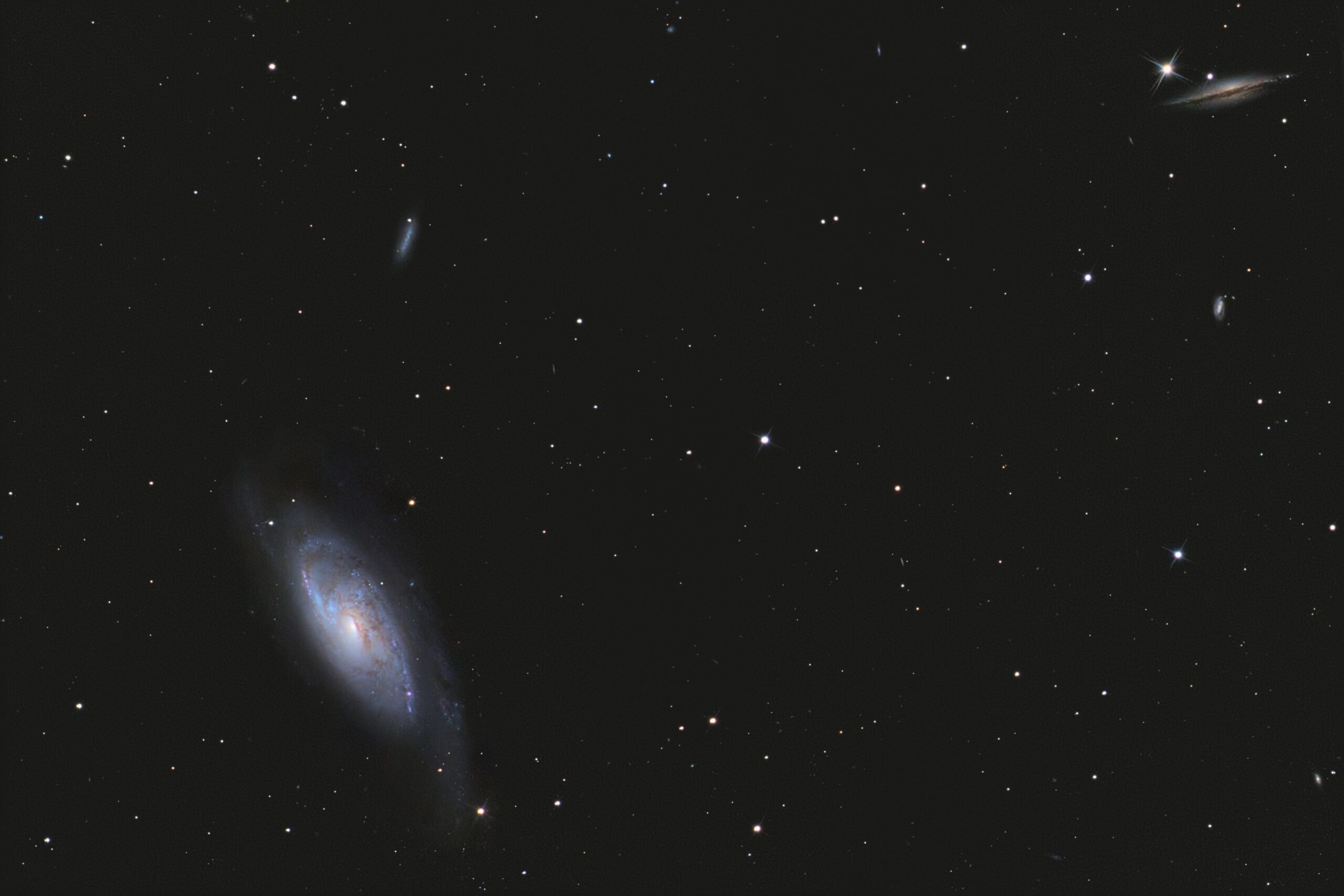
In 2011, I captured Messier 106 from my backyard in Krefeld using my DSLR setup, gathering roughly 6 hours of exposure time under suburban skies. Despite the limitations, the data already revealed the galaxy’s striking asymmetric spiral structure. A few years later, in 2014, I returned to this target with a CCD camera, accumulating nearly 20 hours of integration. Even though the sky conditions were still light-polluted, the significantly deeper exposure uncovered much finer details—faint outer arms, numerous H II regions, and subtle structural irregularities.
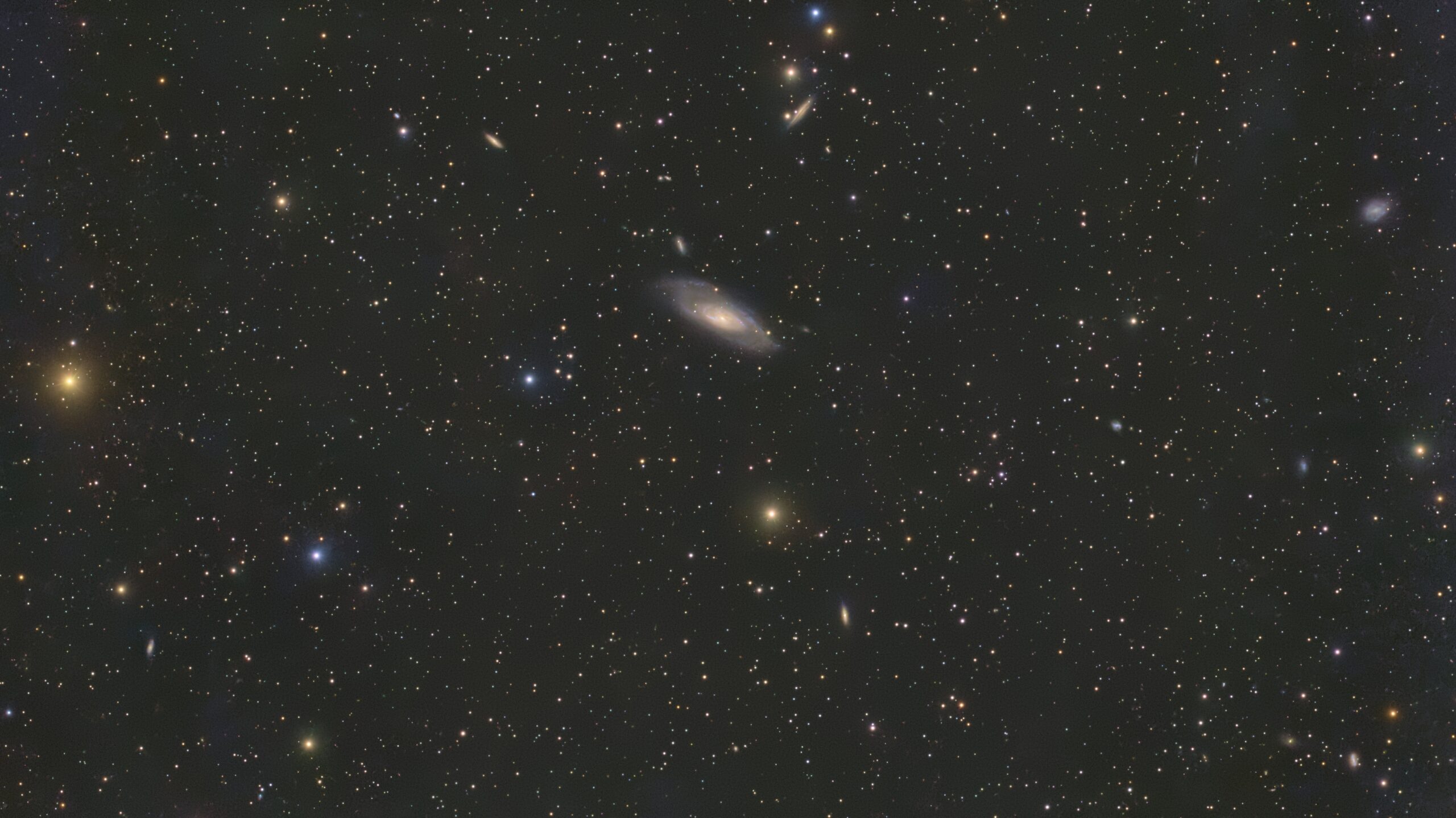
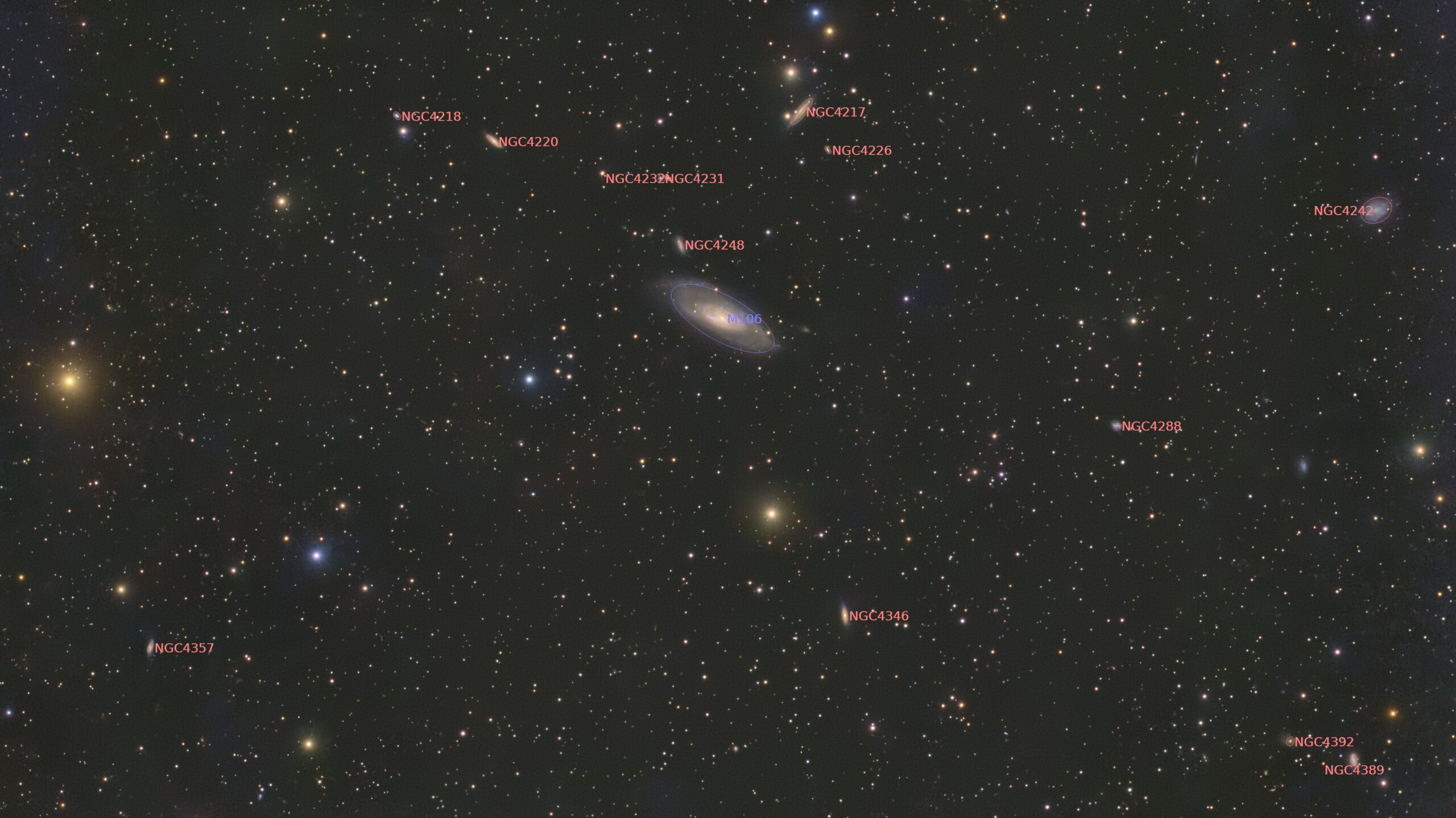
Most recently, in 2026, I imaged M106 once again using my new Seestar Smart Telescope. Although far more compact and automated than my earlier setups, the modern smart telescope still delivered a remarkably detailed image of this fascinating galaxy, demonstrating how much imaging technology has evolved over the years. Revisiting the same object with such different generations of equipment provided an interesting comparison between traditional long-exposure astrophotography and today’s highly integrated smart imaging systems.
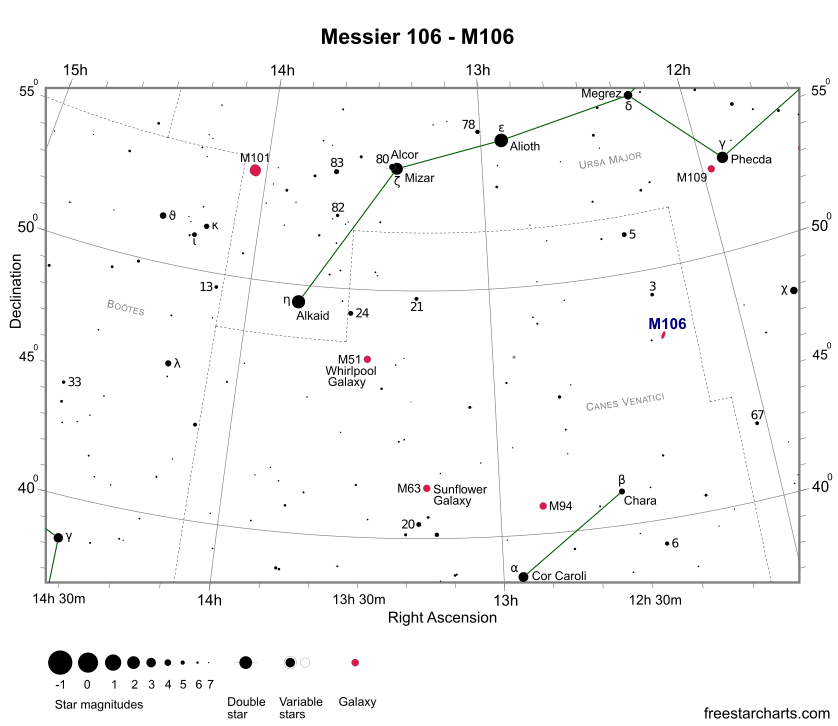
Scientifically, M106 (also catalogued as NGC 4258) is one of the most fascinating nearby spiral galaxies. Located about 23 million light-years away in the constellation Canes Venatici, it is classified as a Seyfert II galaxy and belongs to the rare class of anomalous-arm spirals. Unlike ordinary spiral arms shaped mainly by density waves and star formation, M106 exhibits additional arms that emit strongly in radio, X-ray, and Hα wavelengths.
These unusual “anomalous arms” are powered by jets and shock heating originating from the galaxy’s actively accreting supermassive black hole, making M106 an important laboratory for studying AGN feedback in relatively normal disk galaxies. The galaxy is also famous for hosting water megamasers in its nucleus—natural microwave amplifiers that allow extremely precise geometric distance measurements. These observations have made M106 one of the key calibrators for the extragalactic distance scale and for refining the value of the Hubble constant.
Comparing my datasets from 2011, 2014, and 2026 beautifully illustrates how improvements in cameras, optics, processing techniques, and smart telescope technology continue to reveal ever more detail in this extraordinary galaxy, where classical spiral structure and energetic nuclear activity coexist in a single visually spectacular system.
Registration and the final processing of the Seestar data was performed in PixInsight, the result was as follows:
Here is an overview of the used equipment and the exposure times:
- Date: 2026
- Location: Varel, Germany
- Telescope/Lens: Seestar S30 Pro
- Focal length [mm]: 160
- Focal ratio: 5.3
- Mount: Seestar, EQ Mode
- Camera: Seestar Tele
- Filter: OSC
- Exposure time [min]: 216
- Resolution: 3.67″/px
Data calibration and registration was performed with DeepSkyStacker, the final processing was done with PixInsight. The result was as follows:

Here is an overview of the used equipment and the exposure times:
- Date: 2014
- Location: Krefeld, Germany
- Telescope/Lens: 10″ Newton ohne Namen
- Focal length [mm]: 1000
- Focal ratio: 4
- Mount: Losmandy G11
- Camera: Moravian 8300FW
- Filter: L:R:G:B:Hα
- Exposure time [min]: 615:110:115:115:165
- Resolution: 1.11″/px
For the 2011 data the calibration and registration was performed with DeepSkyStacker, the final processing was done with PixInsight. The result was as follows:
Here is an overview of the used equipment and the exposure times:
- Date: 2011
- Location: Krefeld, Germany
- Telescope/Lens: 10″ Orion Newton
- Focal length [mm]: 1000
- Focal ratio: 4.8
- Mount: Skywatcher NEQ6
- Camera: Canon 500Da
- Filter: no
- Exposure time [min]: 360
- Resolution: 0.81″/px



Leave a reply