

NGC 6939 and NGC 6946
I imaged the beautiful pair consisting of the open cluster NGC 6939 and the nearby spiral galaxy NGC 6946 several times over the years, documenting both my development as an astrophotographer and the advances in imaging technology. My first image was captured in 2009 from my backyard observatory in Krefeld using my DSLR equipment.
In 2010, during a stay in Banon, I revisited the pair with a newer DSLR camera, benefiting from the darker skies of Haute-Provence and the improved performance of the upgraded camera. In 2021, I imaged the field once again from my observatory using my dual-rig CCD setup, capturing high-resolution luminance data simultaneously with RGB color information to produce a detailed LRGB image. Most recently, in 2025, I processed a deep dataset of the same region obtained through Astrophotomarket, revealing even fainter structures within the galaxy and countless distant background galaxies.
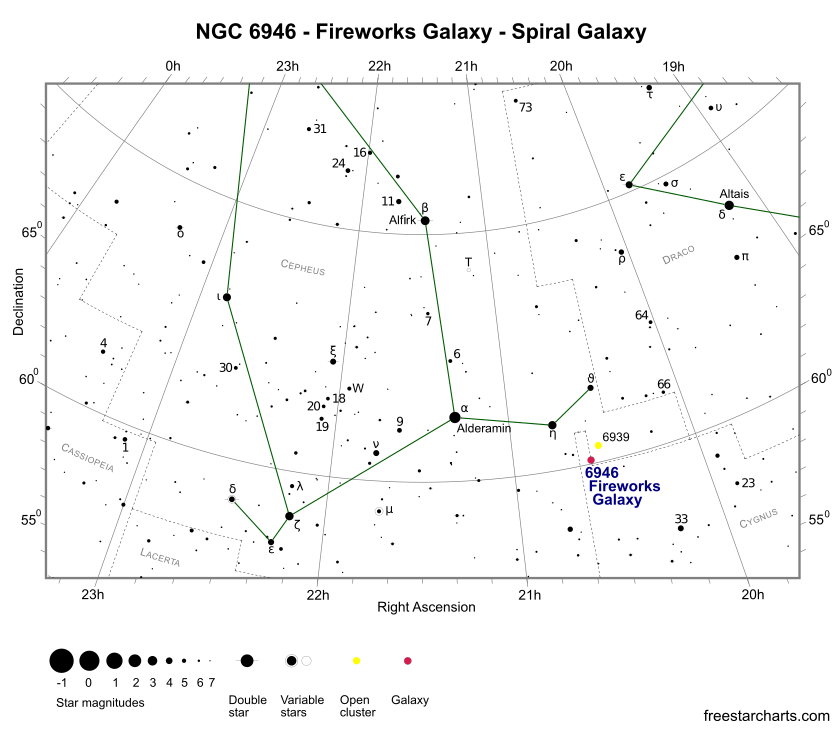
Although they appear close together in the sky, NGC 6939 and NGC 6946 are completely unrelated objects separated by an enormous distance. NGC 6939 is an open cluster located in the constellation Cepheus, approximately 3,800 light-years from Earth. It is estimated to be around one billion years old, making it considerably older than many prominent open clusters. The cluster contains several hundred stars, including numerous evolved red giants, which contrast beautifully with its remaining blue-white main-sequence stars.
Only about half a degree away lies NGC 6946, better known as the Fireworks Galaxy. Despite its apparent proximity to the cluster, it is located approximately 22 million light-years away and is one of the nearest face-on spiral galaxies beyond the Local Group. The galaxy is famous for its exceptionally high rate of star formation and has hosted at least ten confirmed supernovae during the past century, more than almost any other nearby galaxy. This remarkable record earned it the nickname Fireworks Galaxy.
Viewed nearly face-on, NGC 6946 displays a magnificent network of spiral arms rich in H II regions, dark dust lanes, and young blue star clusters. Deep images reveal an abundance of delicate detail throughout its disk, including numerous star-forming complexes where massive young stars illuminate surrounding hydrogen clouds. Radio and infrared observations have shown that the galaxy contains enormous reservoirs of molecular gas, providing the raw material for its ongoing vigorous star formation.
The juxtaposition of NGC 6939 and NGC 6946 makes this field one of the most fascinating in the northern sky. In a single image, it is possible to observe an open cluster belonging to our own Milky Way together with a giant spiral galaxy lying millions of times farther away. This striking perspective beautifully illustrates the immense depth of the universe, from nearby stellar populations to distant island universes beyond our own Galaxy.
The deep Astrophotomarket dataset from 2025 further enhances this remarkable scene by revealing subtle dust structures within the Fireworks Galaxy and a wealth of faint background galaxies scattered across the field. Together with my earlier images from 2009, 2010, and 2021, it documents more than fifteen years of astrophotographic progress, from early DSLR imaging to modern CCD and professional remote-observatory data. The collection not only demonstrates the improvements in imaging technology and processing techniques but also highlights the enduring beauty of one of the most iconic deep-sky pairings in the northern hemisphere.
For the Astrophotomarket data the calibration, registration and final processing were performed with PixInsight.
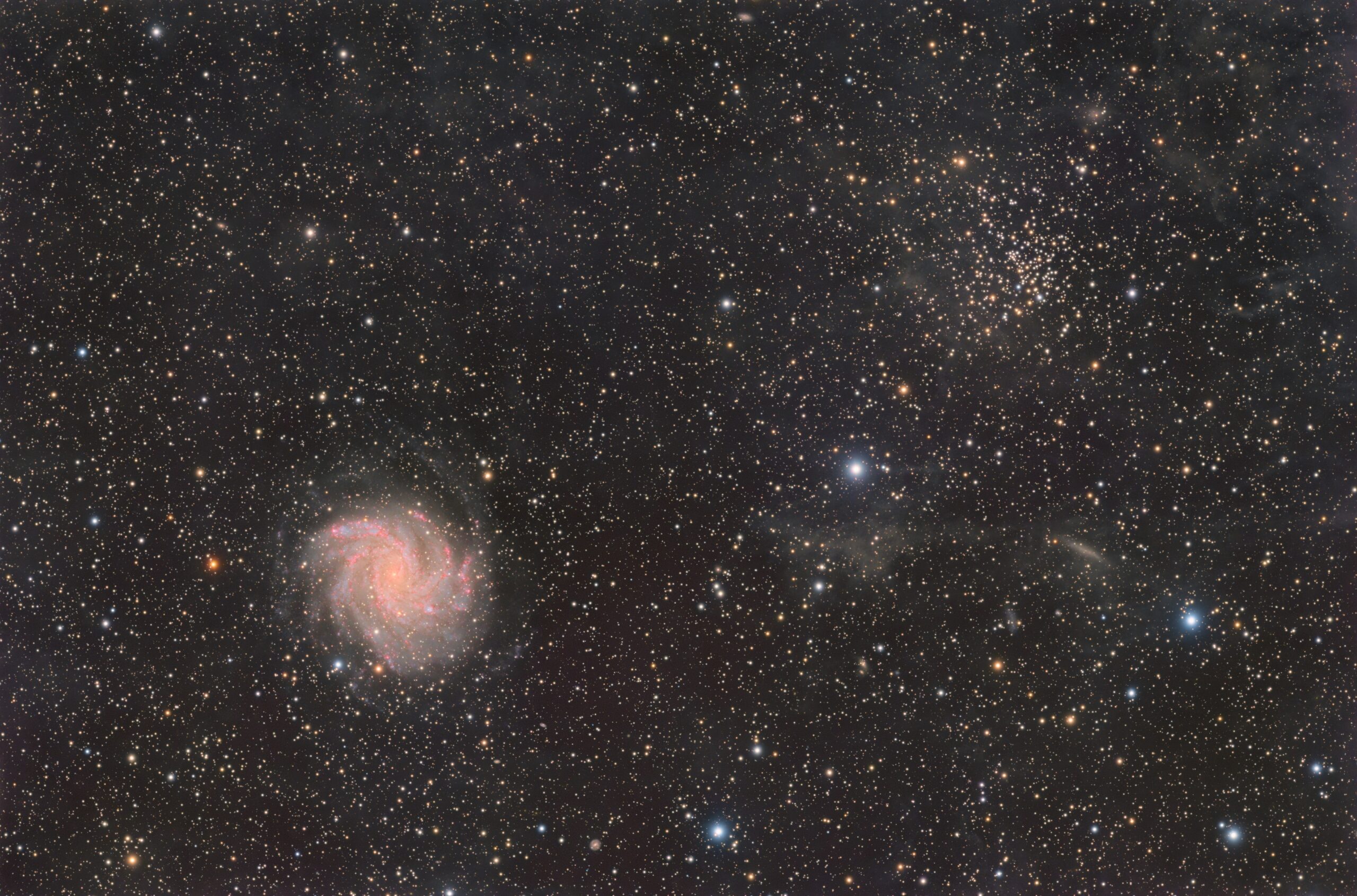
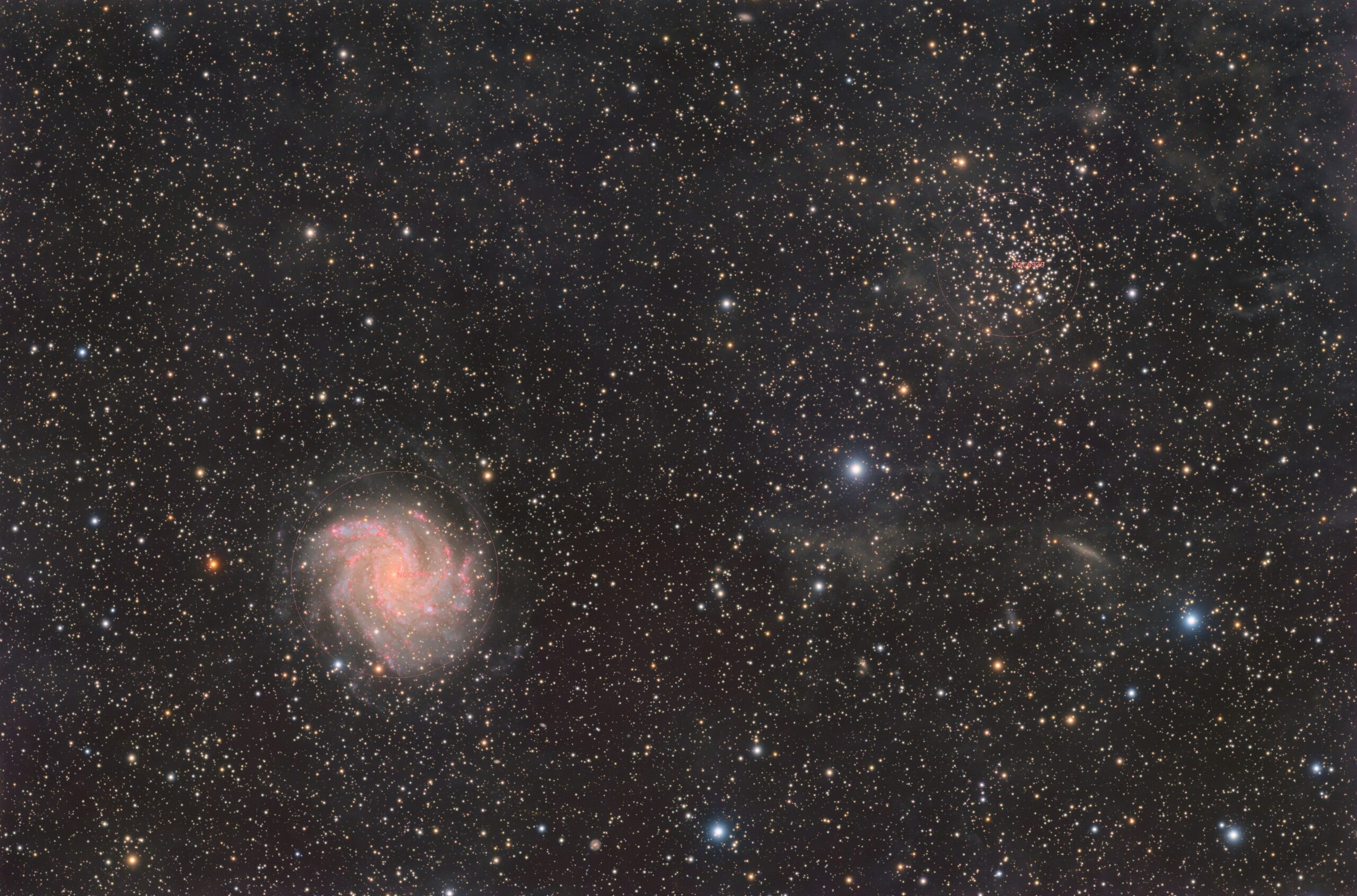
The images were taken with the following equipment (Astrophotomarket):
- Date: 2025
- Location: Canada
- Telescope/Lens: Askar 151PHQ
- Focal length [mm]: 1057
- Focal ratio: 7
- Mount: iOptron HAE69
- Camera: ZWO ASI 2600MM Pro
- Filter: L:R:G:B:Hα
- Exposure time [min]: 664:372:378:372:920
- Resolution: 0.74″/px
For the 2021 data the calibration, registration and final processing were performed with PixInsight.
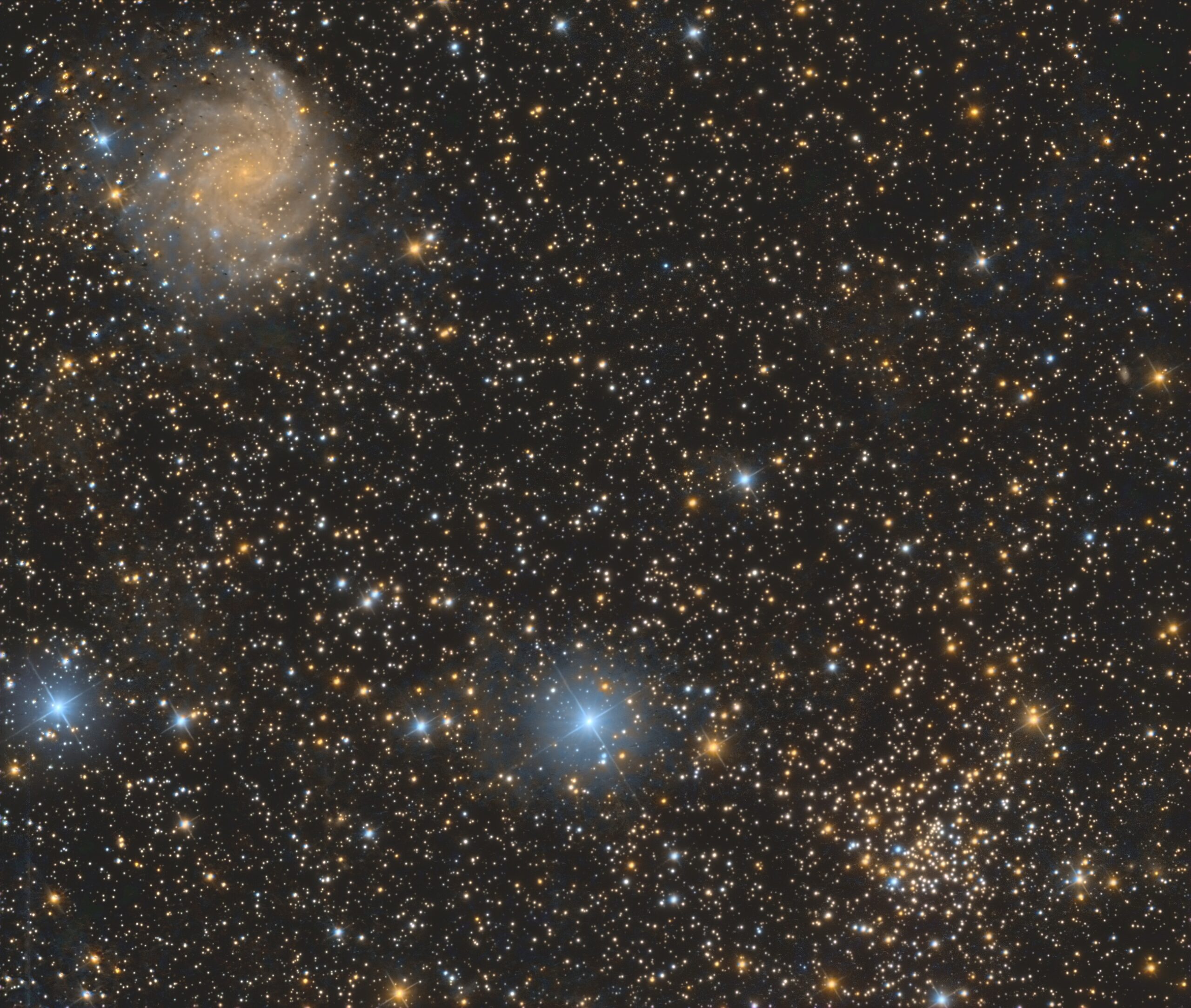
The images were taken with the following equipment:
- Date: 2021
- Location: Krefeld
- Telescope/Lens: 10″ Newton ohne Namen – TS IS 65 Apo
- Focal length [mm]: 1000 – 420
- Focal ratio: 3.9 – 6.5
- Mount: Skywatcher EQ8
- Camera: QSI 583WS – Moravian 16200FW
- Filter: L – RGB
- Exposure time [min]: 408 – 200:195:240
- Resolution: 1.11″/px – 2.62″/px
For the 2010 data the calibration and registration was done with DeepSkyStacker the and final processing was performed with PixInsight.
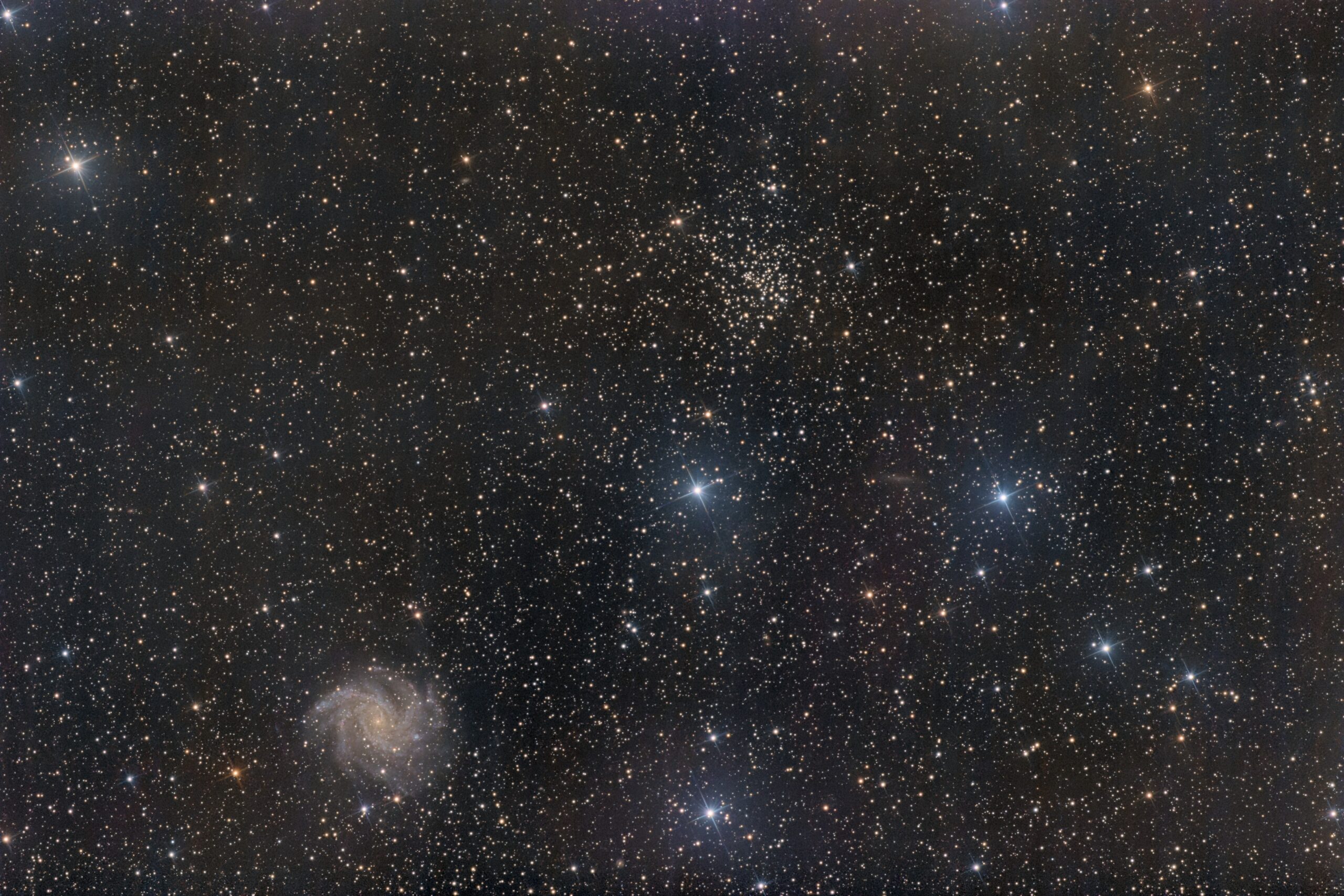
The images were taken with the following equipment:
- Date: 2010
- Location: Banon, France
- Telescope/Lens:8″ GSO Newton
- Focal length [mm]: 800
- Focal ratio: 4
- Mount: Skywatcher NEQ6
- Camera: Canon 500Da
- Filter: OSC
- Exposure time [min]: 120
- Resolution: 1.19″/px
For the 2009 data the calibration and registration was done with DeepSkyStacker and the final processing was performed with PixInsight.
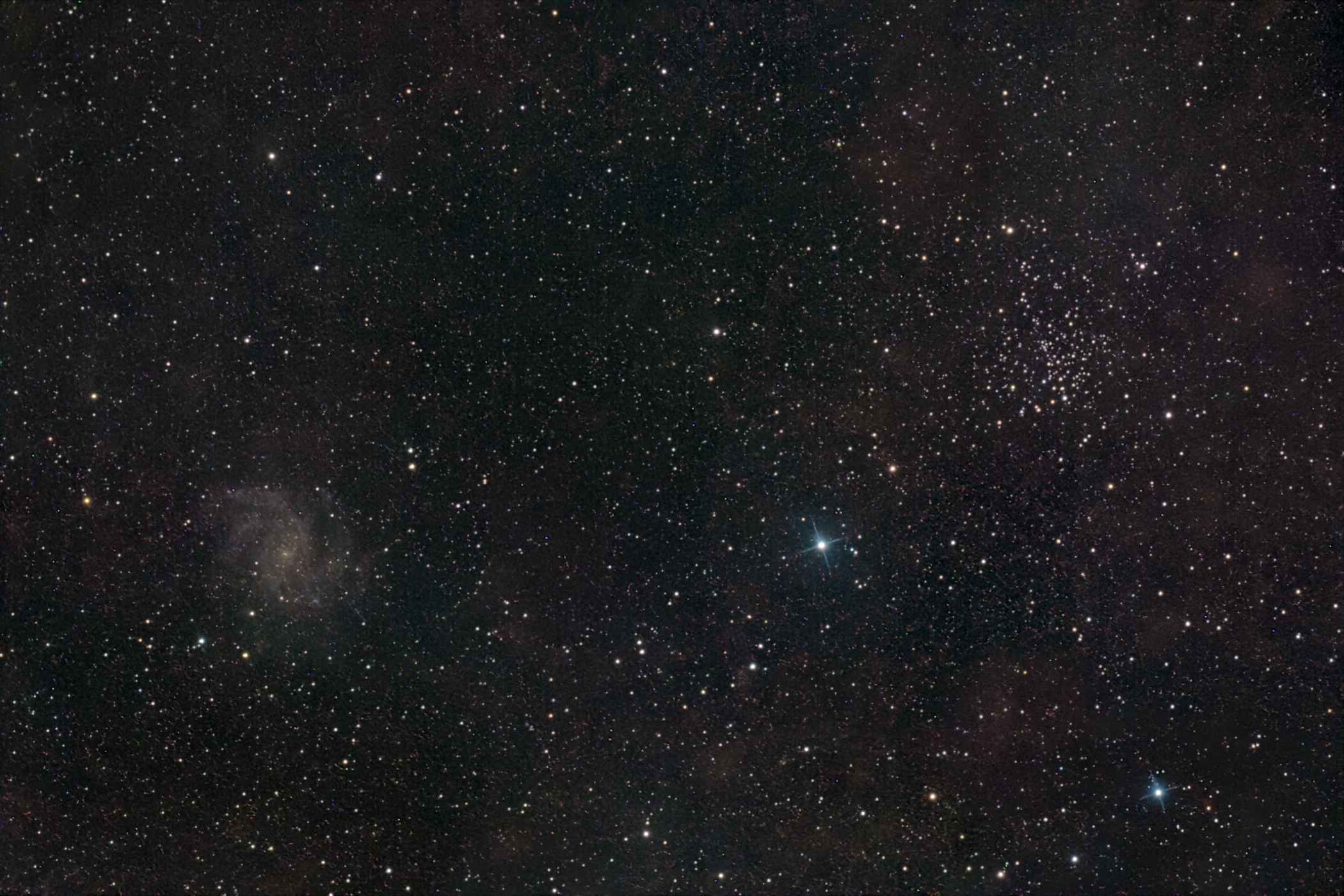
The images were taken with the following equipment:
- Date: 2009
- Location: Krefeld
- Telescope/Lens: 8″ GSO Newton
- Focal length [mm]: 800
- Focal ratio: 4
- Mount: Skywatcher NEQ6
- Camera: Canon 300Da
- Filter: OSC
- Exposure time [min]: 45
- Resolution: 1.88″/px



Leave a reply