

NGC 6520
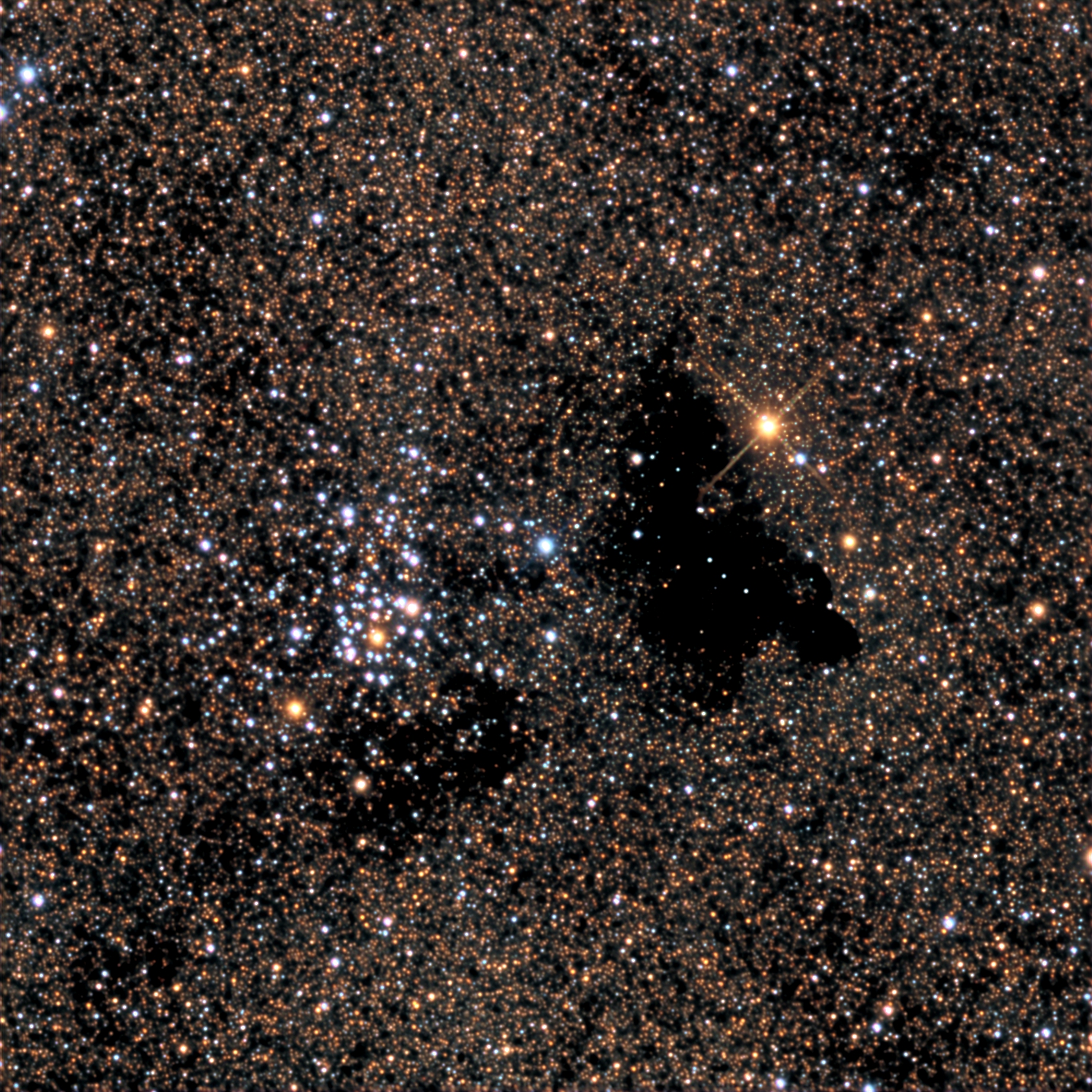
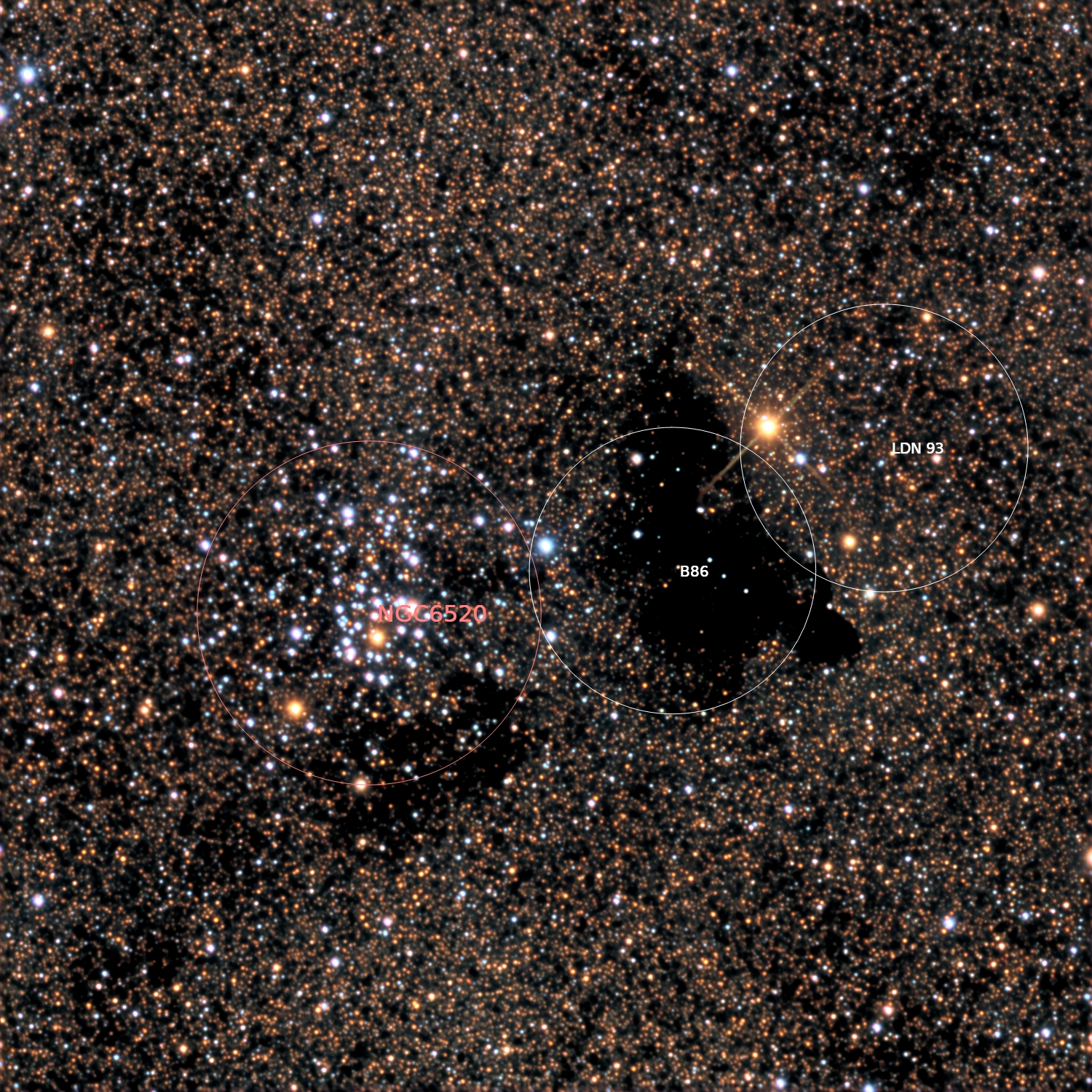
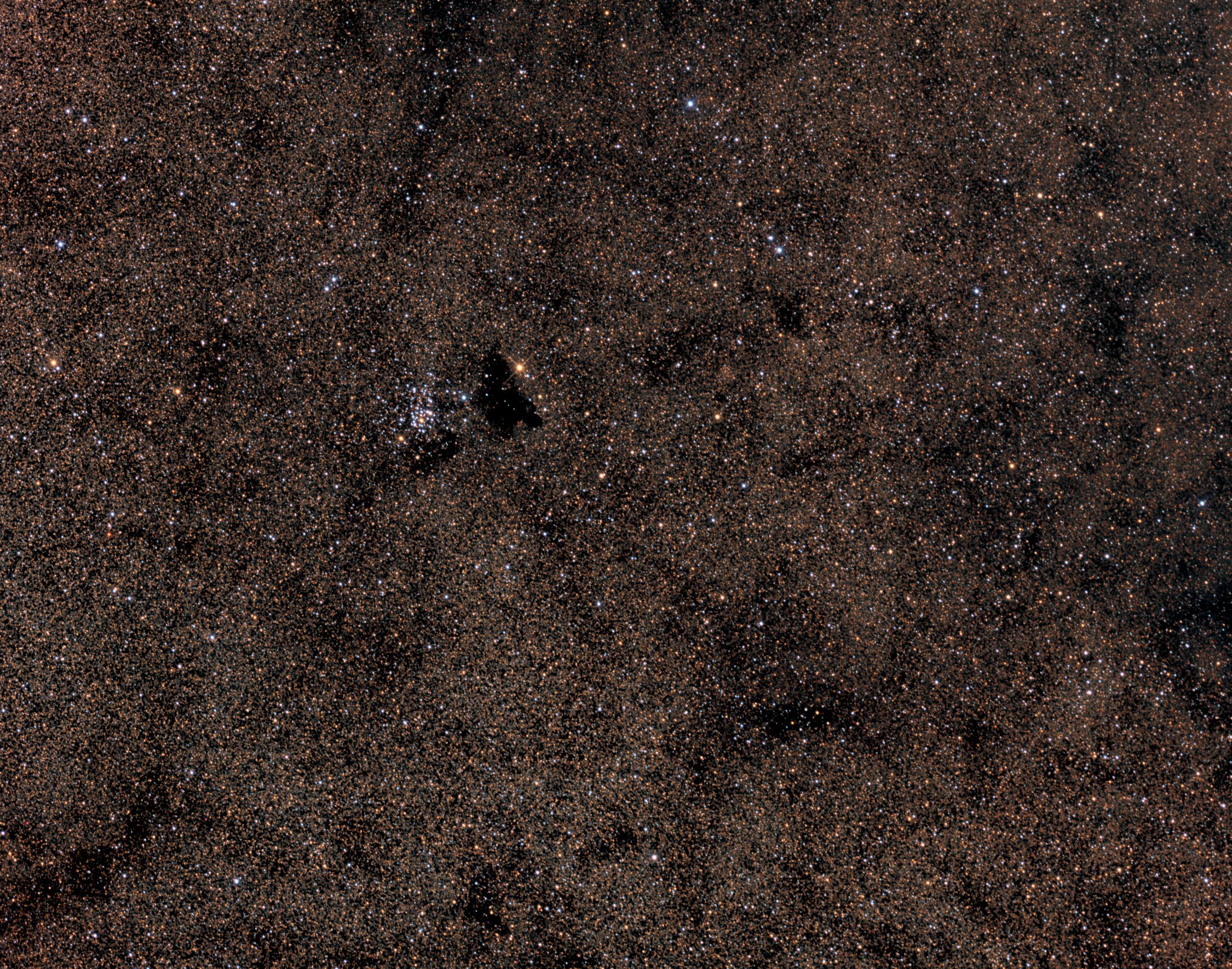
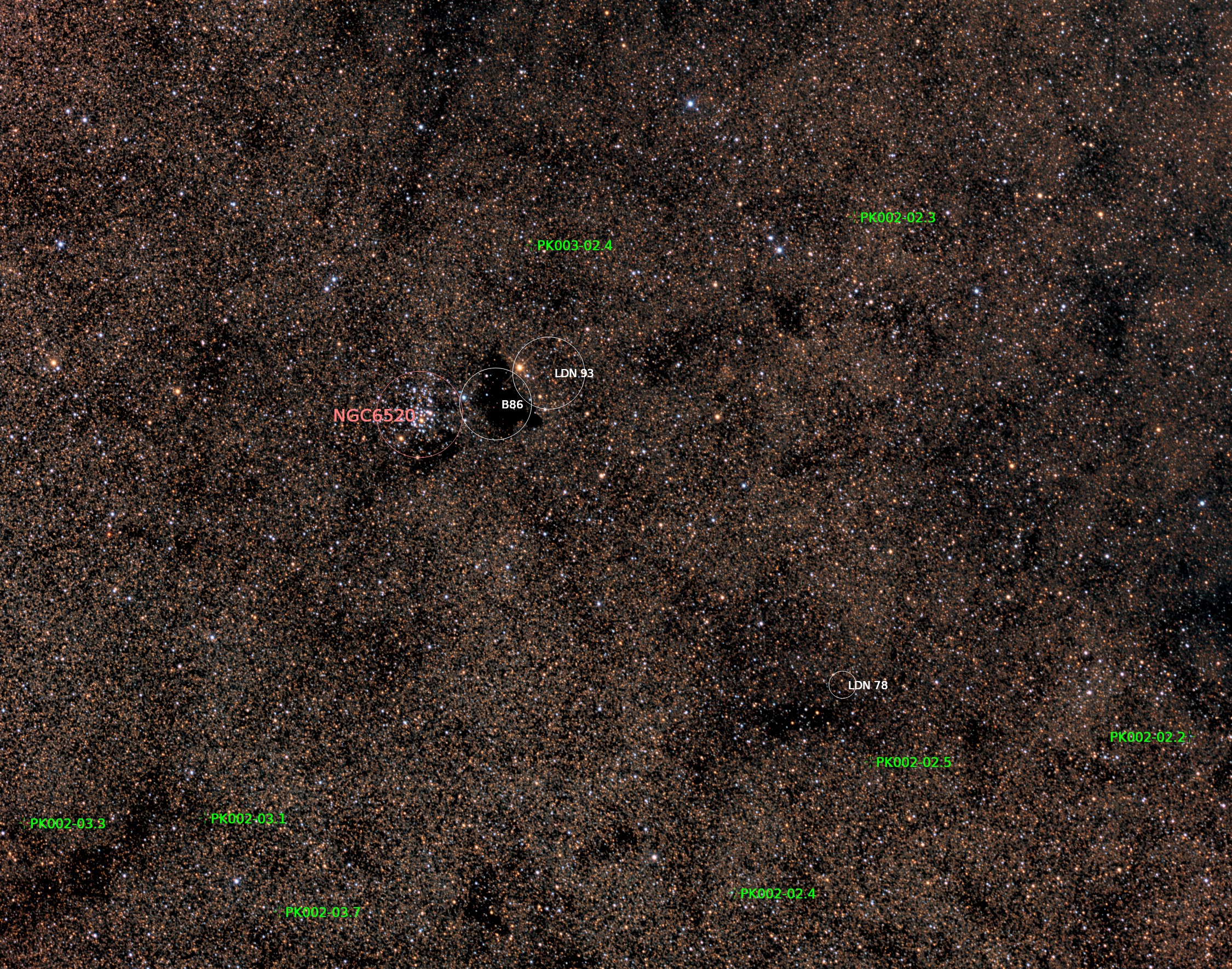
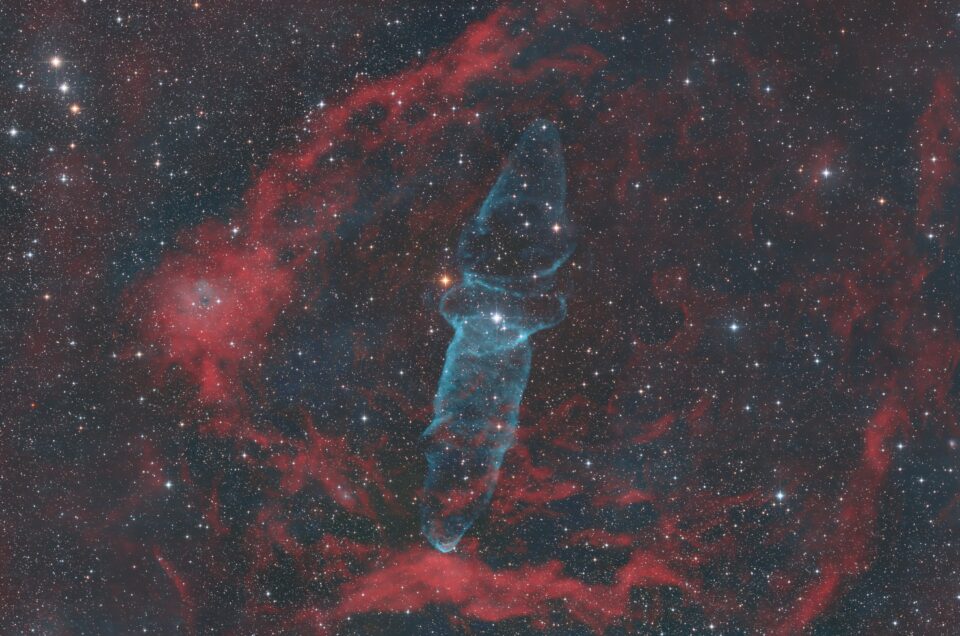
In 2017, during a stay at the Tivoli astrofarm in Namibia, I imaged the beautiful combination of the open cluster NGC 6520 and the adjacent dark nebula Barnard 86. The exceptionally transparent skies of Namibia provided ideal conditions for recording the striking contrast between the bright concentration of young stars and the dense, light-absorbing cloud immediately beside it. This pairing is one of the most attractive examples of contrasting deep-sky objects in the summer Milky Way.
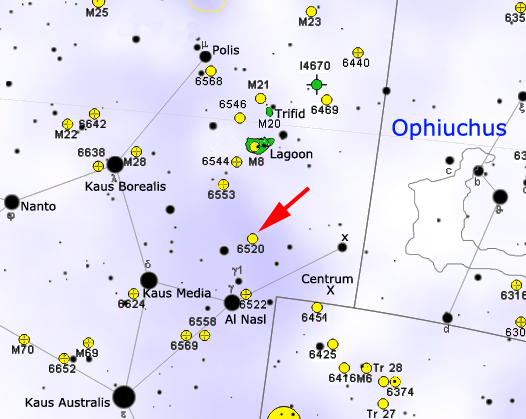
Located in the constellation Sagittarius, NGC 6520 lies at a distance of approximately 5,000 light-years and is estimated to be around 150 million years old. The cluster contains several dozen bright stars embedded in the rich stellar background of the Milky Way. Its relatively compact appearance and abundance of blue-white stars make it a rewarding target for both visual observers and astrophotographers.
Immediately adjacent to the cluster lies Barnard 86, one of the most famous dark nebulae catalogued by the American astronomer Edward Emerson Barnard. Unlike emission or reflection nebulae, Barnard 86 does not shine by its own light. Instead, it consists of a dense cloud of cold interstellar dust that obscures the countless stars of the Milky Way behind it. The nebula appears as a sharply defined black patch silhouetted against one of the richest stellar regions in the sky.
For many years, astronomers debated whether NGC 6520 and Barnard 86 were physically related or simply aligned by chance along our line of sight. Modern observations suggest that the dark nebula is likely located somewhat farther away than the cluster, although the exact relationship remains the subject of study. Regardless of their true spatial separation, their close apparent proximity creates one of the most striking visual contrasts in the night sky.
Barnard 86 is composed of dense molecular gas and microscopic dust grains that absorb and scatter visible light. These clouds represent the raw material from which future generations of stars may eventually form. Infrared observations are able to penetrate much of this dust, revealing young stellar objects hidden within the cloud that remain invisible at optical wavelengths.
The image obtained in 2017 beautifully captures the contrast between the brilliant stars of NGC 6520 and the opaque darkness of Barnard 86. Set against the densely populated Milky Way of Sagittarius, the field illustrates two very different aspects of our Galaxy: a young open cluster whose stars have already emerged from their birth cloud, and a neighboring reservoir of gas and dust where future stars may one day be born. It is this interplay between light and darkness that makes the NGC 6520–Barnard 86 region one of the most fascinating and photogenic targets in the southern Milky Way.
The data the calibration and registration and the final processing was done with PixInsight. The result was as follows:
The images were taken with the following equipment:
- Date: 2017
- Location: Tivoli, Namibia
- Telescope/Lens: ASA 12″ Astrograph
- Focal length [mm]: 1078
- Focal ratio: 3.6
- Mount: ASA DDM85
- Camera: FLI ML 16200
- Filter: L:R:G:B
- Exposure time [min]: 180:60:60:60
- Resolution: 1.14″/px


Leave a reply