

NGC 6334
I imaged the magnificent emission nebula NGC 6334 twice over the years, both times during stays at the Tivoli astrofarm in Namibia. My first image was captured in 2008 using my DSLR equipment, taking advantage of Namibia’s exceptionally dark skies to record the extensive nebular complex. In 2015, I revisited the region with a CCD camera, producing a much deeper and wider-field image that included not only NGC 6334 but also the neighboring emission nebula NGC 6357. The larger field of view beautifully illustrates that both nebulae belong to the same giant star-forming complex in the Milky Way.
I imaged the magnificent emission nebula NGC 6334 three times over the years, documenting both my progress in astrophotography and the advances in imaging technology. My first image was captured in 2008 during a stay at the Tivoli astrofarm in Namibia using my DSLR equipment. Under Namibia’s exceptionally dark skies, I was able to record the extensive nebular complex and its rich surrounding star fields. In 2015, I revisited the region with a CCD camera, producing a much deeper and wider-field image that included not only NGC 6334 but also the neighboring emission nebula NGC 6357. The larger field of view beautifully illustrates that both nebulae belong to the same giant star-forming complex within the Milky Way.
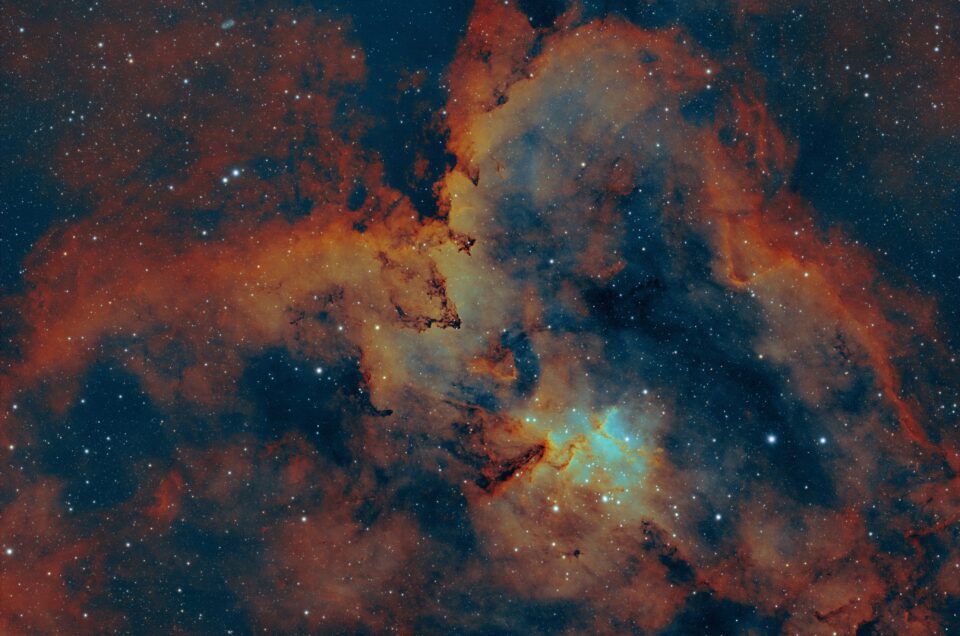
Most recently, in 2025, I received a professional SHO dataset of NGC 6334 from Telescope Live, acquired with a telescope in Chile. The narrowband data reveal an extraordinary wealth of filaments, dust pillars, and ionized gas that are only faintly visible in broadband images.
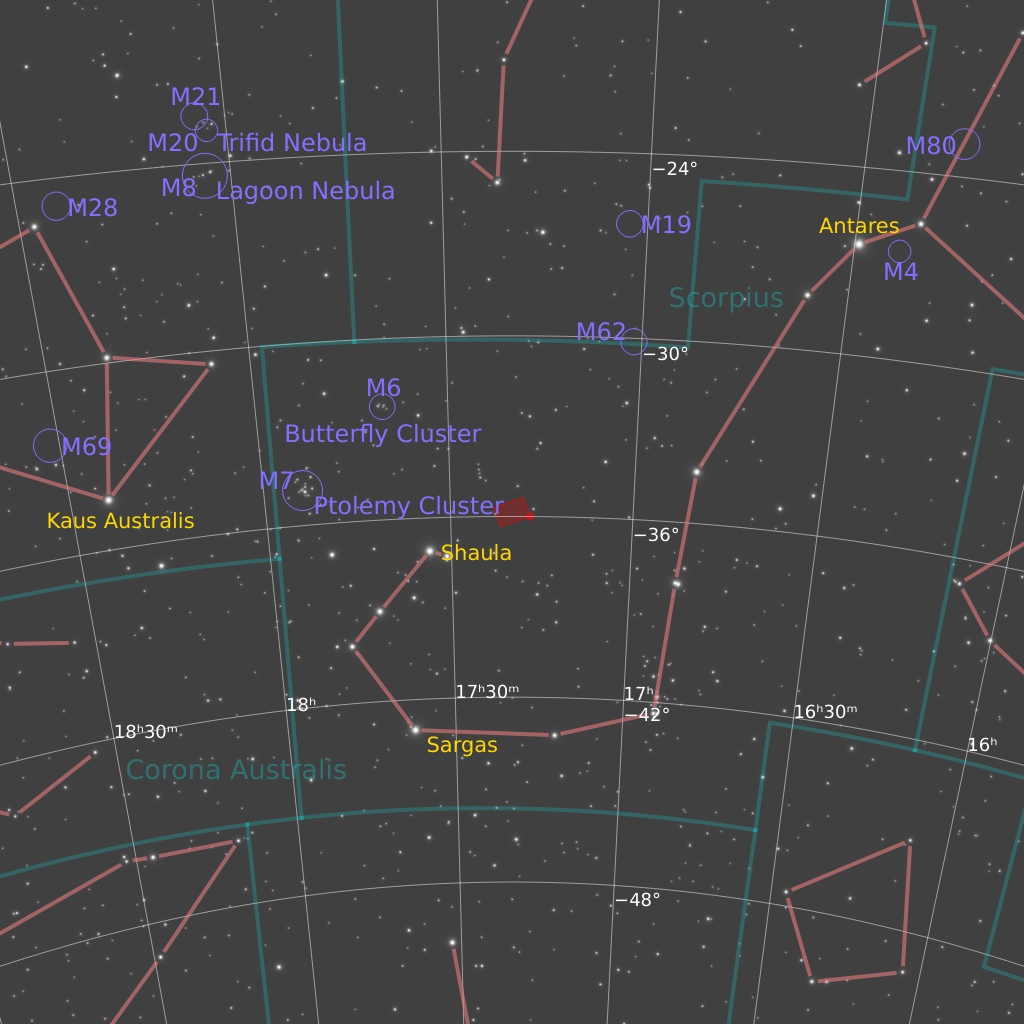
NGC 6334 is located in the constellation Scorpius, approximately 5,500 light-years from Earth. Better known as the Cat’s Paw Nebula, it is one of the Galaxy’s most active stellar nurseries. Its popular nickname originates from the bright, rounded emission regions that resemble the imprint of a cat’s paw. These glowing clouds consist primarily of ionized hydrogen, excited by the intense ultraviolet radiation emitted by newly formed massive stars deeply embedded within the nebula.
The nebula extends over more than 50 light-years and contains enormous reservoirs of gas and dust from which new generations of stars continue to form. Much of the ongoing star formation is hidden behind dense molecular clouds that are opaque in visible light but can be studied at infrared and radio wavelengths. Observations with modern space telescopes have revealed hundreds of young stellar objects and protostars buried within these dark clouds, many still surrounded by their natal cocoons.
One of the most striking features of NGC 6334 is its intricate network of dark dust lanes, bright emission ridges, and filamentary structures sculpted by stellar winds and intense radiation from massive young stars. These processes continuously reshape the surrounding molecular cloud, compressing some regions while dispersing others, thereby triggering successive generations of star formation.
The neighboring NGC 6357, also included in the 2015 image, forms another spectacular star-forming complex only a few degrees away on the sky. Dominated by the young open cluster Pismis 24, it contains some of the most massive stars known in the Milky Way. Together, NGC 6334 and NGC 6357 provide an impressive view of large-scale star formation within one of the richest regions of our Galaxy.
From a scientific perspective, the Cat’s Paw Nebula is an important laboratory for studying the earliest stages of stellar evolution, particularly the formation of massive stars. The combination of dense molecular clouds, active star formation, and powerful stellar feedback makes the region a key target for observations across the electromagnetic spectrum.
The SHO dataset from 2025 beautifully separates the nebula’s different emission components. Hydrogen (Hα) traces the widespread ionized gas, sulfur ([S II]) highlights cooler regions and shock fronts, while oxygen ([O III]) emphasizes areas exposed to the strongest ultraviolet radiation. This combination reveals a remarkable level of structural detail and clearly illustrates the complex physical processes taking place throughout the nebula.
For the Telescope Live data the calibration, registration and the final processing was done with PixInsight. The result was as follows:
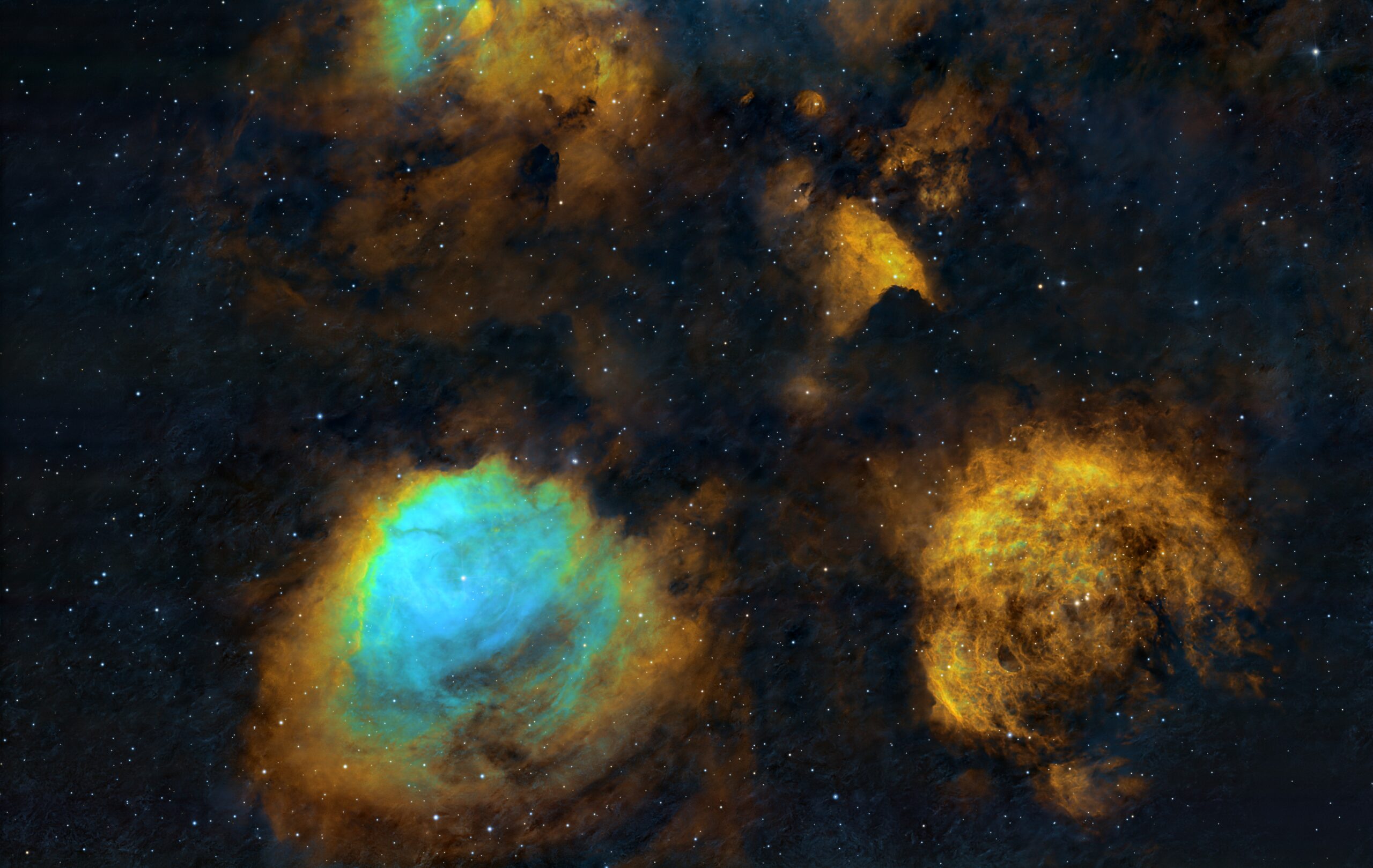
The images were taken with the following equipment TL – CHI1):
- Date 2025
- Location: El Sauce Observatory, Chile
- Telescope: Planwave CDK24
- Focal length [mm]: 3962
- Focal ratio: 6.5
- Mount: Mathis MI-1000/1250
- Camera: QHY 600M Pro
- Filter: Hα:[OIII]:[SII]
- Exposure time [min]: 235:215:225
- Resolution: 0.39″/px bin2
For the 2015 data the calibration, registration and the final processing was done with PixInsight. The result was as follows:
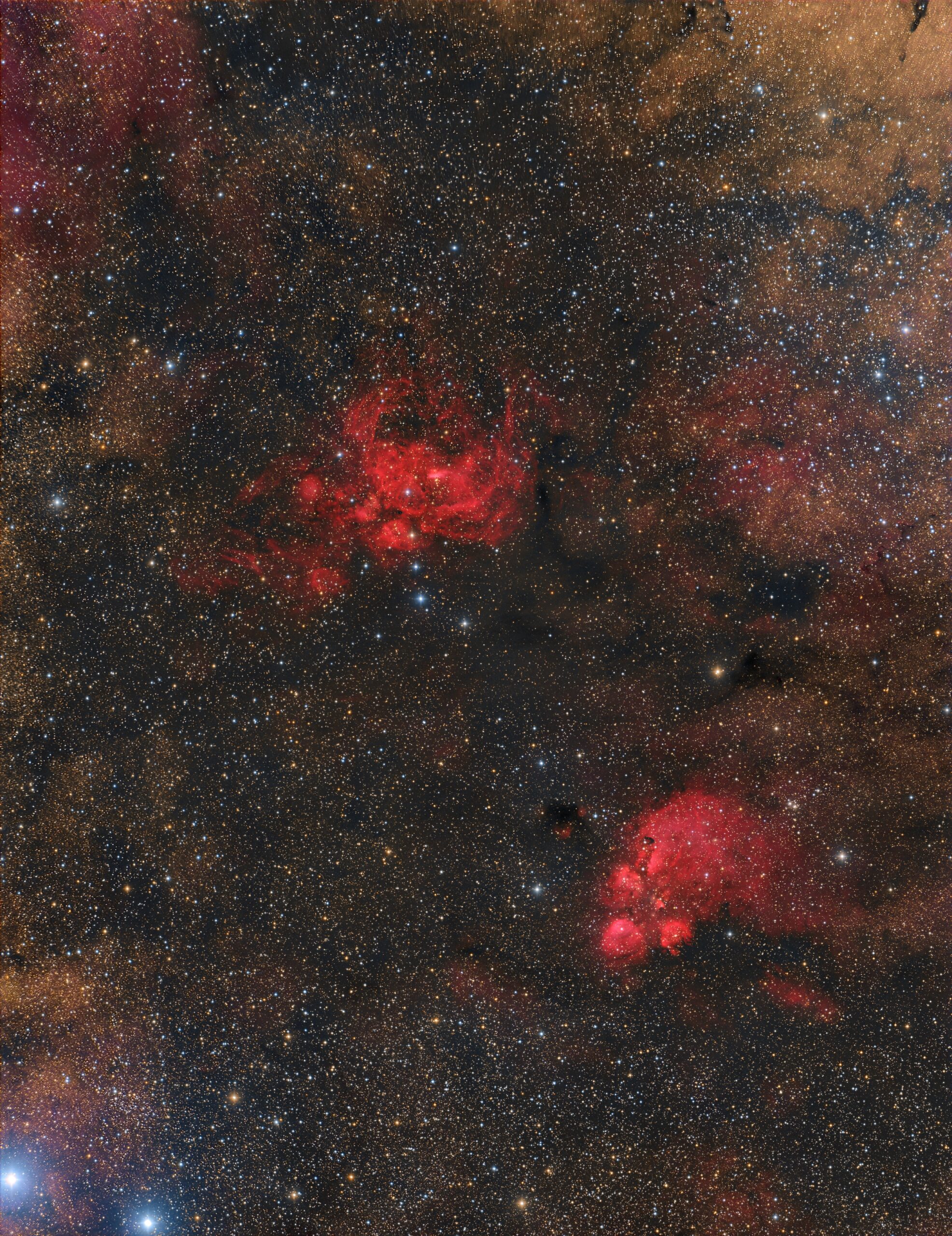

The images were taken with the following equipment:
- Date 2015
- Location: Tivoli, Namibia
- Telescope: Canon 200mm lens
- Focal length [mm]: 200
- Focal ratio: 4
- Mount: Losmandy G11
- Camera: Moravian FW8300
- Filter: Hα:R:G:B
- Exposure time [min]: 120:60:60:60
- Resolution: 5.73″/px
For the 2008 data the calibration and registration was done with DeepSkyStacker and the final processing was done with PixInsight. The result was as follows:
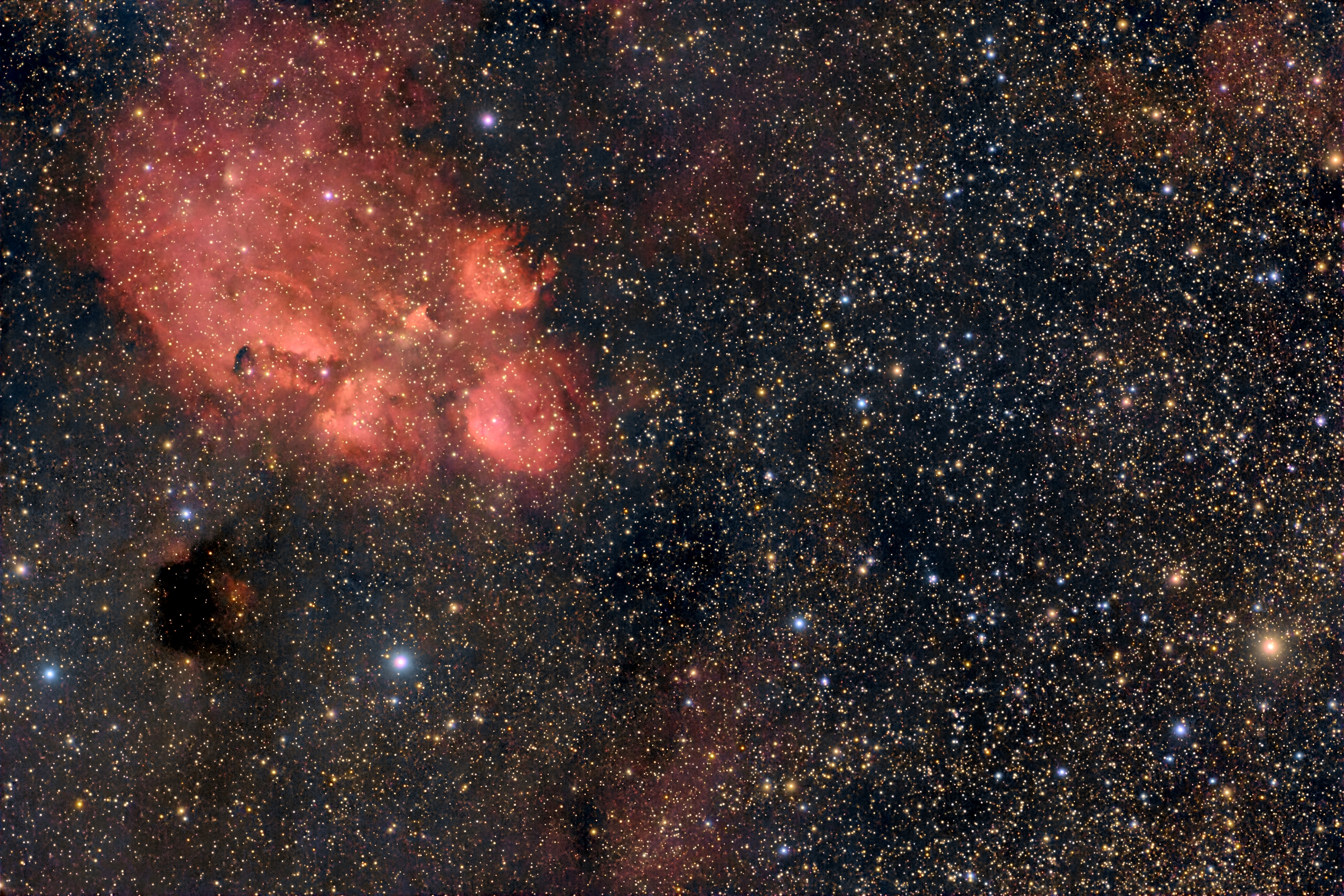
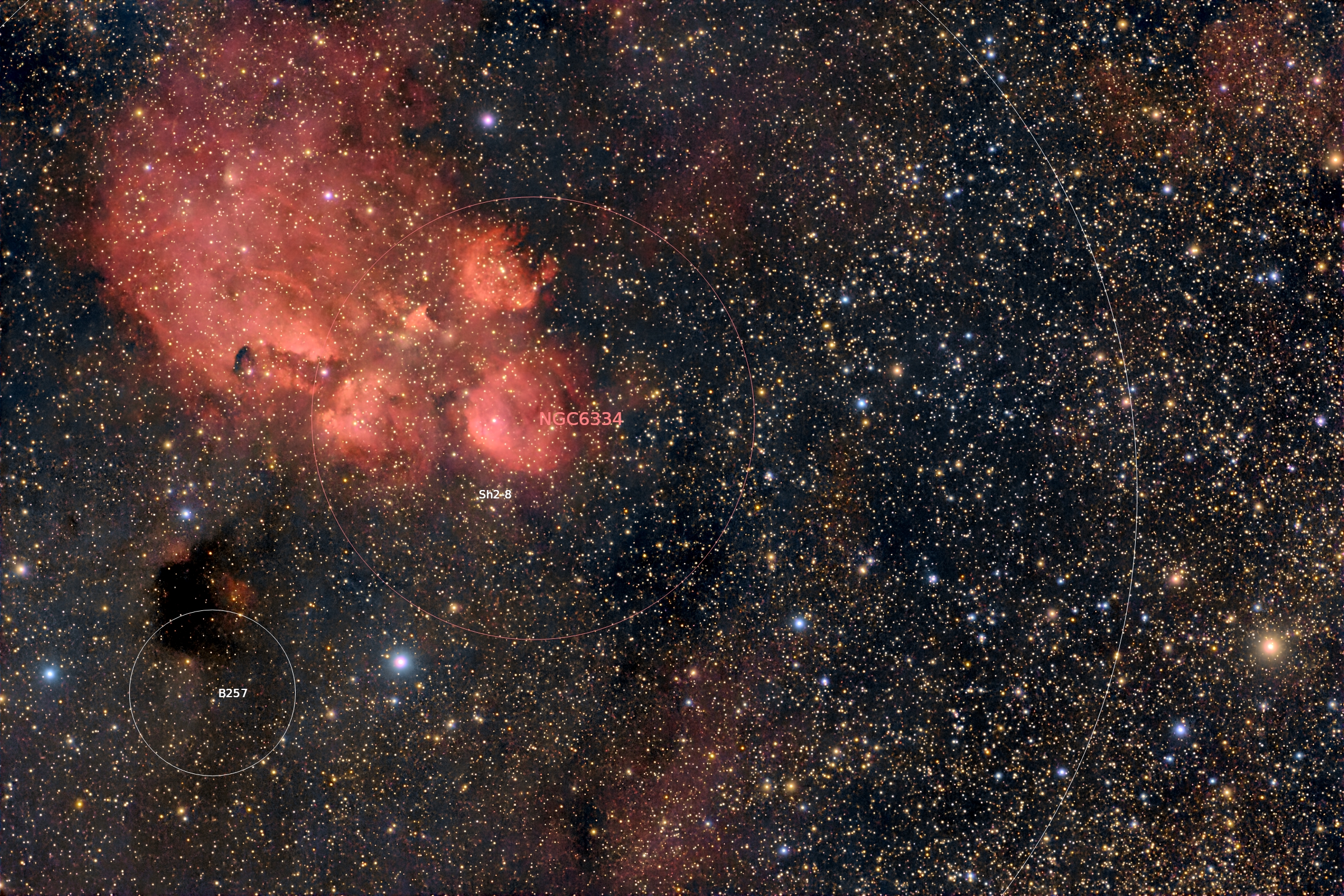
The images were taken with the following equipment:
- Date 2008
- Location: Tivoli, Namibia
- Telescope: Pentax 75
- Focal length [mm]: 500
- Focal ratio: 6.7
- Mount: Vixen Atlux
- Camera: Canon 300 Da
- Filter: OSC
- Exposure time [min]: 80
- Resolution: 3.04″/px



Leave a reply