• Home
  • Blog
  • Astrophotography
    • Deep Sky
      • Galaxies (Galaxien)
      • Nebulae (Nebel)
      • Planetary Nebulae (Planetarische Nebel)
      • Globular Clusters (Kugelsternhaufen)
      • Open Clusters (Offene Sternhaufen)
      • Miscellaneous (Verschiedenes)
    • Solar System (Sonnensystem)
      • Comets (Kometen)
      • Moon (Mond)
      • Planets (Planeten)
      • Sun (Sonne)
  • Archiv

    • Juli 2026
    • Juni 2026
    • Mai 2026
    • April 2026
    • Dezember 2025
    • November 2025
    • Oktober 2025
    • September 2025
    • August 2025
    • Juli 2025
    • Juni 2025
    • Mai 2025
    • April 2025
    • März 2025
    • Januar 2025
    • Dezember 2024
    • November 2024
    • Oktober 2024
    • September 2024
    • Juli 2024
    • Juni 2024
    • Mai 2024
    • April 2024
    • März 2024
    • Februar 2024
    • Januar 2024
    • November 2023
    • Oktober 2023
    • September 2023
    • August 2023
    • Juli 2023
    • Juni 2023
    • Mai 2023
    • April 2023
    • März 2023
    • Februar 2023
    • Januar 2023
    • Dezember 2022
    • November 2022
    • Oktober 2022
    • September 2022
    • August 2022
    • Juni 2022
    • Mai 2022
    • April 2022
    • März 2022
    • Februar 2022
    • Januar 2022
    • Dezember 2021
    • November 2021
    • September 2021
    • August 2021
    • Juli 2021
    • März 2021
    • Februar 2021
    • November 2020
    • September 2020
    • August 2020
    • April 2020
    • März 2020
    • Februar 2020
    • Januar 2020
    • Dezember 2019
    • November 2019
    • Oktober 2019
    • September 2019
    • August 2019
    • Mai 2019
    • April 2019
    • März 2019
    • Dezember 2018
    • November 2018
    • September 2018
    • Juni 2018
    • Mai 2018
    • April 2018
    • März 2018
    • Februar 2018
    • Januar 2018
    • Oktober 2017
    • Juli 2017
    • Juni 2017
    • Januar 2017
    • September 2016
    • Mai 2016
    • März 2016
    • November 2015
    • Oktober 2015
    • September 2015
    • Mai 2015
    • März 2015
    • Februar 2015
    • September 2014
    • August 2014
    • März 2014
    • Februar 2014
    • Oktober 2013
    • September 2013
    • August 2013
    • April 2013
    • März 2013
    • November 2012
    • August 2012
    • Juli 2012
    • Mai 2012
    • März 2012
    • Januar 2012
    • November 2011
    • Oktober 2011
    • September 2011
    • August 2011
    • April 2011
    • März 2011
    • Oktober 2010
    • September 2010
    • August 2010
    • Juli 2010
    • April 2010
    • Juli 2009
    • Juli 2008
    • Januar 2008
    • Oktober 2007
    • Juli 2007
    • Februar 2007
    • Juni 2006
    • Oktober 2005
    • September 2005
    • August 2005
    • Januar 2005
  • Kategorien

    • Asterism
    • Astrophotography
    • Barnard
    • Comet
    • Galaxies
    • Globular Cluster
    • IC
    • Messier
    • Moon
    • Nebula
    • NGC
    • Open cluster
    • Photography
    • Planetary Nebula
    • Travel
  • Meta

    • Anmelden
    • Eintrags-Feed
    • Kommentar-Feed
    • WordPress.org
  • Privacy Policy
  • Impressum
  • Haftungsausschluss
  • Cookie-Richtlinie
  • Datenschutzerklärung

wonderfuluniverse.de
  • Home
  • Blog
  • Astrophotography
    • Deep Sky
      • Galaxies (Galaxien)
      • Nebulae (Nebel)
      • Planetary Nebulae (Planetarische Nebel)
      • Globular Clusters (Kugelsternhaufen)
      • Open Clusters (Offene Sternhaufen)
      • Miscellaneous (Verschiedenes)
    • Solar System (Sonnensystem)
      • Comets (Kometen)
      • Moon (Mond)
      • Planets (Planeten)
      • Sun (Sonne)

NGC 5248 from remote


From time to time, I obtain datasets from remote observatories around the world. One of my favorite providers is Telescope Live, which operates telescopes at world-class observing sites in Chile, Australia, and Spain. One of the datasets I received in 2022 featured the beautiful spiral galaxy NGC 5248, located in the constellation Bootes. The professional-quality data, obtained under the exceptionally dark skies of Chile, provided an excellent foundation for producing a detailed image of this elegant face-on spiral galaxy, revealing its intricate spiral arms, dark dust lanes, and numerous star-forming regions.

NGC 5248 lies at a distance of approximately 50 million light-years and is classified as an intermediate barred spiral galaxy (SABbc). Seen almost face-on, it displays a magnificent system of well-defined spiral arms that wind gracefully around a bright central bulge. This orientation allows astronomers to study the galaxy’s internal structure in remarkable detail, making it a popular target for both professional observations and astrophotography.

One of the most remarkable features of NGC 5248 is its double circumnuclear star-forming ring. High-resolution observations have revealed two compact rings of intense star formation surrounding the galaxy’s nucleus. These rings are believed to be produced by gas flowing inward along the galaxy’s weak central bar. As the gas accumulates at specific resonances, it collapses to form large numbers of young, massive stars. NGC 5248 has therefore become an important laboratory for studying how bars transport gas toward the centers of spiral galaxies and trigger bursts of star formation.

The spiral arms are richly populated with bright H II regions, where newly formed hot stars ionize the surrounding hydrogen gas. Interspersed between these luminous regions are prominent dark dust lanes that trace the dense molecular clouds from which future generations of stars will eventually emerge. This interplay between dust, gas, and young stellar populations creates the striking contrast that characterizes the galaxy’s appearance.

Beyond the bright spiral disk, deep images reveal an extended halo together with numerous faint background galaxies scattered across the field of view. These distant galaxies, many hundreds of millions or even billions of light-years away, provide a fascinating reminder of the immense depth contained within a single astronomical image.

From a scientific perspective, NGC 5248 is one of the best-studied examples of how a galactic bar influences the evolution of a spiral galaxy. The inward transport of gas fuels ongoing star formation near the nucleus and may also contribute to feeding the galaxy’s central supermassive black hole. Studying galaxies like NGC 5248 helps astronomers better understand the mechanisms that regulate star formation and the long-term evolution of disk galaxies.

The Telescope Live dataset acquired in 2022 beautifully captures the galaxy’s delicate spiral pattern, intricate dust lanes, and bright blue star-forming regions. Thanks to the excellent image quality and pristine observing conditions of the Chilean observatory, the final image reveals subtle details that would be extremely difficult to obtain under light-polluted skies, making NGC 5248 one of the finest spiral galaxies in my collection of remotely acquired datasets.

Data calibration and registration and the final processing was done with PixInsight. The result was as follows:
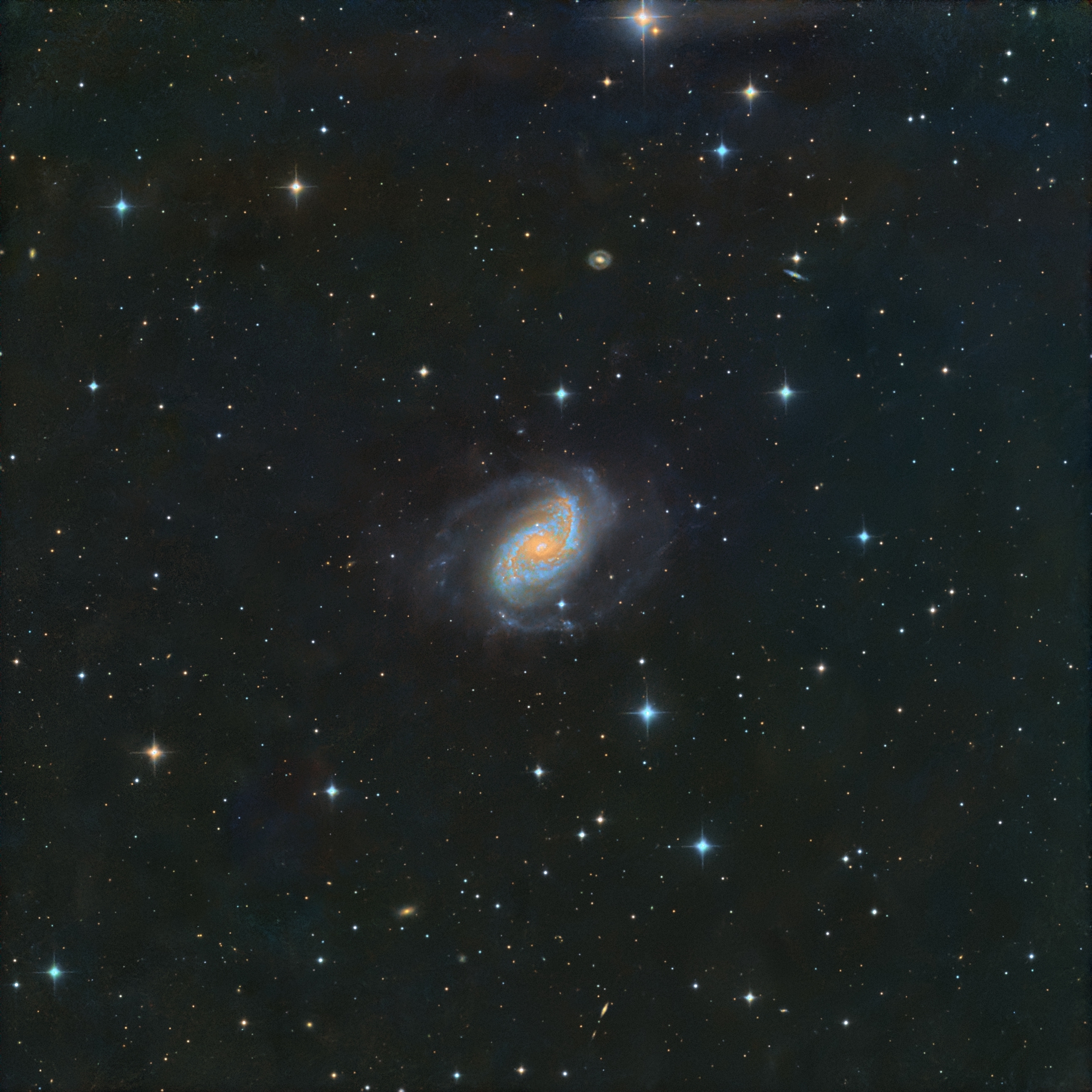
NGC 5248, Telescope Live, Chile, 2021
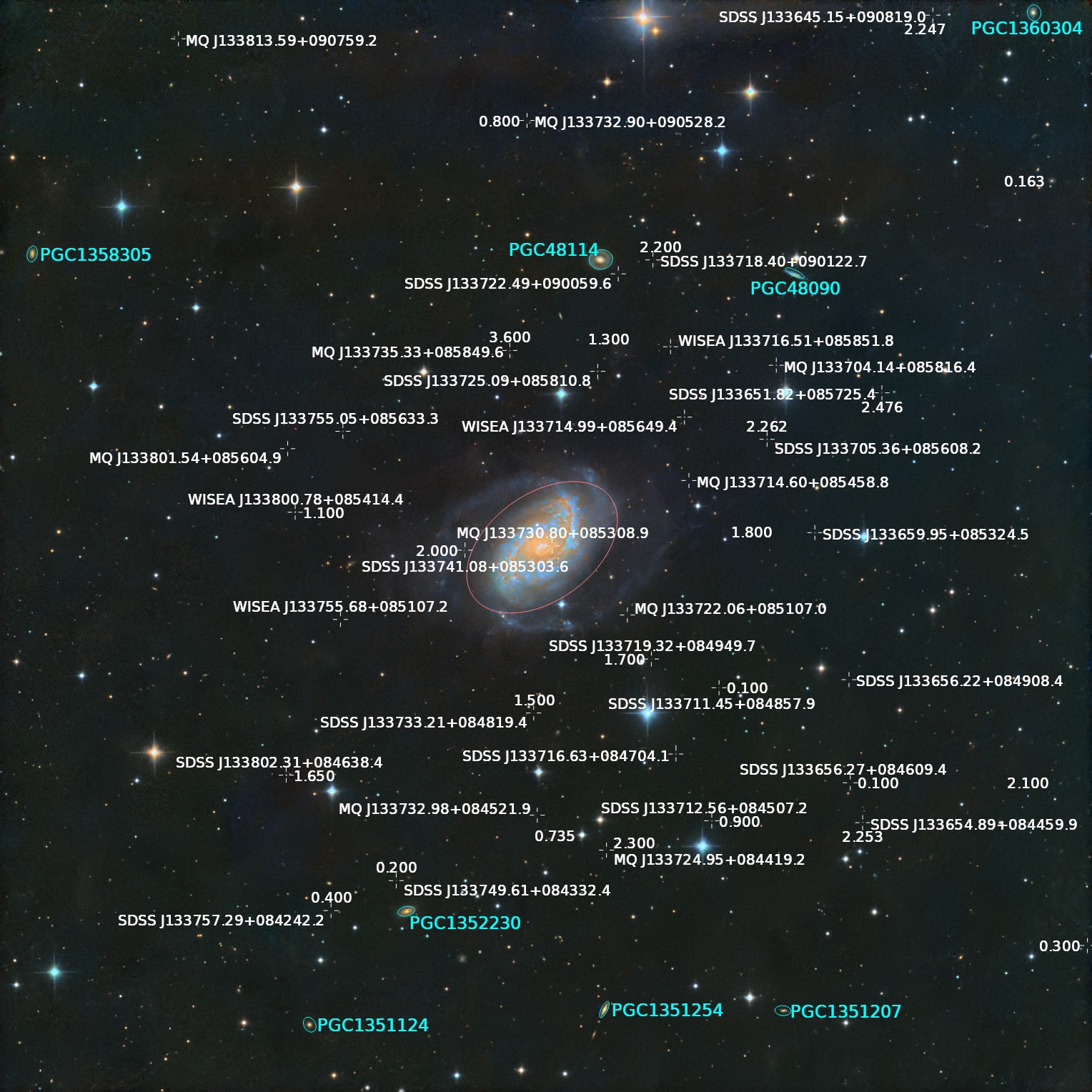
NGC 5248 annotated
NGC 5248 annotated

In the field were quiet a lot of quasars (see annotation).

The most distant of them is MQ J133735.33+085849.6 with a redshift of 3.6.


The images were taken with the following equipment (Telescope Live CHI-1):

  • Date: 2021
  • Telescope/Lens: Planwave CDK24
  • Focal length [mm]: 3900
  • Focal ratio: 6.5
  • Mount: Mathis MI-1000/1250
  • Camera: FLI Proline 9000
  • Filter: LRGB
  • Exposure time [min]: 80:80:75:80
  • Resolution: 0.62″/px


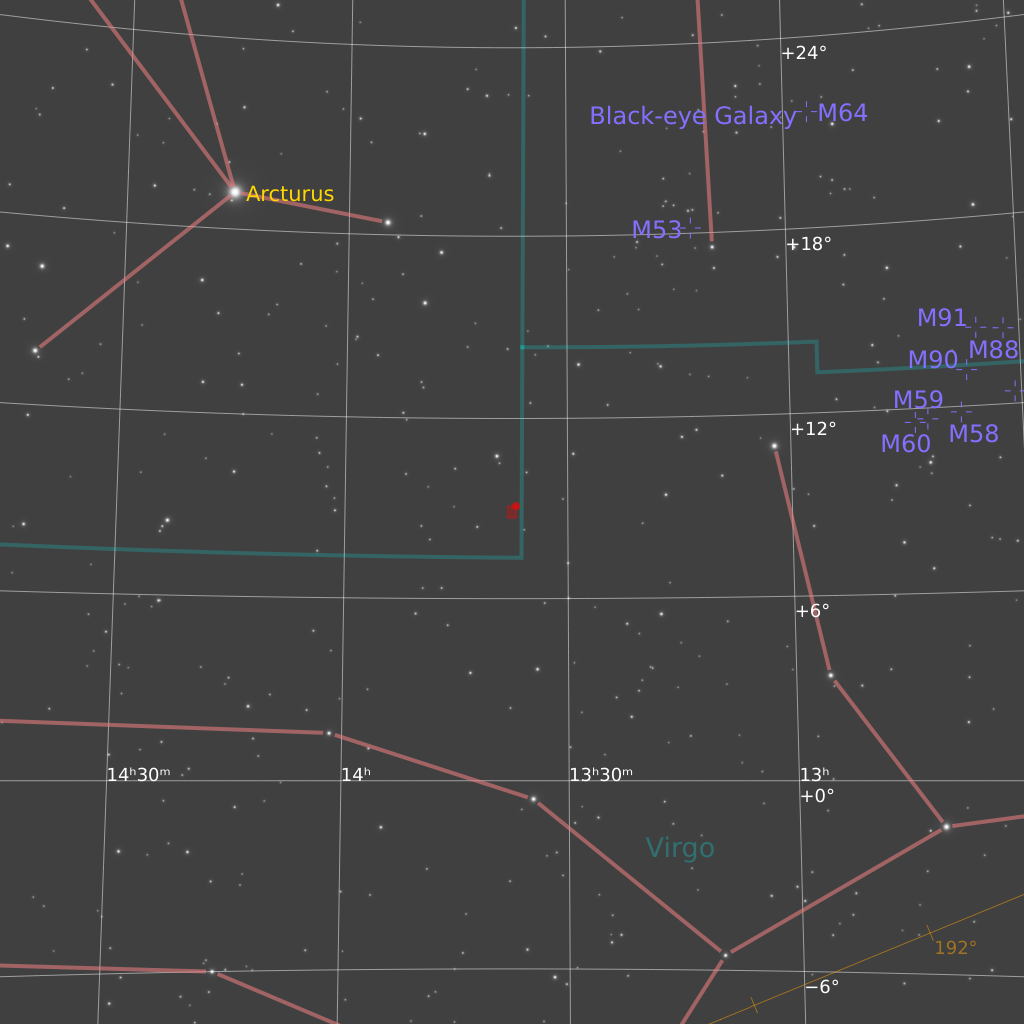
NGC 5248 Finder Chart

Stephan Küppers


You might also like
IC 1318
15. Juli 2026
NGC 7000 with IC 5070
24. Juni 2026
NGC 7023 (Iris Nebula) and LBN 468
25. Mai 2026

Leave a reply

Schreibe einen Kommentar Antwort abbrechen

Deine E-Mail-Adresse wird nicht veröffentlicht. Erforderliche Felder sind mit * markiert


© Stephan Küppers 2020-2022

Cookie-Zustimmung verwalten
Wir verwenden Cookies, um unsere Website und unseren Service zu optimieren.
Funktional Immer aktiv
Die technische Speicherung oder der Zugang ist unbedingt erforderlich für den rechtmäßigen Zweck, die Nutzung eines bestimmten Dienstes zu ermöglichen, der vom Teilnehmer oder Nutzer ausdrücklich gewünscht wird, oder für den alleinigen Zweck, die Übertragung einer Nachricht über ein elektronisches Kommunikationsnetz durchzuführen.
Vorlieben
Die technische Speicherung oder der Zugriff ist für den rechtmäßigen Zweck der Speicherung von Präferenzen erforderlich, die nicht vom Abonnenten oder Benutzer angefordert wurden.
Statistiken
Die technische Speicherung oder der Zugriff, der ausschließlich zu statistischen Zwecken erfolgt. Die technische Speicherung oder der Zugriff, der ausschließlich zu anonymen statistischen Zwecken verwendet wird. Ohne eine Vorladung, die freiwillige Zustimmung deines Internetdienstanbieters oder zusätzliche Aufzeichnungen von Dritten können die zu diesem Zweck gespeicherten oder abgerufenen Informationen allein in der Regel nicht dazu verwendet werden, dich zu identifizieren.
Marketing
Die technische Speicherung oder der Zugriff ist erforderlich, um Nutzerprofile zu erstellen, um Werbung zu versenden oder um den Nutzer auf einer Website oder über mehrere Websites hinweg zu ähnlichen Marketingzwecken zu verfolgen.
  • Optionen verwalten
  • Dienste verwalten
  • Verwalten von {vendor_count}-Lieferanten
  • Lese mehr über diese Zwecke
Einstellungen anzeigen
  • {title}
  • {title}
  • {title}