

NGC 4945
I imaged the spiral galaxy NGC 4945 twice, both times during stays at the astrofarm Tivoli in Namibia. My first image was acquired in 2015, followed by a second imaging session in 2017. On both occasions, I used the observatory’s 12-inch astrograph, but in 2017 a larger CCD camera was available, allowing a wider field of view and improved image quality. The combination of excellent equipment and Namibia’s exceptionally dark skies made it possible to capture the galaxy’s rich structure and faint outer features in remarkable detail.
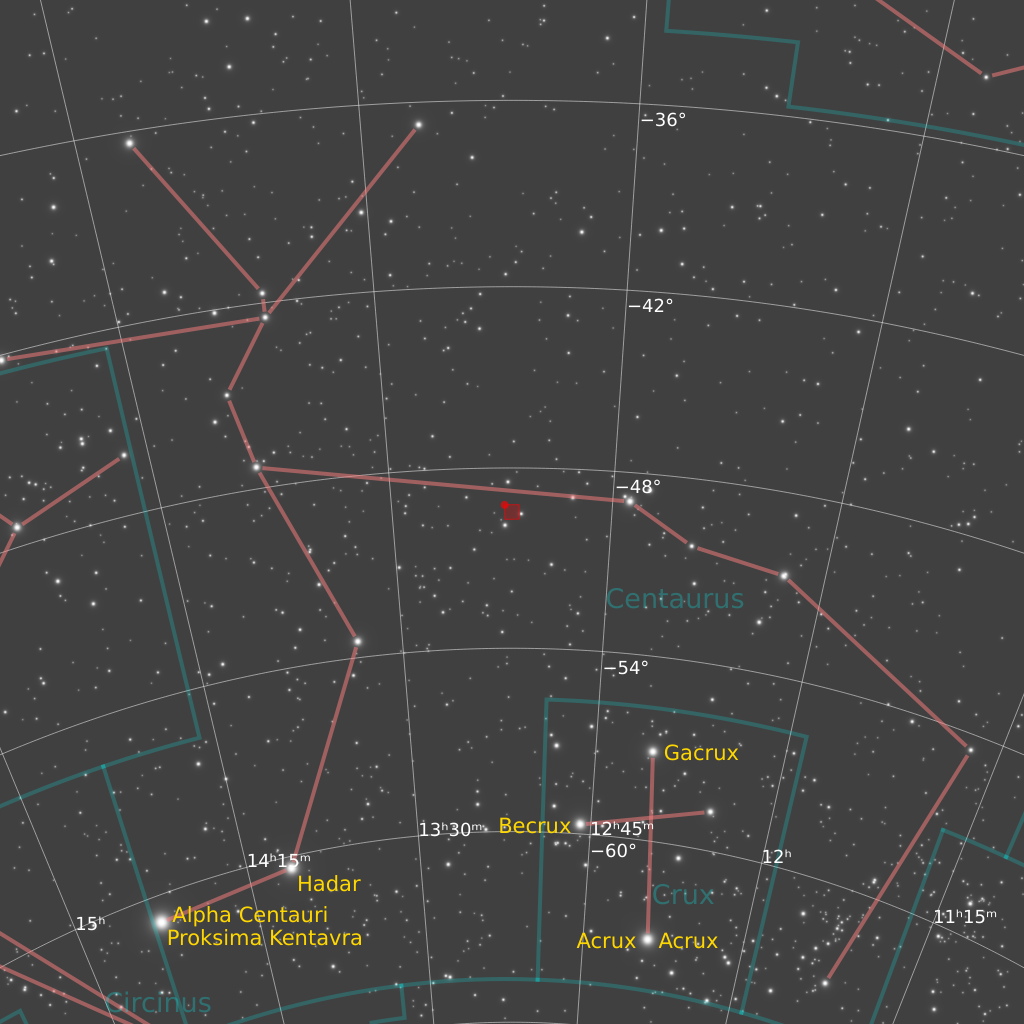
NGC 4945 is located in the constellation Centaurus at a distance of approximately 11–13 million light-years, making it one of the nearest large galaxies beyond the Local Group. It is a member of the Centaurus A/M83 Group, which also includes the famous galaxies Centaurus A and Messier 83.
Viewed almost perfectly edge-on, NGC 4945 bears a striking resemblance to our own Milky Way. A prominent dust lane runs along the length of the galactic disk, partially obscuring the bright central regions and creating a dramatic visual appearance. Deep images reveal countless dark dust clouds, bright stellar associations, and subtle structures extending far into the galaxy’s outer disk.
From a scientific perspective, NGC 4945 is one of the most interesting nearby galaxies. It is classified as a Seyfert galaxy, meaning that its nucleus contains an actively accreting supermassive black hole. Although the central region is heavily obscured by dust in visible light, observations in infrared, radio, and X-ray wavelengths have revealed intense activity near the galactic core. The galaxy is also experiencing a powerful starburst phase, producing new stars at a rate significantly higher than that of the Milky Way.
Large amounts of molecular gas and dust are concentrated in the central regions, fueling both the active nucleus and the ongoing burst of star formation. Astronomers have observed enormous outflows of gas extending above and below the galactic plane, driven by stellar winds, supernova explosions, and activity associated with the central black hole. These processes provide valuable insight into how galaxies regulate star formation and evolve over time.
Because of its proximity, NGC 4945 has become an important laboratory for studying the interplay between starburst activity and active galactic nuclei. It is often compared with the Milky Way because of its similar size and structure, offering astronomers a unique opportunity to examine processes that may also occur within our own galaxy but are difficult to observe from our position inside it.
The images obtained in 2015 and 2017 illustrate not only the beauty of this magnificent southern galaxy but also the advantages of improved instrumentation. The larger CCD camera used in 2017 revealed additional faint structures and provided a broader view of the surrounding star field, resulting in a deeper and more detailed portrait of one of the most fascinating galaxies in the southern sky.
For the 2017data the calibration and registration, as well as the final image processing, were all done with PixInsight.
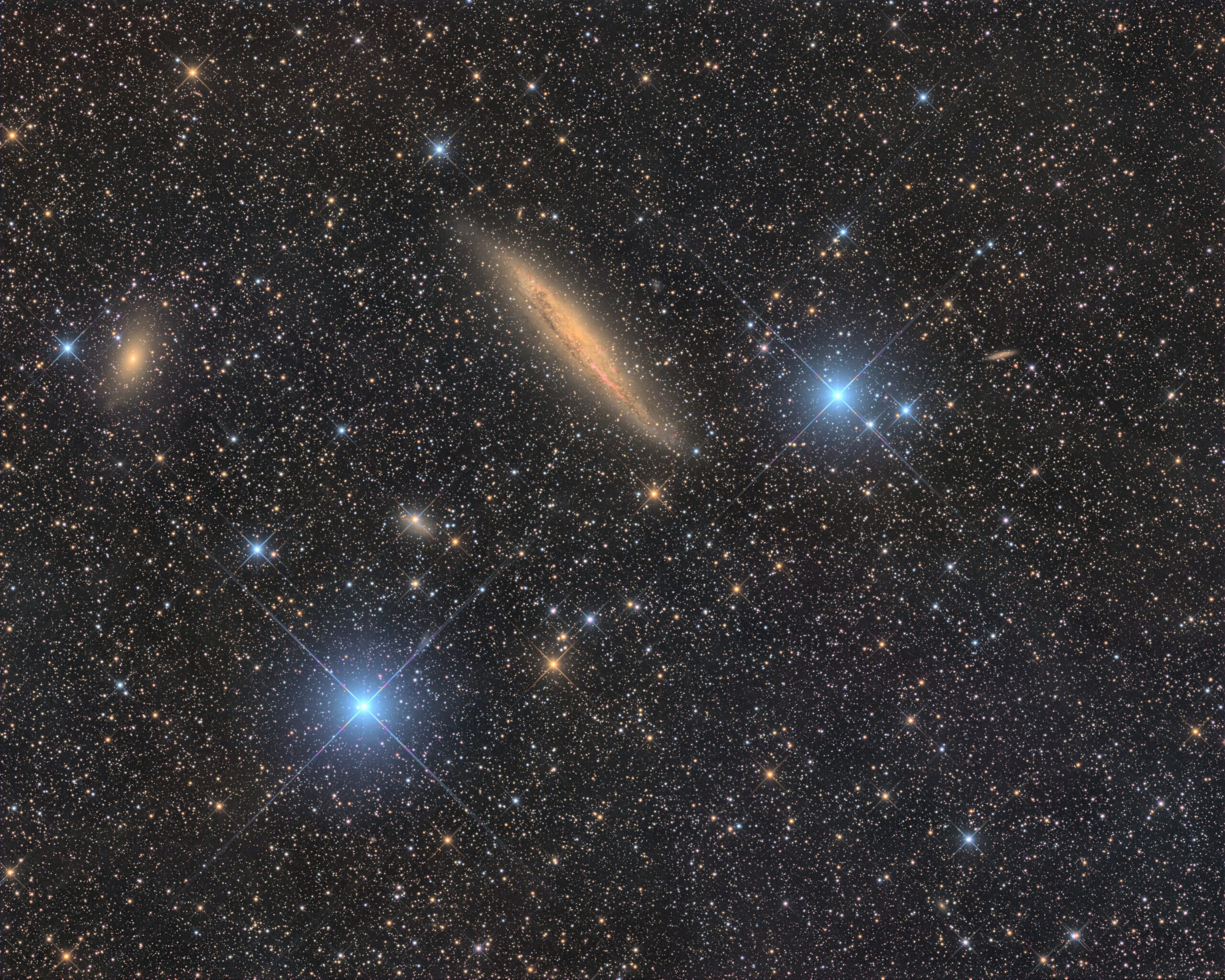
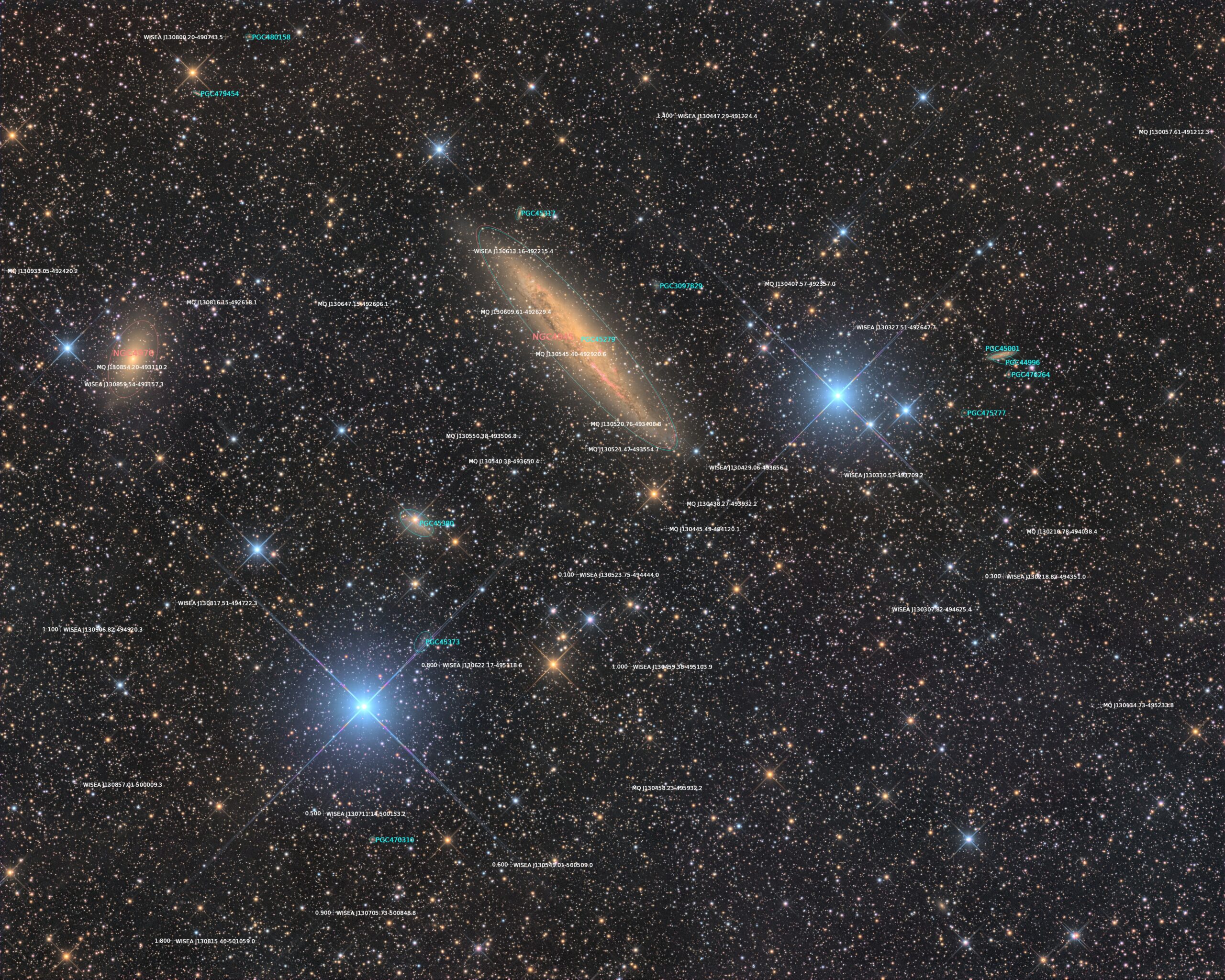
The images were taken with the following equipment:
- Date: 2017
- Location: Tivoli, Namibia
- Telescope: 12″ ASA Astrograph
- Focal length [mm]: 1076
- Focal ratio: 3.6
- Mount: ASA DDM85
- Camera: FLI Microline ML16200
- Filter: L:R:G:B
- Exposure time [min]: 360:60:60:60
- Resolution: 1.14″/px
For the 2015 data the calibration and registration, as well as the final image processing, were all done with PixInsight.
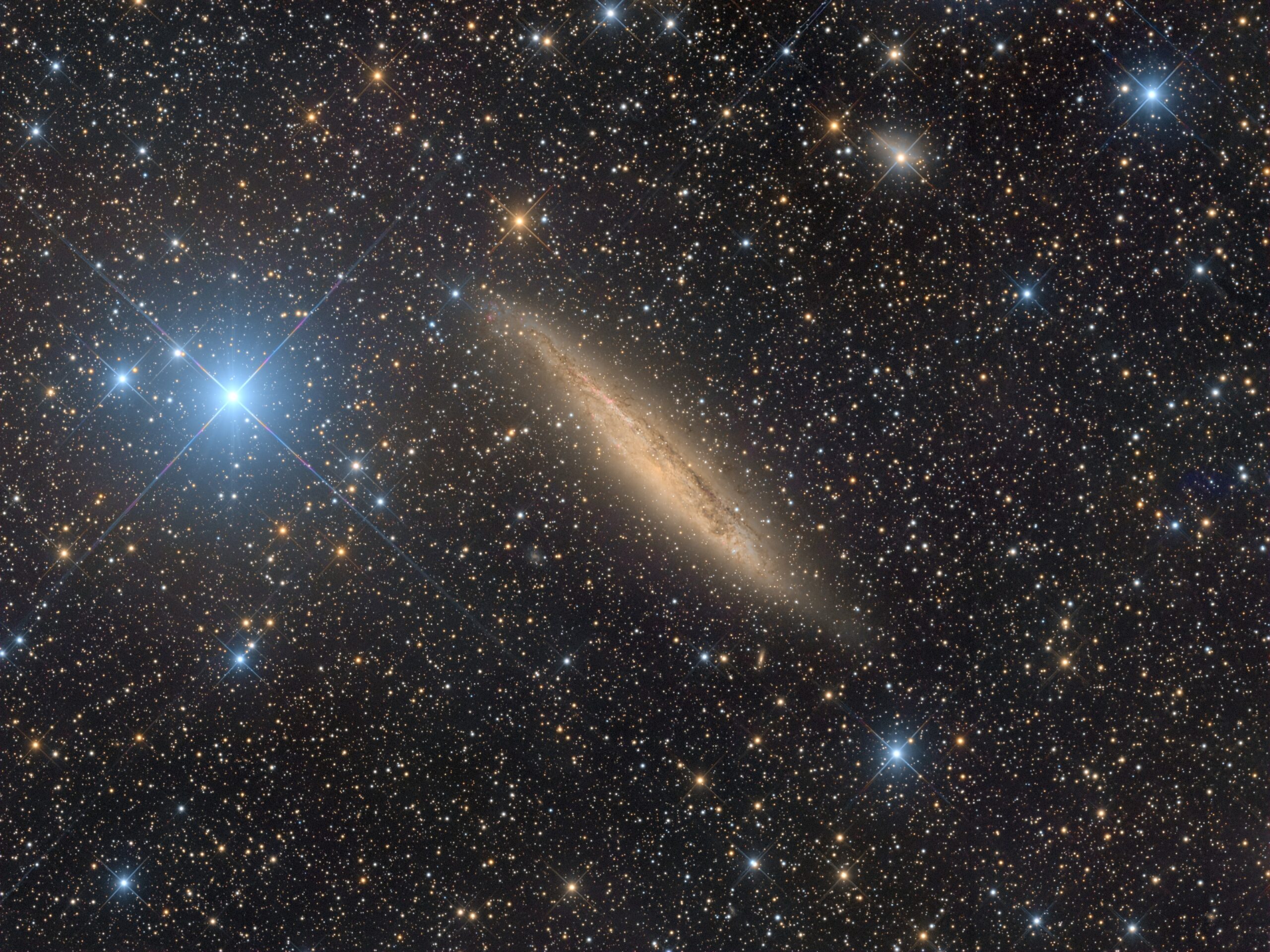
The images were taken with the following equipment:
- Date: 2015
- Location: Tivoli, Namibia
- Telescope: 12″ ASA Astrograph
- Focal length [mm]: 1076
- Focal ratio: 3.6
- Mount: ASA DDM85
- Camera: FLI Microline 8300
- Filter: L:R:G:B
- Exposure time [min]: 100:60:60:60
- Resolution: 1.14″/px



Leave a reply