

NGC 4559 from my backyard
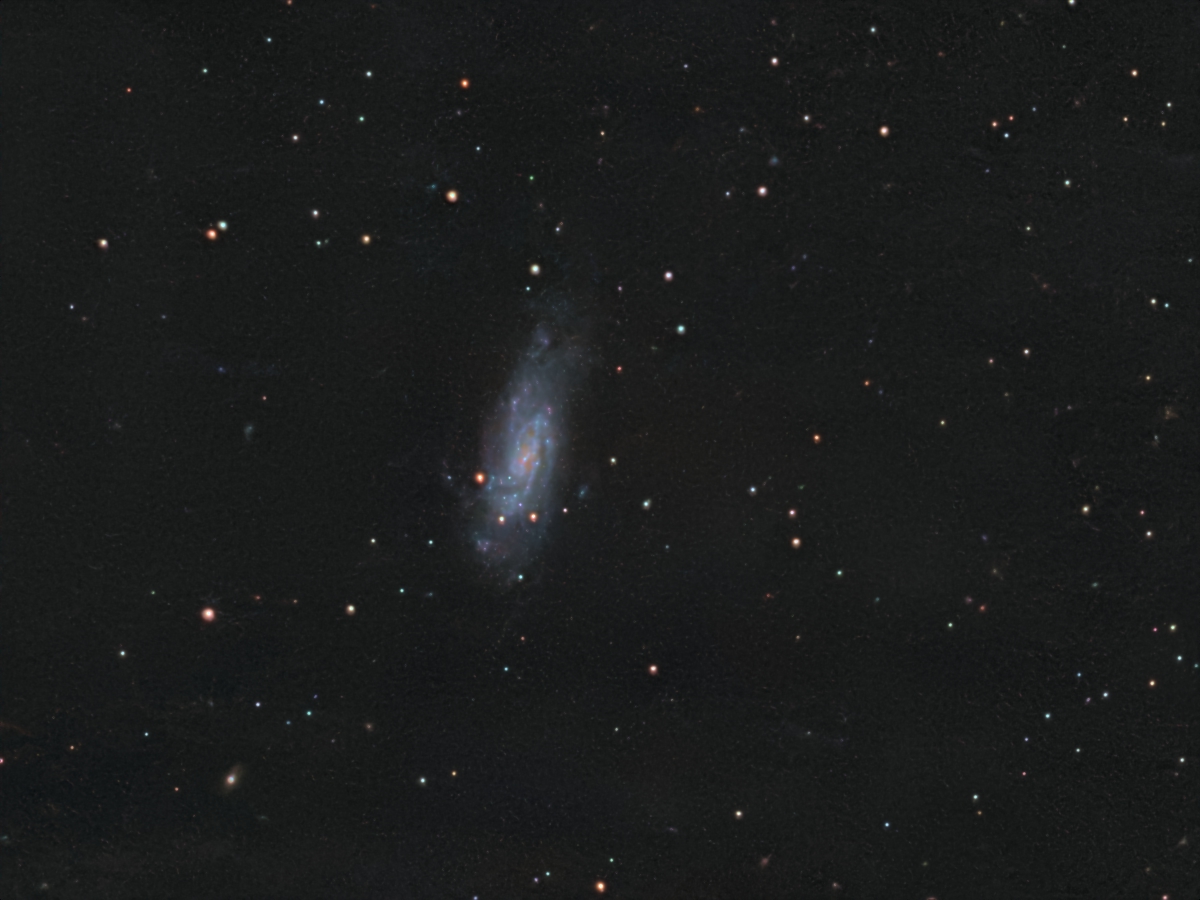
In 2010, I imaged the spiral galaxy NGC 4559 from my backyard using my DSLR equipment. Despite the limitations imposed by suburban skies, the long integration time allowed the galaxy’s extensive spiral structure and numerous star-forming regions to be recorded in surprising detail. NGC 4559 is a rewarding target for amateur astrophotographers because of its relatively large apparent size and rich internal structure.
Located in the constellation Coma Berenices, NGC 4559 lies at a distance of approximately 30 million light-years. It is classified as an intermediate spiral galaxy (SABcd) and is viewed at a moderate inclination, providing an excellent perspective on its disk and spiral arms. Unlike the highly symmetrical grand-design spirals such as Messier 51, NGC 4559 exhibits a more fragmented and irregular spiral pattern, giving it a dynamic and natural appearance.
One of the most striking features of the galaxy is its abundance of bright H II regions distributed throughout the spiral arms. These glowing clouds of ionized hydrogen mark sites of active star formation where massive young stars are illuminating the surrounding gas. Deep images reveal numerous blue stellar associations and clusters embedded within the arms, highlighting the galaxy’s ongoing stellar production.
NGC 4559 has attracted considerable scientific interest because it hosts several ultraluminous X-ray sources (ULXs). These objects emit far more X-ray radiation than typical stellar-mass black holes and are believed to be powered by compact objects accreting matter at extremely high rates. The best-known ULX in NGC 4559 has been studied extensively as a possible intermediate-mass black hole candidate, making the galaxy an important target for high-energy astrophysics.
The galaxy also possesses an extensive reservoir of gas and dust, providing the raw material for future star formation. Radio observations have revealed large amounts of neutral hydrogen extending beyond the visible stellar disk, while optical images show intricate dust structures woven throughout the spiral arms. These features contribute to the galaxy’s rich and highly textured appearance.
The final DSLR image captured not only the bright central regions of NGC 4559 but also the delicate outer arms and numerous star-forming complexes that characterize this beautiful galaxy. The result showcases one of the finest late-type spiral galaxies visible in the northern sky and highlights the impressive amount of detail that can be recorded with modest equipment and careful image processing.
Data calibration and registration was done with DeepSkyStacker and the final processing was done with PixInsight. The result was as follows:
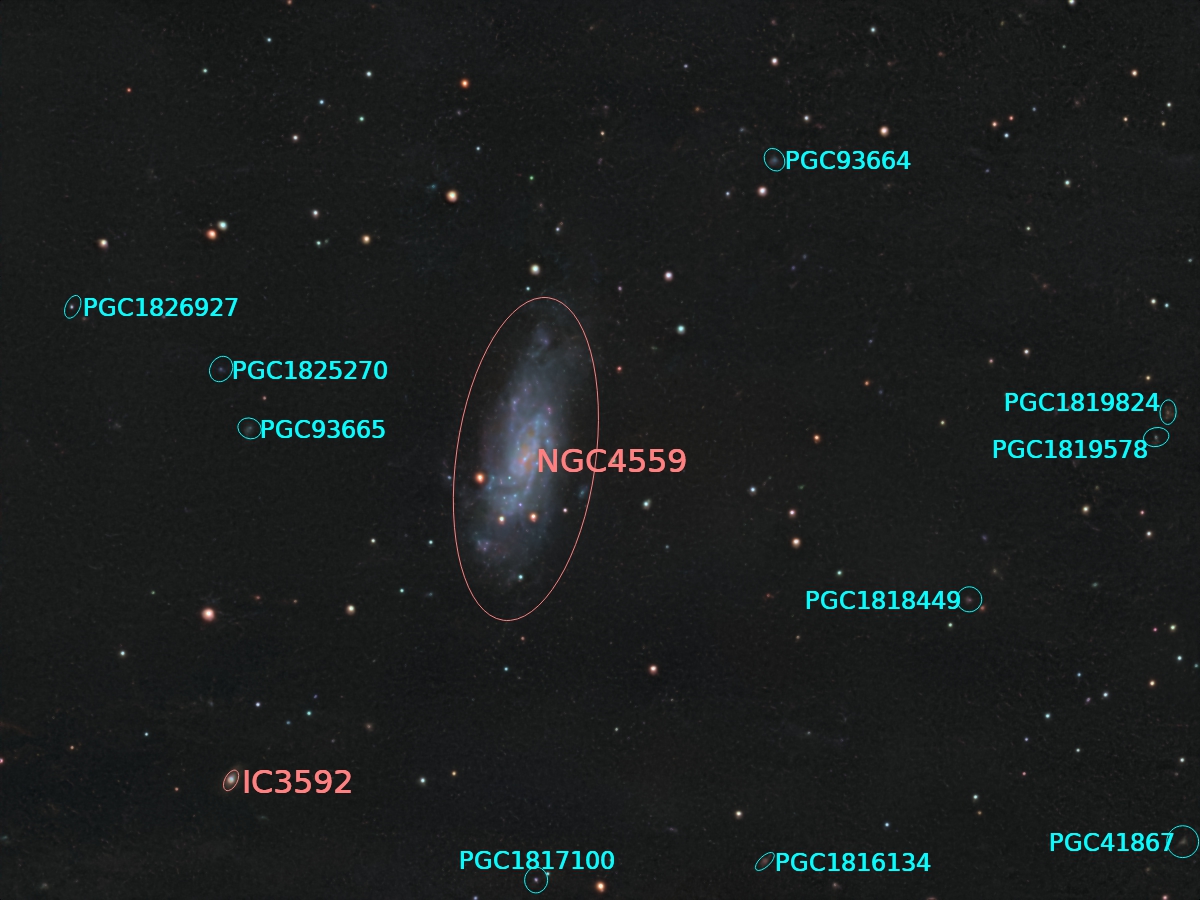
The images were taken with the following equipment:
- Date: 2010
- Location: Krefeld
- Telescope: 8″ GSO Newton
- Focal length [mm]: 500
- Focal ratio: 4
- Mount: Skywatcher NEQ6 Synscan
- Camera: Canon 300Da
- Filter: OSC
- Exposure time [min]: 331
- Resolution: 1.88″/px




Leave a reply