

NGC 3981 from remote
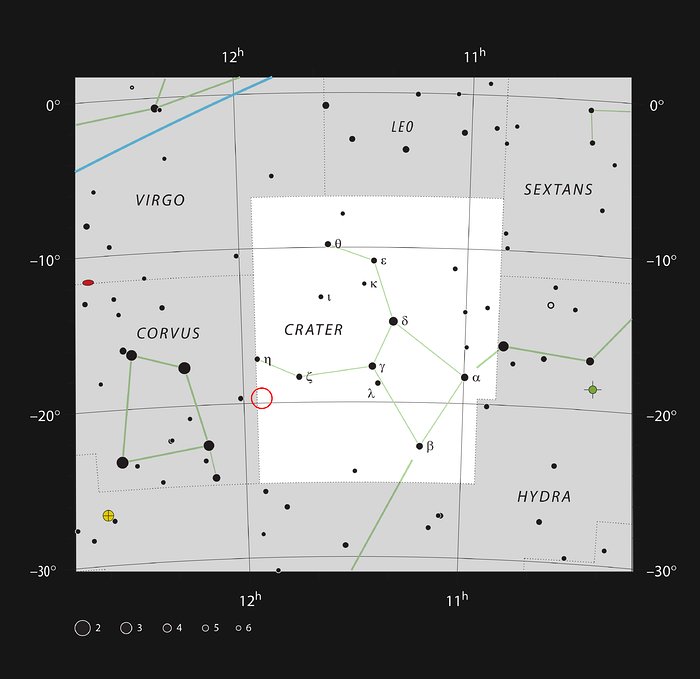
From time to time, I obtain data sets from remote observatories around the world. One of my favorite providers is Telescope Live, which operates telescopes in locations such as Chile, Australia, and Spain. One of the datasets I received featured the galaxy NGC 3981, located in the constellation Crater.
NGC 3981 is a beautiful barred spiral galaxy situated approximately 65 million light-years from Earth. Seen at a moderate inclination, the galaxy displays a striking spiral structure with prominent dust lanes winding through its disk. Deep images reveal a wealth of fine detail, including bright star-forming regions, subtle dust features, and faint outer extensions that become visible only through long exposures.
Classified as an SABbc galaxy, NGC 3981 occupies an intermediate position between strongly barred and unbarred spirals. Its central bar channels gas toward the inner regions of the galaxy, helping to fuel ongoing star formation. Numerous bright H II regions can be seen along the spiral arms, marking areas where massive young stars have recently formed and are illuminating the surrounding hydrogen clouds.
One of the most interesting aspects of NGC 3981 is its active nucleus. The galaxy is classified as a Seyfert galaxy, meaning that its central supermassive black hole is actively accreting material and producing measurable energetic emission. Although the nucleus is modest compared with the powerful active galactic nuclei found in quasars, it nevertheless provides astronomers with an opportunity to study the interaction between a galaxy’s central black hole and its surrounding stellar population.
The spiral arms of NGC 3981 are rich in structure and exhibit numerous dark dust lanes that contrast beautifully with the brighter stellar background. Deep observations reveal that the galaxy’s disk extends farther than might be expected from visual inspection alone, with faint outer features tracing the distribution of stars and gas at large distances from the center.
The field surrounding NGC 3981 contains many distant background galaxies, adding depth and perspective to the image. These faint systems serve as a reminder that even a relatively nearby galaxy such as NGC 3981 is only one member of a vast cosmic web extending across billions of light-years.
The high-quality Telescope Live dataset allowed for careful processing of both the bright inner regions and the delicate outer structures of the galaxy. The resulting image highlights the intricate interplay of dust, gas, and stars within this elegant spiral system while also revealing the subtle features associated with its active galactic nucleus. NGC 3981 is therefore both a visually appealing astrophotographic target and an interesting object for studying spiral galaxy structure and nuclear activity.
Data calibration and registration and the final processing was done with PixInsight. The result was as follows:
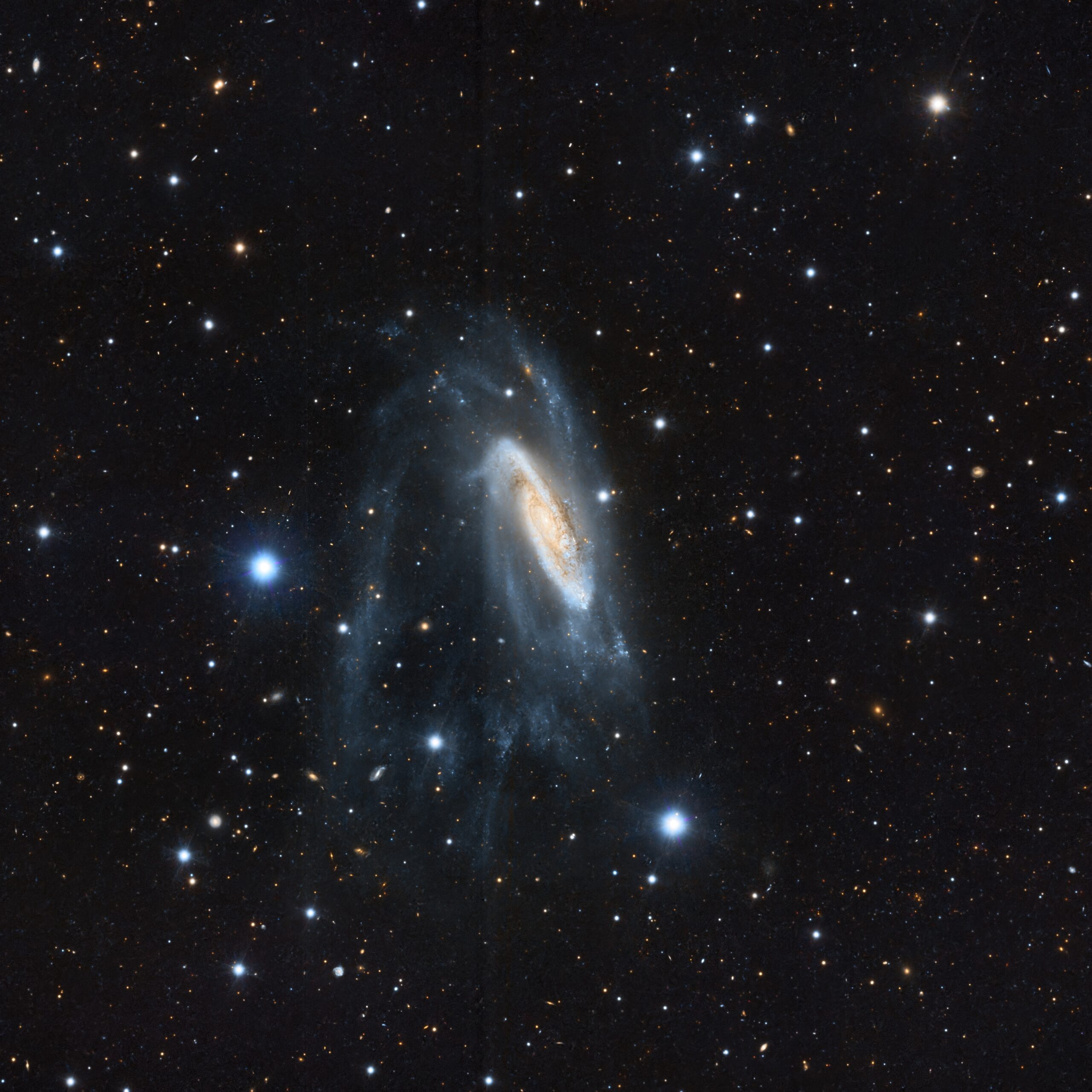
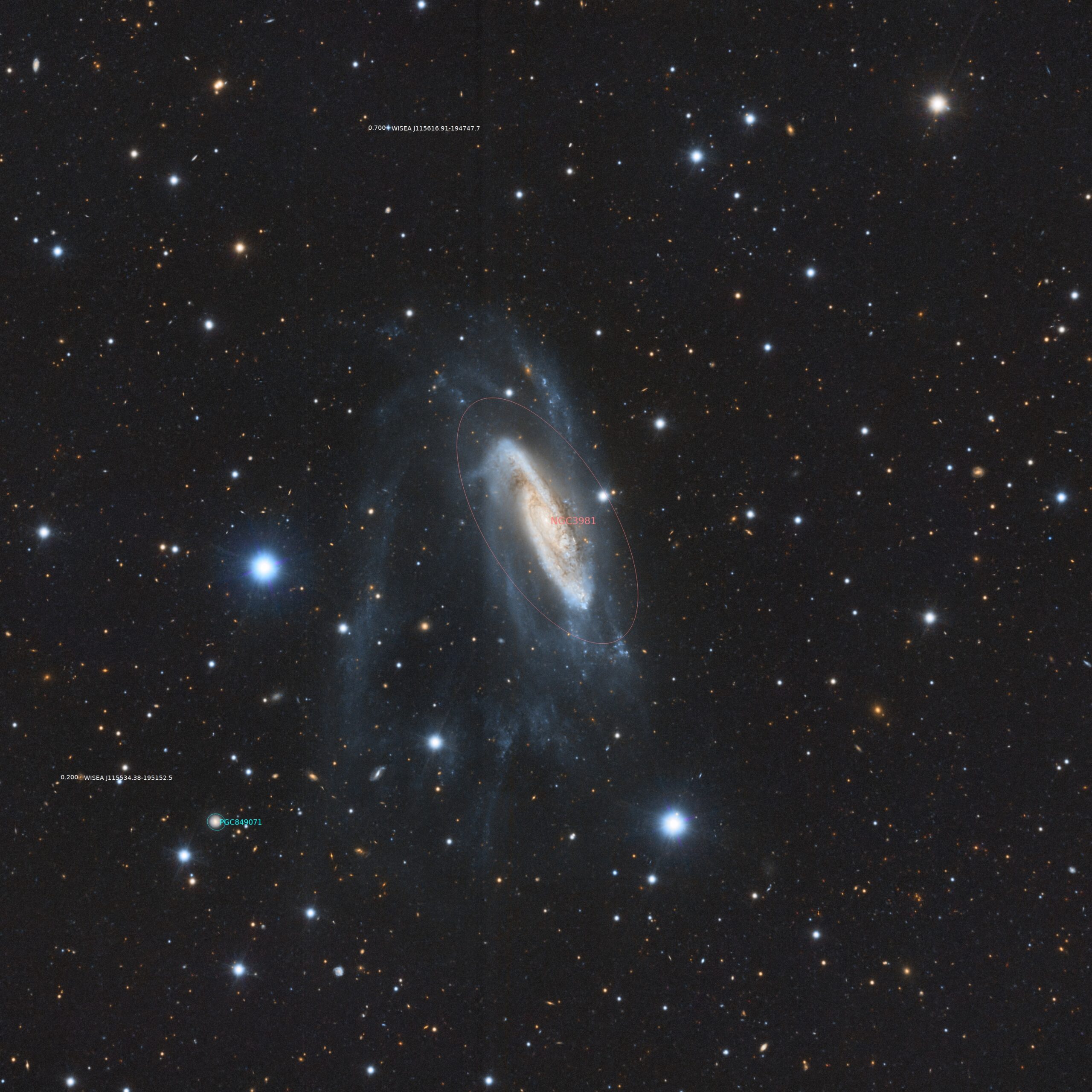
NGC 3981 annotated
The images were taken with the following equipment (Telescope Live CHI-3):
- Date: 2020
- Location: El Sauce Observatory, Chile
- Telescope/Lens: ASA RC-1000AZ
- Focal length [mm]: 6780
- Focal ratio: 6.8
- Mount: ASA Alt-Az DDM
- Camera: FLI Proline 16803
- Filter: LRGB
- Exposure time [min]: 520:500:400:500
- Resolution: 0.274″/px



Leave a reply