

NGC 3718, NGC 3729 from my own „Sterntaucher“ observatory
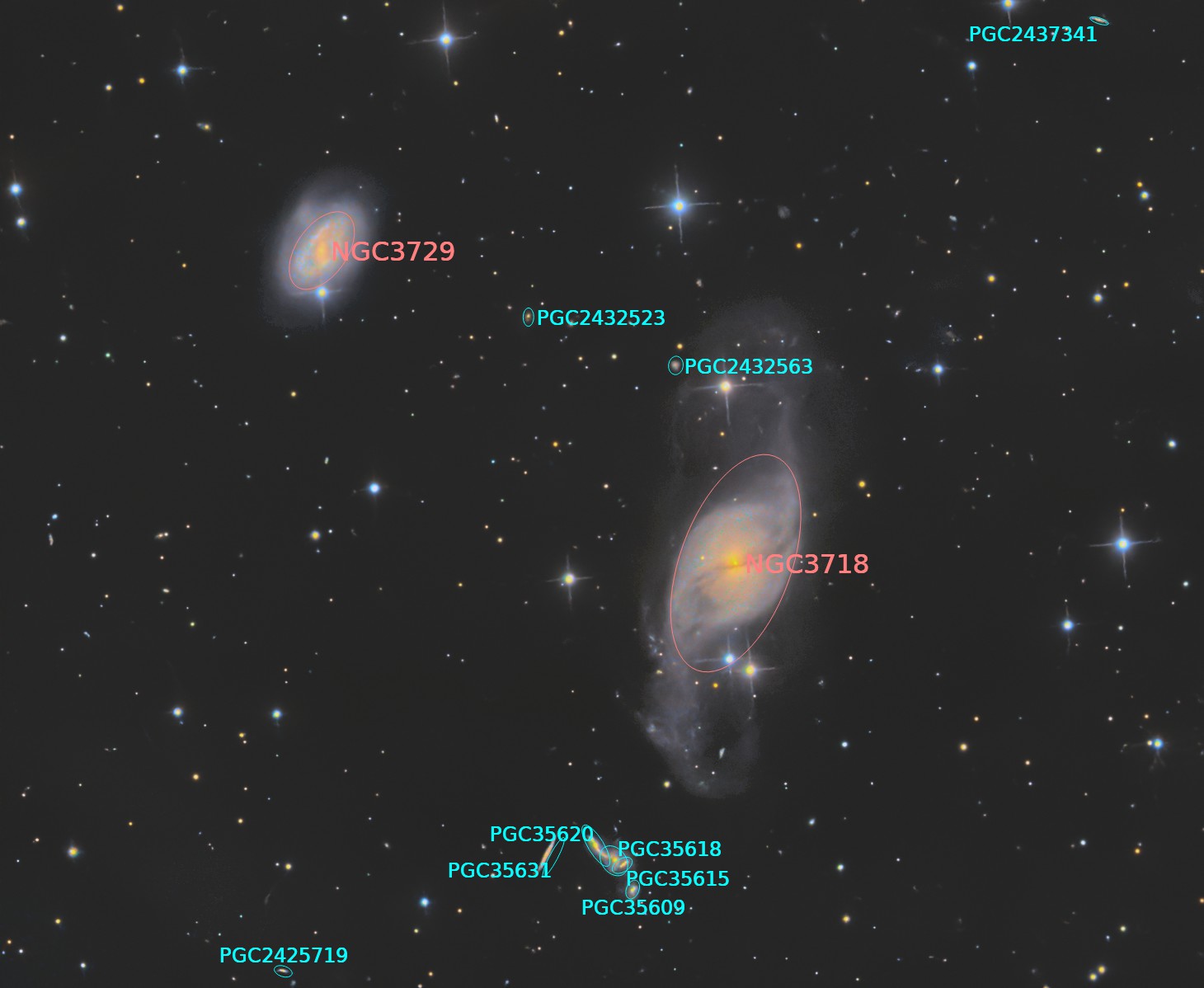
I imaged the galaxy pair NGC 3718 and NGC 3729 three times over the years. My first observations were made in 2011 and 2012 using my DSLR equipment from my backyard. Several years later, in 2018, I revisited the field and acquired additional luminance data with a CCD camera, taking advantage of the higher sensitivity and resolution of the monochrome detector. For the final image, I combined the earlier one-shot-color DSLR data with the newer CCD luminance frames, creating a detailed LRGB image that benefited from both datasets.
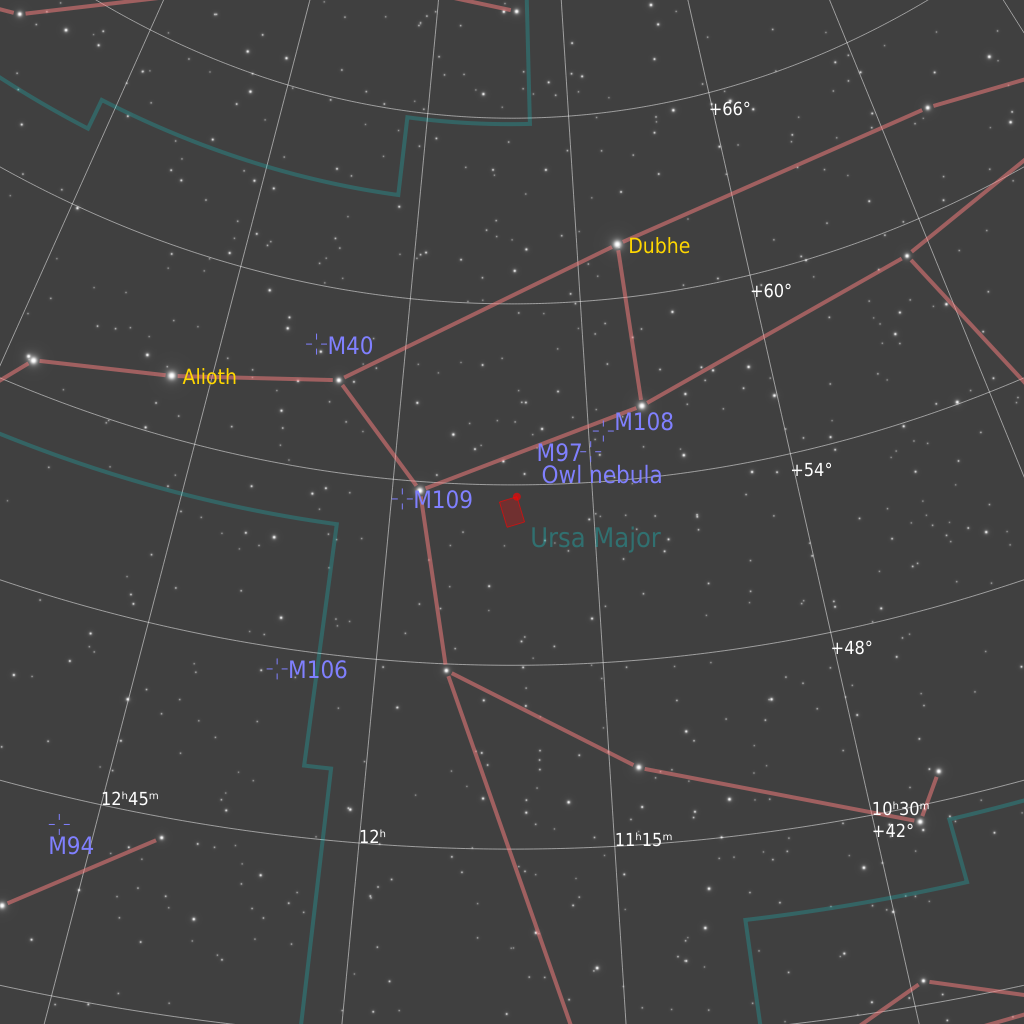
The dominant object in the field, NGC 3718, is located in the constellation Ursa Major at a distance of approximately 50 million light-years. It is one of the most unusual galaxies in the northern sky, often compared to the famous Centaurus A because of its spectacular warped dust lane. Deep images reveal a complex system of twisting dust structures crossing the bright central bulge and extending far beyond the visible disk.
NGC 3718 is classified as a peculiar barred spiral galaxy and is believed to have undergone significant gravitational interactions in the past. These interactions have dramatically distorted its structure, producing the remarkable warp that makes the galaxy such an attractive astrophotographic target. Radio observations have shown that the galaxy possesses an enormous reservoir of neutral hydrogen gas extending well beyond the visible stellar component, further evidence of its turbulent evolutionary history.
Nearby NGC 3729 forms a physical companion to NGC 3718 and is thought to have played an important role in shaping its distorted appearance. Although much smaller and more regular in structure, NGC 3729 exhibits its own spiral pattern and active star-forming regions. Together, the two galaxies form one of the most interesting interacting systems in the spring sky.
The field surrounding the galaxy pair contains numerous faint background galaxies, emphasizing the depth of the image and providing a striking contrast to the nearby foreground system. The combination of DSLR color data from 2011 and 2012 with the higher-resolution CCD luminance data from 2018 allowed much finer structural detail to be revealed, particularly within the warped dust lane of NGC 3718 and the subtle outer features surrounding both galaxies.
The resulting image showcases one of the most peculiar galaxy systems visible from the northern hemisphere and highlights the dramatic effects that gravitational interactions can have on the evolution and appearance of galaxies over cosmic timescales.
Data calibration and registration and the final processing was done with PixInsight.

Here is an overview of the used equipment and the exposure times:
- Date: 2011, 2012 and 2018
- Location: Krefeld
- Telescope/Lens: 10″ Newton ohne Namen – 10″ Orion Newton
- Focal length [mm]: 1000 – 1200
- Focal ratio: 3.9 – 4.8
- Mount: Skywatcher EQ8 – Skywatcher NEQ6
- Camera: Moravian 8300 FW – Canon 500Da
- Filter: L – OSC
- Exposure time [min]: 350 – 627
- Resolution: 1.11″/px – 0.81″/px



Leave a reply