

NGC 2537 from my own backyard
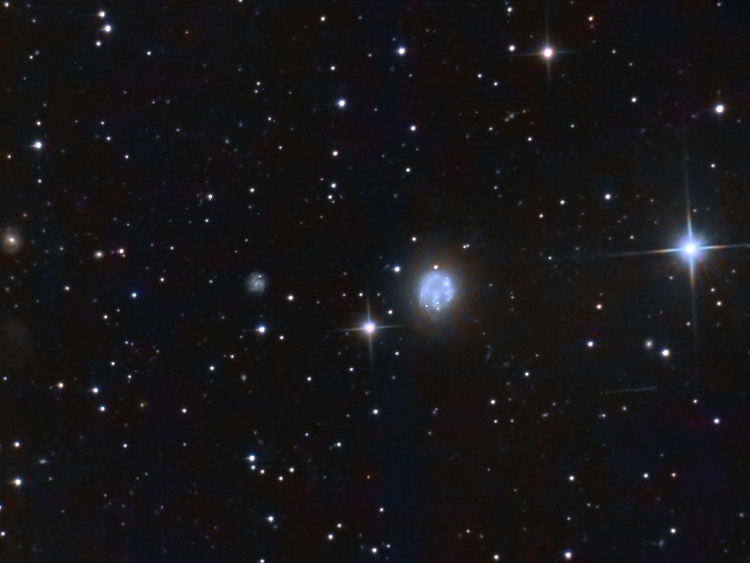
I imaged the peculiar dwarf galaxy NGC 2537 twice during 2012 from my backyard using the same telescope but two very different camera systems. The first dataset was captured with my DSLR equipment, providing natural color information and a wide dynamic range. Later that year, I revisited the object using a Meade DSI Pro II CCD camera, which allowed for more sensitive monochrome imaging and improved detection of faint structural details.
Combining experiences from both imaging sessions highlighted the strengths and limitations of the two technologies. While the DSLR image emphasized the galaxy’s overall appearance and color, the CCD data provided noticeably better contrast in the brighter star-forming regions and finer detail in the irregular outer structure.
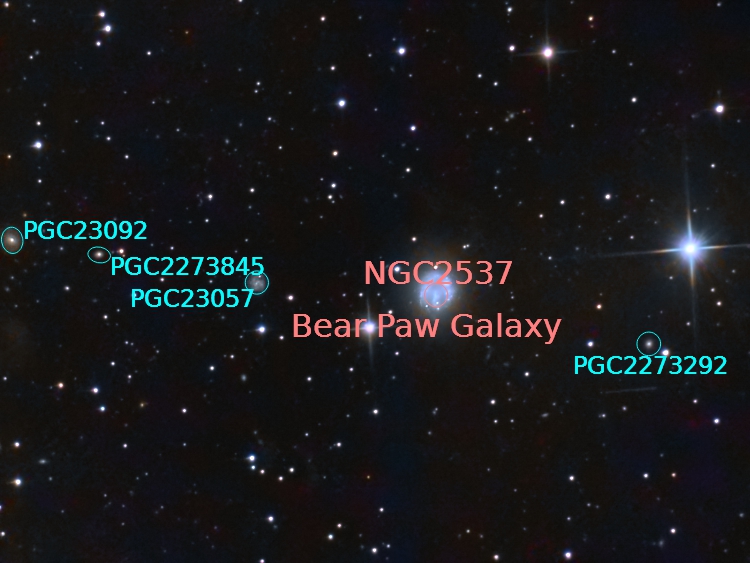
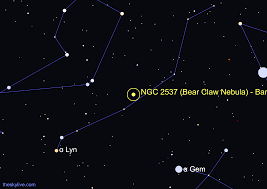
NGC 2537 is located in the constellation Lynx at a distance of roughly 20 million light-years. It is commonly known as the Bear Paw Galaxy because of its distinctive asymmetric appearance. The galaxy is classified as a blue compact dwarf galaxy undergoing intense starburst activity, with vigorous star formation concentrated in its bright central regions.
Scientifically, NGC 2537 is particularly interesting because it may represent a nearby example of the kind of compact star-forming galaxies that were much more common in the early universe. Its irregular morphology and strong star-forming knots suggest a turbulent evolutionary history, possibly influenced by gravitational interactions or mergers in the past. The galaxy contains large populations of hot young stars whose ultraviolet radiation ionizes surrounding gas clouds, creating numerous luminous H II regions visible in deep images.
Despite its relatively small size, NGC 2537 is a surprisingly rich target for astrophotography, especially when imaged at high resolution. The combination of DSLR and early CCD imaging from my backyard provided an interesting opportunity to compare two generations of amateur imaging technology while capturing the energetic nature of this compact starburst galaxy.
The data calibration and registration was done with DeepSkystacker and the final processing was performed with PixInsight. The result was as follows:
The images were taken with the following equipment:
- Date: 2012
- Location: Krefeld
- Telescope: 12″ TS-Newton
- Focal length [mm]: 1140
- Focal ratio: 4.5
- Mount: Skywatcher NEQ6
- Camera: Canon 500Da, Meade DSI 2 Pro
- Filter: OSC:L
- Exposure time [min]: 133:144
- Resolution: 1.51″/px



Leave a reply