

Sharpless 64
In 2015, during a stay at the Tivoli Astrofarm in Namibia, I imaged the emission nebula Sharpless 64 using the equipment of a rented observatory. The image was acquired in HRGB, combining deep Hα exposures with broadband RGB data to reveal both the faint hydrogen emission and the rich stellar background of the southern Milky Way. The exceptionally dark Namibian skies and excellent atmospheric conditions made it possible to record the delicate structure of this relatively faint nebula with remarkable clarity.
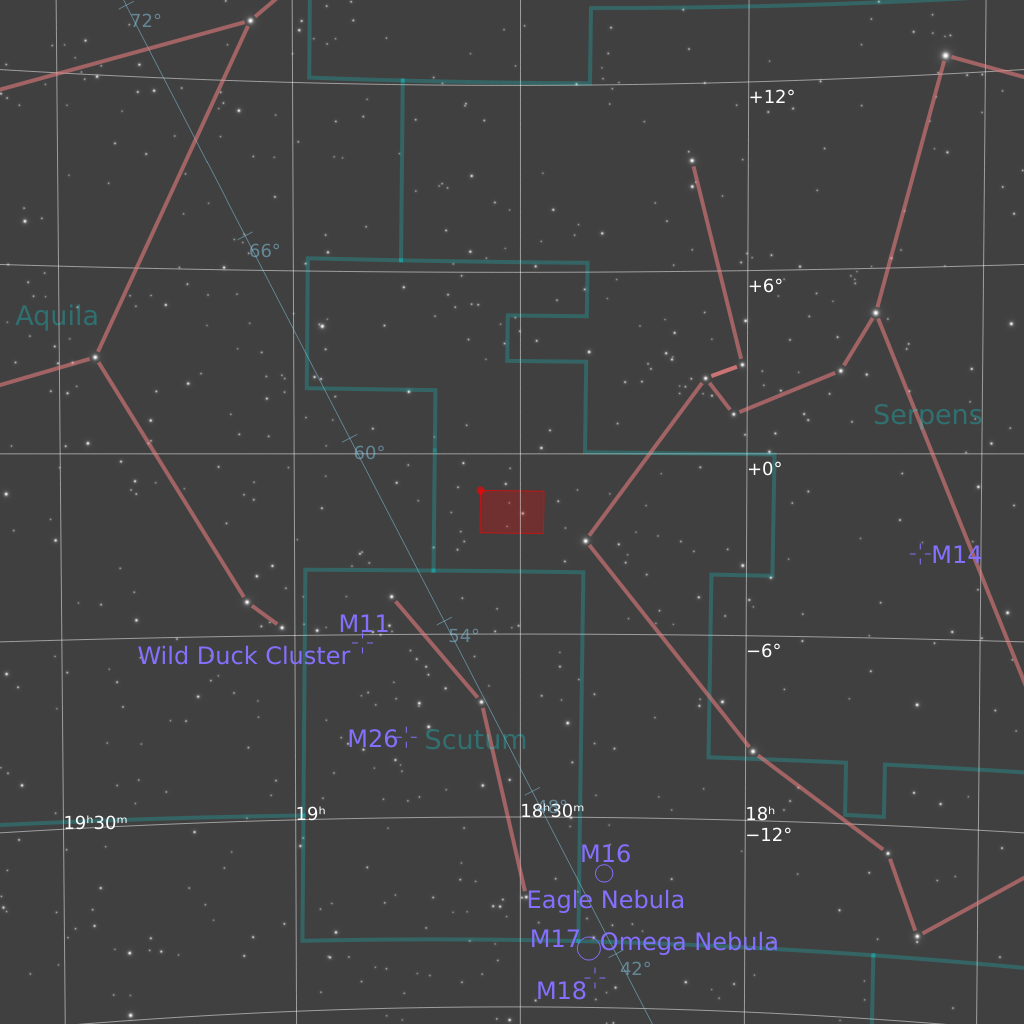
Located in the constellation Scorpius, Sh2-64 is an H II region situated within one of the Milky Way’s richest star-forming environments. The nebula lies several thousand light-years from Earth and forms part of the extensive network of emission nebulae and molecular clouds that trace the Galaxy’s spiral arms. Although less famous than neighboring nebulae such as the Cat’s Paw or Lobster Nebula, Sh2-64 is an attractive target for deep wide-field astrophotography because of its subtle structure and its location within the dense southern Milky Way.
The nebula shines through the ionization of hydrogen gas by nearby O- and B-type stars. Their intense ultraviolet radiation excites the surrounding gas, producing the characteristic Hα emission that dominates the nebula. Deep images reveal a complex pattern of diffuse hydrogen clouds, bright ionization fronts, and dark dust lanes that are continuously being shaped by stellar winds and radiation from these young, massive stars.
The Hα data recorded for this image greatly enhance the visibility of the faint emission, while the RGB exposures preserve the natural colors of the countless stars scattered across the field. This HRGB combination provides both a scientifically informative and aesthetically pleasing representation of the region, emphasizing the contrast between the glowing hydrogen clouds and the dense Milky Way star fields.
The surrounding area is rich in dark molecular clouds and numerous small star-forming regions. These dense clouds represent the raw material from which future generations of stars will eventually emerge, illustrating the continuous cycle of stellar birth and evolution within our Galaxy. Deep images also reveal many faint background galaxies, adding another layer of depth beyond the foreground stars of the Milky Way.
The HRGB image obtained in 2025 beautifully captures this relatively little-known nebula within its rich Galactic environment. Imaging from the pristine skies of the Tivoli Astrofarm with the equipment of a rented observatory made it possible to reveal subtle hydrogen structures that are extremely difficult to detect from light-polluted locations. The result is a detailed portrait of another fascinating star-forming region in the southern sky and a valuable addition to my growing collection of southern emission nebulae.
All data calibration, registration, and final image processing were performed in PixInsight
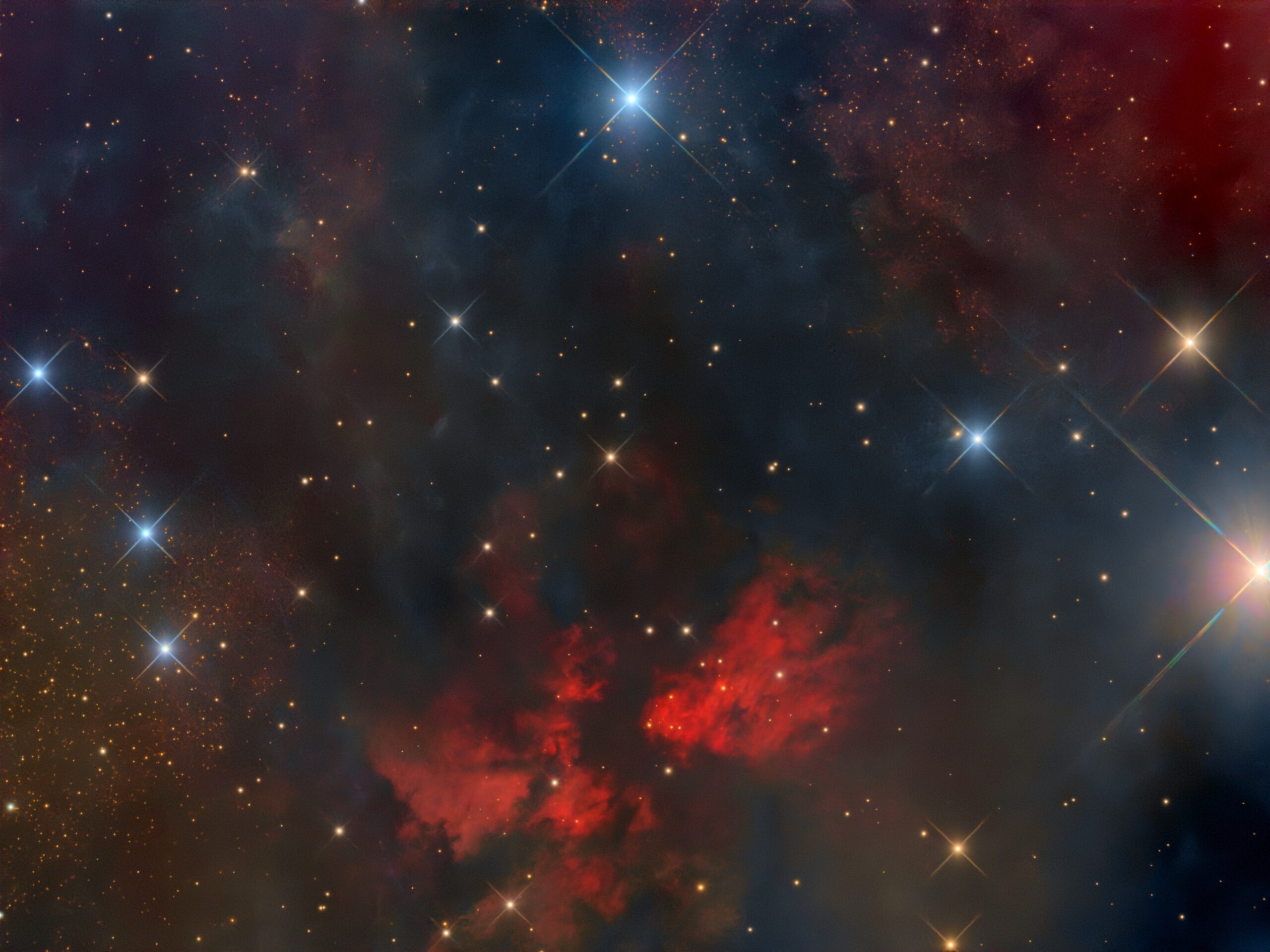
The images were taken with the following equipment:
- Location: Tivoli, Namibia
- Telescope: ASA 12″ Astrograph
- Focal length [mm]: 1076
- Focal ratio: 3.6
- Mount: ASA DDM85
- Camera: FLI Microline ML8300
- Filter: Hα:R:G:B
- Exposure time [min]: 145:55:50:55
- Resolution: 1.04″/px



Leave a reply