

NGC 6888 (The Crescent Nebula)
I imaged the famous emission nebula NGC 6888 several times over the years, documenting both my progress in astrophotography and the evolution of my imaging equipment. My first image was captured in 2010 during a stay in Banon using my DSLR equipment under the dark skies of Haute-Provence. In 2012, I returned to the object at the same location with a CCD camera, concentrating on the Hα emission to reveal the nebula’s intricate filamentary structure. Two years later, in 2014, I revisited NGC 6888 once again, combining Hα and [O III] data to produce a detailed bi-color image that beautifully highlighted the different emission regions within the expanding shell.
In 2016, I changed my approach and captured a much wider field from my own observatory in Krefeld, again using Hα and [O III] filters. This larger field not only showed the Crescent Nebula itself but also revealed the faint and elusive Soap Bubble Nebula, one of the most challenging planetary nebulae for amateur astrophotographers. Finally, in 2018, I received a high-quality RGBHO dataset from Deep Sky West, providing another wide-field view of the region with excellent image quality. This dataset also clearly captured the Soap Bubble Nebula, allowing both remarkable objects to be presented together in a single image.
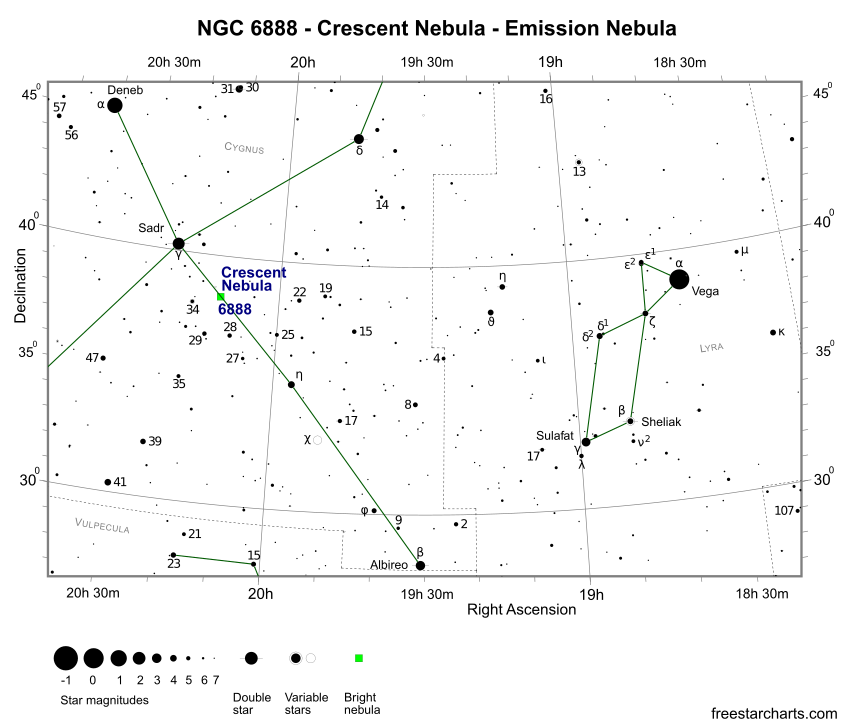
Located in the constellation Cygnus, NGC 6888 lies at a distance of approximately 5,000 light-years. Better known as the Crescent Nebula, it is one of the finest examples of a Wolf–Rayet bubble in our Galaxy. The nebula was created by the powerful stellar winds of the massive WR 136, which is nearing the end of its life. The fast stellar wind, moving at more than 1,500 kilometers per second, collides with material ejected during an earlier red supergiant phase, compressing the gas into the spectacular shell seen today.
The nebula emits strongly in both Hα and [O III], making it one of the most rewarding narrowband imaging targets in the northern sky. Hydrogen emission outlines the dense shell of ionized gas, while oxygen emission traces the energetic shock fronts where the stellar wind interacts with the surrounding material. Deep images reveal an extraordinary network of filaments, arcs, and knots that record the turbulent history of the central star’s mass loss.
The Soap Bubble Nebula (PN G75.5+1.7), located just south of NGC 6888, is a fascinating contrast. Discovered only in 2008 by amateur astronomer Dave Jurasevich, it is an extremely faint planetary nebula with a nearly perfect spherical appearance. Its surface brightness is so low that it remained unnoticed for decades despite lying close to one of the sky’s best-known emission nebulae. Capturing both objects in a single field creates a remarkable juxtaposition of two very different phases of stellar evolution: the violent stellar wind bubble of a massive Wolf–Rayet star and the delicate expanding shell produced by the death of a Sun-like star.
Together, the images from 2010, 2012, 2014, 2016, and 2018 illustrate nearly a decade of astrophotographic development. They range from my first DSLR image to increasingly sophisticated narrowband and remote-observatory datasets, culminating in wide-field compositions that place NGC 6888 within its rich galactic environment and reveal the elusive Soap Bubble Nebula alongside one of the Milky Way’s most spectacular emission nebulae.
For the DSW data the calibration, registration and final processing were performed with PixInsight.
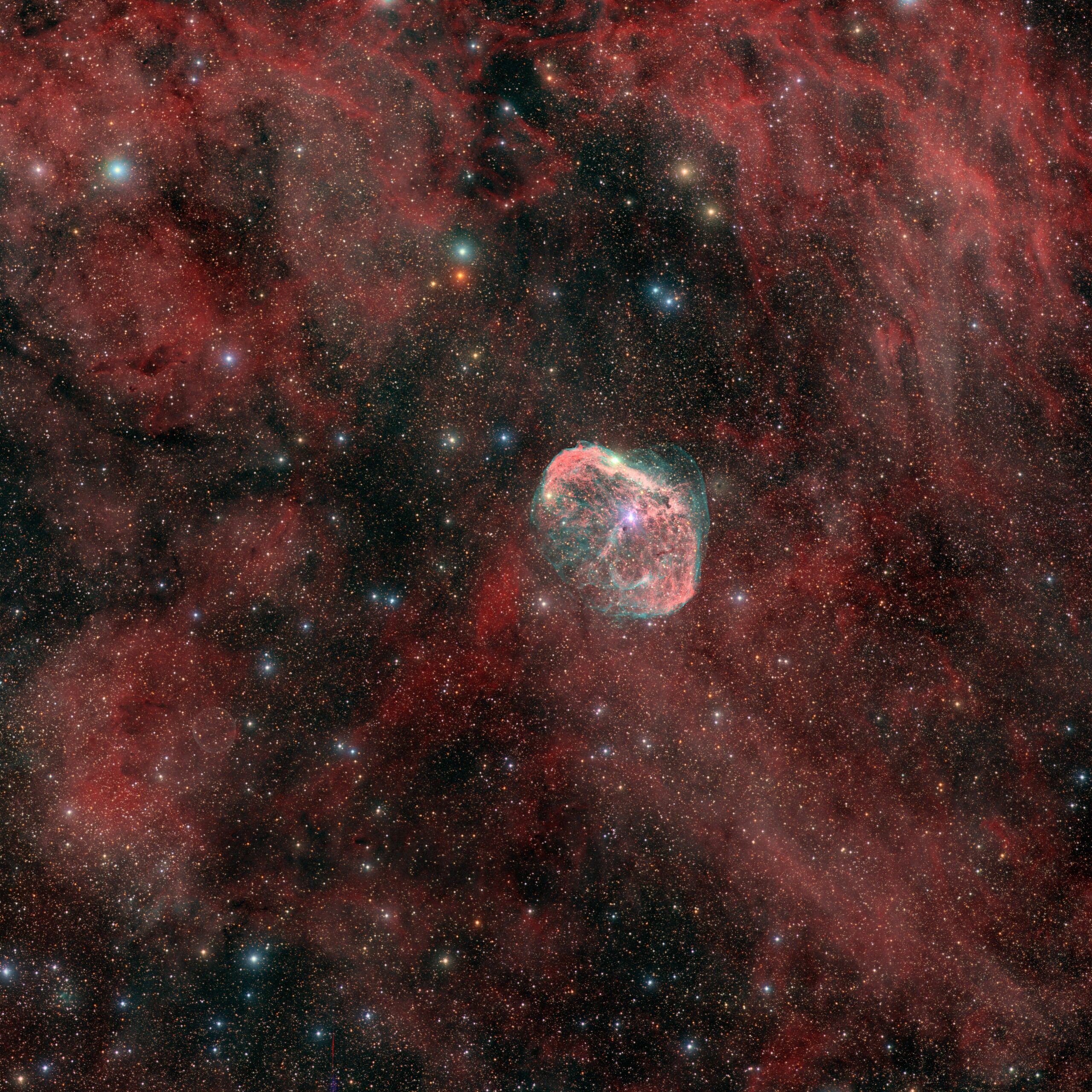
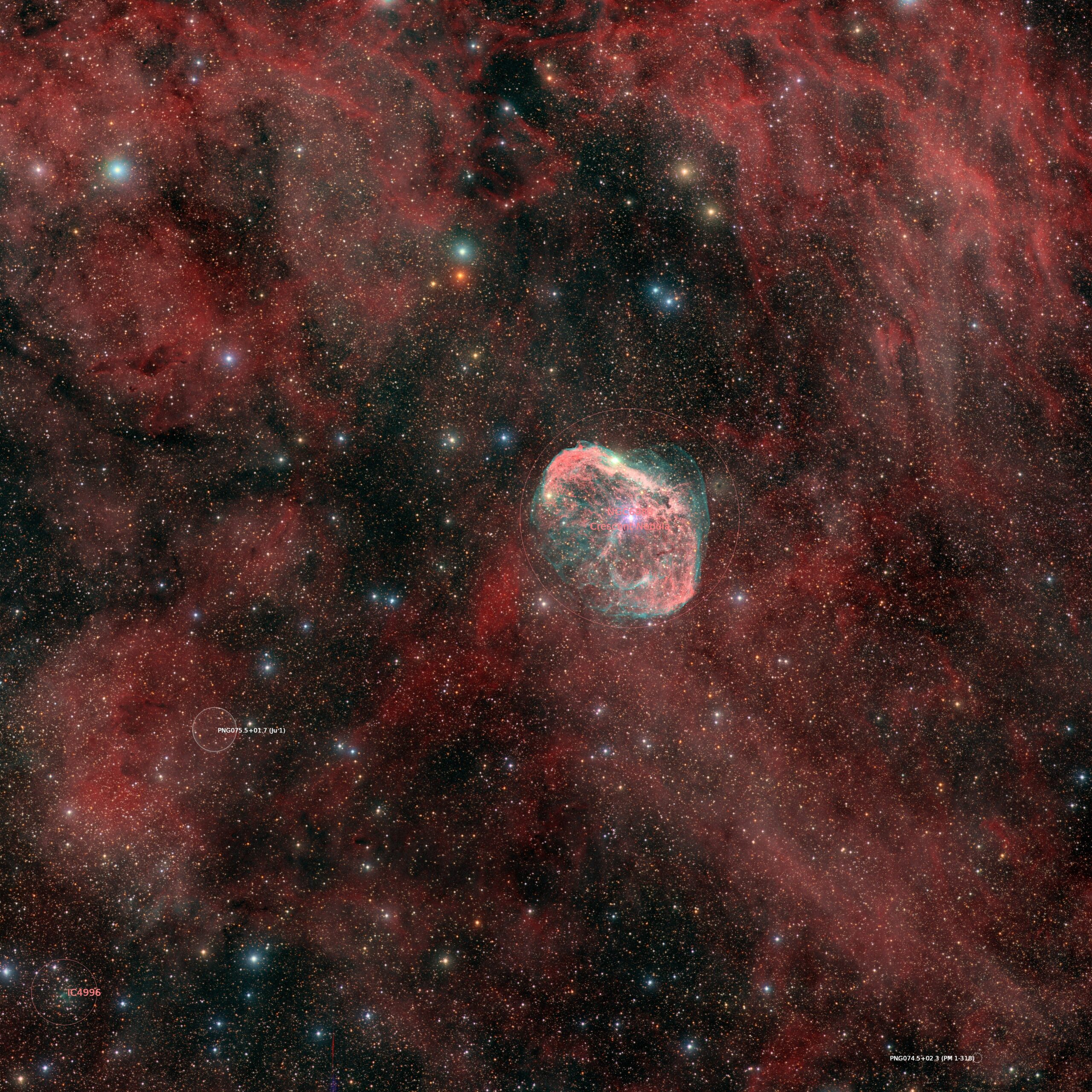
The images were taken with the following equipment (DSW):
- Date: 2018
- Location: Rowe, New Mexico
- Telescope/Lens: Astro Physics RH305
- Focal length [mm]: 1159
- Focal ratio: 3.8
- Mount: Paramount ME
- Camera: SBIG STX16803
- Filter: R:G:B:Hα:[OIII][SII]
- Exposure time [min]: 60:130:60:460:400:340
- Resolution: 1.66″/px
For the 2016 data the calibration, registration and final processing were performed with PixInsight.
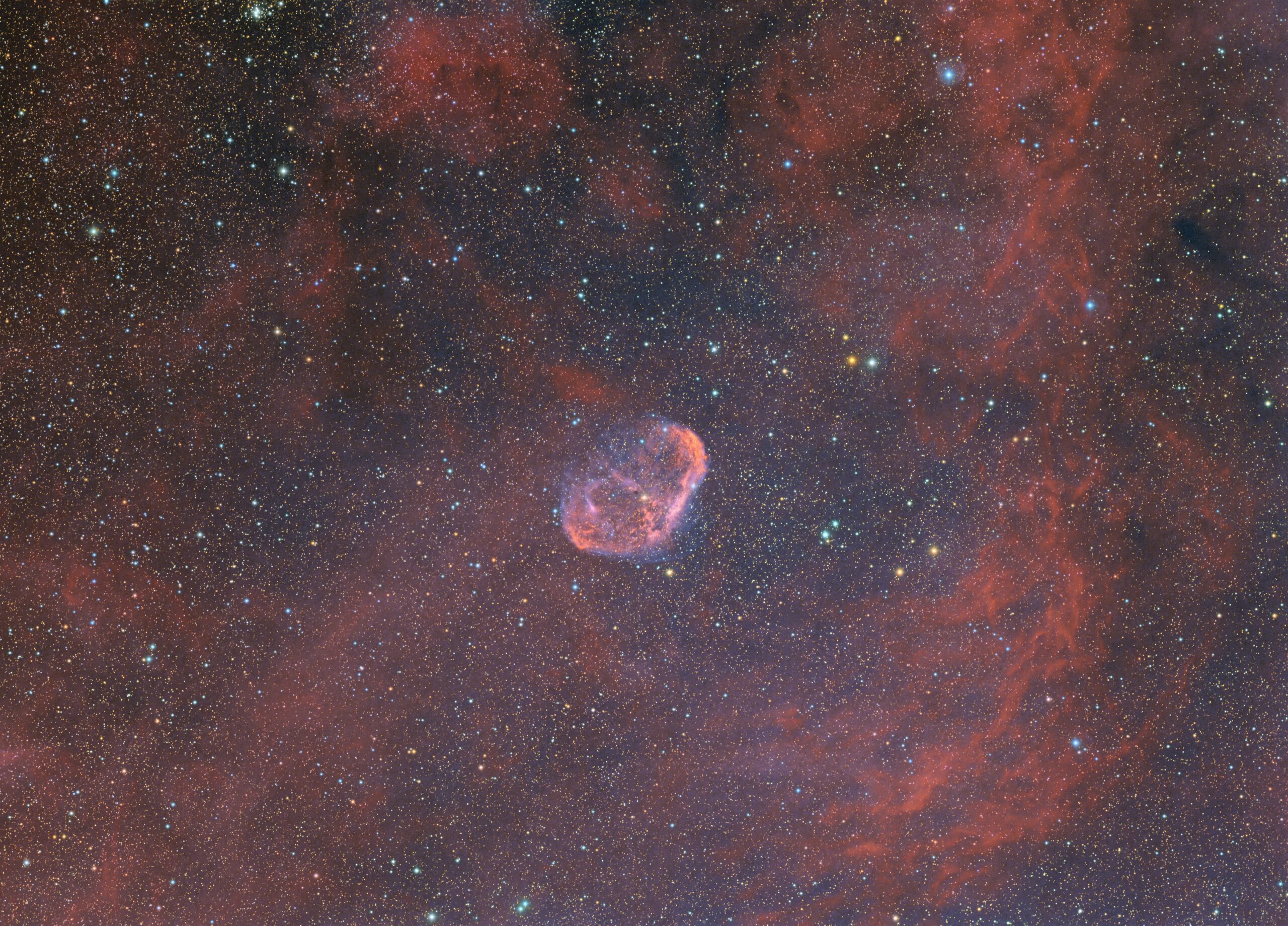
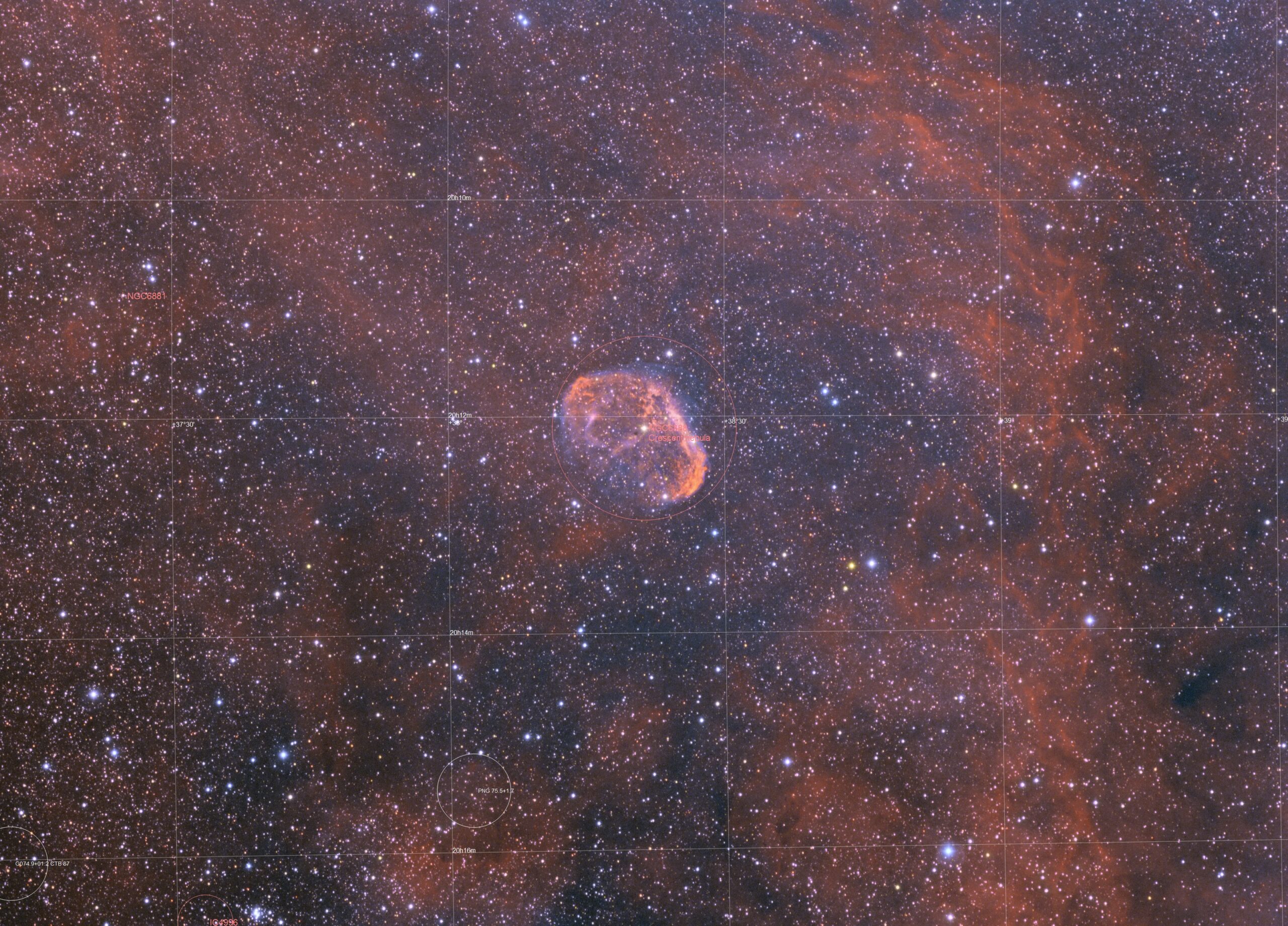
The images were taken with the following equipment:
- Date: 2016
- Location: Krefeld
- Telescope/Lens: TS IS 65 Apo
- Focal length [mm]: 420
- Focal ratio: 6.5
- Mount: Dkywatcher EQ8
- Camera: Moravian 8300FW
- Filter: Hα:[OIII]
- Exposure time [min]: 180:350
- Resolution: 2.62″/px
For the 2014 data the calibration, registration and final processing were performed with PixInsight.
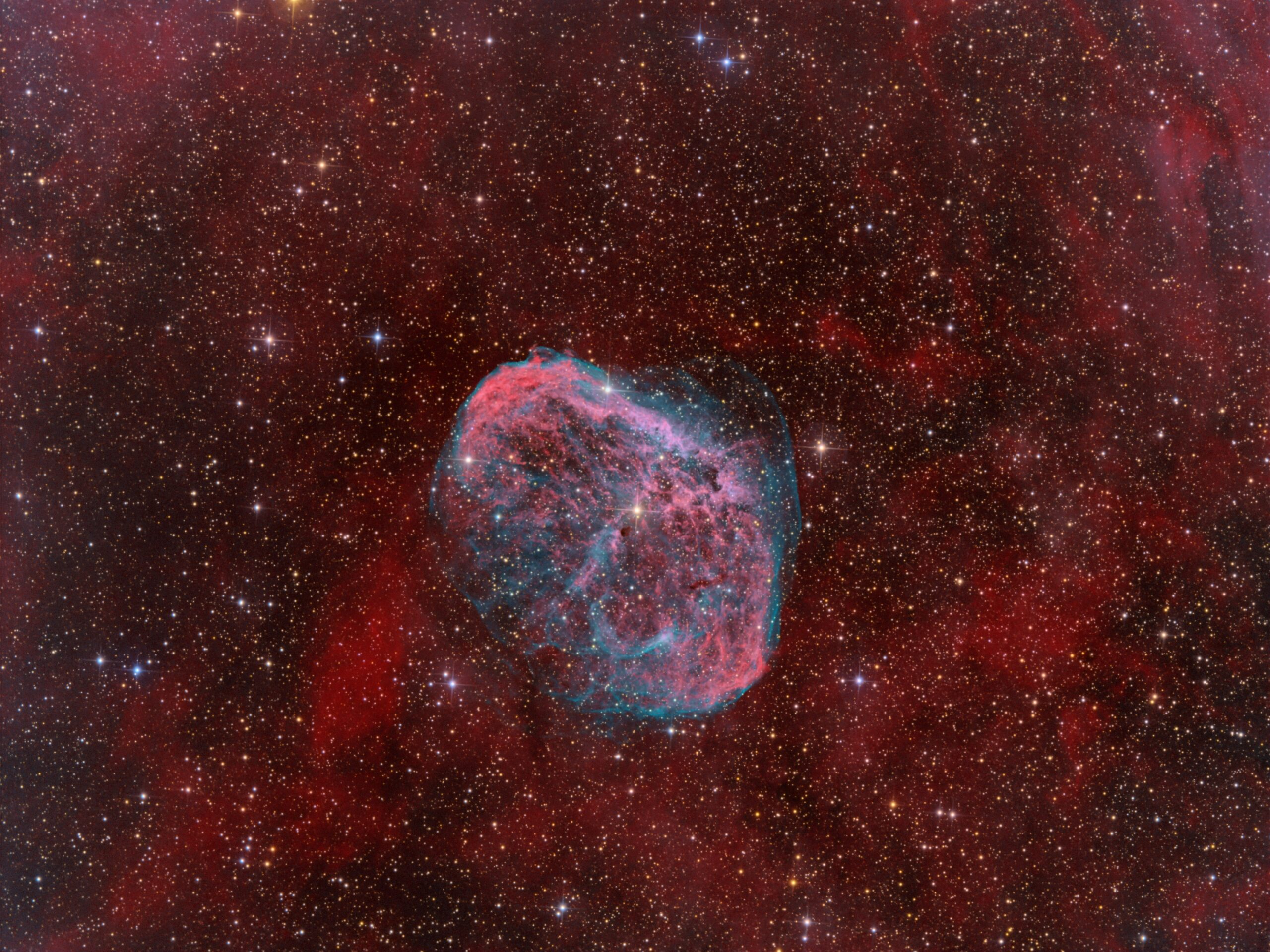
The images were taken with the following equipment:
- Date: 2014
- Location: Banon, France
- Telescope/Lens:10″ Newton ohne Namen
- Focal length [mm]: 1000
- Focal ratio: 3.9
- Mount: Skywatcher NEQ6
- Camera: Moravian FW8300
- Filter: Hα:[OIII]
- Exposure time [min]: 180:160
- Resolution: 1.11″/px
For the 2012 data the calibration, registration and final processing were performed with PixInsight.
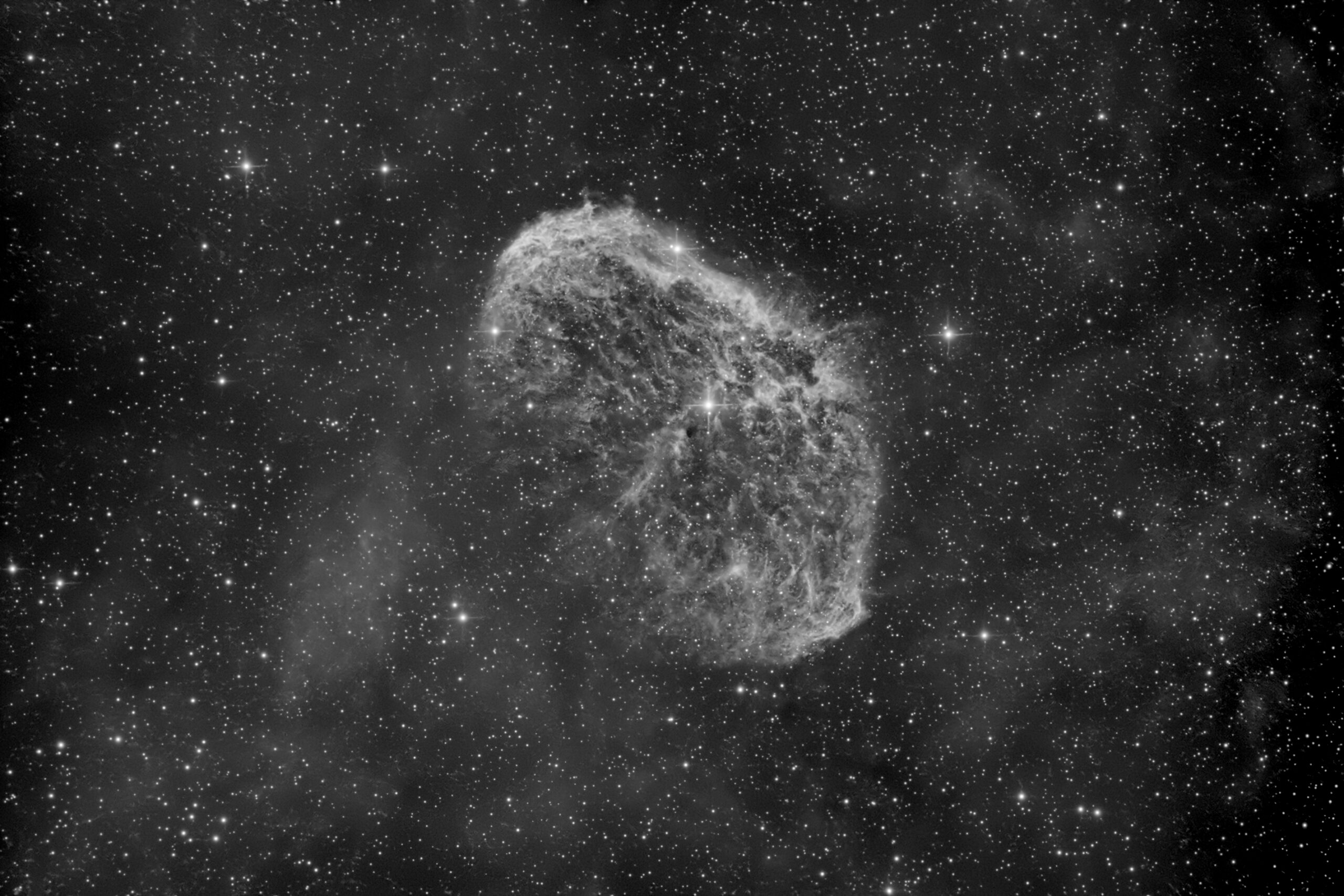
The images were taken with the following equipment:
- Date: 2012
- Location: Banon, France
- Telescope/Lens:10″ TS Newton
- Focal length [mm]: 1140
- Focal ratio: 4.5
- Mount: Skywatcher NEQ6
- Camera: Moravian FW8300
- Filter: Hα
- Exposure time [min]: 145
- Resolution: 0.97″/px
For the 2010 data the calibration and registration was done with DeepSkyStacker and the final processing was performed with PixInsight.
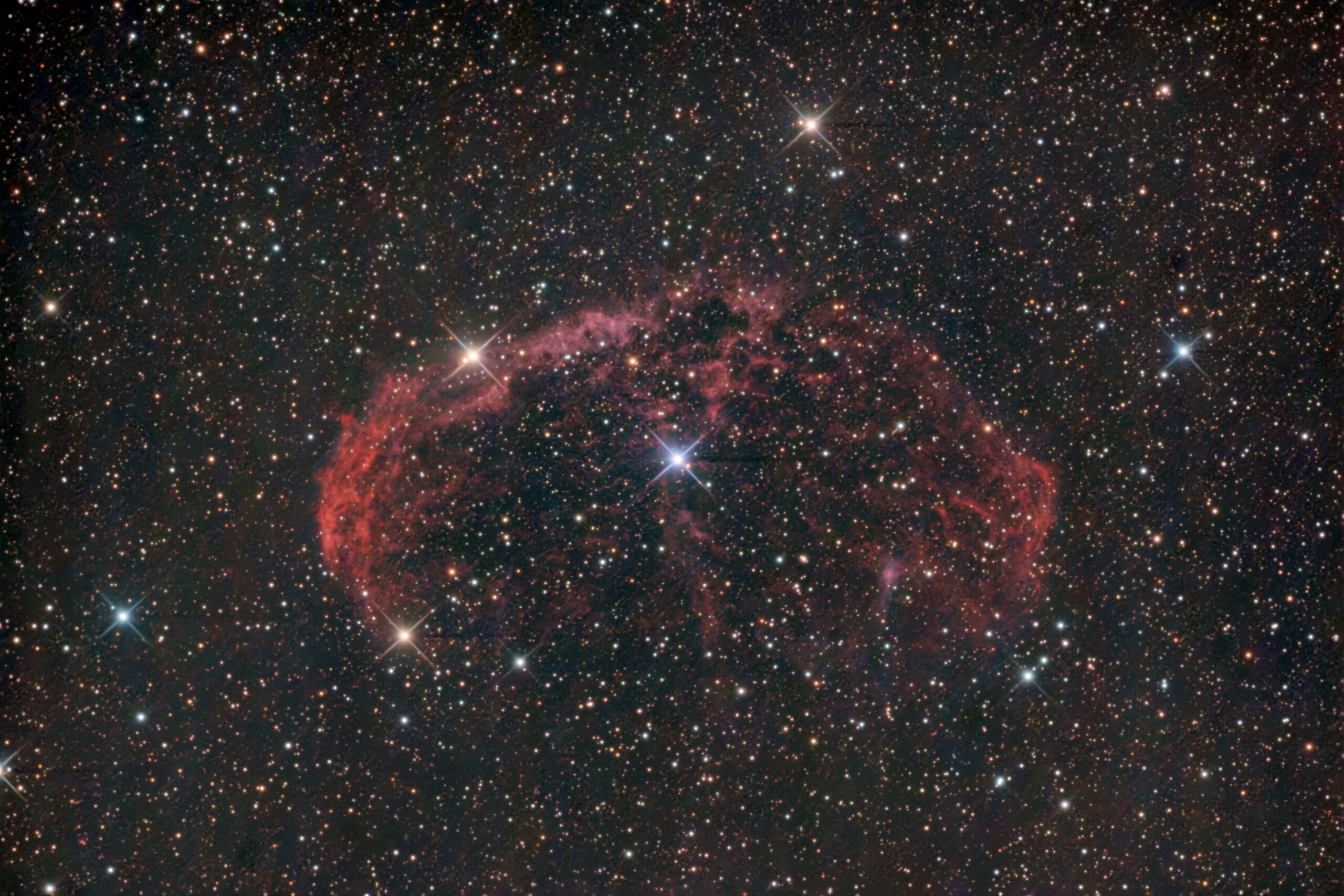
The images were taken with the following equipment:
- Date: 2010
- Location: Banon, France
- Telescope/Lens:10″ Orion Newton
- Focal length [mm]: 1200
- Focal ratio: 4.8
- Mount: Skywatcher NEQ6
- Camera: Canon 300Da
- Filter: OSC
- Exposure time [min]: 157
- Resolution: 1.31″/px



Leave a reply