

NGC 2174-5 (Monkey Head Nebula)
I have imaged the nebular complex NGC 2174 and NGC 2175 several times over the years using very different equipment and imaging techniques. My first attempt dates back to 2011, when I captured the region from my backyard using my DSLR equipment. Even under suburban skies, the bright hydrogen emission and embedded star cluster were already clearly visible.
In 2018, I received a high-quality narrowband CCD dataset of the nebula from the Deep Sky West Observatory, acquired in New Mexico. The dark desert skies and narrowband filters revealed much finer filamentary structures and significantly improved contrast within the emission regions. A few years later, in 2022, I obtained an additional narrowband CMOS dataset from the Insight Observatory, this time recorded with a telescope in China. Combining these professional datasets provided an opportunity to explore the nebula in far greater detail than was possible with the original DSLR image.
Scientifically, NGC 2174 and NGC 2175 form a complex star-forming region located in the constellation Orion, roughly 6,400 light-years away. Although the designations are sometimes used interchangeably, NGC 2174 generally refers to the surrounding emission nebula, while NGC 2175 identifies the embedded open cluster and brighter portions of the nebula. The region is rich in ionized hydrogen gas, dark dust lanes, and young stellar objects still embedded within their natal molecular cloud.
Deep narrowband imaging reveals intricate structures shaped by stellar winds and ultraviolet radiation from the young massive stars within the cluster. Pillars, globules, and shock fronts become visible in Hα, [S II], and [O III] emission, tracing the dynamic interaction between newly formed stars and the surrounding interstellar medium. The combination of DSLR broadband imaging and later professional CCD and CMOS narrowband datasets beautifully illustrates both the aesthetic richness and the astrophysical complexity of this active stellar nursery.
For the 2022 data the calibration and registration and the final processing was done with PixInsight. The result was as follows:
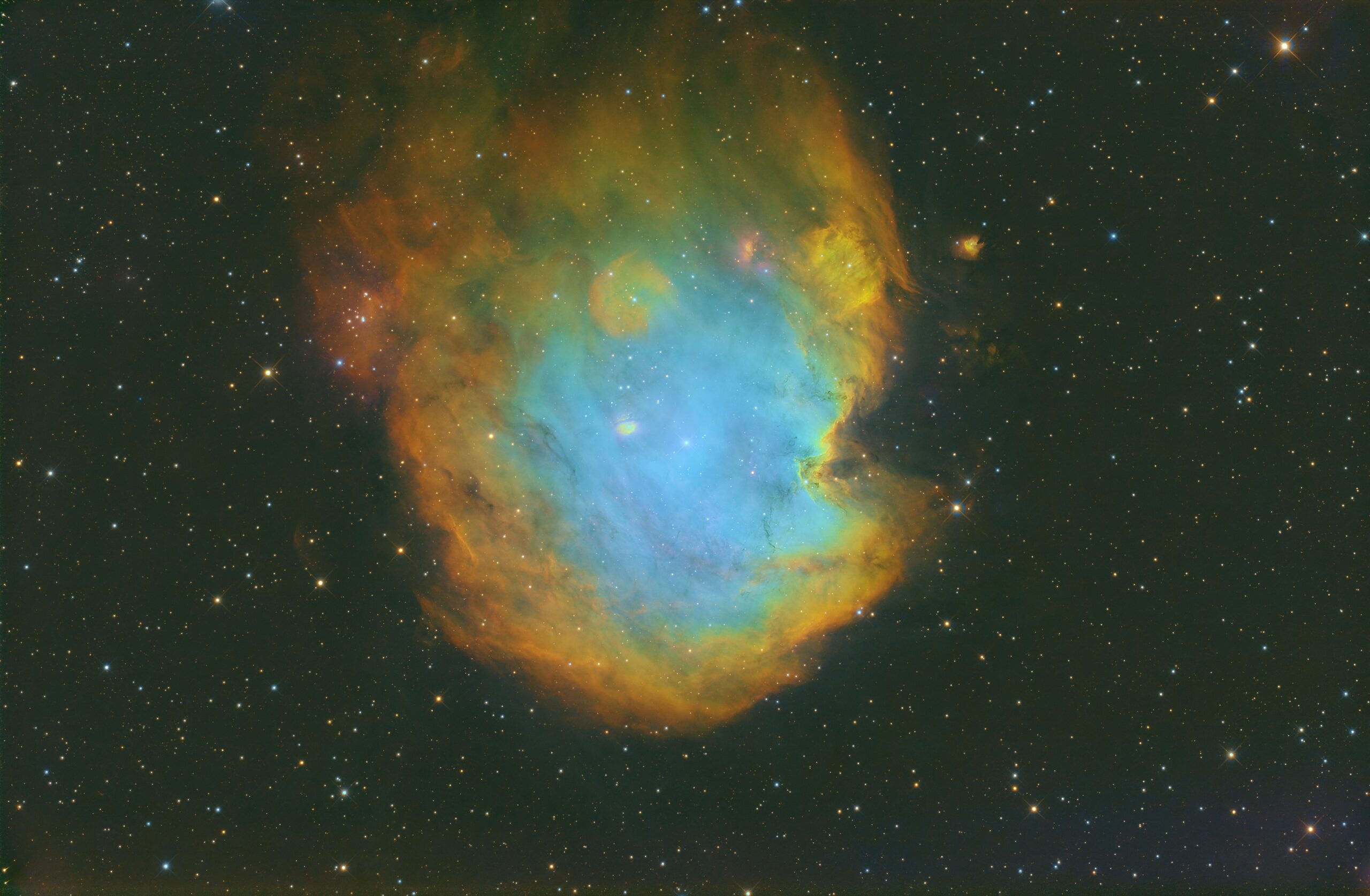
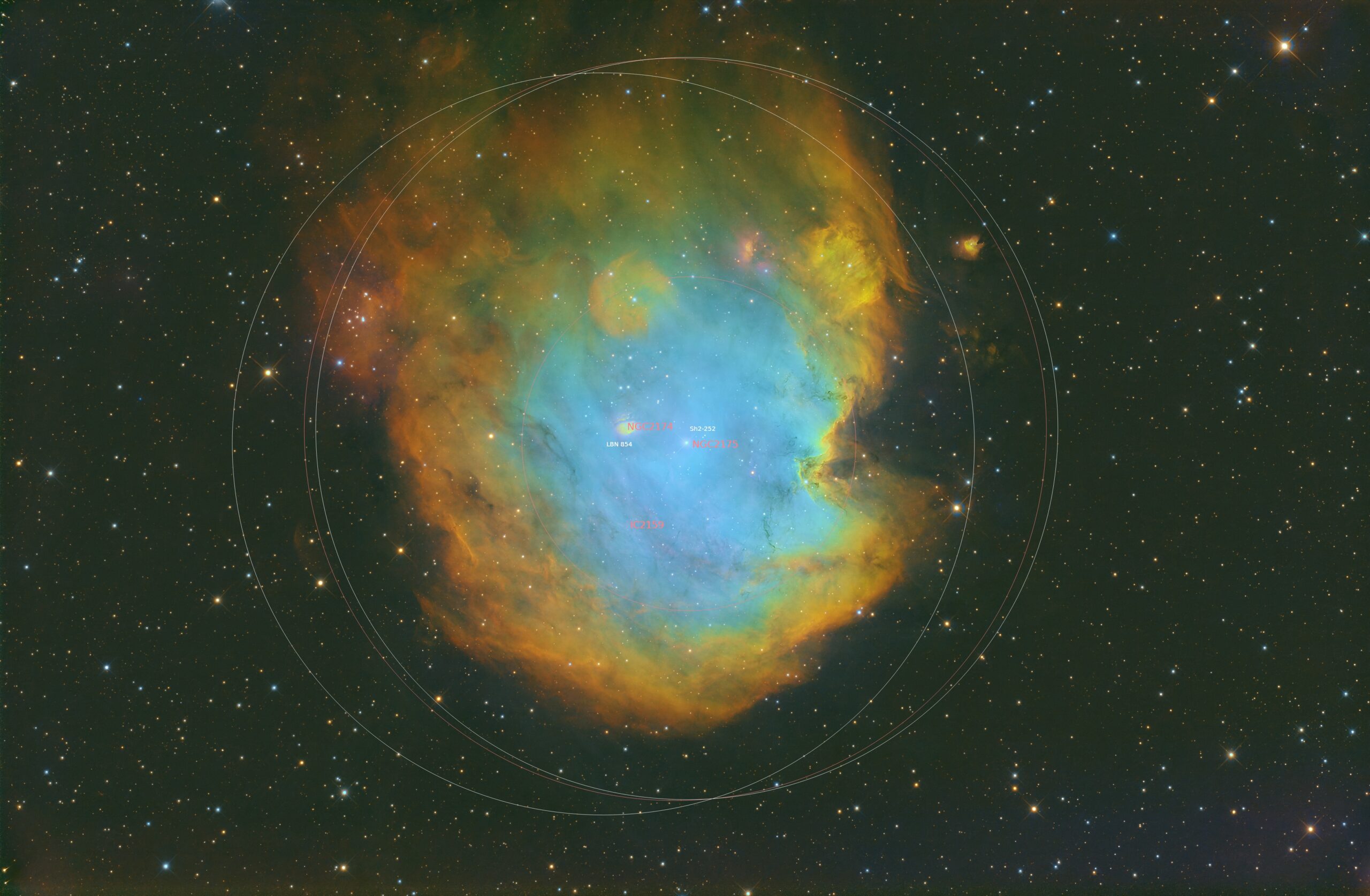
The images were taken with the following equipment (AFIL-1, Insight Observatory):
- Date: 10/23/2021 to 11/02/2021
- Location: Lijiang, China
- Telescope/Lens: AG10 CDK
- Focal length [mm]: 1665
- Focal ratio: 6.7
- Mount: SkyWatcher EQ8RH
- Camera: ZWO ASI 6200MM Pro
- Filter: Hα:[OIII]:[SII]:R:G:B
- Exposure time [min]: 450:450:450:95:95:95
- Resolution: 0.47″/px
For the 2022 data the calibration and registration and the final processing was done with PixInsight. The result was as follows:
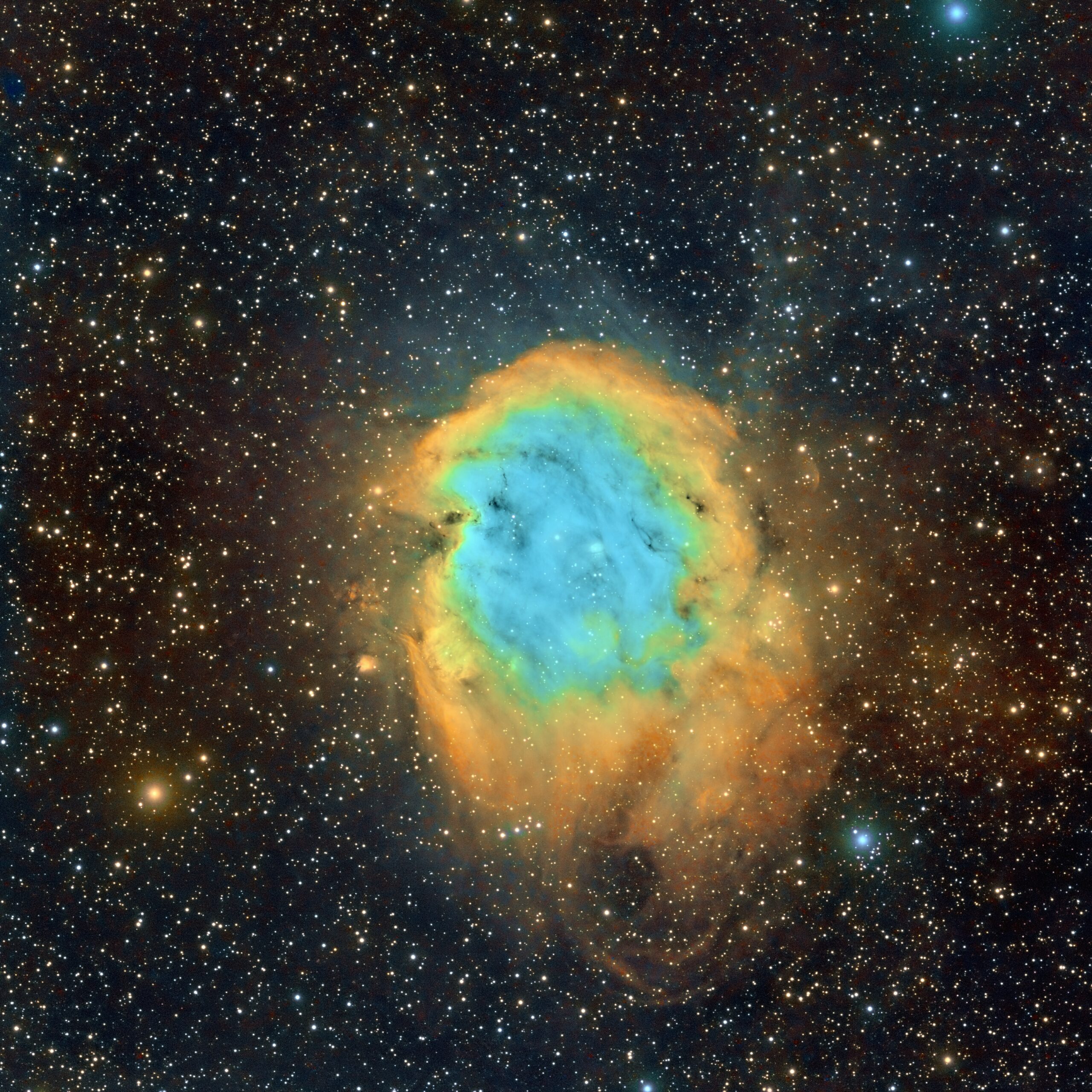
The images were taken with the following equipment (DSW):
- Date: 2018
- Location: Rowe, New Mexico
- Telescope/Lens: Astrophysics RH 305
- Focal length [mm]: 1159
- Focal ratio: 3.9
- Mount: Astrophysics 1600
- Camera: SBIG STX 16803
- Filter: Hα:[OIII]:[SII]:L:R:G:B
- Exposure time [min]: 240:60:160:240:180:240:340
- Resolution: 1.66″/px
For the 2011 data the calibration and registration was done with DeepSkyStacker while the final processing was performed with PixInsight. The result was as follows:
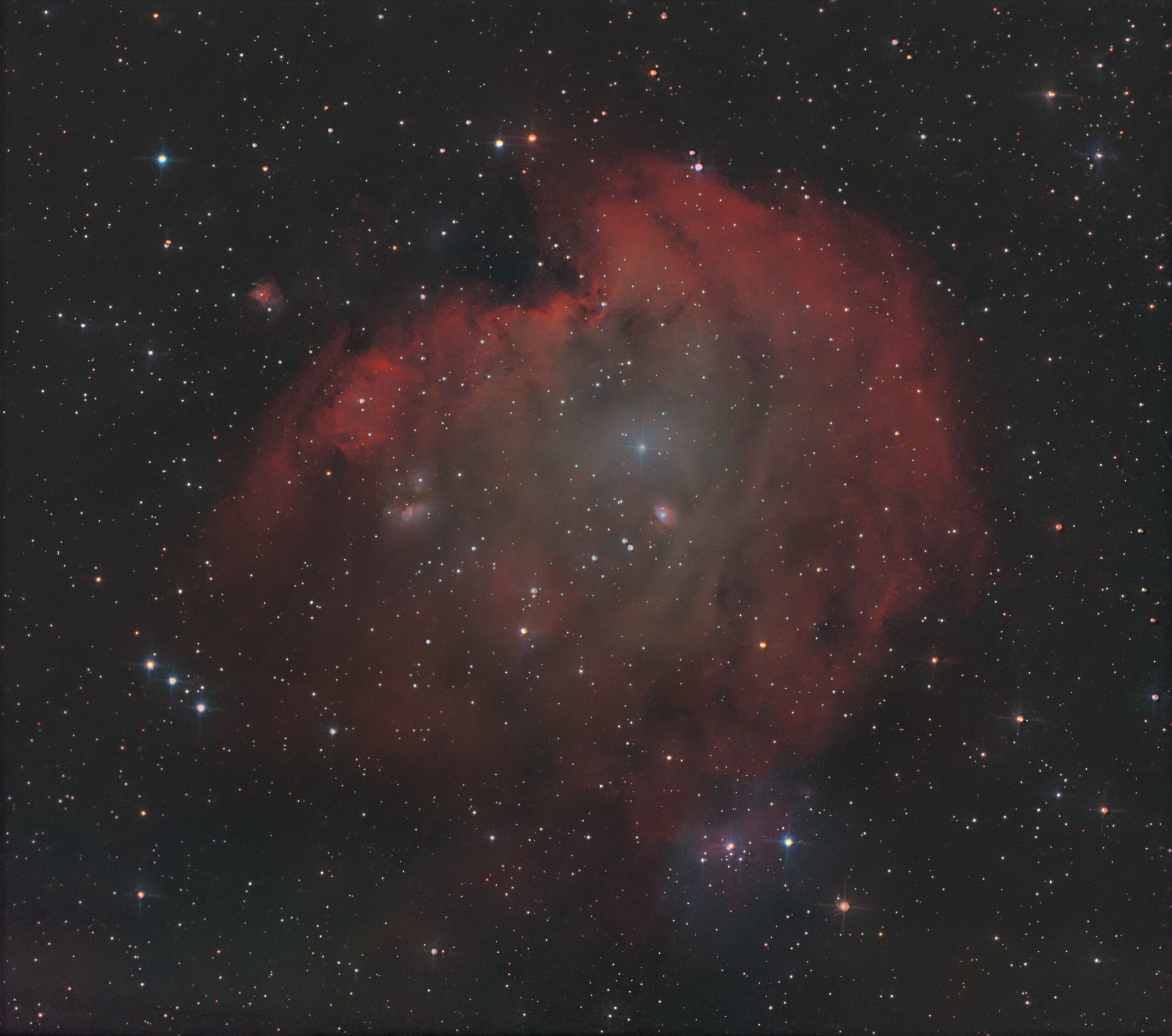
The images were taken with the following equipment:
- Date: 2011
- Location: Krefeld
- Telescope/Lens: 8″ GSO Newton
- Focal length [mm]: 800
- Focal ratio: 4
- Mount: Skywatcher NEQ6
- Camera: Canon 500Da
- Filter: OSC
- Exposure time [min]: 270
- Resolution: 1.2″/px


Leave a reply