

Sharpless 68 – VdS Remote Hakos
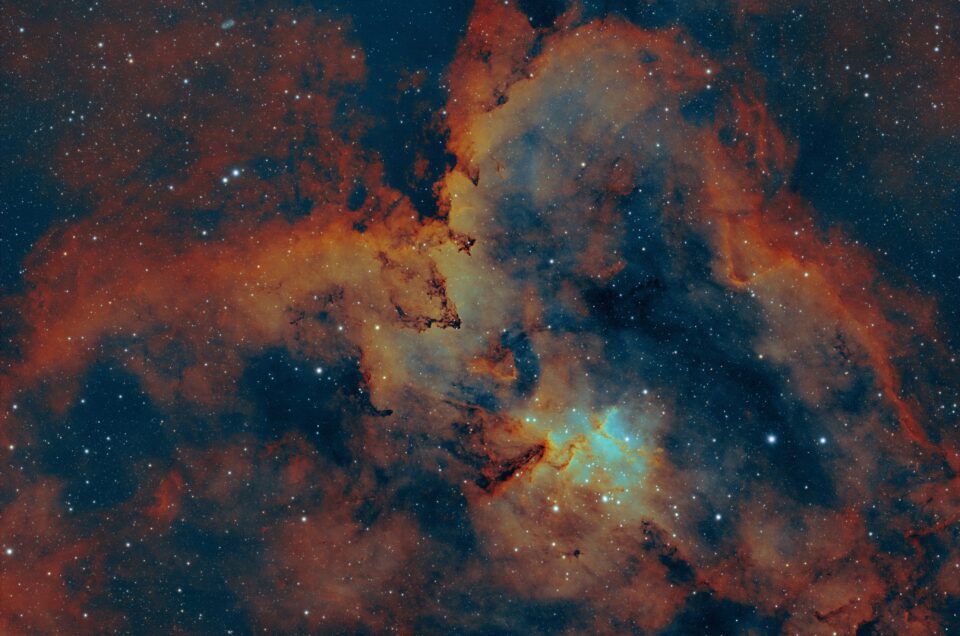
In 2025, together with my astrophotography companion Karsten Möller, I imaged the remarkable emission nebula Sh2-68 using both telescopes of the VdS Remote Observatory at Hakos, Namibia. By operating the two observatory systems simultaneously, we obtained a deep dataset with excellent signal-to-noise ratio, allowing us to record the nebula’s extremely faint hydrogen emission and its extensive filamentary structures. The exceptionally dark skies of Hakos were essential for revealing this elusive object, which is among the faintest targets in the Sharpless catalogue.
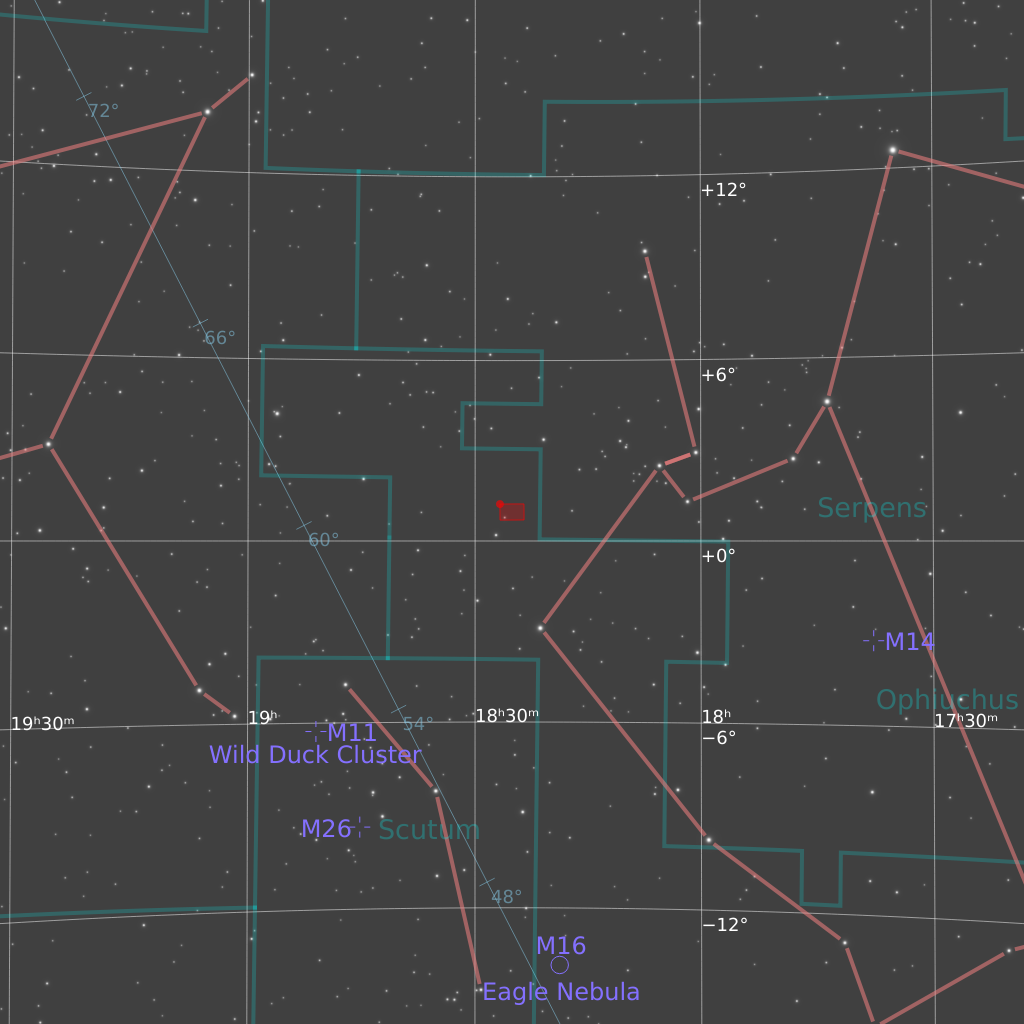
Unlike most Sharpless objects, Sh2-68 is not an H II region but the highly evolved remnant of a planetary nebula. Located in the constellation Serpens, it lies approximately 1,300 light-years from Earth and represents one of the largest known planetary nebulae on the sky, spanning nearly three degrees. Its enormous apparent size results from both its physical expansion over tens of thousands of years and its relatively close distance.
The nebula was formed when a Sun-like star reached the end of its life and expelled its outer layers into interstellar space. At its center lies a hot white dwarf, the exposed stellar core that emits enough ultraviolet radiation to ionize the expanding shell of gas. Unlike the bright, compact planetary nebulae often seen in amateur telescopes, Sh2-68 has expanded to such an extent that its surface brightness has become extremely low, making it a challenging target even under pristine skies.
One of the most fascinating aspects of Sh2-68 is its interaction with the interstellar medium. The central white dwarf is moving rapidly through space, and as the nebula encounters the surrounding gas, its originally symmetrical shell has become distorted. The leading edge appears compressed, while the trailing material has been stretched into long, diffuse filaments. This interaction provides astronomers with an excellent opportunity to study how aging planetary nebulae gradually disperse into the interstellar medium, recycling chemically enriched material that will eventually contribute to future generations of stars and planets.
Deep Hα imaging reveals the nebula as an intricate web of faint arcs, wisps, and diffuse emission extending over a vast area of the sky. Capturing these delicate structures requires many hours of exposure under exceptionally dark conditions, making remote observatories such as the VdS Remote Observatory at Hakos ideally suited for this type of project.
The 2025 observations obtained with the two telescopes beautifully reveal this ghostly relic of stellar evolution. Although far less spectacular at first glance than many bright emission nebulae, Sh2-68 tells a compelling story about the final stages in the life of a Sun-like star and its gradual return of enriched material to the Galaxy. The resulting image is both scientifically interesting and aesthetically unique, capturing one of the sky’s most elusive and expansive planetary nebulae.
The data the calibration, registration, and final processing were performed in PixInsight. The result was as follows:
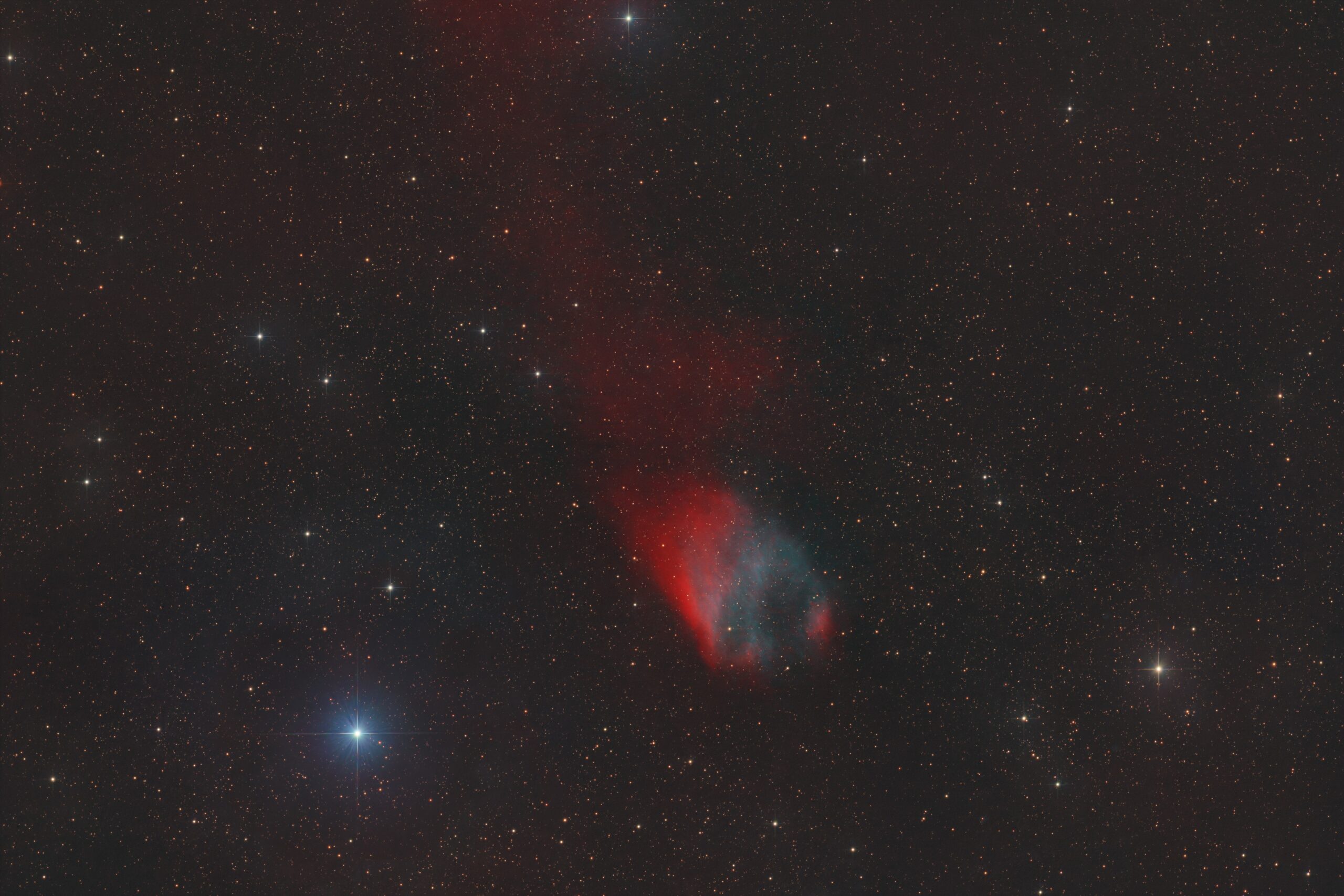
The images were taken with the following equipment:
- Date: 2025
- Location: Hakos, Namibia
- Telescope/Lens: TS 12“ Newton-Astrograph
- Focal length [mm]: 1391
- Focal ratio: 4.56
- Mount: 10Micron GM3000
- Camera: Lacerta DeepSkyPro2600 (mono)
- Filter: RGBHαOIII
- Exposure time [min]: 36:36:42:800:230
- Resolution: 0.56″/px
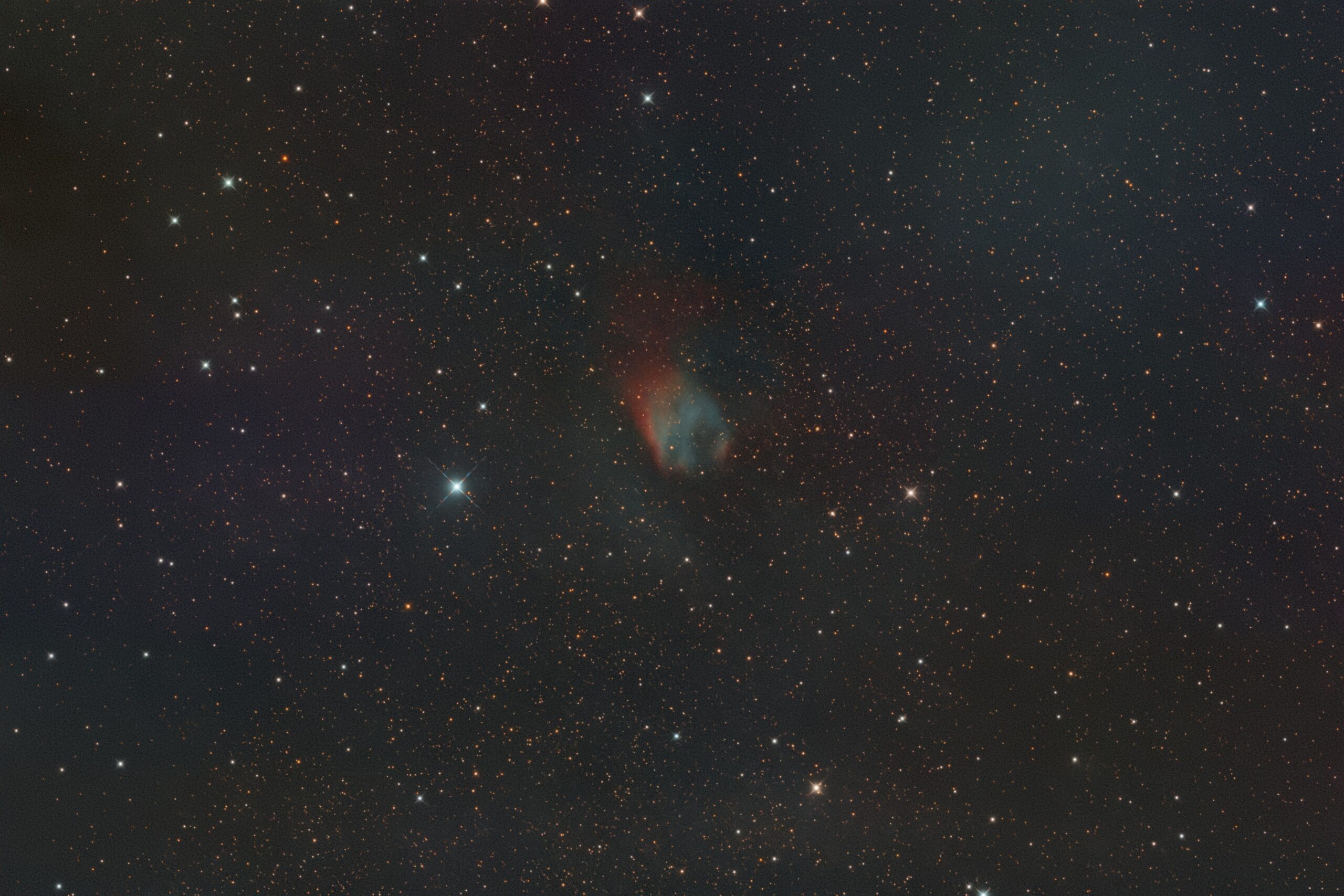
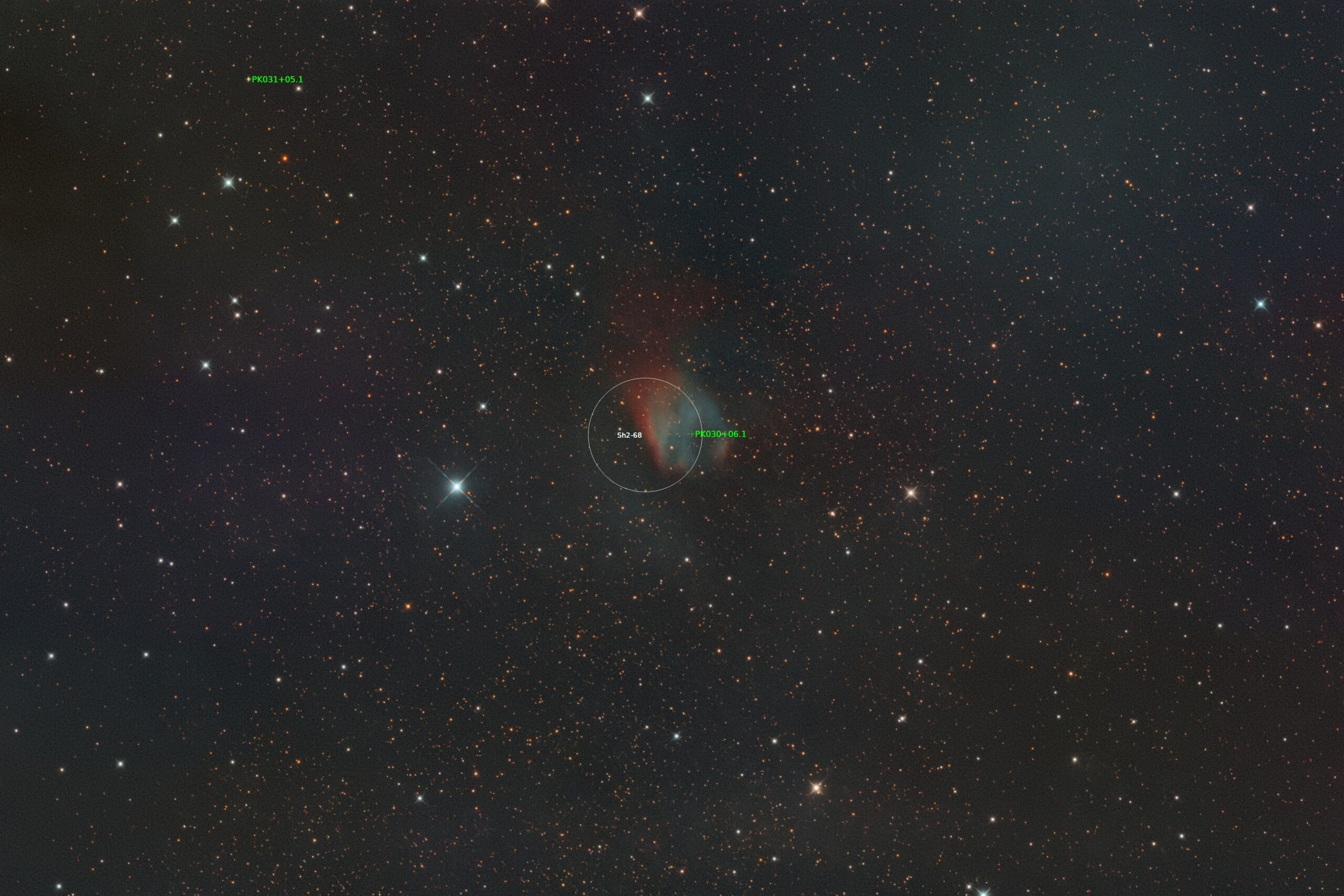
The images were taken with the following equipment:
- Date: 2025
- Location: Hakos, Namibia
- Telescope/Lens: Takahashi Epsilon-160ED
- Focal length [mm]: 535
- Focal ratio: 3.3
- Mount: 10Micron GM3000
- Camera: Lacerta DeepSkyPro2600 C
- Filter: Clear, DB
- Exposure time [min]: 777
- Resolution: 1.45″/px



Leave a reply