

Sharpless 65 (RCW 175) – VdS Remote Hakos
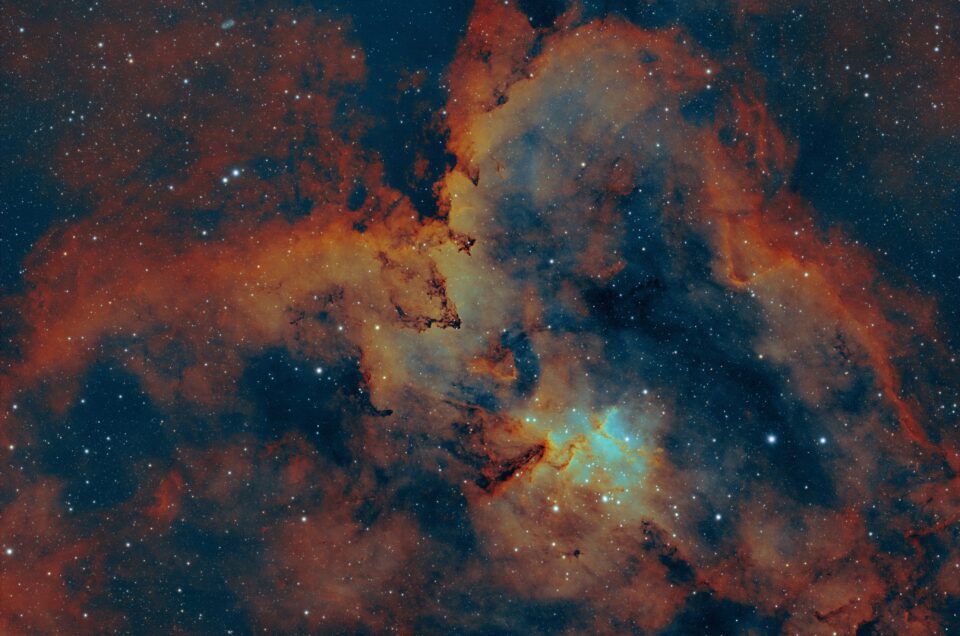
In 2025, together with my astrophotography companion Karsten Möller, I imaged the emission nebula Sh2-65 using both telescopes of the VdS Remote Observatory at Hakos, Namibia. By operating the two observatory systems simultaneously, we obtained a deep dataset with excellent signal-to-noise ratio, revealing the nebula’s intricate emission structures together with the rich star fields of the Milky Way. The exceptional observing conditions at Hakos, with its dark skies and excellent seeing, allowed the faint outer structures of this fascinating H II region to be recorded in remarkable detail.
Located in the constellation Scutum, Sh2-65, also catalogued as RCW 175, lies approximately 10,000 light-years from Earth. It is a compact but complex H II region, consisting of two interconnected bubbles of ionized hydrogen embedded within a larger molecular cloud. These glowing shells are powered by the intense ultraviolet radiation of young, massive O- and B-type stars, which continue to shape the surrounding interstellar medium.
Deep images reveal a remarkable combination of bright ionization fronts, dark dust lanes, and delicate filamentary structures. The nebula is particularly interesting because it consists of two adjacent emission regions, believed to have formed during successive episodes of star formation. Their expanding shells interact with the surrounding molecular cloud, compressing the gas and potentially triggering the birth of new stars along their edges.
Infrared observations have identified numerous young stellar objects and dense molecular condensations throughout RCW 175, confirming that star formation is still actively taking place within the region. The nebula therefore provides an excellent example of how massive stars not only illuminate their surroundings but also influence future generations of stars through stellar feedback.
The surrounding field is rich in Milky Way stars and crossed by numerous dark dust clouds that partially obscure the more distant Galactic background. These dark nebulae create a striking contrast with the glowing hydrogen emission and add depth and complexity to the image. Careful inspection also reveals numerous faint background galaxies beyond the dense foreground star fields.
The 2025 observations obtained with the two telescopes of the VdS Remote Observatory demonstrate the advantages of collaborative astrophotography. Using both instruments simultaneously allowed us to obtain a deep dataset capable of revealing the subtle structures within this beautiful nebula. The resulting image is another excellent example of the capabilities of the VdS Remote Observatory at Hakos and highlights the scientific and aesthetic value of imaging the rich star-forming regions of the southern Milky Way.
The data the calibration, registration, and final processing were performed in PixInsight.
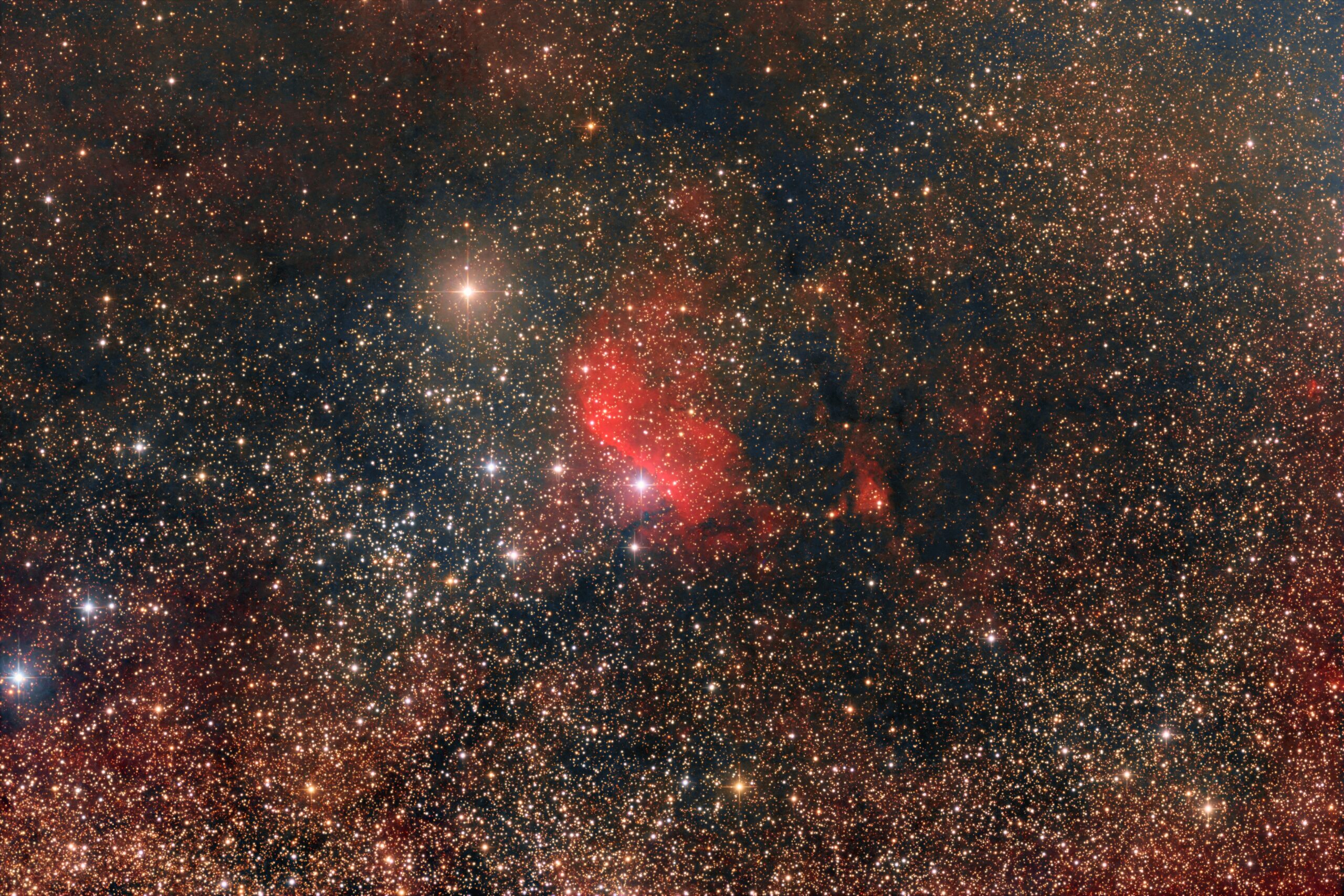
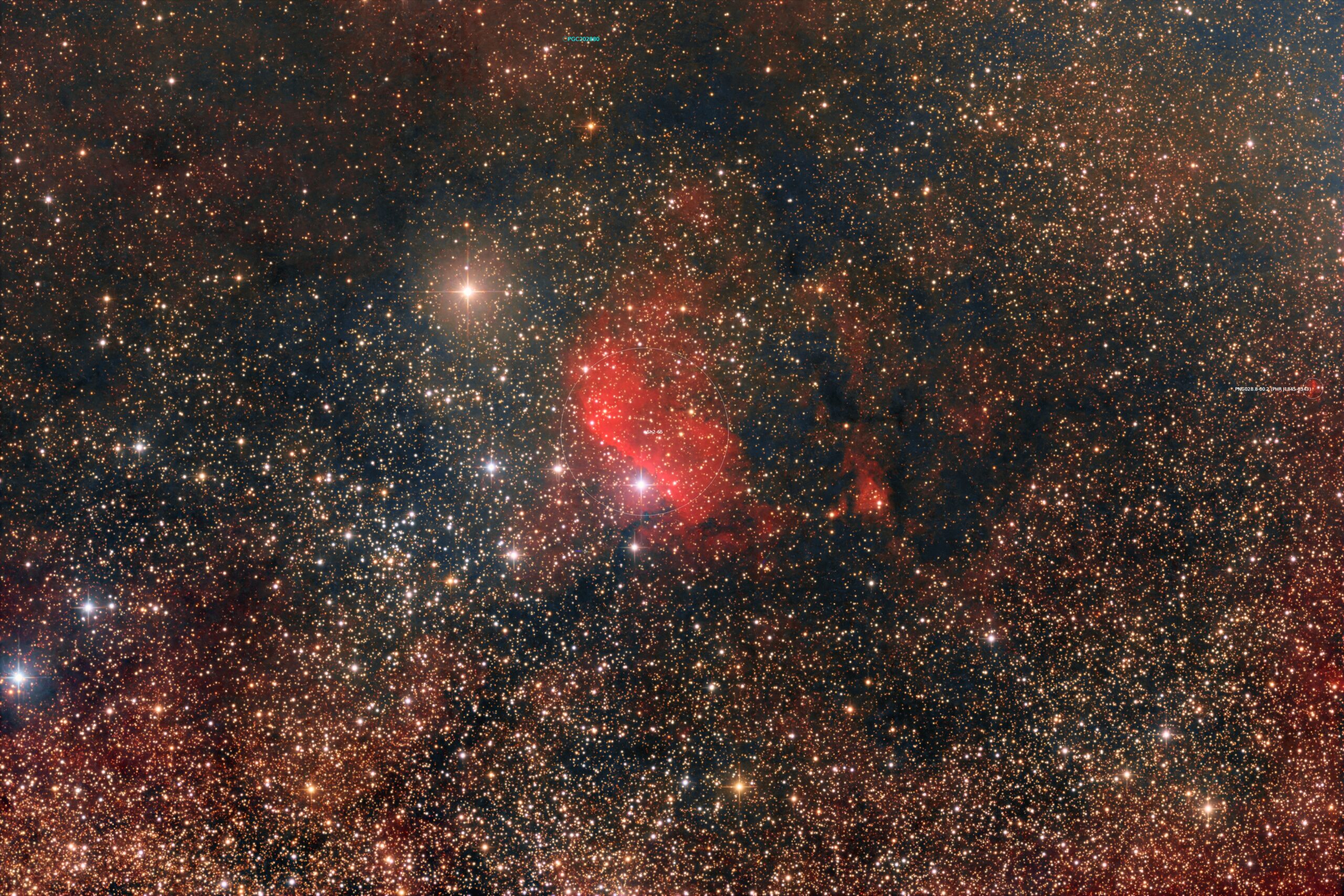
The images were taken with the following equipment:
- Date: 2025
- Location: Hakos, Namibia
- Telescope/Lens: TS 12“ Newton-Astrograph
- Focal length [mm]: 1391
- Focal ratio: 4.56
- Mount: 10Micron GM3000
- Camera: Lacerta DeepSkyPro2600 (mono)
- Filter: RGBHα
- Exposure time [min]: 21:27:33:420
- Resolution: 0.56″/px
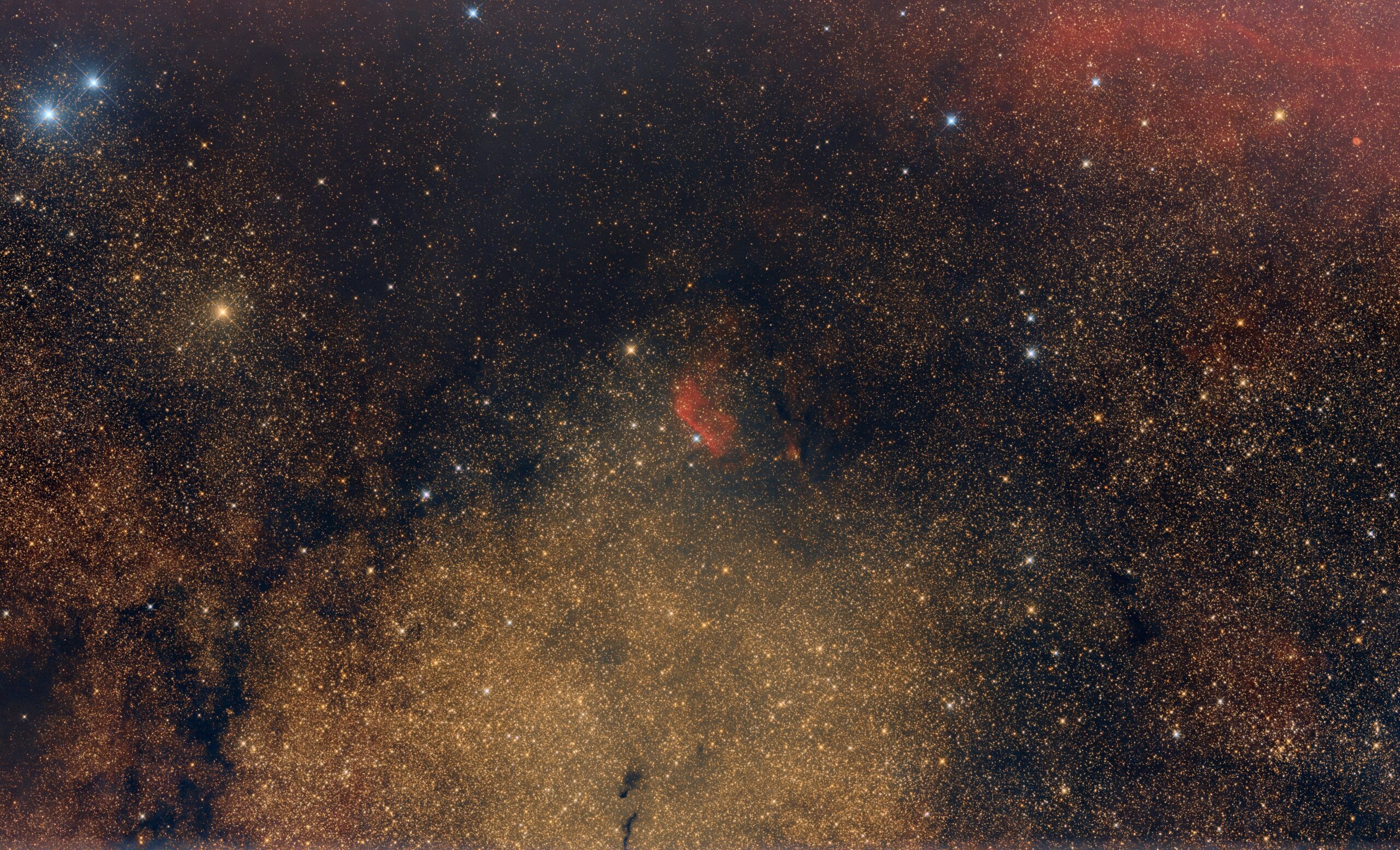
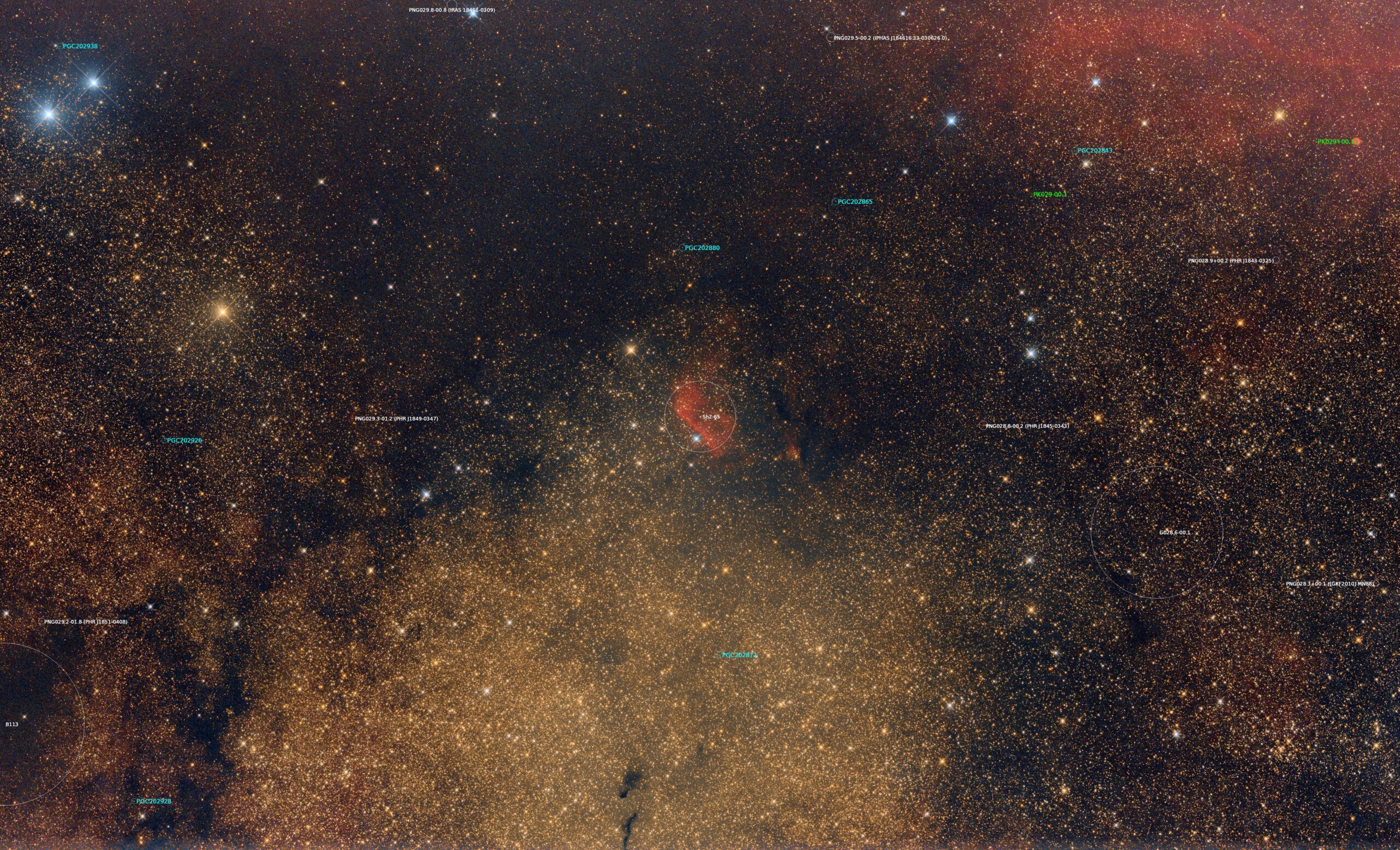
The images were taken with the following equipment:
- Date: 2025
- Location: Hakos, Namibia
- Telescope/Lens: Takahashi Epsilon-160ED
- Focal length [mm]: 535
- Focal ratio: 3.3
- Mount: 10Micron GM3000
- Camera: Lacerta DeepSkyPro2600 C
- Filter: Clear, DB
- Exposure time [min]: 601
- Resolution: 1.45″/px



Leave a reply