

Sharpless 2-41 – VdS Remote Hakos and remote
In 2025, together with my astrophotography companions Karsten Möller and Jan Beckmann, I imaged the emission nebula Sh2-41 using both telescopes of the VdS Remote Observatory at Hakos, Namibia. By operating the two observatory systems simultaneously, we obtained a deep dataset with an excellent signal-to-noise ratio, revealing the nebula’s delicate hydrogen emission together with the extraordinarily rich star fields of the southern Milky Way. The pristine skies and excellent seeing at Hakos provided ideal conditions for imaging this relatively little-known but fascinating region.
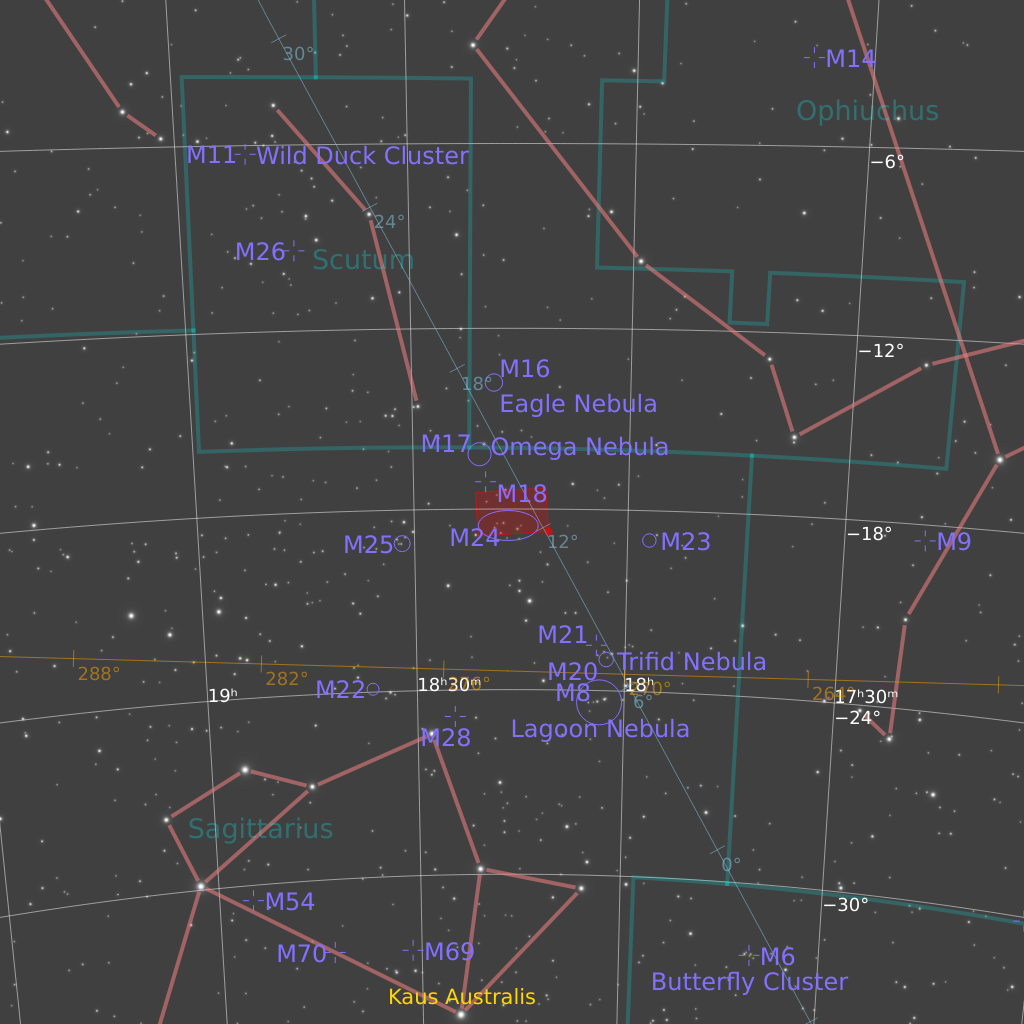
Located in the constellation Sagittarius, Sh2-41 is part of the vast network of H II regions that populate the inner Milky Way. It lies in one of the richest sections of our Galaxy, where dense molecular clouds, young star clusters, and glowing hydrogen nebulae trace the spiral structure of the Galactic disk. The nebula is estimated to be several thousand light-years away and is associated with an active region of ongoing star formation.
Like other H II regions, Sh2-41 shines because energetic ultraviolet radiation from newly formed O- and B-type stars ionizes the surrounding hydrogen gas. Deep images reveal a complex mixture of bright emission, dark dust lanes, and subtle filamentary structures sculpted by stellar winds and radiation pressure. Embedded within the surrounding molecular cloud are numerous young stellar objects that continue to emerge from their natal cocoons of gas and dust.
The field surrounding Sh2-41 is exceptionally rich, containing countless foreground and background stars of the Milky Way together with several dark nebulae that partially obscure the more distant Galactic plane. These dark clouds consist of cold molecular gas and dust, representing the raw material from which future generations of stars and planetary systems will eventually form.
From a scientific perspective, Sh2-41 provides another excellent example of the continuous cycle of stellar birth and feedback within our Galaxy. Massive stars both illuminate and reshape their parent molecular clouds, while their radiation and stellar winds compress nearby gas, sometimes triggering the formation of new stars. Such regions help astronomers understand how star formation propagates through giant molecular cloud complexes.
The 2025 observations obtained with the two telescopes of the VdS Remote Observatory demonstrate the advantages of collaborative astrophotography. By combining data from both instruments, we were able to produce a deep image that captures the nebula’s faint hydrogen emission together with the spectacular surrounding Milky Way star fields. The project is another excellent example of the scientific and photographic opportunities made possible through the VdS Remote Observatory at Hakos, as well as the benefits of teamwork in modern astrophotography.
For the 2025 data the calibration, registration, and final processing were performed in PixInsight.
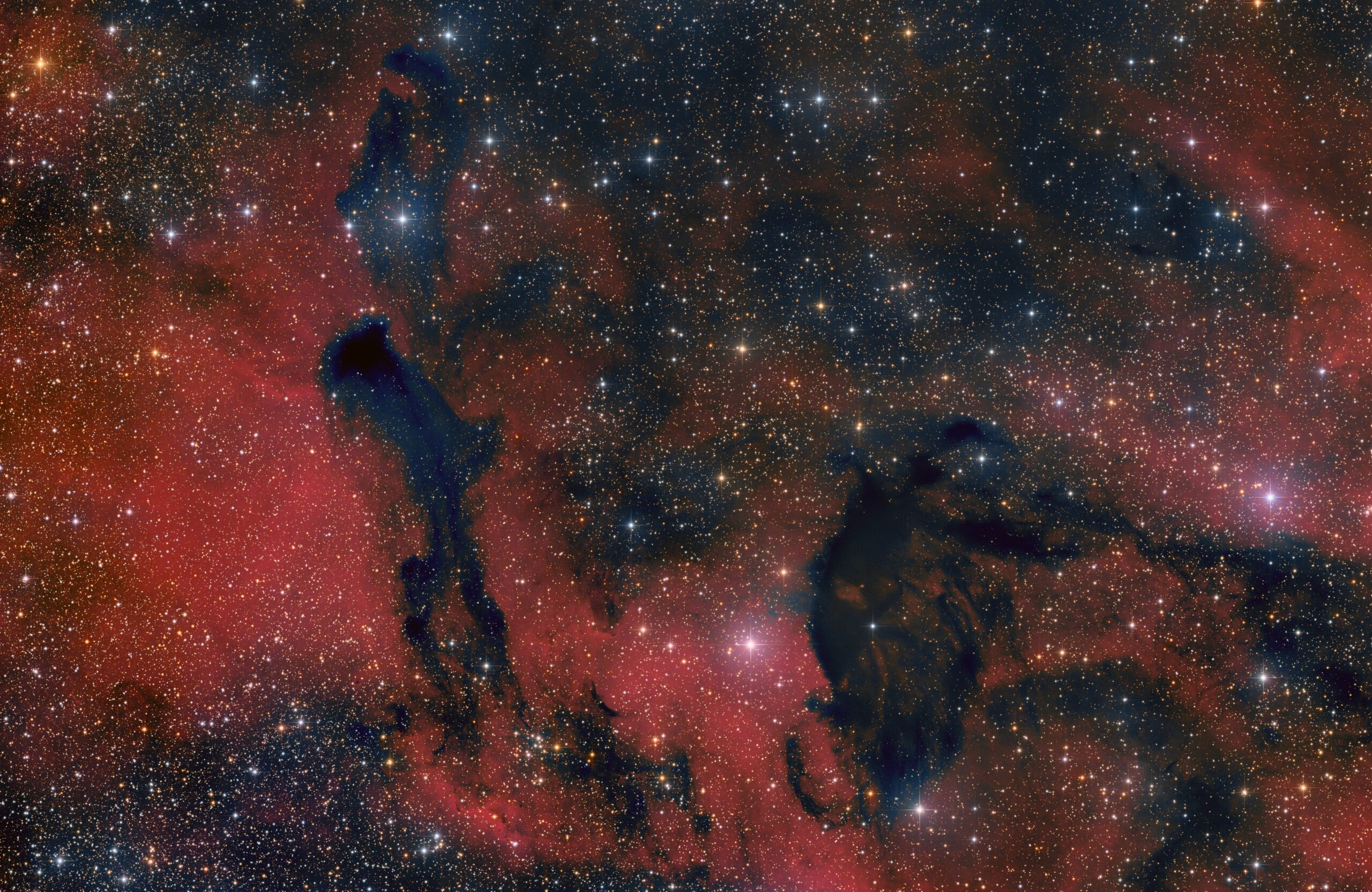
The images were taken with the following equipment:
- Date: 2025
- Location: Hakos, Namibia
- Telescope/Lens: TS 12“ Newton-Astrograph
- Focal length [mm]: 1391
- Focal ratio: 4.56
- Mount: 10Micron GM3000
- Camera: Lacerta DeepSkyPro2600 (mono)
- Filter: LRGBHα
- Exposure time [min]: 213:36:36:36:300
- Resolution: 0.56″/px
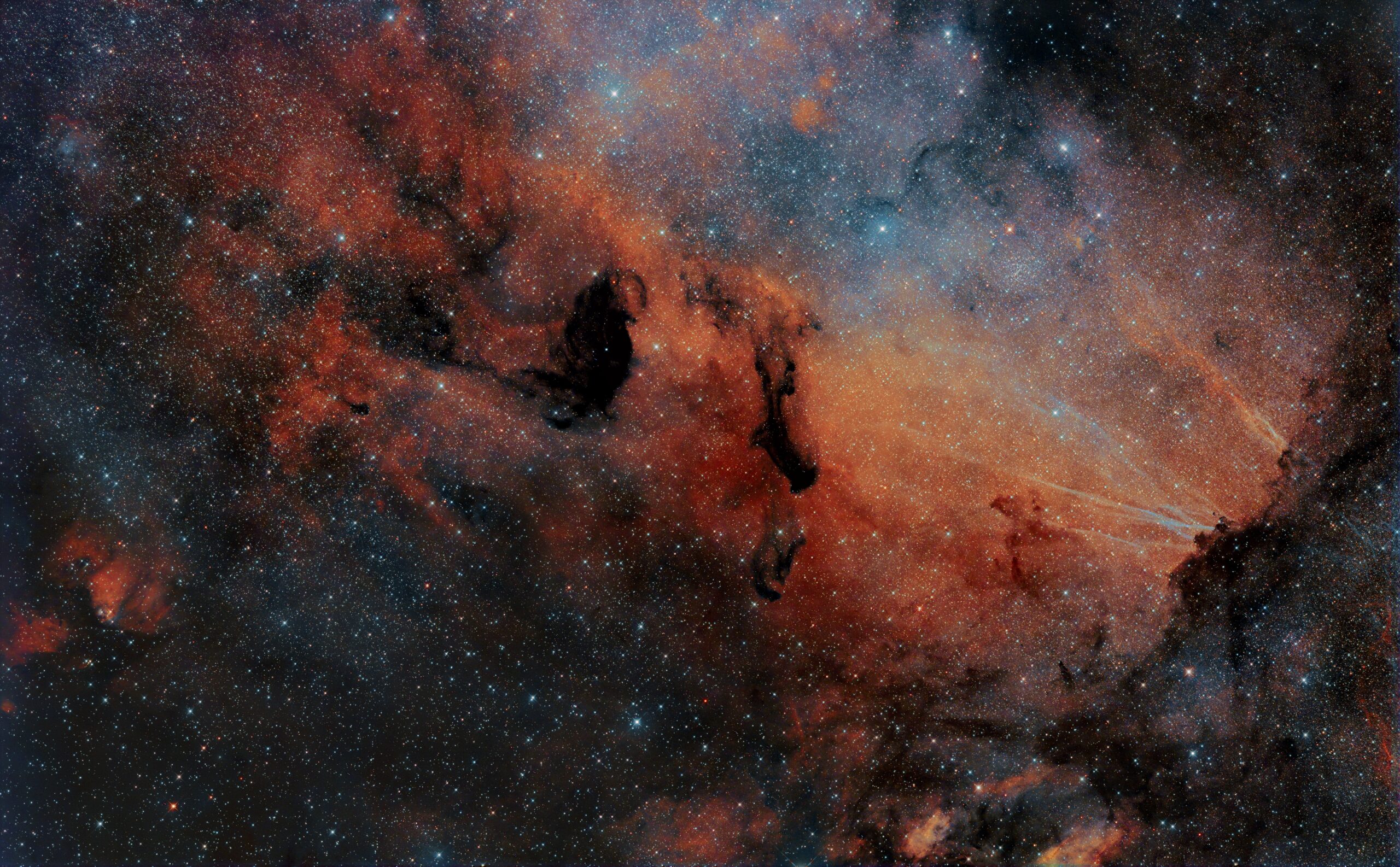

The images were taken with the following equipment:
- Date: 2025
- Location: Hakos, Namibia
- Telescope/Lens: Takahashi Epsilon-160ED
- Focal length [mm]: 535
- Focal ratio: 3.3
- Mount: 10Micron GM3000
- Camera: Lacerta DeepSkyPro2600 C
- Filter: Clear, DB
- Exposure time [min]: 645
- Resolution: 1.45″/px



Leave a reply