

Sharpless 2-3 (RCW 120) – VdS Remote Hakos and remote
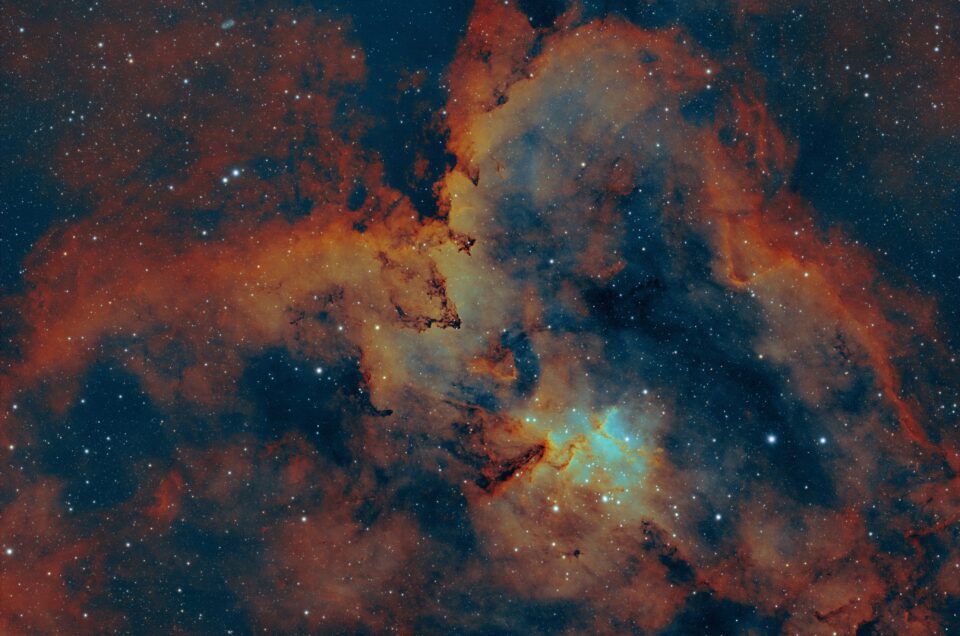
I imaged the spectacular emission nebula Sh2-3, also catalogued as RCW 120, twice over the years using two independent datasets. In 2024, I received a professional SHO narrowband dataset from Telescope Live, acquired under the pristine skies of Chile. One year later, in 2025, together with my astrophotography companion Karsten Möller, I imaged the same nebula using both telescopes of the VdS Remote Observatory at Hakos, Namibia. For this project, we acquired Hα and RGB data (HRGB), producing a detailed image with natural star colors while enhancing the hydrogen emission that dominates the nebula. The two datasets were processed independently, each highlighting the object in a different way.
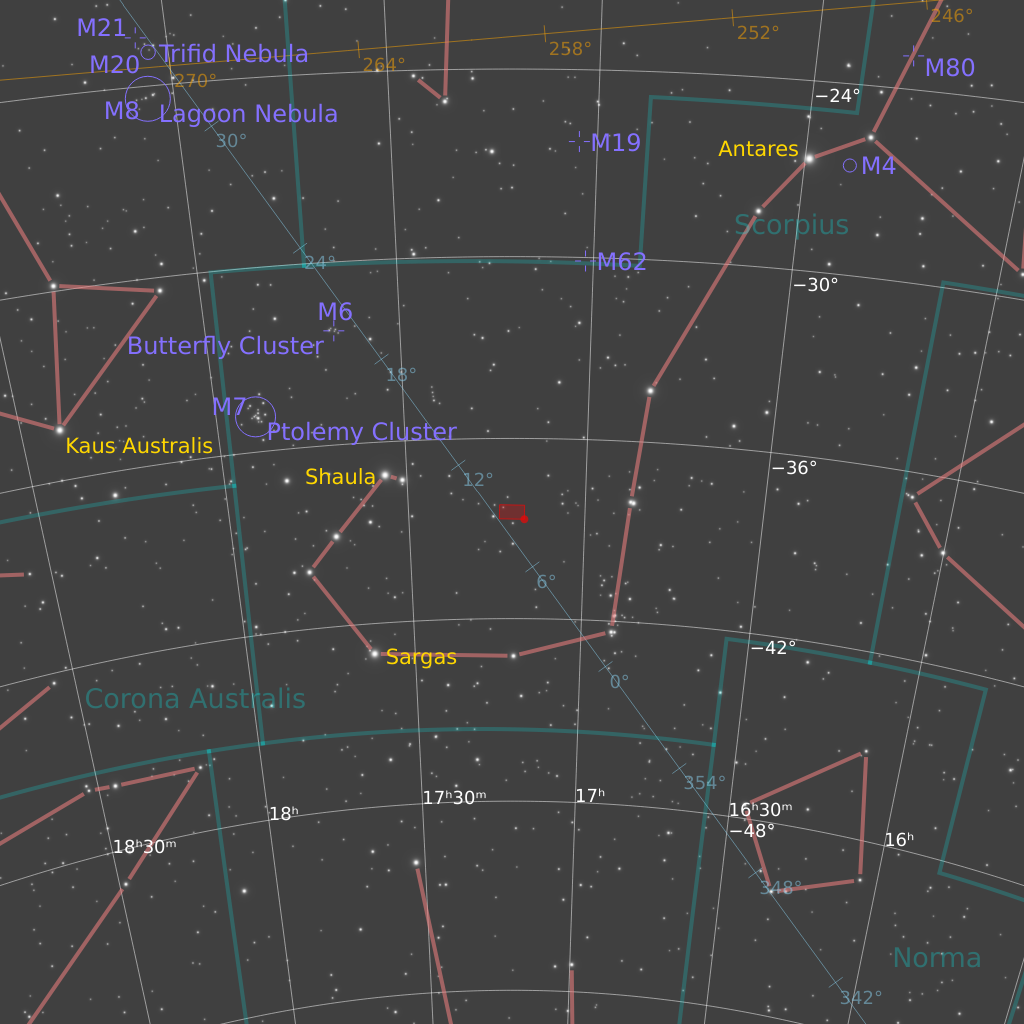
Located in the constellation Scorpius, RCW 120 lies approximately 4,300 light-years from Earth and is one of the best-known H II regions in the Milky Way. Often referred to as the Perfect Bubble Nebula, it is famous for its nearly circular appearance, making it one of the finest examples of a stellar wind bubble created by a massive young star.
At the center of the nebula is a hot O-type star, whose intense ultraviolet radiation ionizes the surrounding hydrogen gas while its powerful stellar wind sweeps the surrounding material into an expanding shell. This process has produced the nebula’s characteristic bubble, approximately 10 light-years in diameter. The bright rim marks the interface where the expanding shell encounters the surrounding molecular cloud.
Infrared observations, particularly with the Spitzer Space Telescope, have shown that the expanding shell is compressing the surrounding gas and dust, triggering the formation of a new generation of stars along its rim. Numerous young stellar objects and protostars have been identified in these dense condensations, making RCW 120 one of the best-studied examples of triggered star formation in our Galaxy.
The SHO image from Telescope Live emphasizes the different ionization zones within the nebula by separating the emission from hydrogen, sulfur, and oxygen, revealing an intricate network of filaments and shock fronts. In contrast, the HRGB image obtained at the VdS Remote Observatory combines deep Hα data with natural RGB colors, highlighting the glowing hydrogen shell while preserving the appearance of the rich Milky Way star field surrounding the nebula.
These two independent images beautifully demonstrate how different imaging techniques can reveal complementary aspects of the same object. While the SHO image emphasizes the nebula’s physical structure and ionization, the HRGB image presents a more natural view of this remarkable stellar nursery. Together, they provide two distinct perspectives on one of the Milky Way’s most iconic star-forming regions.
For the 2025 data the calibration, registration, and final processing were performed in PixInsight.
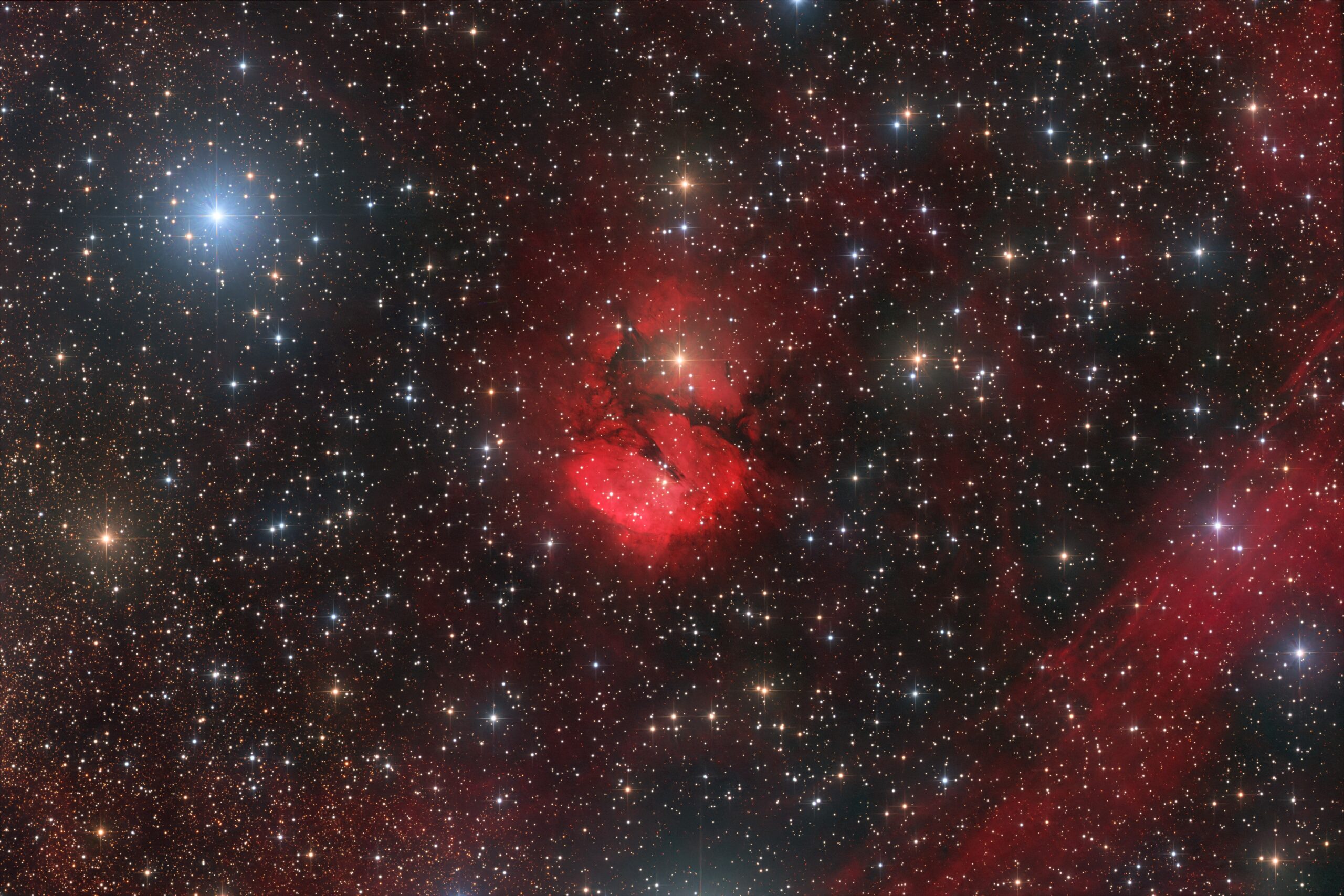
The images were taken with the following equipment:
- Date: 2025
- Location: Hakos, Namibia
- Telescope/Lens: TS 12“ Newton-Astrograph
- Focal length [mm]: 1391
- Focal ratio: 4.56
- Mount: 10Micron GM3000
- Camera: Lacerta DeepSkyPro2600 (mono)
- Filter: RGBHα
- Exposure time [min]: 50:50:50:435
- Resolution: 0.56″/px
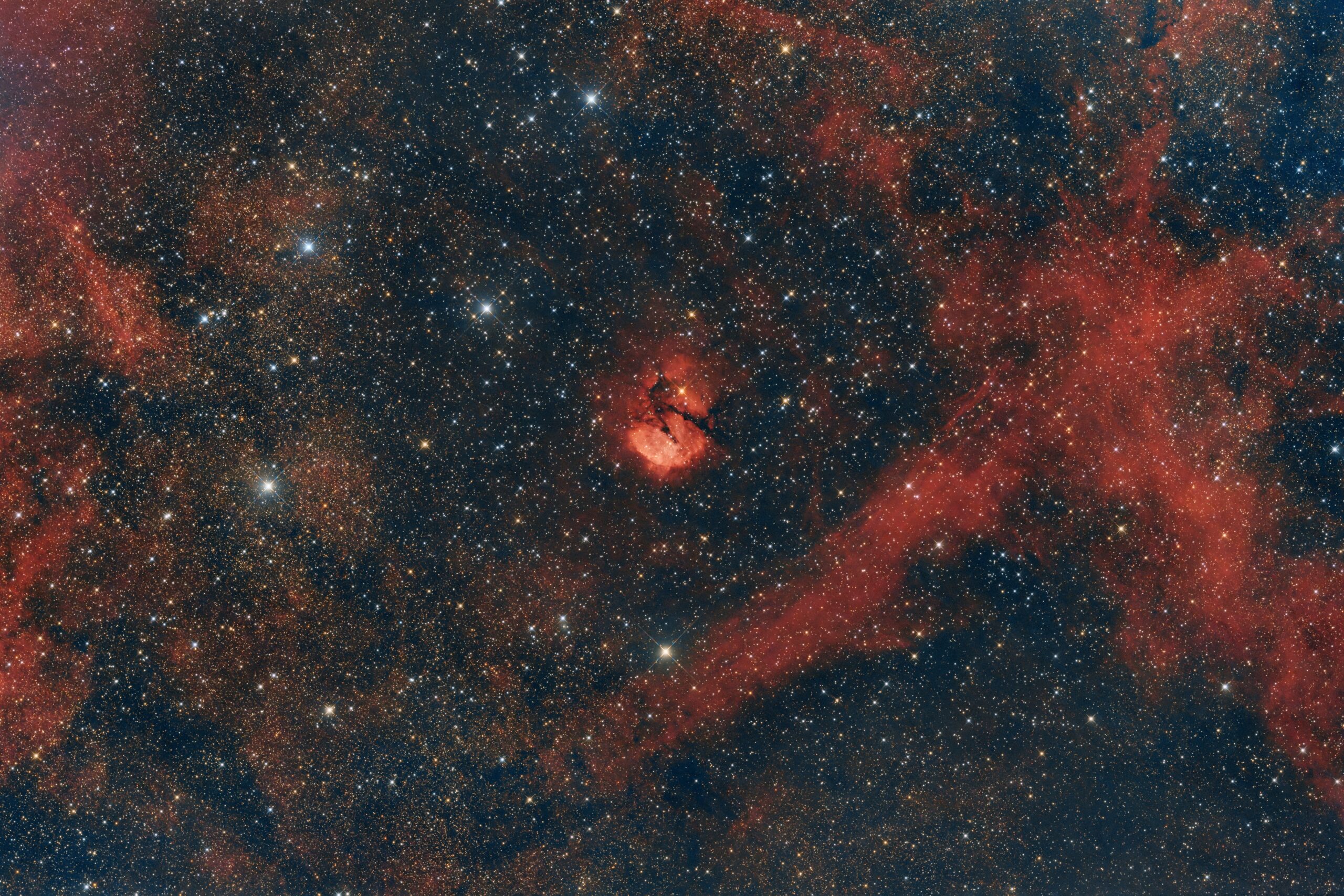
The images were taken with the following equipment:
- Date: 2025
- Location: Hakos, Namibia
- Telescope/Lens: Takahashi Epsilon-160ED
- Focal length [mm]: 535
- Focal ratio: 3.3
- Mount: 10Micron GM3000
- Camera: Lacerta DeepSkyPro2600 C
- Filter: Clear, DB
- Exposure time [min]: 601
- Resolution: 1.45″/px
For the Telescope Live data the calibration, registration, and final processing were performed in PixInsight.
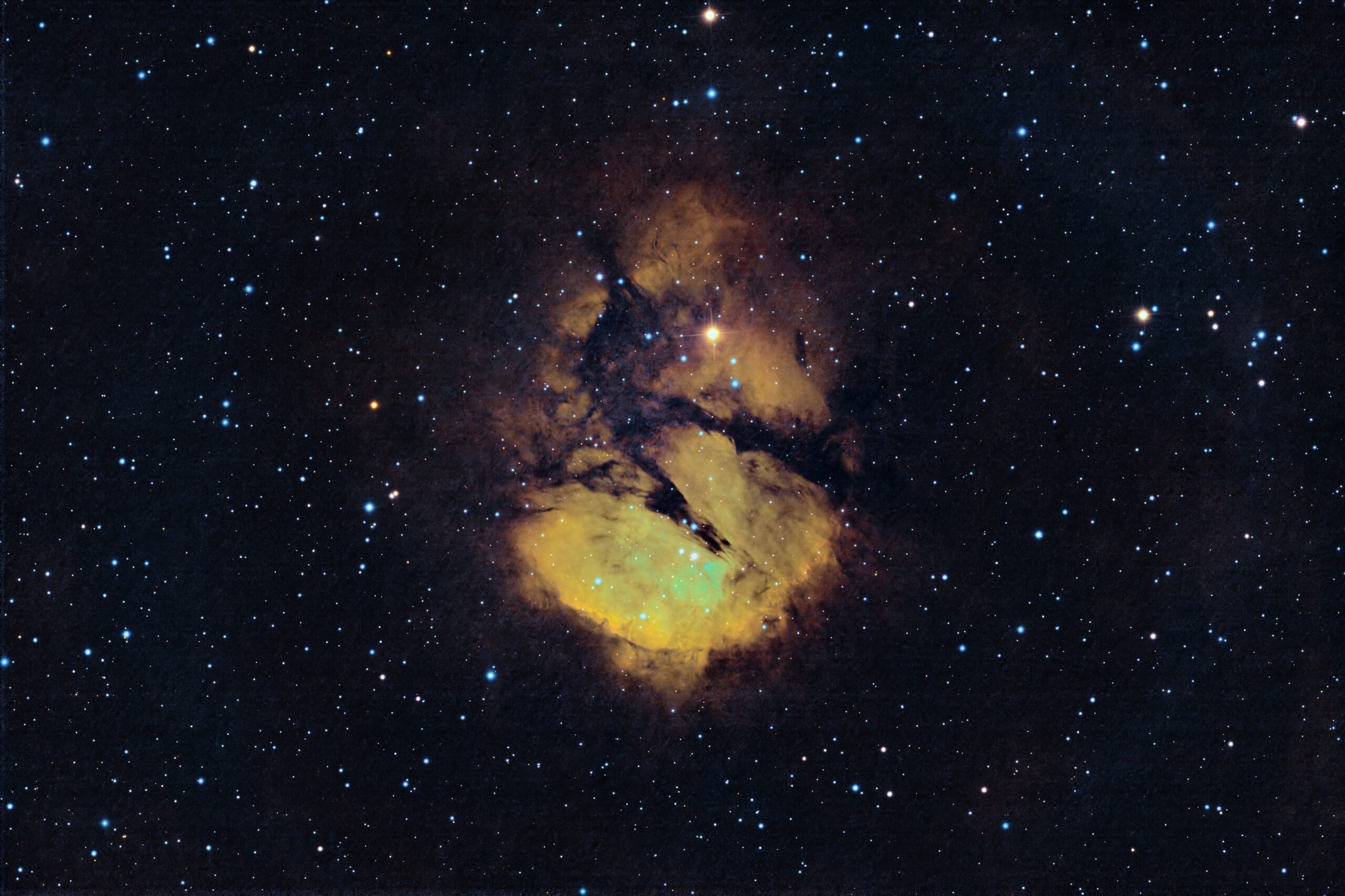
The images were taken with the following equipment:
- Date: 2024
- Location: El Sauce Obsertaory, Chile
- Telescope/Lens: Planwave CDK24
- Focal length [mm]: 3962
- Focal ratio: 6.5
- Mount: Mathis MI-1000/1250
- Camera: QHY 600M Pro
- Filter: SHO
- Exposure time [min]: 165:165:165
- Resolution: 1.45″/px



Leave a reply