

Sharpless 2-27
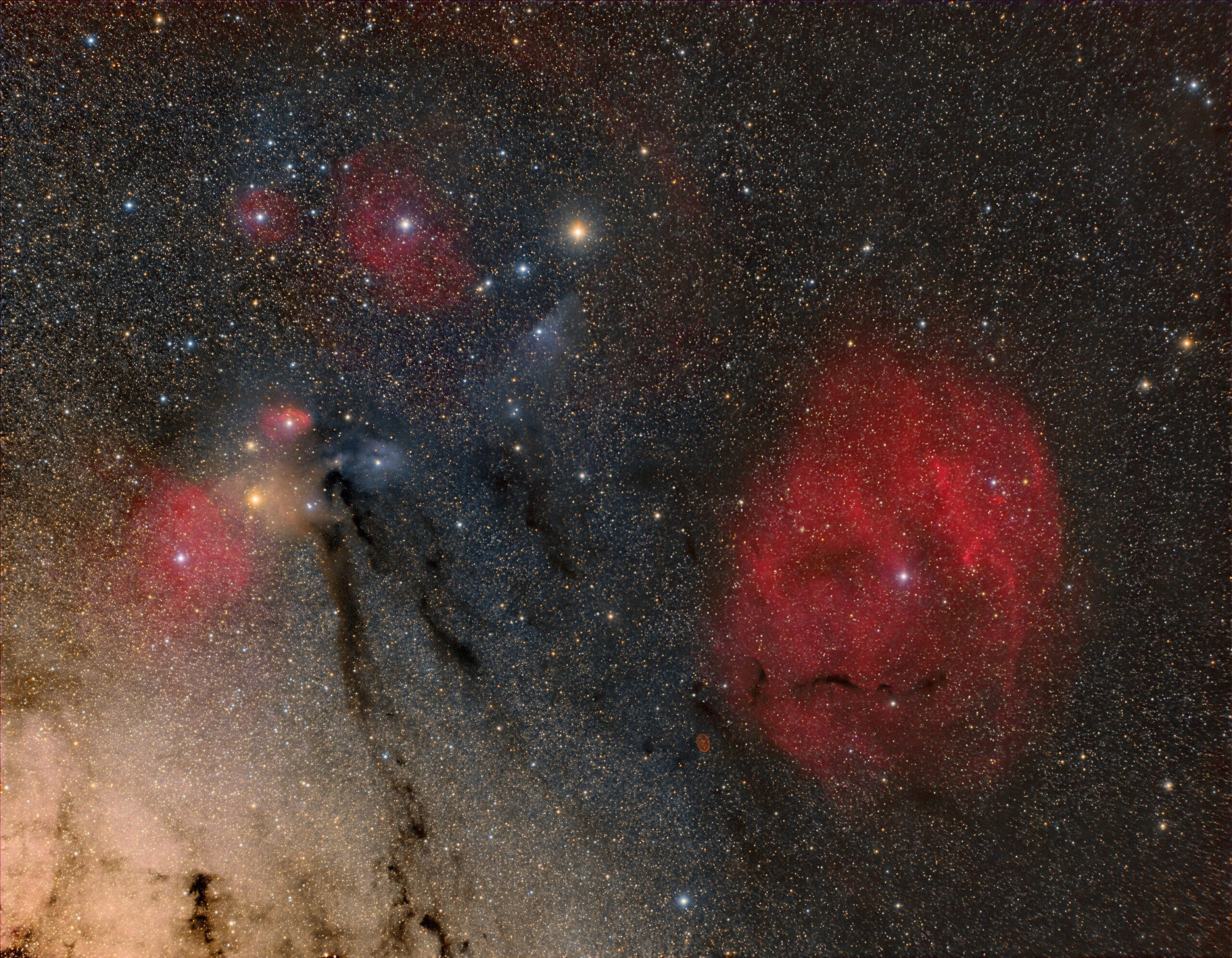
In 2015, during a stay at the Tivoli Astrofarm in Namibia, I captured a wide-field image of the enormous emission nebula Sh2-27 using a CCD camera and a telephoto lens. The image was acquired in HRGB, combining deep Hα exposures with broadband RGB data to reveal both the faint hydrogen emission and the rich natural colors of the surrounding Milky Way star fields. The exceptionally dark Namibian skies were essential for recording this vast, low-surface-brightness nebula, which extends over several degrees of the sky.
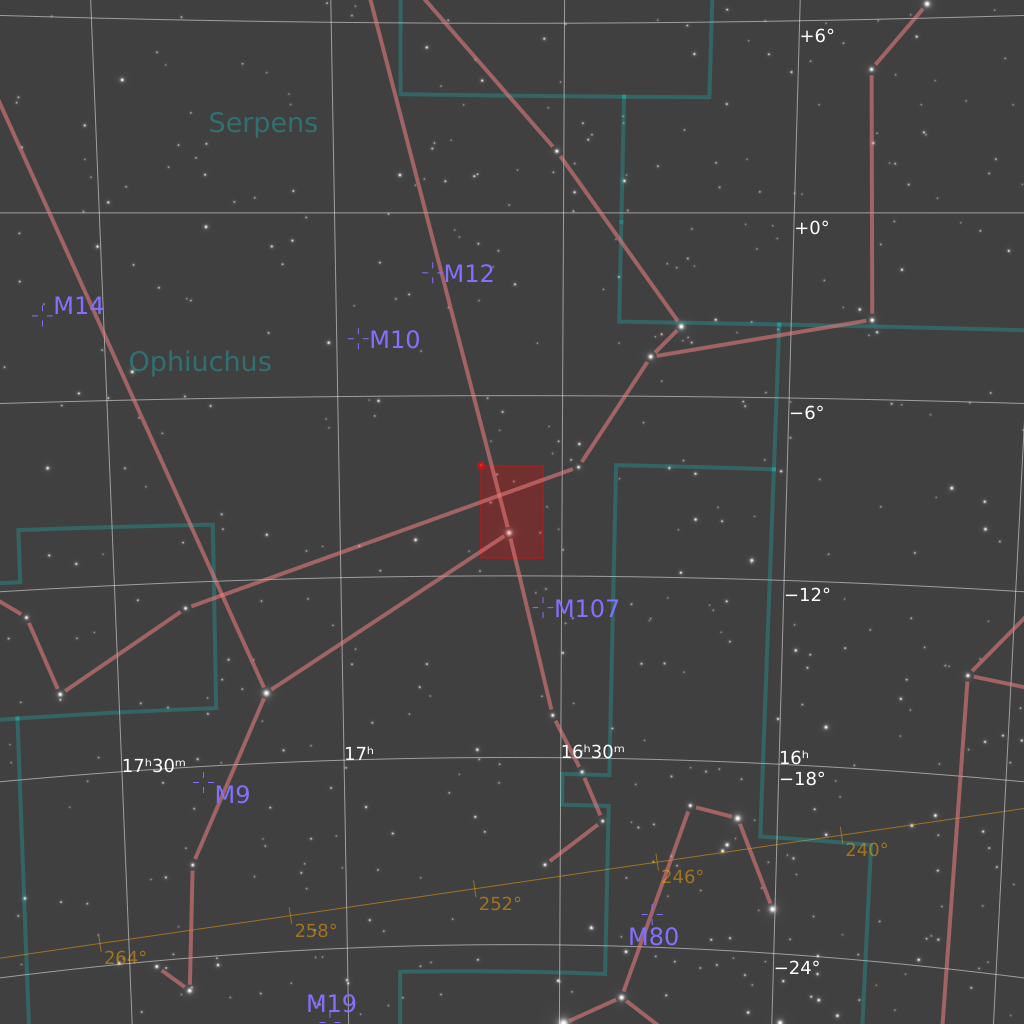
Located in the constellation Ophiuchus, Sh2-27 is one of the largest known H II regions visible from Earth, spanning nearly 10 degrees across the sky. At an estimated distance of approximately 500 light-years, its enormous apparent size corresponds to a physical diameter of almost 100 light-years, making it one of the nearest large emission nebulae in our Galactic neighborhood.
The nebula is primarily ionized by the hot runaway star Zeta Ophiuchi, one of the closest O-type stars to the Sun. Traveling through space at a velocity of about 30 km/s, Zeta Ophiuchi emits intense ultraviolet radiation that excites the surrounding hydrogen gas, causing the nebula to glow in the characteristic red light of Hα emission. The star itself is believed to have been ejected from a binary system after its companion exploded as a supernova several million years ago.
Deep Hα imaging reveals an intricate network of diffuse emission, bright filaments, and subtle arcs extending throughout the nebula. The additional RGB data preserve the natural colors of the countless foreground and background stars while also recording the numerous dark dust clouds that weave through this section of the Milky Way. Together, the HRGB combination produces a natural yet highly detailed representation of this immense interstellar complex.
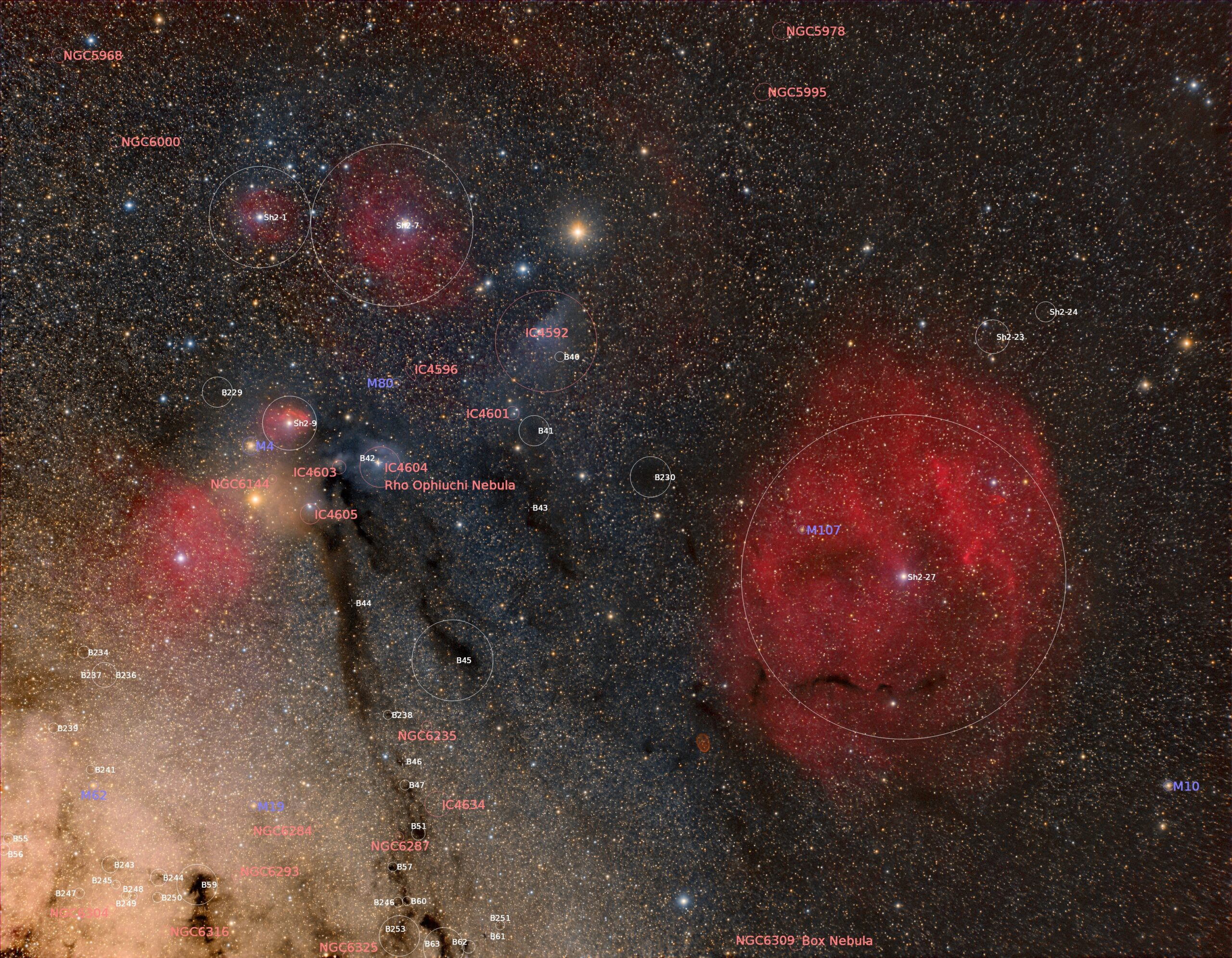
Wide-field images of Sh2-27 also capture the remarkable environment surrounding Zeta Ophiuchi. The region contains numerous dark molecular clouds and reflection nebulae, illustrating the complex interaction between hot massive stars and the interstellar medium. The radiation and stellar wind from Zeta Ophiuchi continue to shape the surrounding gas, creating subtle shock fronts and ionization boundaries that can only be appreciated in deep, wide-field photographs.
The HRGB image obtained in 2015 remains one of my favorite wide-field projects from Namibia. The combination of a CCD camera, a telephoto lens, and the pristine skies of the Tivoli Astrofarm made it possible to capture the full extent of this enormous nebula together with the spectacular star fields of the Milky Way. It is an excellent example of how wide-field astrophotography can reveal the large-scale structure of our Galaxy that often remains unnoticed in images taken with longer focal lengths.
The data calibration, registration and final processing was done with PixIsight. The result is shown below:
The images were taken with the following equipment:
- Location: Tivoli, Namibia
- Telescope/Lens: Canon 24-105
- Focal length [mm]: 32
- Focal ratio: 4
- Mount: Losmandy G11
- Camera: Moravian FW8300
- Filter: Hα:R:G:B
- Exposure time [min]: 300:90:90:90
- Resolution: 34.8″/px



Leave a reply