

Sh2-297 (Ced 90, GUM 3)
Over the years, I have had the opportunity to process several outstanding datasets from Telescope Live in Chile. Among them were two independent observations of the beautiful emission nebula Sh2-297, acquired three years apart using different generations of imaging technology. The first dataset, obtained in 2020, consisted of RGB and SHO data captured with a high-performance CCD camera. In 2023, a second dataset became available, this time comprising RGB and HO data recorded with a modern CMOS camera. The availability of these two datasets offered a fascinating opportunity to compare the characteristics of CCD and CMOS sensors, each with its own strengths in sensitivity, dynamic range, and noise performance.
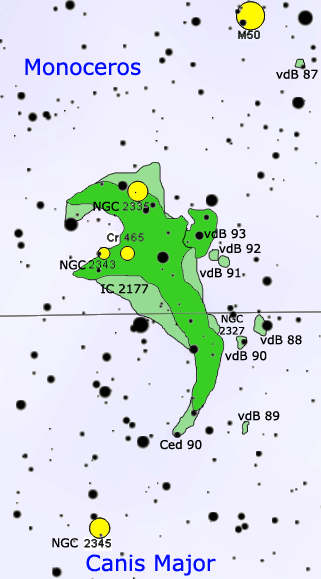
Sh2-297 is a small but active emission nebula in Canis Major, also cataloged as Sharpless 297 or Ced 90. It sits in the Canis Major OB1 star-forming complex and is part of the larger reflection/emission nebula system often associated with the Seagull Nebula region.
At its core, Sh2-297 is an H II region: glowing hydrogen gas ionized by young, hot stars nearby. The bright star identified as the main illuminator is HD 53623, a B1II/III star, which provides enough ultraviolet radiation to keep the nebula lit. Because it is embedded in a messy cloud environment, Sh2-297 is not just a single cloud but part of a broader molecular complex with dust rifts, reflection nebulae, and young stellar objects.
One of the most interesting facts about Sh2-297 is how active it is in star formation. Studies report nearly 100 young stellar objects in the region, with typical ages around one million years and masses from roughly 0.3 to 2 solar masses. That means the nebula is not only being illuminated by young stars, but is also actively producing them now. In astronomy terms, this makes Sh2-297 a living nursery rather than a static cloud.
A particularly notable discovery was UYSO-1, a deeply embedded young stellar object that was first “unidentified” because it is invisible at short wavelengths such as 2MASS infrared data. Even though it is hidden behind dust, it reveals itself in the far infrared and through a carbon monoxide bipolar outflow. The outflow has a mass of about 5.4 solar masses, and the surrounding envelope is estimated at 30 to 40 solar masses. That is a strong sign of a massive protostar in an early stage of development.
Sh2-297 lies at the southern wingtip of the Seagull Nebula complex, near the better-known reflection nebula vdB 94. It is often described as being around 4,000 light-years away, though the literature gives a broader range of about 3,300 to 4,600 light-years. Visually, it is a faint knot in a richer field, with dust lanes and surrounding nebulosity making it especially attractive in narrowband and deep-sky images.
Sh2-297 is valuable because it combines several stages of stellar evolution in one field: ionized gas, reflection nebulosity, hidden protostars, and older variable stars. That mix helps astronomers study how massive stars affect the clouds around them and how new stars form inside the same environment. It also shows how catalog names can hide a surprisingly complex physical system: what looks like a small patch of glow is actually part of a much larger, dynamic star-forming region.
In short, Sh2-297 is a compact but scientifically rich nebula: a bright ionized patch in Canis Major, embedded in the Seagull region, with young stars, dusty filaments, and at least one deeply hidden protostar still growing inside.
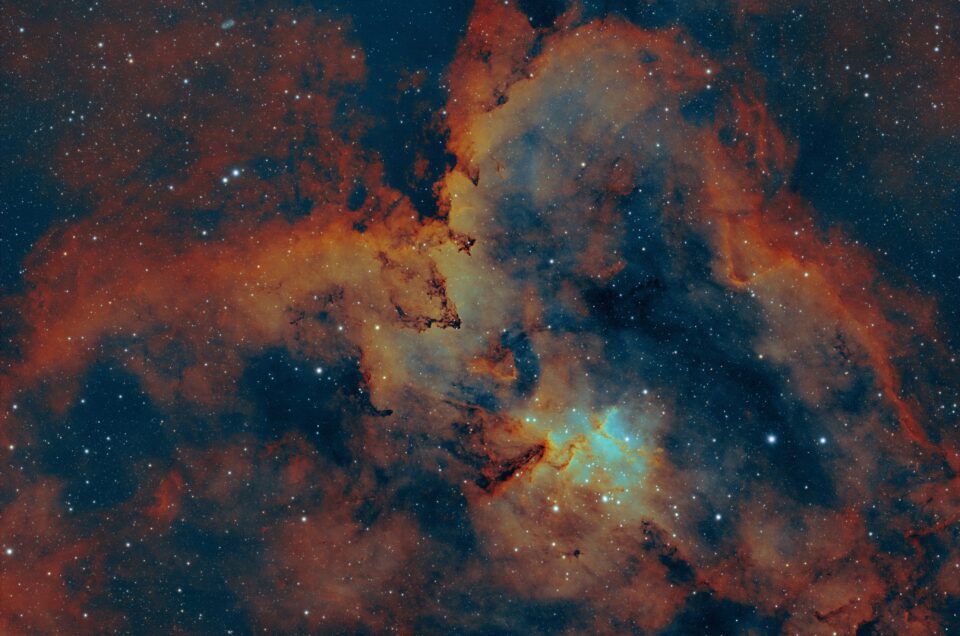
For the 2023 data the calibration, registration and the final processing was done with PixInsight. The result was as follows:
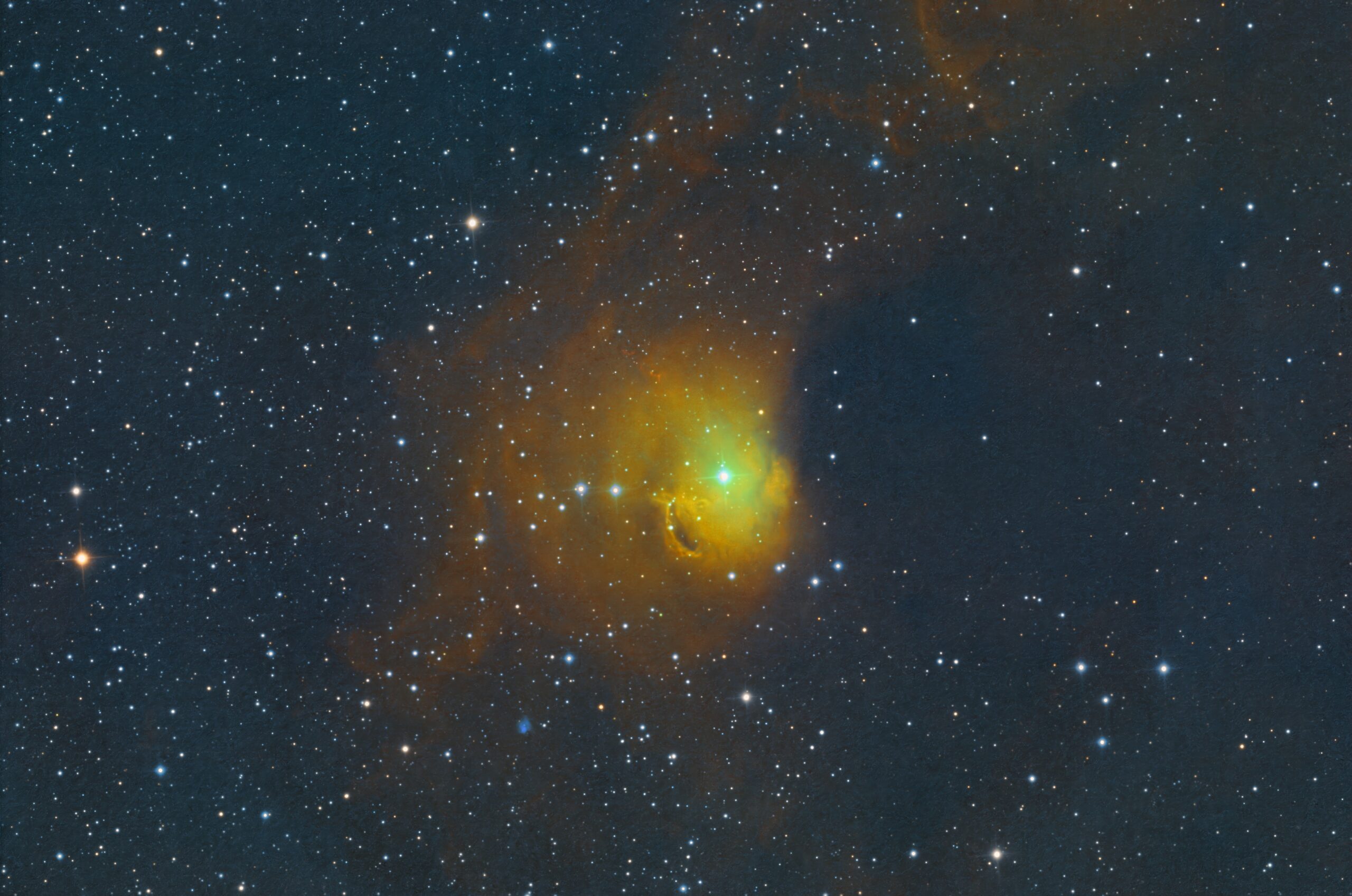
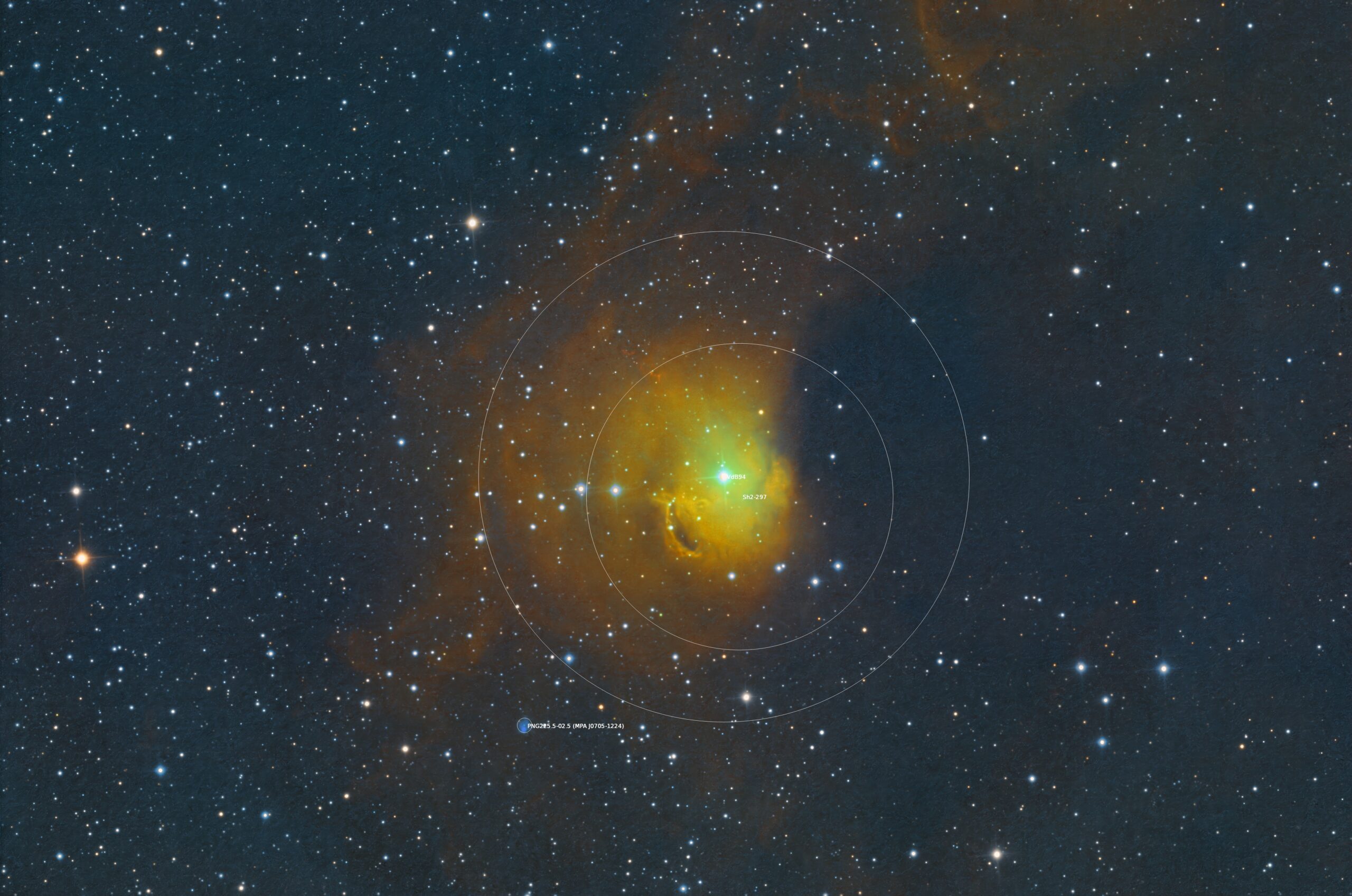
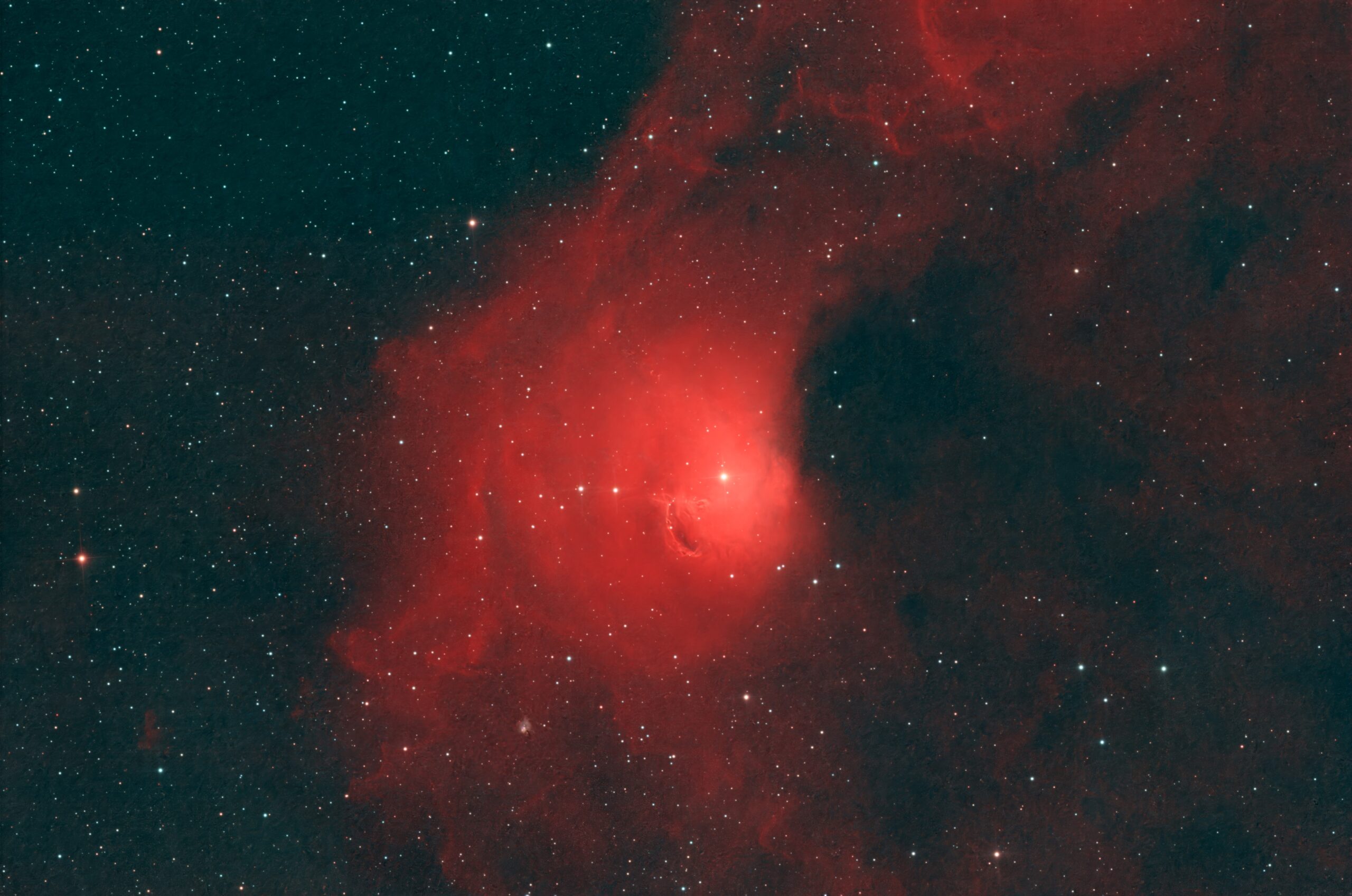
The images were taken with the following equipment (Telescope Live CHI-1):
- Date: 2023
- Location: El Sauce Observatory, Chile
- Telescope/Lense: Planwave CDK24
- Focal length [mm]: 3962
- Focal ratio: 6.5
- Mount: Mathis MI-1000/1250
- Camera: QHY 600M Pro
- Filter: Hα:[OIII]:[SII]
- Exposure time [min]: 195:185:185
- Resolution: 0.39″/px
For the 2020 data the calibration, registration and the final processing was done with PixInsight. The result was as follows:
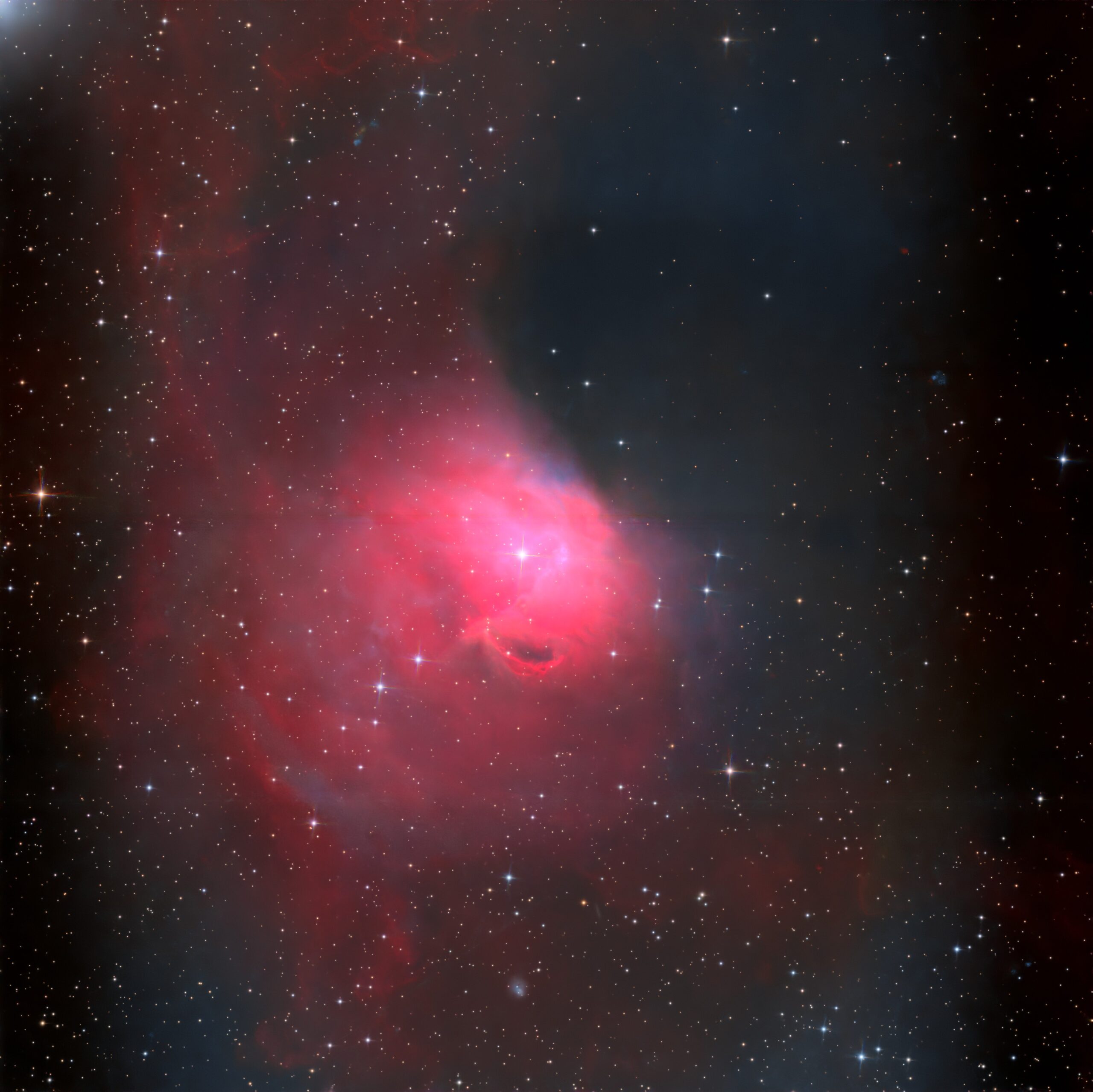
The images were taken with the following equipment (Telescope Live CHI-3):
- Date: 2020
- Location: El Sauce Observatory, Chile
- Telescope/Lense: ASA RC-1000AZ
- Focal length [mm]: 6800
- Focal ratio: 6.8
- Mount: ASA Alt-Az DDM
- Camera: FLI Proline 16803
- Filter: R:G:B:Hα:[OIII]:[SII]
- Exposure time [min]: 12:9:9:130:60:130
- Resolution: 0.27″/px



Leave a reply