

Sh2-279 (Running Man Nebula) – from remote
In 2025, I received a high-quality LRGB dataset of Sh2-279 from Telescope Live, acquired under the exceptionally dark skies of Chile. Sh2-279 is the large nebula complex in Orion best known as the Running Man Nebula, and the named pieces NGC 1973, NGC 1975, and NGC 1977 are different parts of that same broader region. It sits just north of the Orion Nebula in Orion’s Sword and is usually described as a mix of reflection nebulae plus an H II region, lit by hot young stars and separated by dark dust lanes.
NGC 1977 is the brightest and most famous piece, and many sources use its name for the whole visible reflection nebula complex. NGC 1973 and NGC 1975 are smaller reflection nebulae nearby, first recorded in the 1860s by Heinrich Louis d’Arrest. Together they form a visually striking shape that looks like a running figure, which is where the common name comes from.
The blue glow of the nebula is scattered light from nearby hot stars, especially 42 Orionis, which illuminates much of the region. Unlike an emission nebula that shines mostly from ionized gas, a reflection nebula shines because fine dust grains scatter starlight toward us. That is why NGC 1977 often looks blue in images, while faint red hydrogen emission can appear in the darker lanes around it.
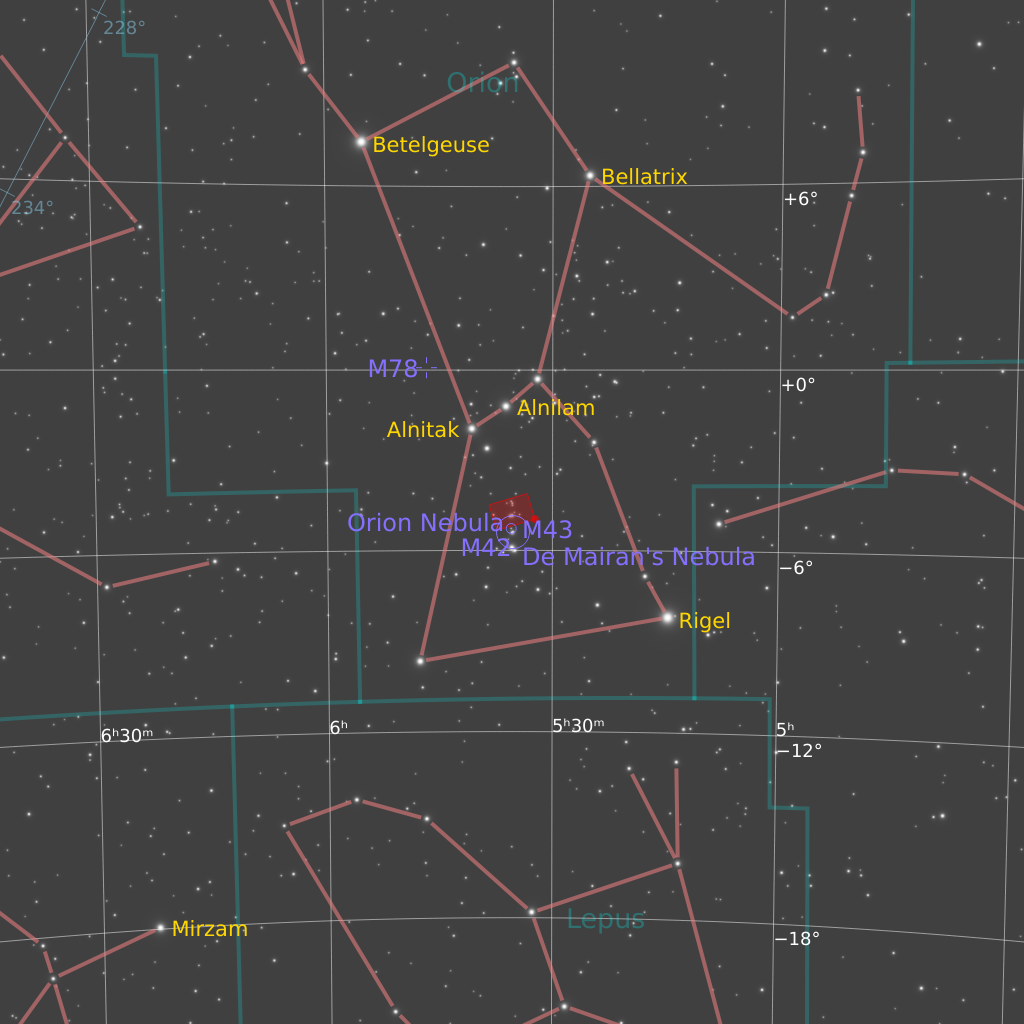
The region is about 1,500 light-years away, embedded in Orion’s giant molecular cloud. It lies close to the Orion Nebula, only about 0.6 degrees to the north, so the two are often photographed together. At that distance, the Running Man complex spans many light-years and includes not just the nebulae themselves but also the open cluster NGC 1981.
Sh2-279 is a good example of how star-forming regions can contain both reflection and emission features in a single crowded field. Astronomers use it to study dust scattering, nearby massive stars, and the structure of the Orion molecular cloud. It is also a useful reminder that deep-sky catalog names can describe one physical environment even when observers visually split it into several smaller objects.
If you look at Sh2-279, you are seeing a bright blue dust cloud being lit from inside and around by young stars, with dark lanes cutting through it to create the “running man” outline. NGC 1973, NGC 1975, and NGC 1977 are the three named nebular parts of that scene, and together they make one of Orion’s most recognizable wide-field objects.
The data calibration, registration, and final processing were performed in PixInsight. The result was as follows.
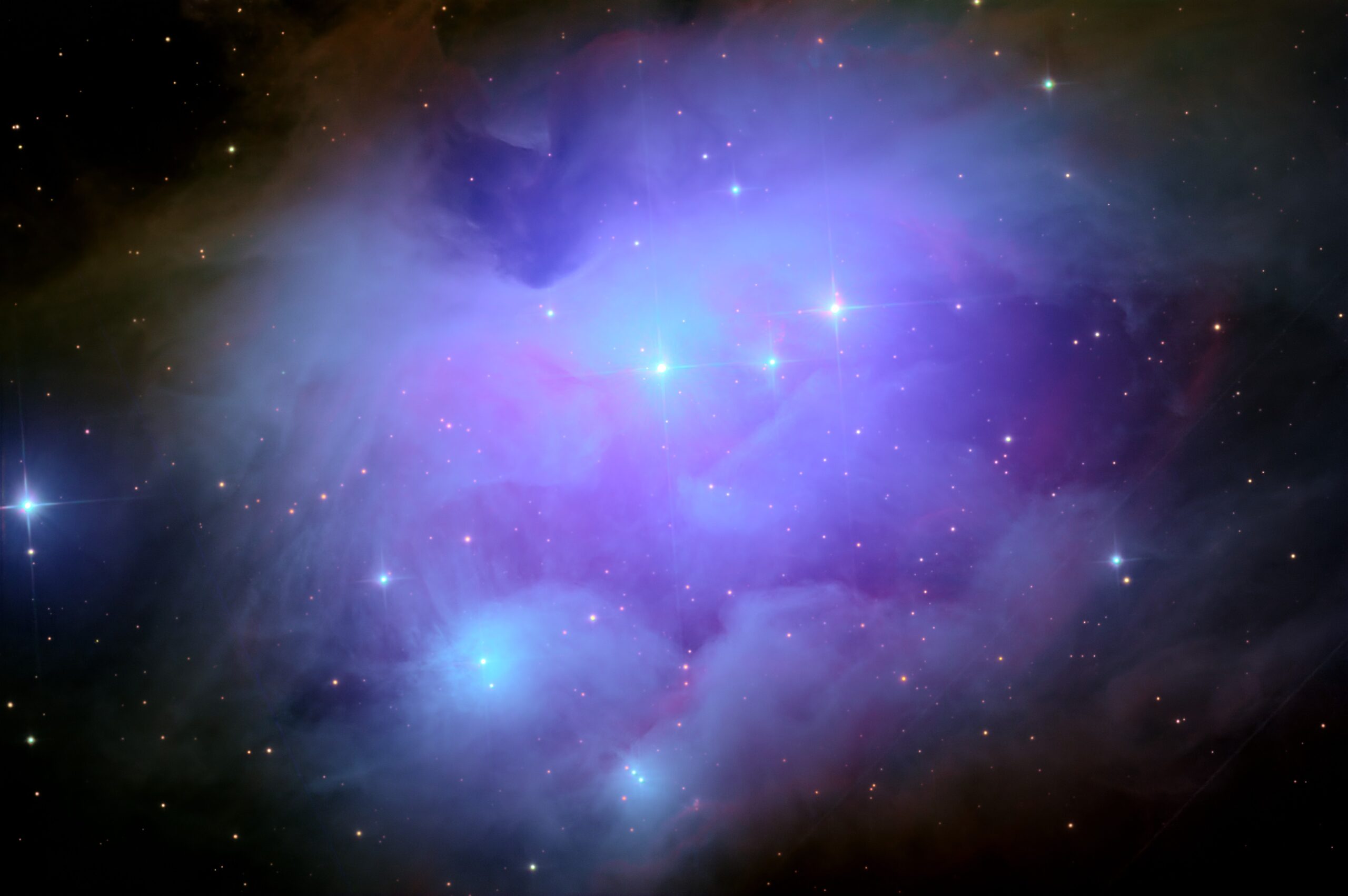
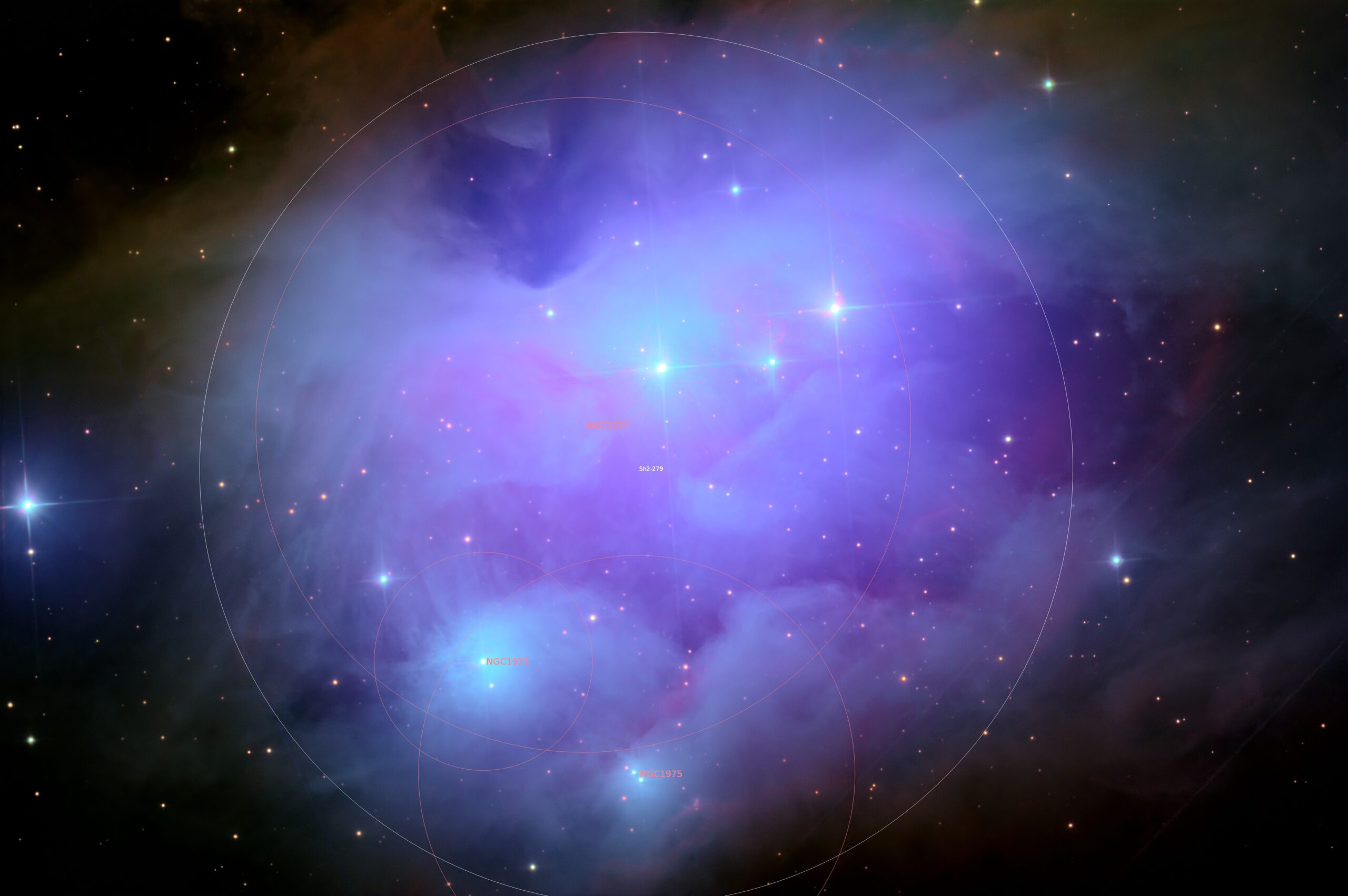
The images were taken with the following equipment:
- Date: 2024
- Location: El Sauce Obsertaory, Chile
- Telescope/Lens: Planwave CDK24
- Focal length [mm]: 3962
- Focal ratio: 6.5
- Mount: Mathis MI-1000/1250
- Camera: QHY 600M Pro
- Filter: LRGB
- Exposure time [min]: 20:20:20:20
- Resolution: 1.45″/px



Leave a reply