• Home
  • Blog
  • Astrophotography
    • Deep Sky
      • Galaxies (Galaxien)
      • Nebulae (Nebel)
      • Planetary Nebulae (Planetarische Nebel)
      • Globular Clusters (Kugelsternhaufen)
      • Open Clusters (Offene Sternhaufen)
      • Miscellaneous (Verschiedenes)
    • Solar System (Sonnensystem)
      • Comets (Kometen)
      • Moon (Mond)
      • Planets (Planeten)
      • Sun (Sonne)
  • Archiv

    • Juli 2026
    • Juni 2026
    • Mai 2026
    • April 2026
    • Februar 2026
    • Dezember 2025
    • November 2025
    • Oktober 2025
    • September 2025
    • August 2025
    • Juli 2025
    • Juni 2025
    • Mai 2025
    • April 2025
    • März 2025
    • Januar 2025
    • Dezember 2024
    • November 2024
    • Oktober 2024
    • September 2024
    • August 2024
    • Juli 2024
    • Juni 2024
    • Mai 2024
    • April 2024
    • März 2024
    • Februar 2024
    • Januar 2024
    • November 2023
    • Oktober 2023
    • September 2023
    • August 2023
    • Juli 2023
    • Juni 2023
    • Mai 2023
    • April 2023
    • März 2023
    • Februar 2023
    • Januar 2023
    • Dezember 2022
    • November 2022
    • Oktober 2022
    • September 2022
    • August 2022
    • Juni 2022
    • Mai 2022
    • April 2022
    • März 2022
    • Februar 2022
    • Januar 2022
    • Dezember 2021
    • November 2021
    • September 2021
    • August 2021
    • Juli 2021
    • März 2021
    • Februar 2021
    • November 2020
    • September 2020
    • August 2020
    • April 2020
    • März 2020
    • Februar 2020
    • Januar 2020
    • Dezember 2019
    • November 2019
    • Oktober 2019
    • September 2019
    • August 2019
    • Mai 2019
    • April 2019
    • März 2019
    • Dezember 2018
    • November 2018
    • Oktober 2018
    • September 2018
    • Juni 2018
    • Mai 2018
    • April 2018
    • März 2018
    • Februar 2018
    • Januar 2018
    • Oktober 2017
    • Juli 2017
    • Juni 2017
    • Januar 2017
    • Dezember 2016
    • September 2016
    • Mai 2016
    • März 2016
    • November 2015
    • Oktober 2015
    • Juli 2015
    • Mai 2015
    • März 2015
    • Februar 2015
    • September 2014
    • August 2014
    • März 2014
    • Februar 2014
    • Oktober 2013
    • September 2013
    • August 2013
    • April 2013
    • März 2013
    • November 2012
    • August 2012
    • Juli 2012
    • Mai 2012
    • März 2012
    • Januar 2012
    • November 2011
    • Oktober 2011
    • September 2011
    • August 2011
    • April 2011
    • März 2011
    • Oktober 2010
    • September 2010
    • August 2010
    • Juli 2010
    • April 2010
    • Juli 2009
    • Juli 2008
    • Januar 2008
    • Oktober 2007
    • Juli 2007
    • Februar 2007
    • Juni 2006
    • Oktober 2005
    • September 2005
    • August 2005
    • Januar 2005
  • Kategorien

    • Asterism
    • Astrophotography
    • Barnard
    • Comet
    • Galaxies
    • Globular Cluster
    • IC
    • Messier
    • Moon
    • Nebula
    • NGC
    • Open cluster
    • Photography
    • Planetary Nebula
    • Travel
  • Meta

    • Anmelden
    • Eintrags-Feed
    • Kommentar-Feed
    • WordPress.org
  • Privacy Policy
  • Impressum
  • Haftungsausschluss
  • Cookie-Richtlinie
  • Datenschutzerklärung

wonderfuluniverse.de
  • Home
  • Blog
  • Astrophotography
    • Deep Sky
      • Galaxies (Galaxien)
      • Nebulae (Nebel)
      • Planetary Nebulae (Planetarische Nebel)
      • Globular Clusters (Kugelsternhaufen)
      • Open Clusters (Offene Sternhaufen)
      • Miscellaneous (Verschiedenes)
    • Solar System (Sonnensystem)
      • Comets (Kometen)
      • Moon (Mond)
      • Planets (Planeten)
      • Sun (Sonne)

Sh2-115 from DSW


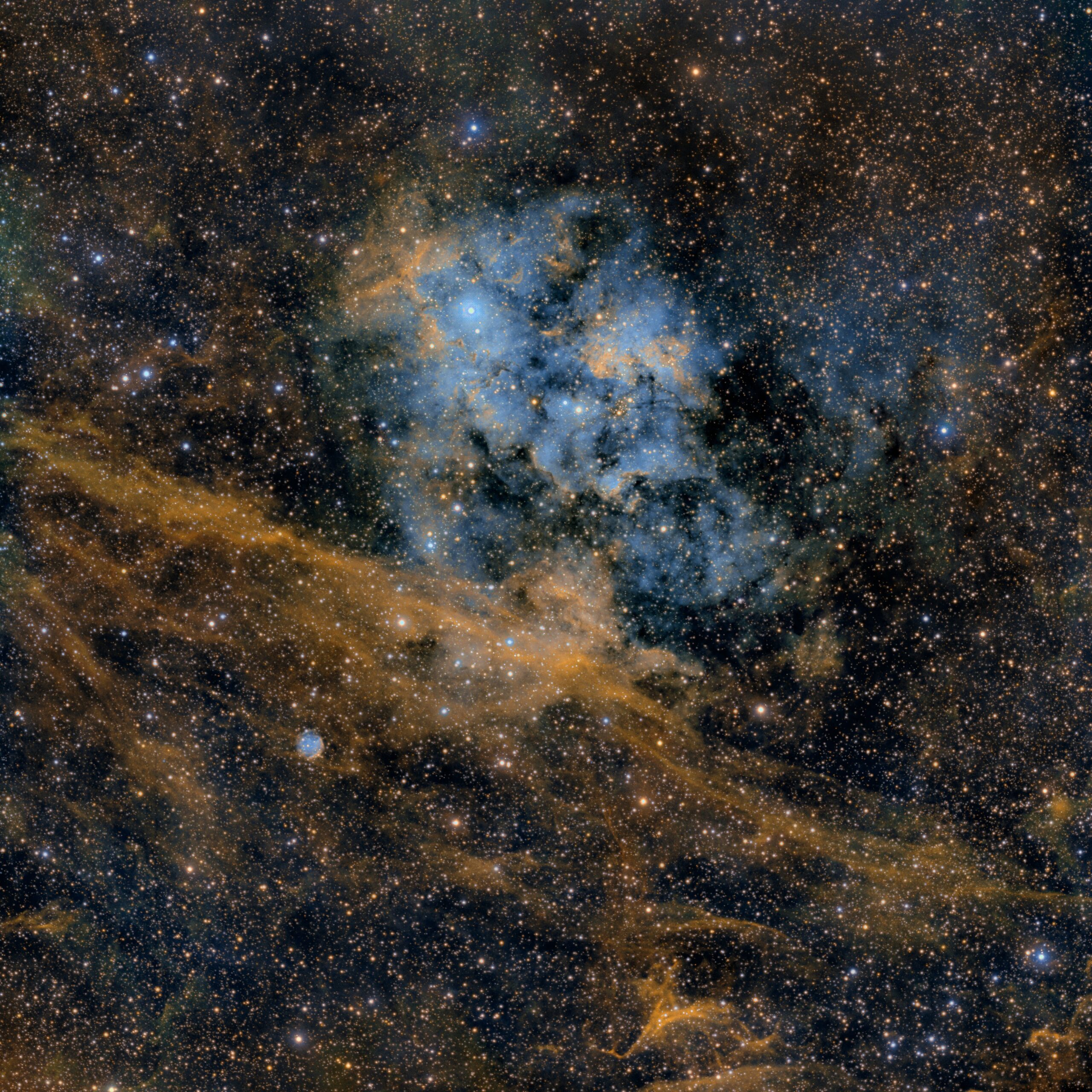
In 2018, I received a deep SHO narrowband dataset of Sh2-115, including the faint planetary nebula Abell 71, from the Deep Sky West (DSW) Observatory. Located beneath the exceptionally dark skies of New Mexico, the observatory provided high-quality S II, Hα, and O III data that reveal both the extensive hydrogen emission of Sh2-115 and the subtle shell of the much smaller planetary nebula Abell 71. The combination of these two very different nebular objects within a single field offers a fascinating view of both the birth and death of stars.

Located in the constellation Cygnus, Sh2-115 is a diffuse H II region situated approximately 7,500 light-years from Earth. It forms part of the vast Cygnus X complex, one of the richest star-forming regions in the Milky Way. This enormous concentration of molecular clouds, young stellar clusters, and emission nebulae provides astronomers with an outstanding laboratory for studying the formation and evolution of massive stars.

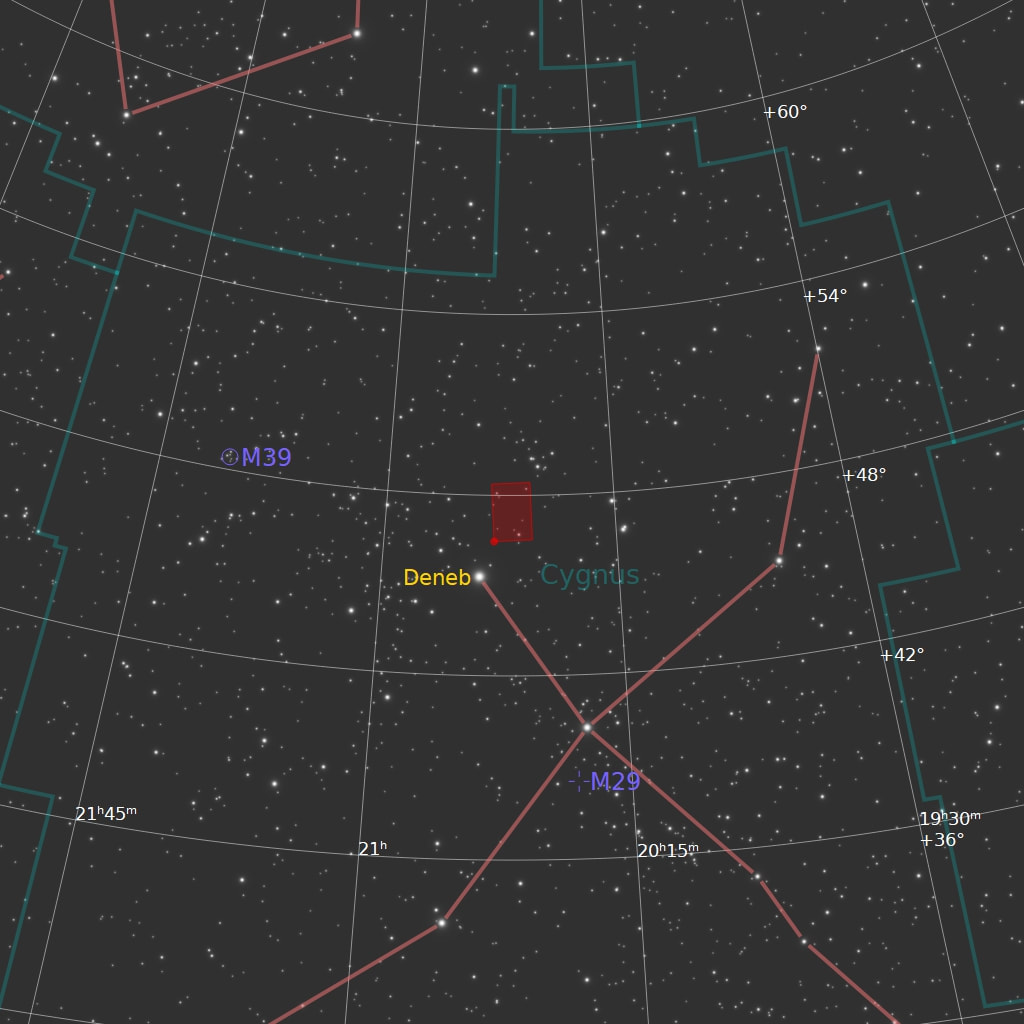
Sh2-115 is an H II region catalogued by Stewart Sharpless in 1959, located a couple of degrees northwest of Deneb in Cygnus. It lies on the ionized edge of a giant molecular cloud in the Orion Arm of the Milky Way, at a distance of roughly 2.3–3 kpc, i.e. about 7,500 light‑years.

The nebula’s glow is powered mainly by hot, massive O‑ and B‑type stars in the open cluster Berkeley 90, which sits in the eastern part of the nebula and is physically associated with it. Structurally, Sh2‑115 appears as a chaotic, oval patch of emission threaded by dark lanes of dust, with filaments and knots that show up well in narrowband Hα and often very faintly in [O III] and [S II].

Abell 71 is the small, nearly circular patch of emission near Sh2‑115, often seen as a bluish or teal disk in narrowband or RGB images depending on the mapping. It carries several designations (Abell 71, Sh2‑116, PK 085+04.1, PN G084.9+04.4) because it was originally classified as a planetary nebula by George Abell in the 1950s.

Later work has questioned this classification because Abell 71 shows very weak green [O III] emission compared to typical planetary nebulae, and its morphology includes small extensions or “arms” more reminiscent of irregular H II patches. Some authors therefore treat it as a compact H II region, while others still argue for a very evolved planetary nebula, pointing to spectroscopic evidence of expansion and the presence of a faint central star around magnitude 18.9.

The coexistence of Sh2-115 and Abell 71 within the same field provides an excellent illustration of the stellar life cycle. While Sh2-115 represents the birthplace of massive stars still embedded within their natal clouds, Abell 71 records the final chapter in the evolution of a star with a mass similar to that of our Sun. The contrast between these two objects emphasizes the continuous recycling of matter within the Galaxy, as material expelled by dying stars eventually becomes incorporated into new generations of stellar systems.

The SHO dataset from Deep Sky West Observatory beautifully captures the rich complexity of this region. Brilliant hydrogen clouds, subtle sulfur and oxygen structures, and the delicate shell of Abell 71 are all rendered with exceptional detail, demonstrating how narrowband imaging can reveal faint structures that remain largely invisible in broadband observations. Together, these two nebulae create a remarkable portrait of both stellar birth and stellar death, unfolding side by side against the spectacular backdrop of the Milky Way.

Data calibration, registration, and final image processing were all performed using PixInsight. The result was as follows:
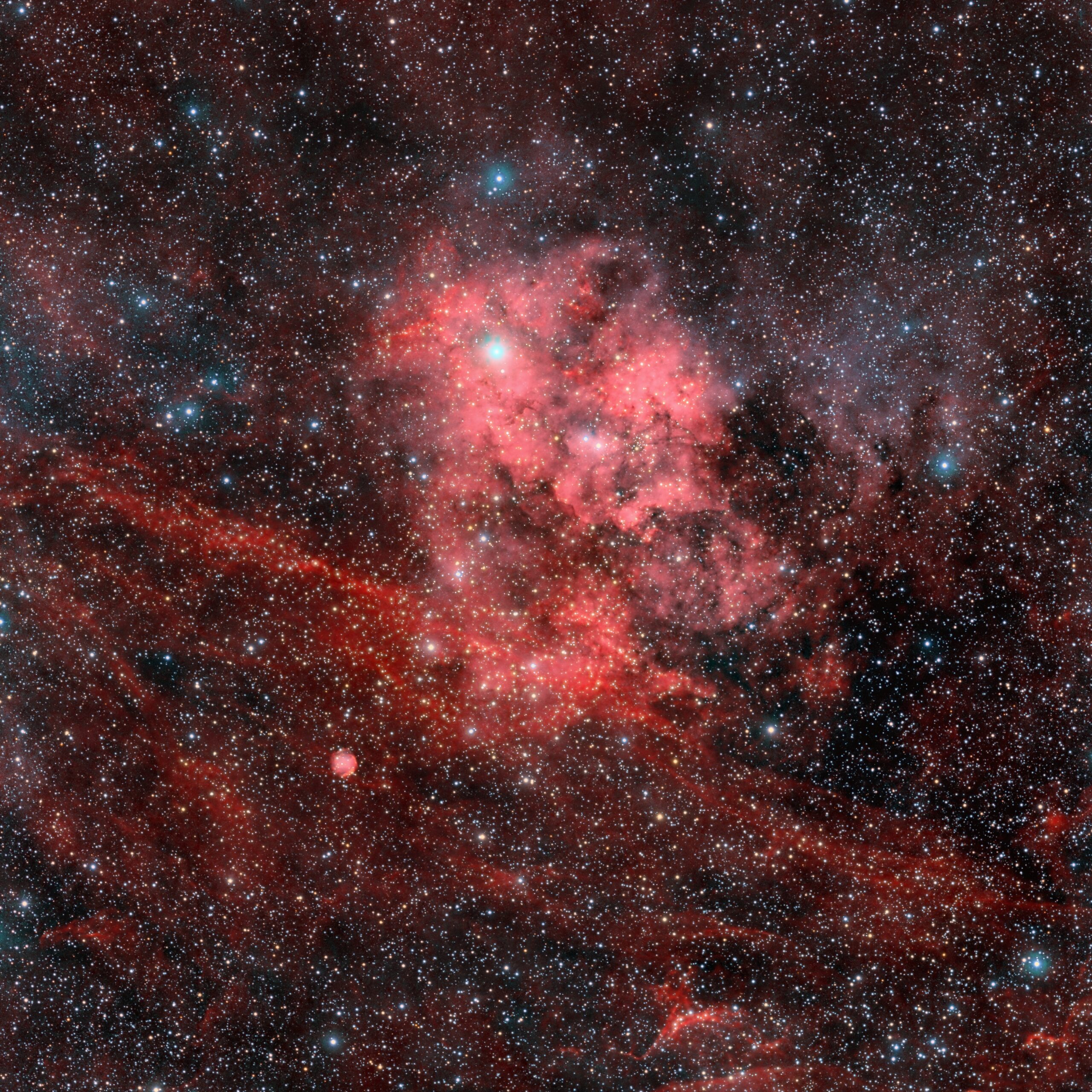
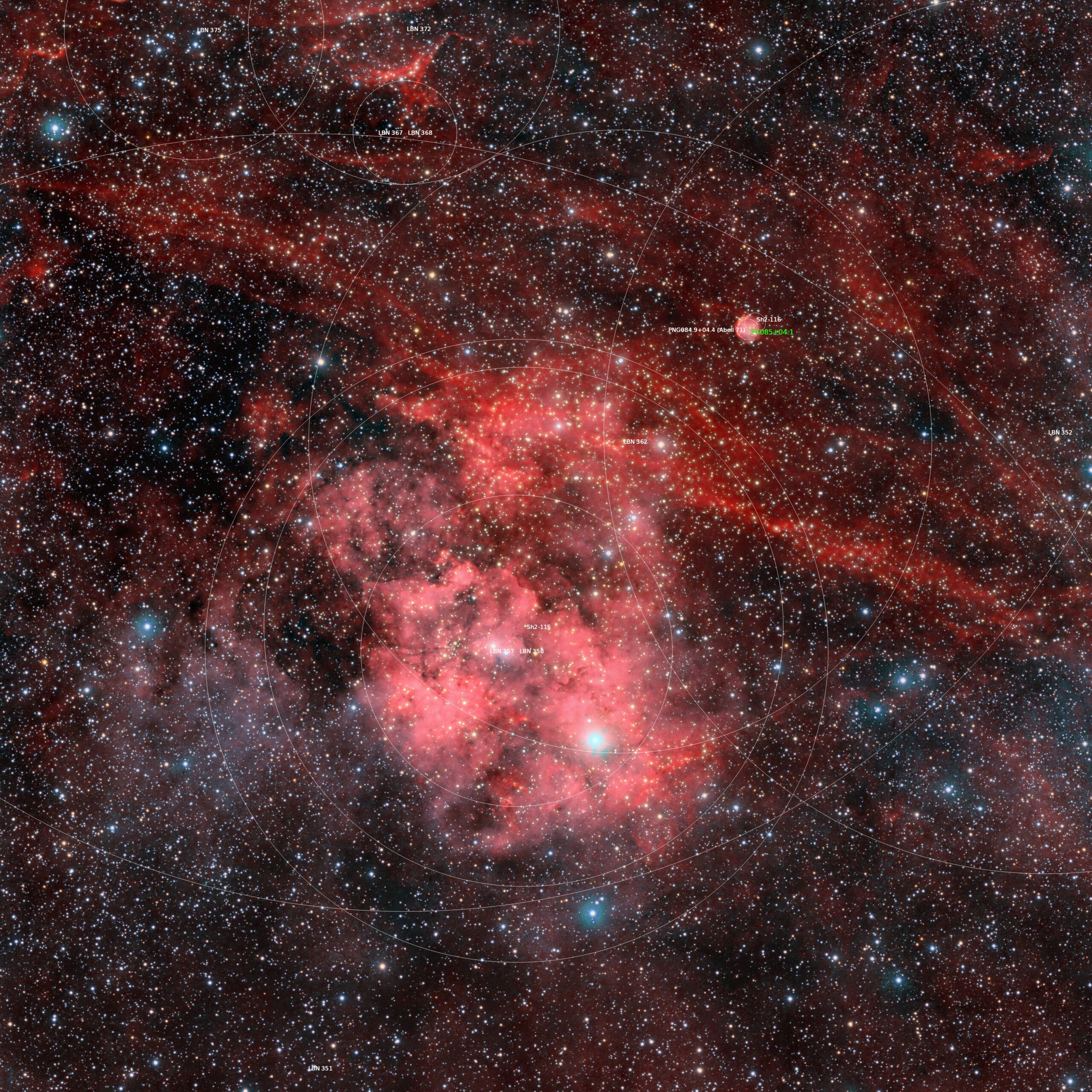
Sh2-115, DSW, Rowe, New Mexico, 2018
Sh2-115 annotated
Sh2-115 annotated
Sh2-115 DSW SHO
Sh2-115 DSW SHO


The images were taken with the following equipment:

  • Location: Rodeo, New Mexico
  • Telescope: Astro Physics RH305
  • Focal length [mm]: 1118
  • Focal ratio: 3.8
  • Mount: Paramount ME
  • Camera: SBIG STX 16803
  • Filter: H:O:S
  • Exposure time [min]: 360:320:400
  • Resolution: 1.66″/px


Sh2-115 Finder Chart


Stephan Küppers


You might also like
IC 1318
15. Juli 2026
NGC 7000 with IC 5070
24. Juni 2026
Sh2-129, Outters 4
29. Mai 2026

Leave a reply

Schreibe einen Kommentar Antwort abbrechen

Deine E-Mail-Adresse wird nicht veröffentlicht. Erforderliche Felder sind mit * markiert


© Stephan Küppers 2020-2022

Cookie-Zustimmung verwalten
Wir verwenden Cookies, um unsere Website und unseren Service zu optimieren.
Funktional Immer aktiv
Die technische Speicherung oder der Zugang ist unbedingt erforderlich für den rechtmäßigen Zweck, die Nutzung eines bestimmten Dienstes zu ermöglichen, der vom Teilnehmer oder Nutzer ausdrücklich gewünscht wird, oder für den alleinigen Zweck, die Übertragung einer Nachricht über ein elektronisches Kommunikationsnetz durchzuführen.
Vorlieben
Die technische Speicherung oder der Zugriff ist für den rechtmäßigen Zweck der Speicherung von Präferenzen erforderlich, die nicht vom Abonnenten oder Benutzer angefordert wurden.
Statistiken
Die technische Speicherung oder der Zugriff, der ausschließlich zu statistischen Zwecken erfolgt. Die technische Speicherung oder der Zugriff, der ausschließlich zu anonymen statistischen Zwecken verwendet wird. Ohne eine Vorladung, die freiwillige Zustimmung deines Internetdienstanbieters oder zusätzliche Aufzeichnungen von Dritten können die zu diesem Zweck gespeicherten oder abgerufenen Informationen allein in der Regel nicht dazu verwendet werden, dich zu identifizieren.
Marketing
Die technische Speicherung oder der Zugriff ist erforderlich, um Nutzerprofile zu erstellen, um Werbung zu versenden oder um den Nutzer auf einer Website oder über mehrere Websites hinweg zu ähnlichen Marketingzwecken zu verfolgen.
  • Optionen verwalten
  • Dienste verwalten
  • Verwalten von {vendor_count}-Lieferanten
  • Lese mehr über diese Zwecke
Einstellungen anzeigen
  • {title}
  • {title}
  • {title}