

Sculptor Dwarf Galaxy (PGC 3589) – VdS Remote Hakos
In 2024, together with my astrophotography companions Karsten Möller and Jan Beckmann, I imaged the Sculptor Dwarf Galaxy using both telescopes of the VdS Remote Observatory at Hakos, Namibia. By combining data from the two observatory systems, we accumulated a deep dataset that revealed the faint stellar population of this nearby dwarf galaxy against the rich southern sky. The outstanding observing conditions at Hakos, with its exceptionally dark skies and excellent seeing, made it possible to record one of the faint satellite galaxies of the Milky Way in remarkable detail.
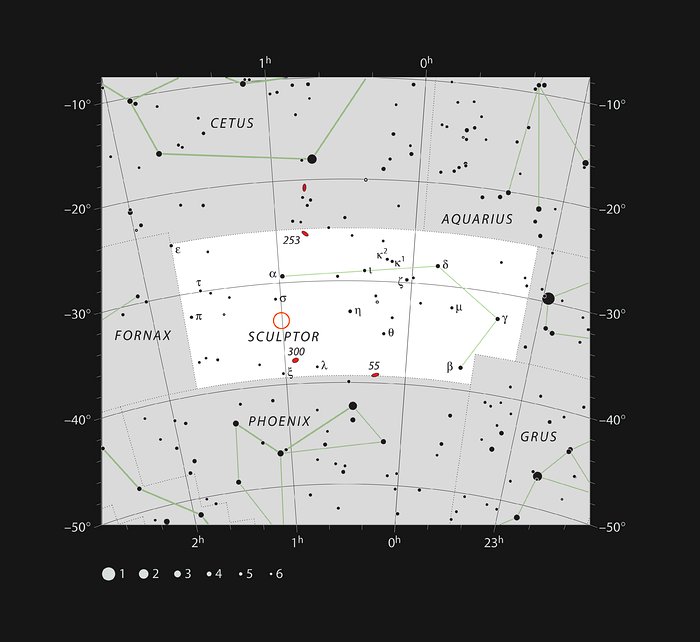
The Sculptor Dwarf Galaxy is located in the constellation Sculptor, approximately 290,000 light-years from Earth. It is one of the closest dwarf spheroidal galaxies orbiting the Milky Way and was discovered in 1937 by the American astronomer Harlow Shapley. Together with several other dwarf companions, it forms part of the Local Group, the collection of galaxies dominated by the Milky Way and the Andromeda Galaxy.
Unlike large spiral galaxies, the Sculptor Dwarf contains no spiral arms, dust lanes, or significant amounts of interstellar gas. Instead, it consists almost entirely of old, metal-poor stars that formed more than 10 billion years ago. These ancient stellar populations make the galaxy an important fossil of the early Universe, preserving information about the conditions under which the first small galaxies formed.
The Sculptor Dwarf is also one of the most dark matter-dominated galaxies known. Measurements of the motions of its stars indicate that its visible matter accounts for only a small fraction of its total mass, with the remainder believed to consist of dark matter. Consequently, it has become a key target for studies of galaxy formation, stellar populations, and the nature and distribution of dark matter on small galactic scales.
Deep images reveal the galaxy as a diffuse, elliptical concentration of countless unresolved stars. Because of its extremely low surface brightness, the Sculptor Dwarf is a challenging target for astrophotography despite its relatively close distance. Long integration times and pristine skies are essential to distinguish the faint glow of the galaxy from the dense foreground star field of the Milky Way.
The combined dataset obtained with the two telescopes of the VdS Remote Observatory beautifully captures this elusive member of the Local Group. It demonstrates the scientific value of collaborative observing projects, where multiple telescopes can be used simultaneously to increase the total integration time and improve the signal-to-noise ratio. The resulting image is a rewarding portrait of one of the Milky Way’s nearest galactic companions and highlights both the capabilities of the VdS Remote Observatory at Hakos and the benefits of teamwork in modern astrophotography.
All data calibration, registration, and final processing were performed in PixInsight.
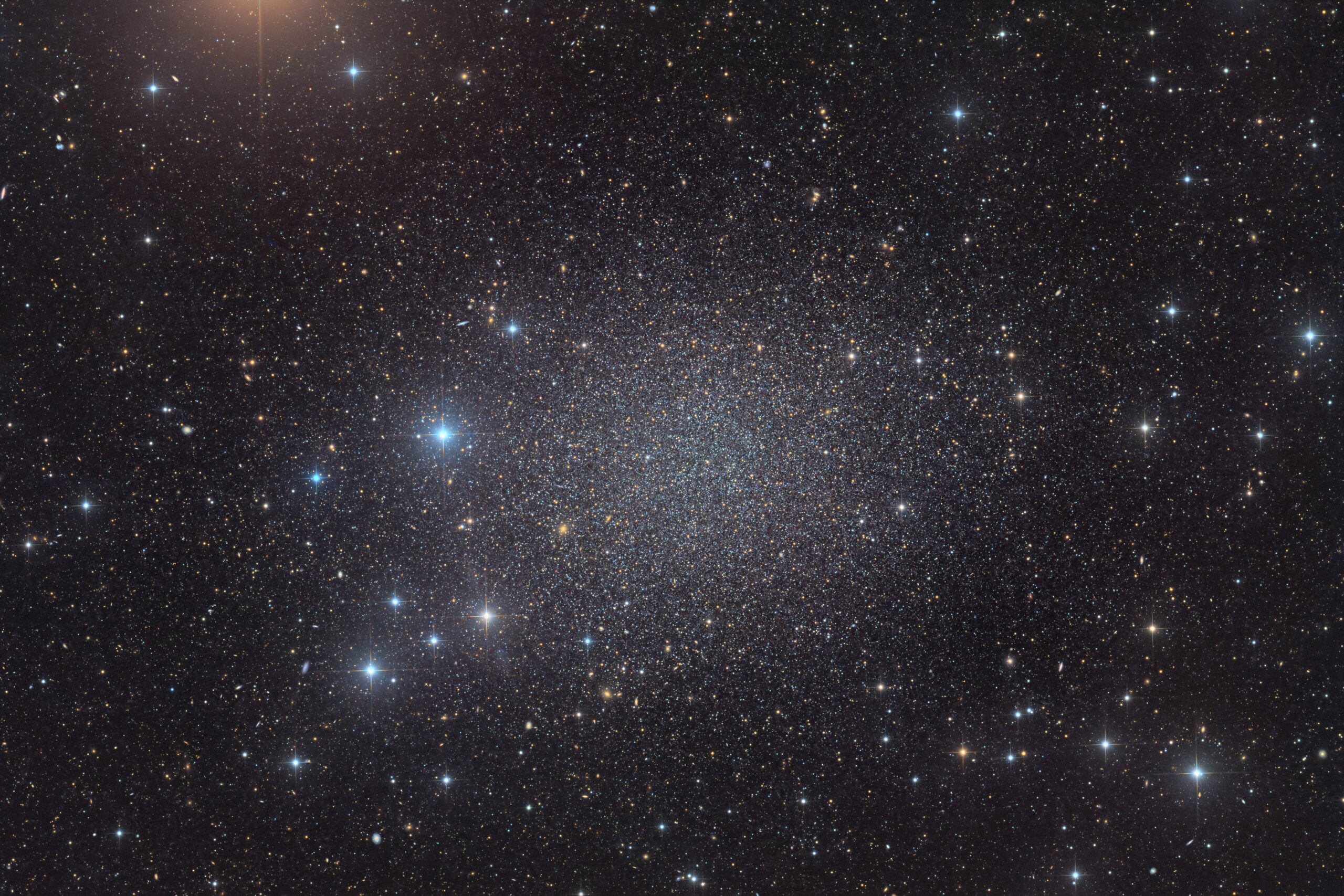
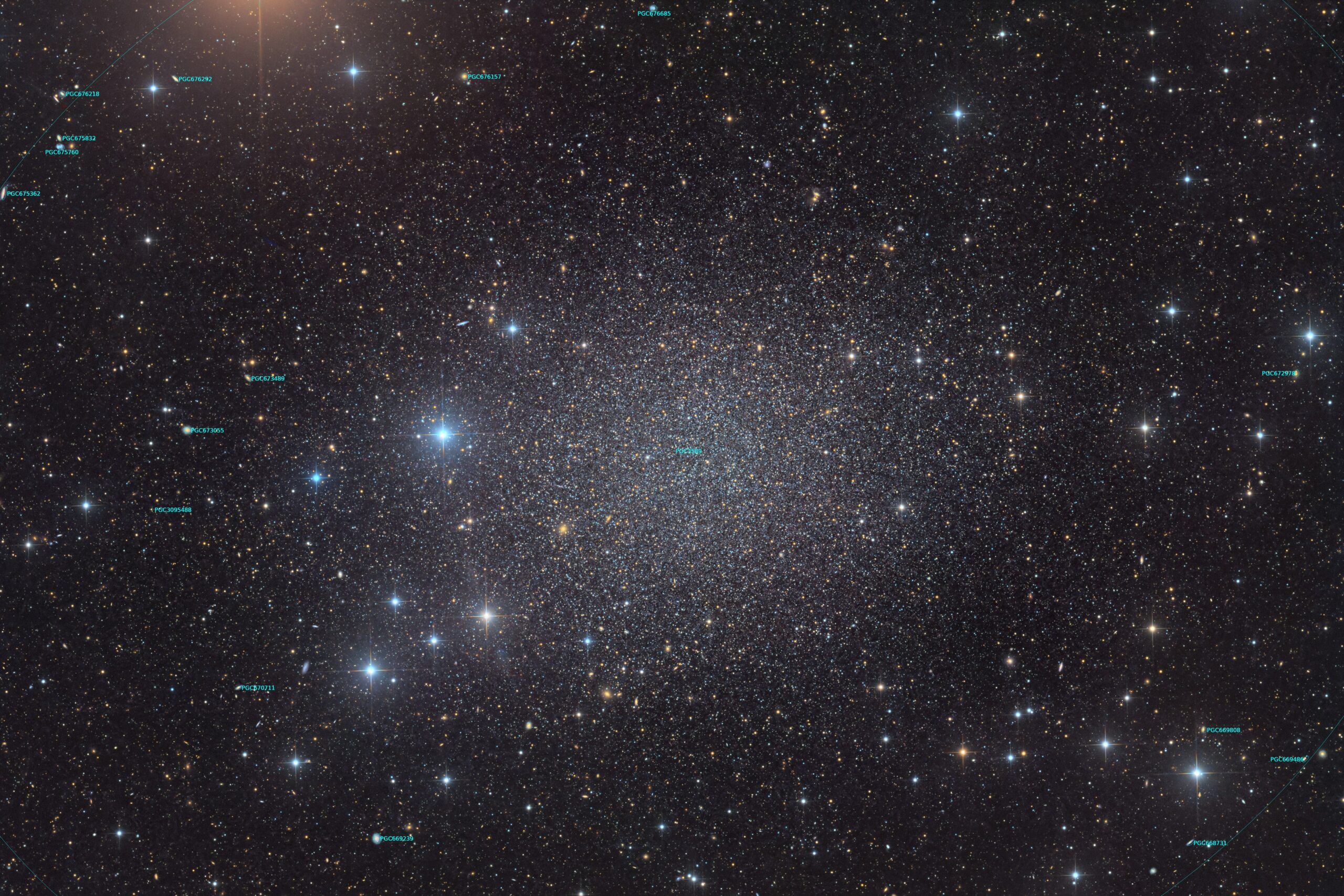
The images were taken with the following equipment:
- Date: 2024
- Location: Hakos, Namibia
- Telescope/Lens: TS 12“ Newton-Astrograph
- Focal length [mm]: 1391
- Focal ratio: 4.56
- Mount: 10Micron GM3000
- Camera: Lacerta DeepSkyPro2600 (mono)
- Filter: LRGB
- Exposure time [min]: 270:60:63:60
- Resolution: 0.56″/px
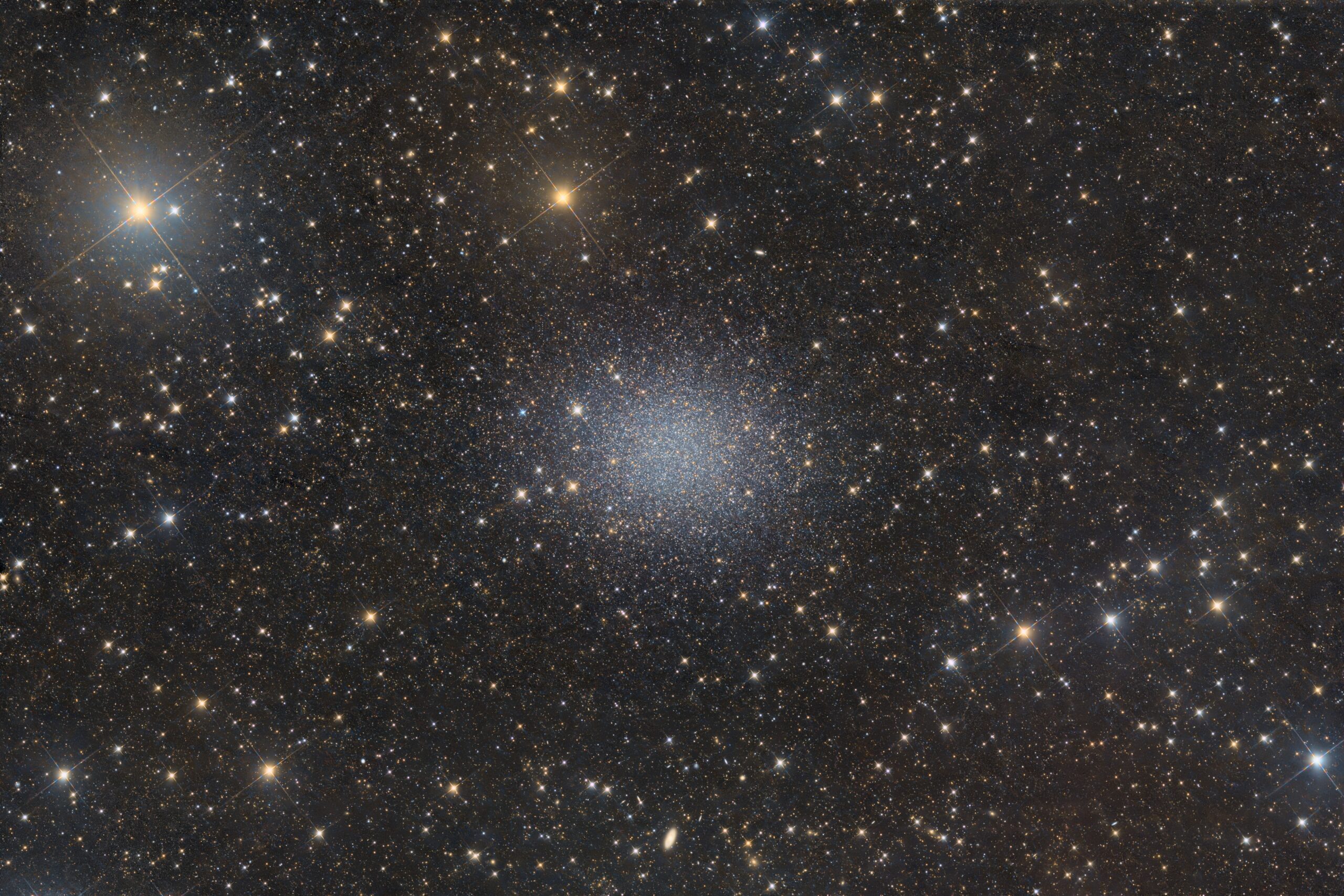
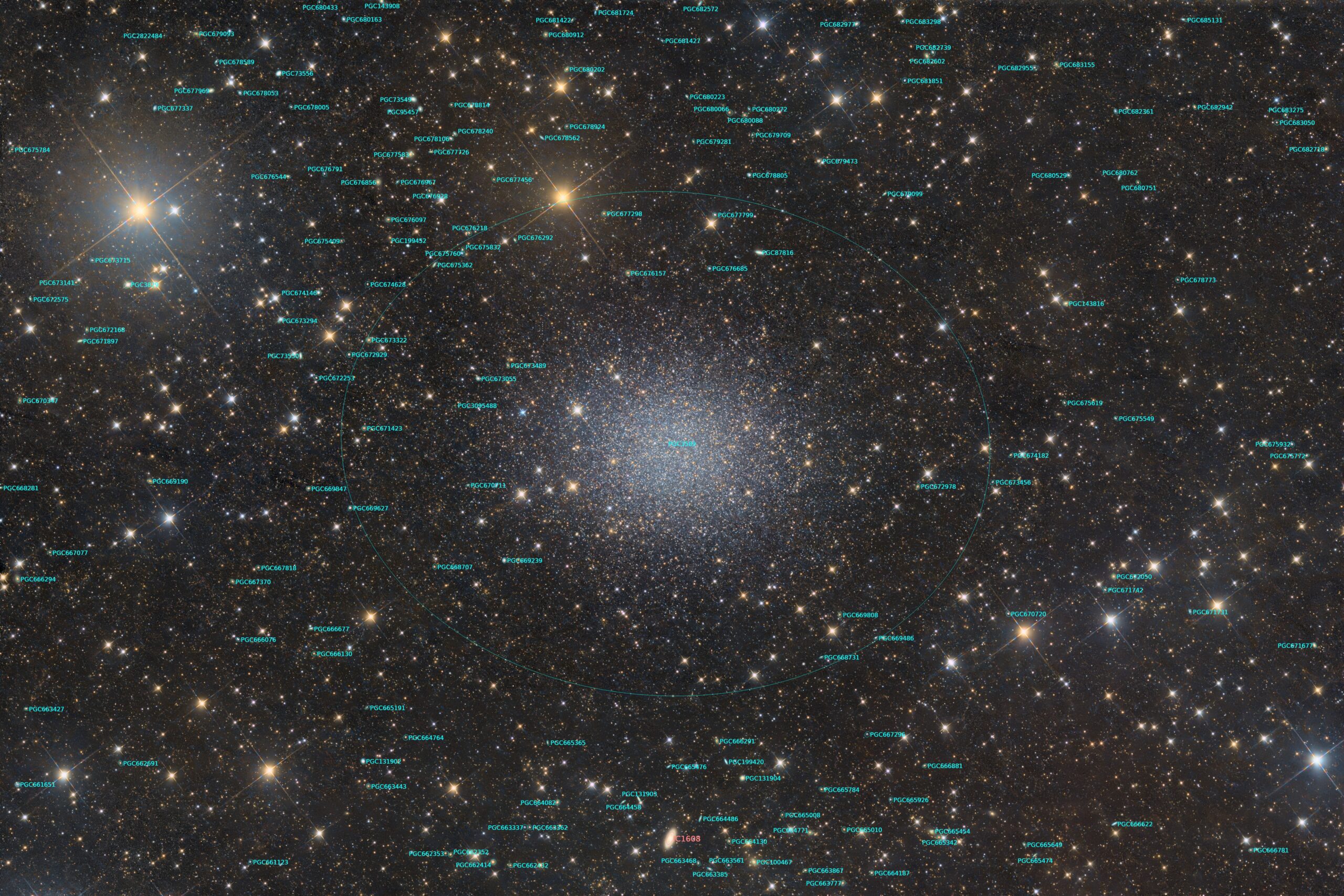
The images were taken with the following equipment:
- Date: 2024
- Location: Hakos, Namibia
- Telescope/Lens: Takahashi Epsilon-160ED
- Focal length [mm]: 535
- Focal ratio: 3.3
- Mount: 10Micron GM3000
- Camera: Lacerta DeepSkyPro2600 C
- Filter: Clear
- Exposure time [min]: 519
- Resolution: 1.45″/px


Leave a reply