

RCW 49 (GUM 29) from remote
From time to time, I obtain datasets from remote observatories around the world. One of my favorite providers is Telescope Live, which operates telescopes at world-class observing sites in Chile, Australia, and Spain. One of the datasets I received in 2025 was a deep SHO narrowband dataset of the spectacular emission nebula RCW 49, acquired with a telescope in Chile. The combination of sulfur, hydrogen, and oxygen data allowed me to reveal the nebula’s intricate network of glowing filaments, dark dust clouds, and energetic star-forming regions with exceptional detail.
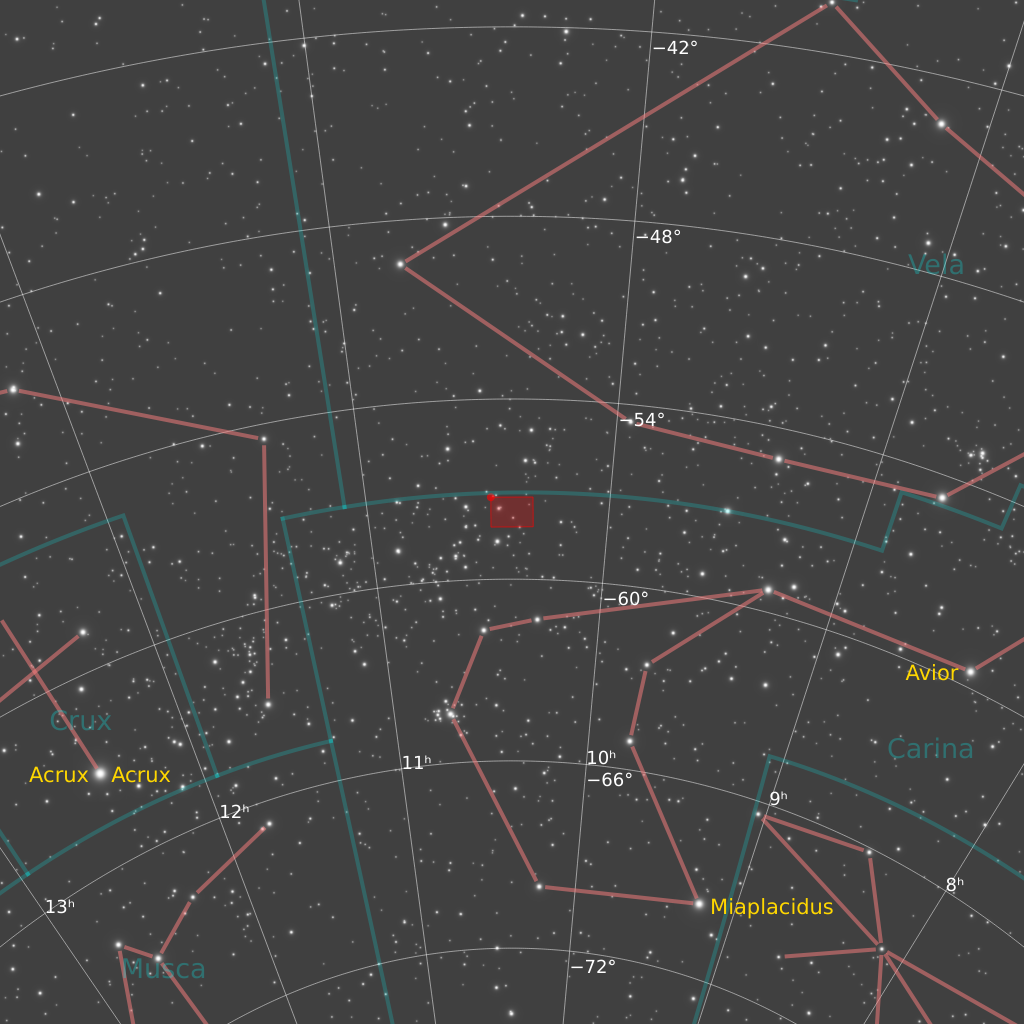
RCW 49 is located in the constellation Carina, approximately 13,000 to 14,000 light-years from Earth. It is one of the Milky Way’s largest and most active H II regions, spanning nearly 350 light-years across. The nebula is energized by the young, massive stars of the remarkable open cluster Westerlund 2, one of the most massive and luminous young star clusters known in our Galaxy.
Westerlund 2 contains dozens of extremely hot O-type stars together with several rare Wolf–Rayet stars. Their intense ultraviolet radiation ionizes the surrounding hydrogen gas, while their powerful stellar winds sculpt the nebula into an intricate landscape of bright ionization fronts, cavities, pillars, and shock waves. These energetic processes continue to reshape the surrounding molecular cloud and play a major role in regulating ongoing star formation.
Infrared observations have revealed that RCW 49 contains thousands of young stellar objects, many of which remain deeply embedded within dense clouds of gas and dust. These protostars are still forming and are invisible at optical wavelengths, making RCW 49 one of the richest nearby laboratories for studying the earliest phases of stellar evolution. The region is believed to have experienced several successive episodes of star formation, likely triggered by the radiation and stellar winds from earlier generations of massive stars.
The SHO narrowband dataset beautifully separates the nebula’s different emission components. Hydrogen (Hα) traces the widespread ionized gas, sulfur ([S II]) highlights cooler regions and shock fronts, while oxygen ([O III]) emphasizes the areas exposed to the most energetic ultraviolet radiation from the cluster’s hottest stars. Together, these channels reveal a wealth of fine structure that is largely invisible in conventional broadband images.
Interwoven with the glowing gas are numerous dark dust pillars and dense molecular clouds. These structures represent the raw material from which future generations of stars and planetary systems will eventually emerge. Their dramatic appearance illustrates the continuous interaction between stellar radiation, stellar winds, and the interstellar medium that drives the evolution of giant star-forming complexes.
The 2025 Telescope Live dataset acquired under the exceptional skies of Chile provided an outstanding opportunity to process professional-quality narrowband data. The resulting SHO image beautifully captures the extraordinary complexity of RCW 49 and the dynamic processes taking place within one of the Milky Way’s most spectacular stellar nurseries, making it one of the highlights of my collection of remote-observatory images.
The data calibration, registration and final processing were all performed with PixInsight.The result was as follows:
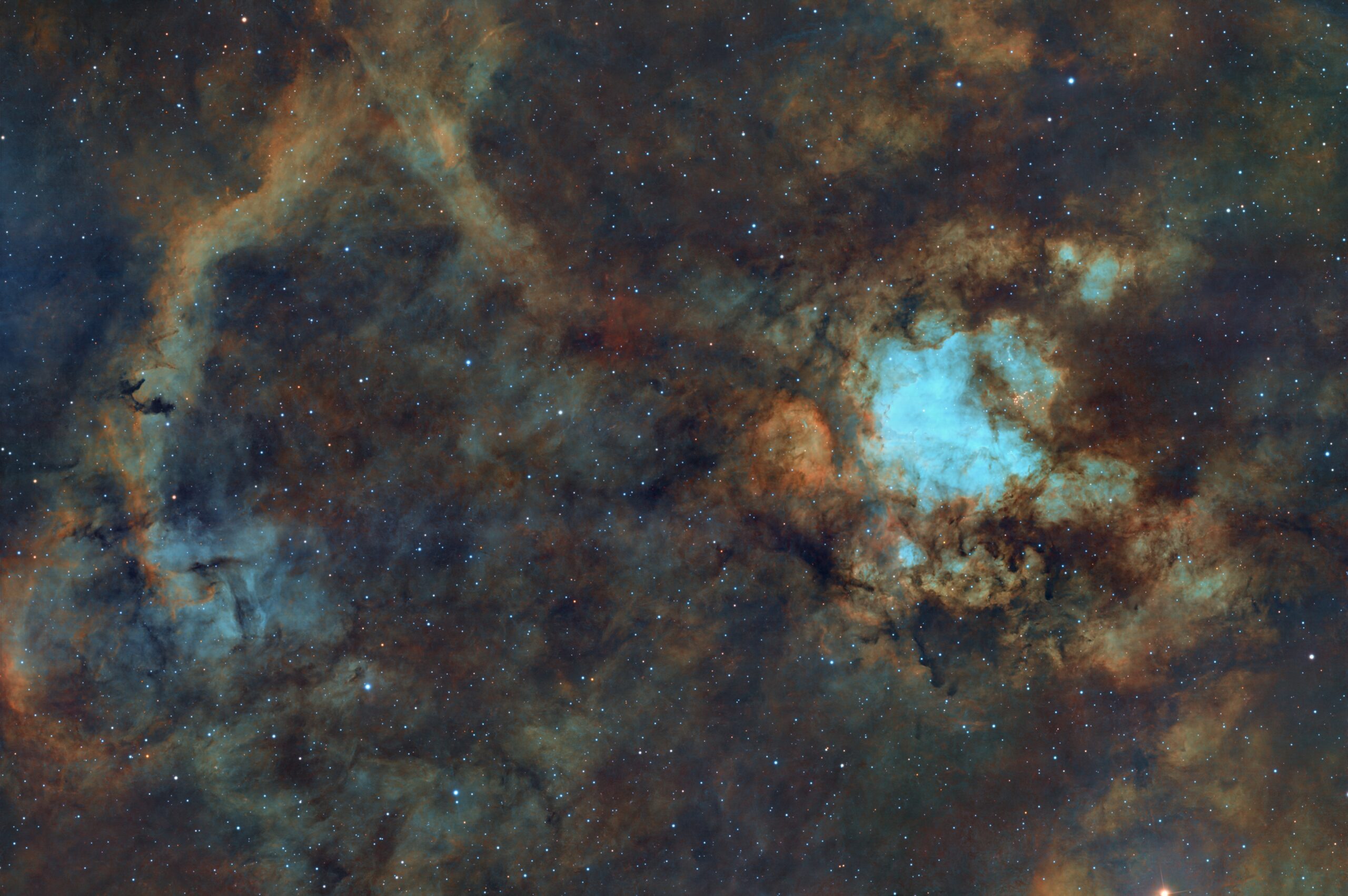
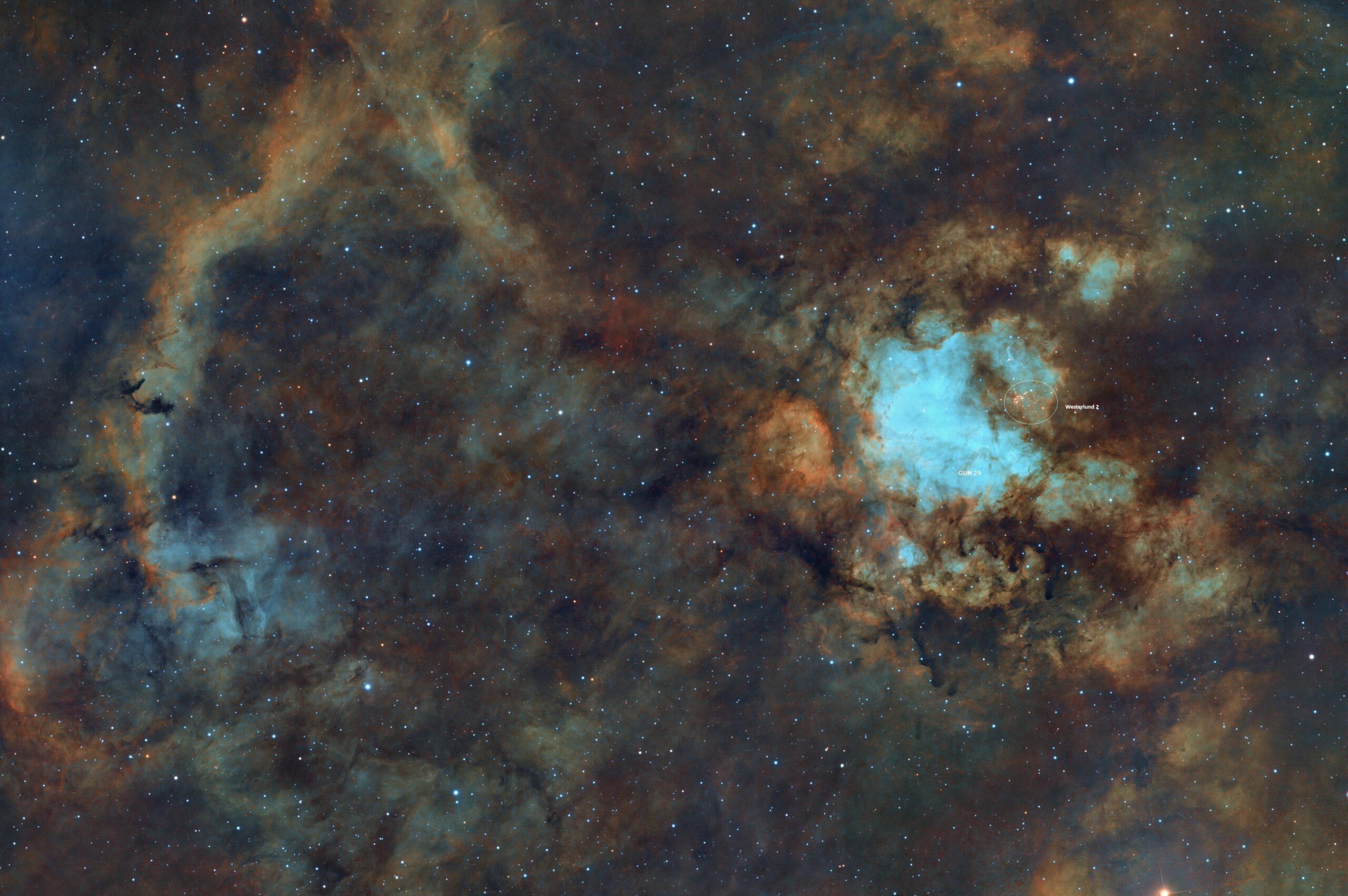
The images were taken with the following equipment (Telescope Live CHI-1):
- Date: 2023
- Location: El Sauce Observatory, Chile
- Telescope: Planwave CDK24
- Focal length [mm]: 3900
- Focal ratio: 6.5
- Mount: Mathis MI-1000/1250
- Camera: Moravian QHY 600M Pro
- Filter: Hα:[OIII][SII]
- Exposure time [min]: 130:105:115
- Resolution: 0.39″/px bin2



Leave a reply