

RCW 19 (GUM 10) from remote
From time to time, I obtain datasets from remote observatories around the world. One of my favorite providers is Telescope Live, which operates telescopes at outstanding astronomical sites in Chile, Australia, and Spain. One of the datasets I received in 2023 was a SHO narrowband dataset of the emission nebula RCW 19, acquired with a telescope in Chile. The combination of sulfur, hydrogen, and oxygen data made it possible to reveal the intricate network of glowing gas, dark dust clouds, and shock fronts within this fascinating but relatively little-known southern nebula.
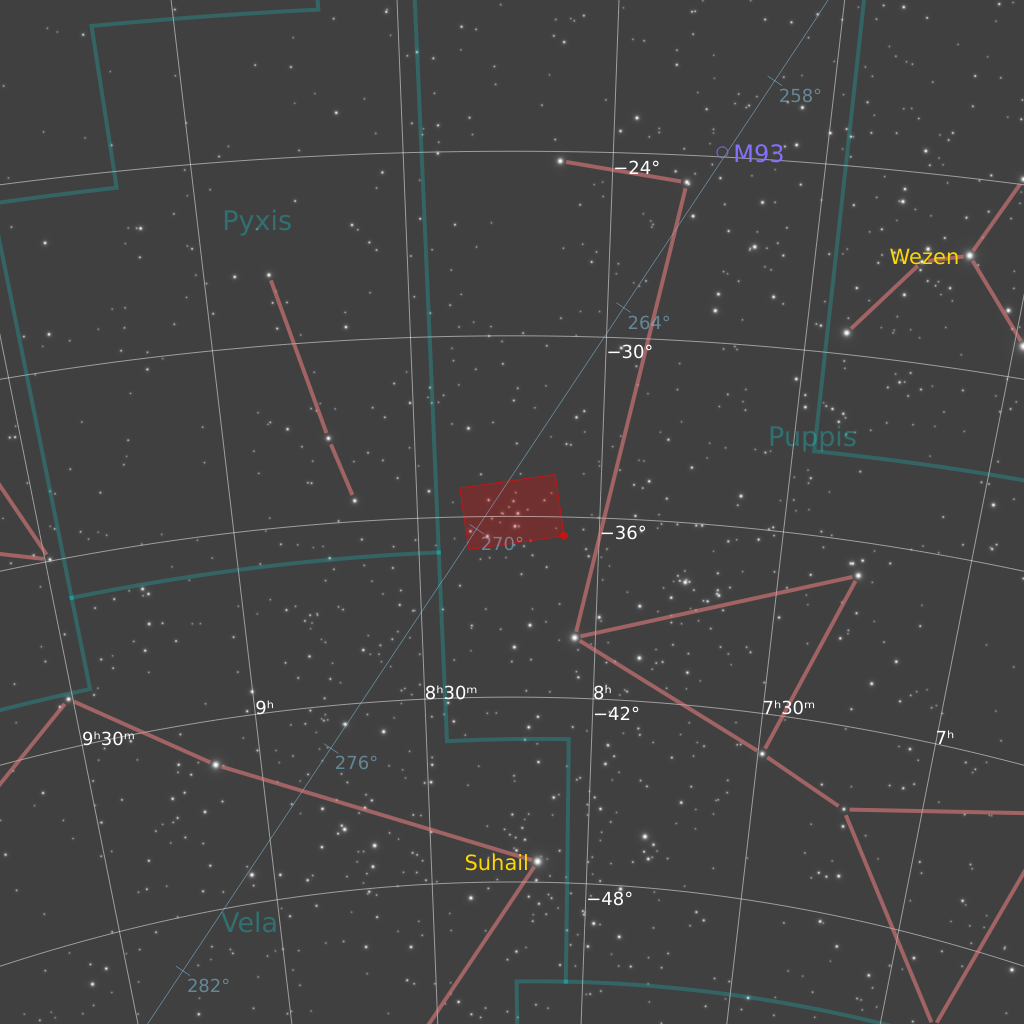
RCW 19 is located in the constellation Ara, at an estimated distance of approximately 4,000 to 5,000 light-years. It is part of the Rodgers, Campbell and Whiteoak (RCW) Catalogue of southern H II regions, which contains many of the Milky Way’s most spectacular emission nebulae. These objects are enormous clouds of ionized hydrogen where new generations of stars are actively being born.
The nebula is energized by several hot, massive O- and B-type stars, whose intense ultraviolet radiation ionizes the surrounding hydrogen gas, causing it to glow brightly in Hα emission. Stellar winds from these young stars continue to sculpt the surrounding molecular cloud, producing bright ionization fronts, curved filaments, and dense dust pillars. Within these dark clouds, astronomers have identified numerous young stellar objects that are still in the earliest stages of stellar evolution.
The SHO dataset beautifully separates the different emission components of the nebula. Hydrogen (Hα) traces the widespread ionized gas, sulfur ([S II]) emphasizes cooler regions and shock-excited structures, while oxygen ([O III]) highlights areas exposed to the most energetic ultraviolet radiation. Combining these three narrowband channels produces a richly detailed image that not only reveals the physical structure of the nebula but also illustrates the different excitation conditions throughout the cloud.
Deep images also show numerous dark Bok globules and dust lanes silhouetted against the glowing background. These dense condensations of gas and dust are the sites where future generations of stars may eventually form. The surrounding field is rich with Milky Way stars, emphasizing the nebula’s location within one of the Galaxy’s active star-forming regions.
From a scientific perspective, RCW 19 is an excellent example of how massive stars shape their environment. Their radiation and stellar winds simultaneously erode the parent molecular cloud while compressing nearby regions, potentially triggering further episodes of star formation. Such nebulae therefore provide valuable insight into the continuous cycle of stellar birth, evolution, and feedback that drives the evolution of our Galaxy.
The 2023 Telescope Live dataset acquired under the exceptional skies of Chile provided an outstanding opportunity to process professional-quality narrowband data. The resulting SHO image beautifully captures the delicate interplay between glowing ionized gas and obscuring dust, making RCW 19 one of the many fascinating southern nebulae that are ideally suited for deep narrowband astrophotography.
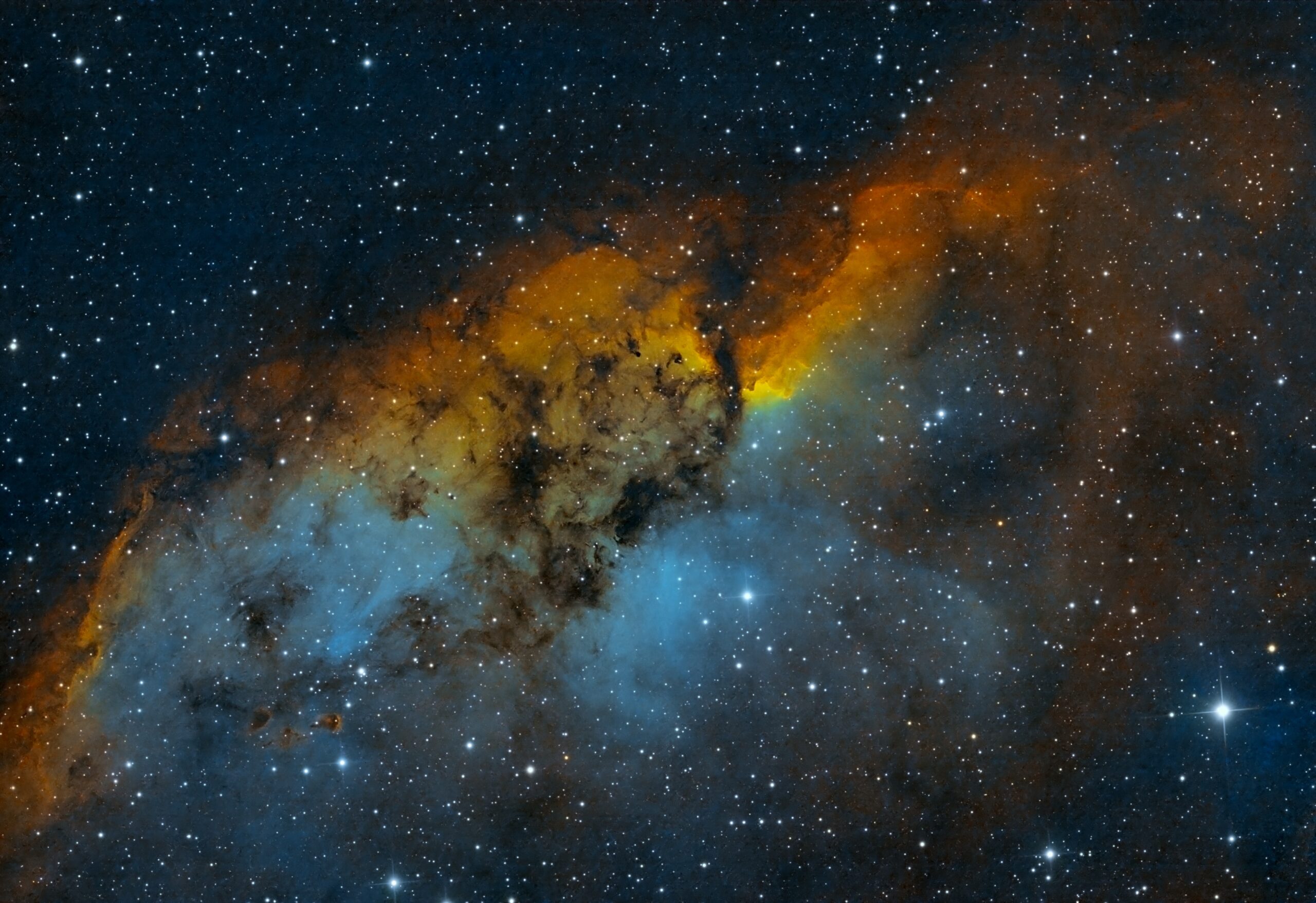
The images were taken with the following equipment (Telescope Live CHI-1):
- Date: 2023
- Location: El Sauce Observatory, Chile
- Telescope: Planwave CDK24
- Focal length [mm]: 3900
- Focal ratio: 6.5
- Mount: Mathis MI-1000/1250
- Camera: Moravian QHY 600M Pro
- Filter: Hα:[OIII][SII]
- Exposure time [min]: 140:145:145
- Resolution: 0.39″/px bin2



Leave a reply