

NGC 7822 from remote
From time to time, I obtain datasets from remote observatories around the world. One of my favorite providers is Telescope Live, which operates telescopes at world-class observing sites in Chile, Australia, Spain, and the United States. One of the datasets I received was acquired in 2022 with a telescope in the USA and features the remarkable emission nebula NGC 7822, located in the constellation Cepheus. The dataset included LRGB as well as SHO narrowband data, providing an excellent basis for revealing both the natural star colors and the intricate structures of ionized gas within this spectacular star-forming region.
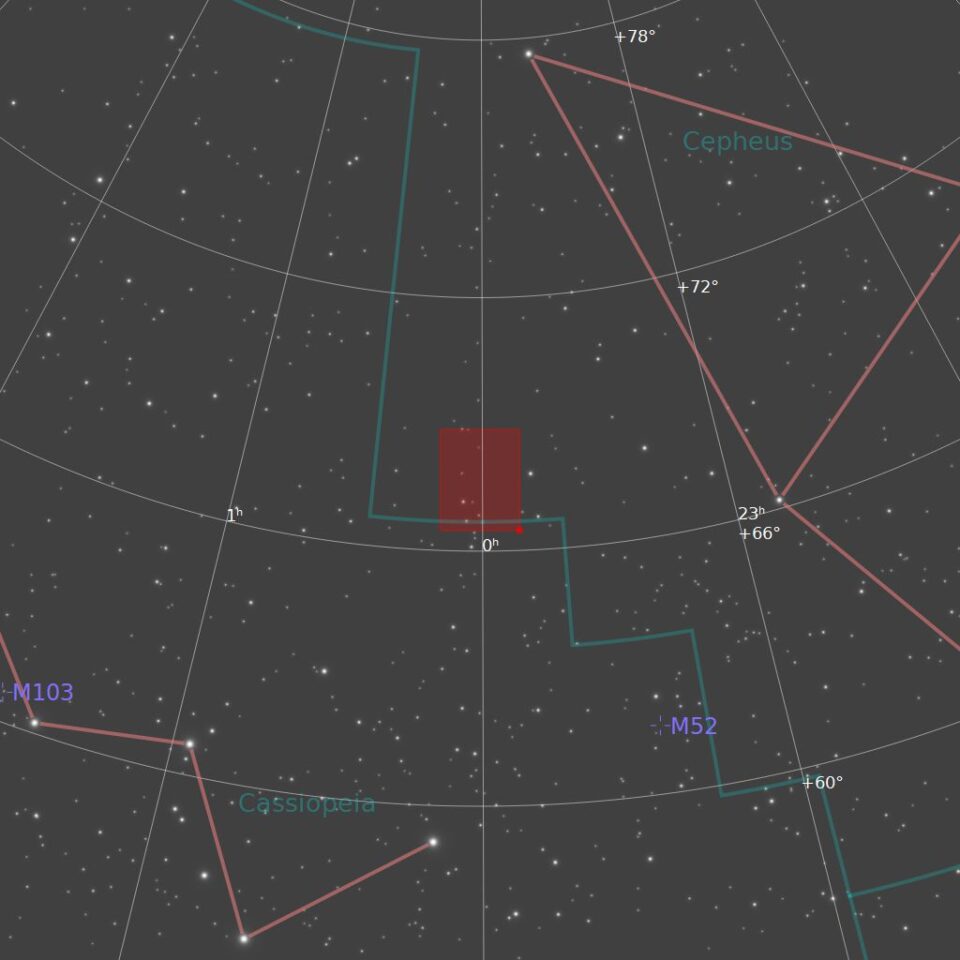
NGC 7822 lies at a distance of approximately 3,000 light-years and forms part of a vast complex of emission nebulae and molecular clouds in northern Cepheus. It is one of the Milky Way’s active stellar nurseries, where massive young stars are continuously shaping the surrounding interstellar medium through intense ultraviolet radiation and powerful stellar winds. These energetic processes create a landscape of glowing hydrogen clouds, dark dust pillars, and bright ionization fronts that make NGC 7822 one of the most impressive wide-field nebulae in the northern sky.
The nebula is closely associated with the young open cluster Berkeley 59, whose hot O- and B-type stars provide the energy required to ionize the surrounding hydrogen gas. Their radiation not only causes the nebula to shine but also sculpts the dense molecular clouds into spectacular pillars, elephant trunks, and cometary globules. Within these dense clouds, infrared observations have revealed numerous young stellar objects and protostars, indicating that star formation is still actively taking place.
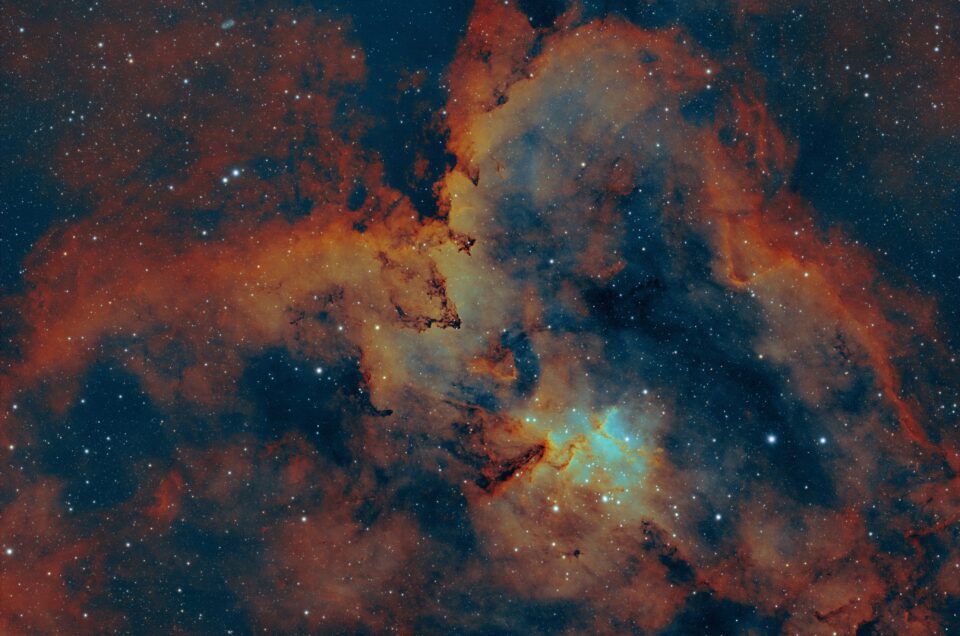
The SHO narrowband data beautifully separate the different chemical components of the nebula. Hydrogen (Hα) traces the widespread ionized gas, sulfur ([S II]) highlights cooler regions and shock fronts, while oxygen ([O III]) emphasizes areas exposed to the most energetic ultraviolet radiation. Combining these channels reveals an intricate network of filaments and ionization fronts that remains largely invisible in broadband RGB images alone. The accompanying LRGB data preserve the natural colors of the countless foreground stars while adding high-resolution structural detail throughout the field.
Deep images of NGC 7822 also reveal numerous dark dust clouds silhouetted against the glowing background. These dense molecular regions represent the raw material from which future generations of stars and planetary systems will eventually form. The interplay between bright emission, opaque dust, and rich Milky Way star fields creates an image with exceptional depth and complexity.
From a scientific perspective, NGC 7822 is an excellent laboratory for studying the interaction between massive stars and their natal molecular clouds. The radiation and stellar winds from the young cluster continue to compress, erode, and reshape the surrounding gas, influencing both the destruction of the original cloud and the formation of new stars. Such regions help astronomers better understand the life cycle of interstellar matter and the mechanisms that regulate star formation throughout our Galaxy.
The 2022 Telescope Live dataset provided an outstanding opportunity to process professional-quality data acquired under pristine observing conditions. The combination of LRGB and SHO imaging beautifully captures both the natural appearance and the physical processes within this magnificent nebula, making NGC 7822 one of the most impressive star-forming regions in my collection of remote-observatory images.
Data calibration and registration and the final processing was done with PixInsight. The result was as follows:
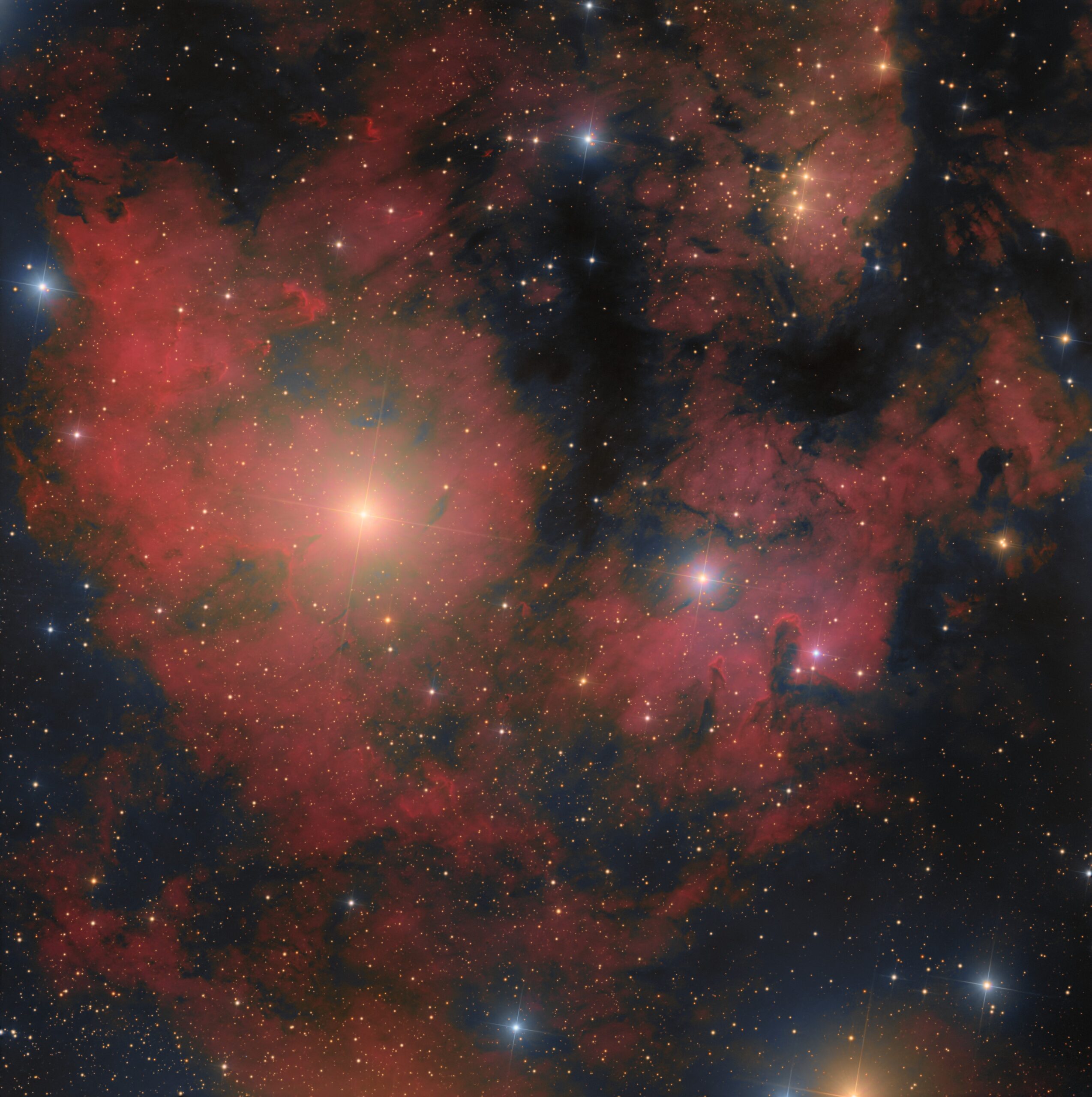
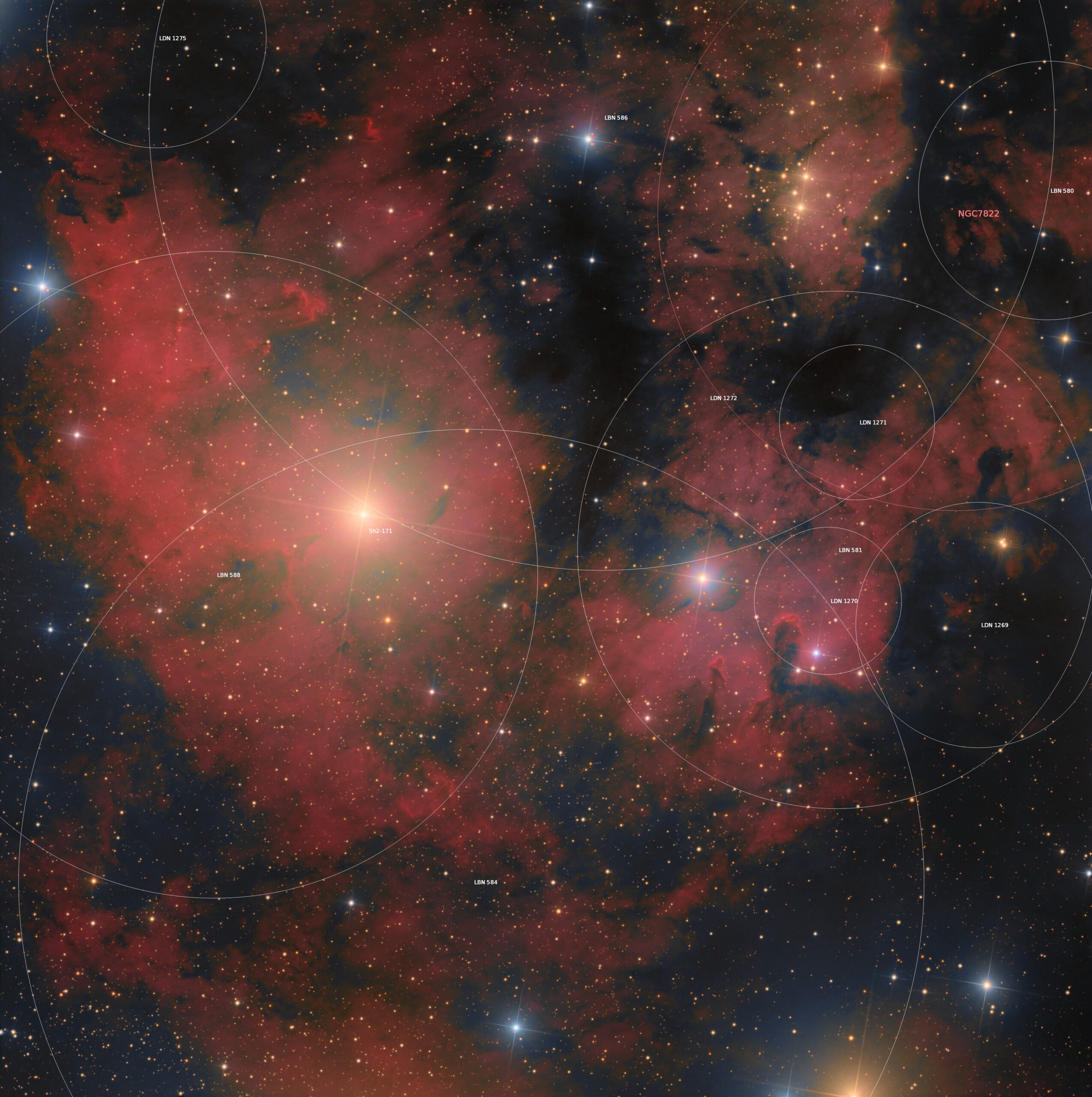

The images were taken with the following equipment (T17-1 CCD, Telescope Live):
- Date: 2022
- Location: USA
- Telescope/Lens: Planwave CDK17
- Focal length [mm]: 2939
- Focal ratio: 6.8
- Mount: Paramount ME
- Camera: FLI Proline 16803
- Filter: L:R:G:B:Hα:[OIII]:[SII]
- Exposure time [min]: 540:240:240:240:540:540:540
- Resolution: 0.64″/px



Leave a reply