

NGC 6769 from remote
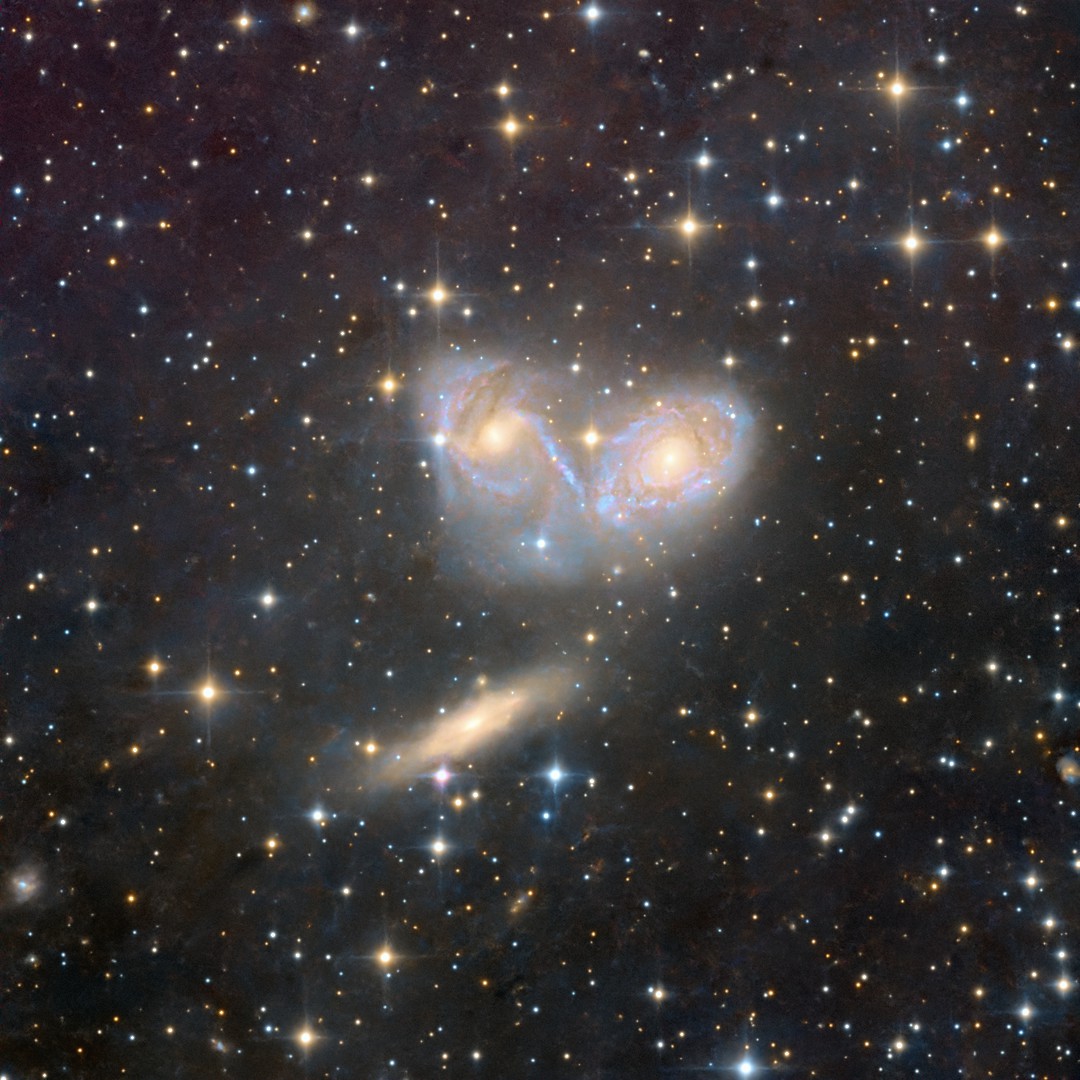
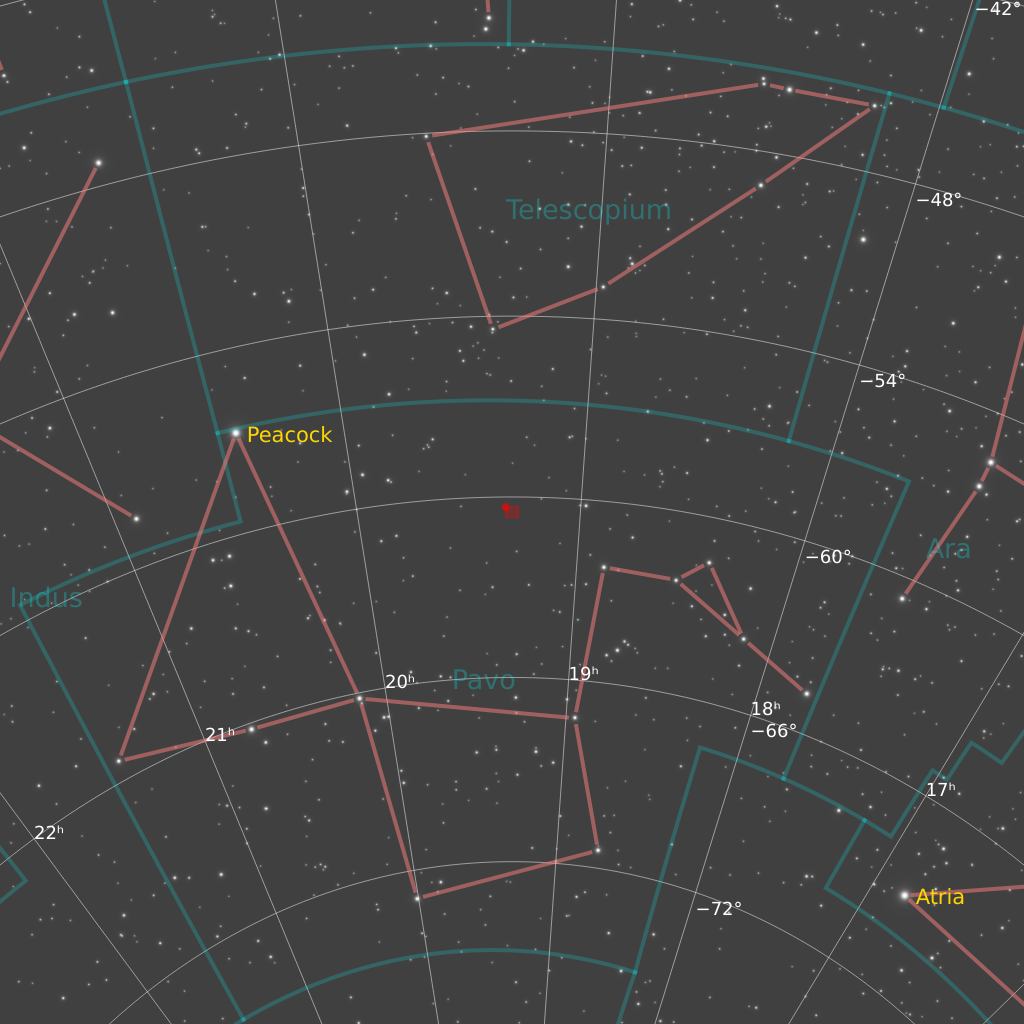
From time to time I obtain data sets from remote observatories. One of my favorite providers is Telescope Live with telescopes in e.g. Chile, Australia and Spain. One of the data sets I received, was data from the galaxy NGC 6769, located in the constellation Sextans.
NGC 6769 is located in the constellation Pavo at a distance of approximately 190 million light-years. It forms the famous compact galaxy group Hickson Compact Group 90 together with NGC 6770, NGC 6771, and the nearby elliptical galaxy NGC 6778. This compact group is regarded as one of the finest examples of galaxies interacting through their mutual gravitational attraction.
The most striking feature of Hickson Compact Group 90 is the close proximity of its member galaxies. Their gravitational interactions have distorted their shapes, producing subtle tidal tails, warped disks, and faint stellar streams that become visible in deep images. Such interactions trigger bursts of star formation, redistribute gas and dust, and may eventually lead to the merger of several galaxies into a single massive elliptical galaxy.
NGC 6769 itself is a barred spiral galaxy displaying a bright central bulge surrounded by tightly wound spiral arms. Nearby NGC 6770 is another spiral galaxy rich in dust lanes and star-forming regions, while NGC 6771 and NGC 6778 are dominated by older stellar populations typical of elliptical galaxies. The coexistence of different galaxy morphologies within such a compact environment makes this system an outstanding laboratory for studying galaxy evolution.
From a scientific perspective, compact groups like Hickson Compact Group 90 represent an important stage in the hierarchical growth of galaxies. Because the member galaxies orbit each other at relatively small separations, repeated close encounters dramatically influence their structure and stellar populations over billions of years. Astronomers therefore use systems such as HCG 90 to investigate the processes that drive galaxy interactions, mergers, and the formation of massive galaxies.
The deep Telescope Live dataset beautifully captures not only the four principal galaxies but also numerous faint background galaxies scattered across the field. Their presence emphasizes the immense depth of the universe and adds further scientific value to the image. The combination of excellent data quality, the dark skies of Chile, and careful image processing reveals one of the most impressive interacting galaxy groups in the southern sky.
Data calibration and registration and the final processing was done with PixInsight. The result was as follows:
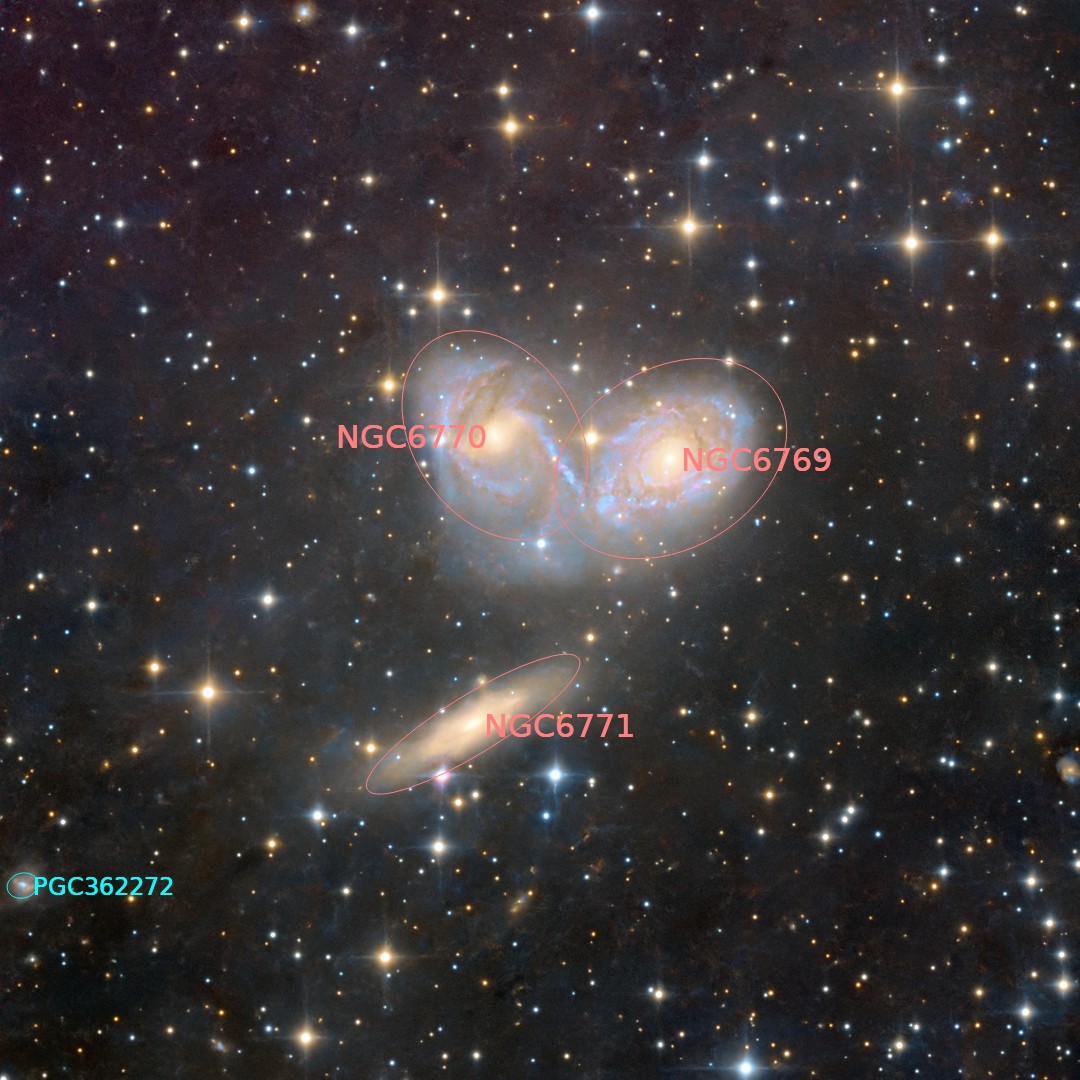
The images were taken with the following equipment (Telescope Live CHI-1):
- Date: 2022
- Telescope/Lens: Planwave CDK24
- Focal length [mm]: 3900
- Focal ratio: 6.5
- Mount: Mathis MI-1000/1250
- Camera: FLI Proline 9000
- Filter: LRGB
- Exposure time [min]: 100:100:100:100
- Resolution: 0.62″/px



Leave a reply