

NGC 6752 – VdS Remote Hakos
As a member of the VdS Remote Observatory group, I have the opportunity to use the VdS remote observatory in Hakos in Namibia. Members are not only allowed to process their own observations but also the datasets acquired by other participants. This collaborative approach provides access to a wide variety of interesting southern-sky targets while allowing different image-processing techniques to be applied to the same high-quality data.
For the image presented here, I processed a dataset of the magnificent globular cluster NGC 6752, acquired in 2023 by Kai-Oliver Detken, Yves Bastian and Dr. Georg Piehler with the equipment of the VdS Remote Observatory at Hakos. While the original observations were obtained by Kai-Oliver and Martin, all calibration, registration, and final image processing were performed by me.
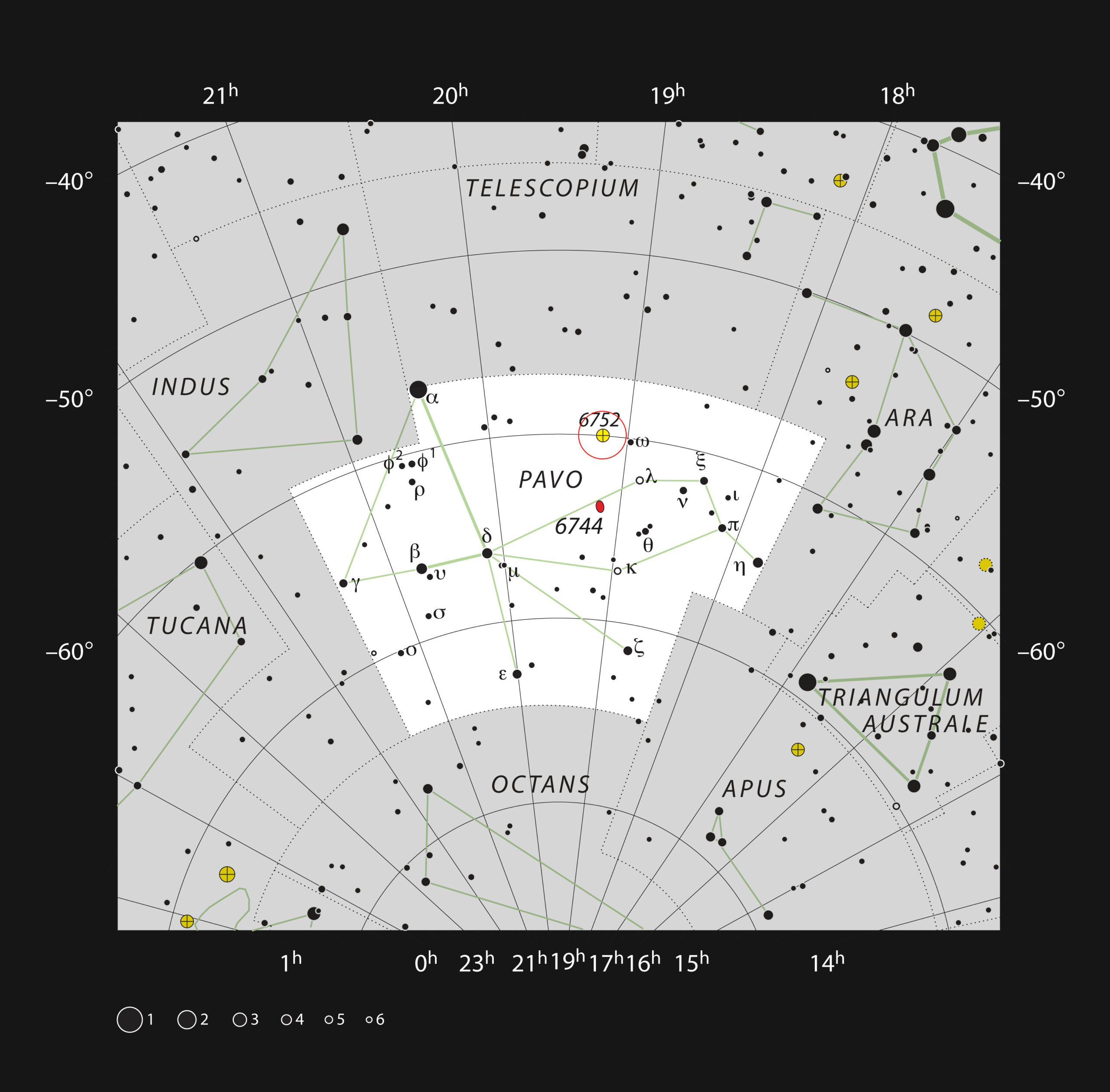
NGC 6752 is located in the constellation Pavo at a distance of approximately 13,000 light-years. It is the third-brightest globular cluster in the night sky, surpassed only by Omega Centauri and 47 Tucanae, and is one of the closest globular clusters to Earth. With an estimated age of around 13 billion years, it contains several hundred thousand stars that formed during the earliest epochs of the Milky Way.
The cluster is classified as a core-collapsed globular cluster, meaning that gravitational interactions over billions of years have produced an exceptionally dense central region. Deep observations have revealed a rich population of blue straggler stars, white dwarfs, variable stars, and compact binary systems. These exotic stellar populations make NGC 6752 an important laboratory for studying stellar evolution, stellar dynamics, and the effects of close encounters between stars in extremely crowded environments.
The outstanding quality of the Hakos dataset beautifully resolves the densely packed core while preserving the delicate outer halo of the cluster. Thousands of individual stars can be distinguished across the image, demonstrating both the exceptional seeing conditions of Namibia and the excellent performance of the VdS remote observatory. The final image showcases one of the finest globular clusters in the southern sky and highlights the value of collaborative astrophotography within the VdS Remote Observatory community.
The result shows the globular star cluster NGC 6752 located in the constellation Pavo. Data calibration and registration and the final processing was done with PixInsight.
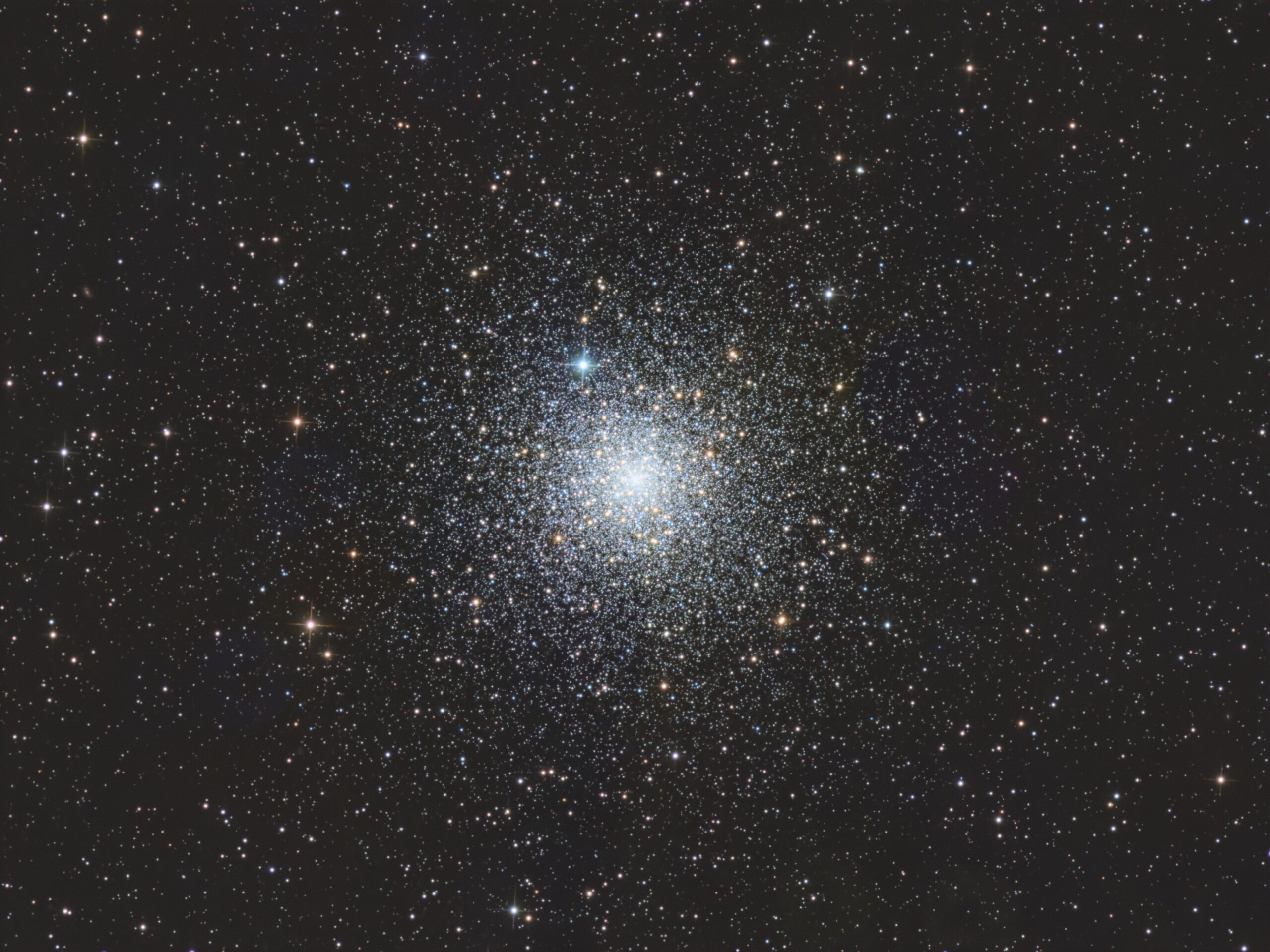
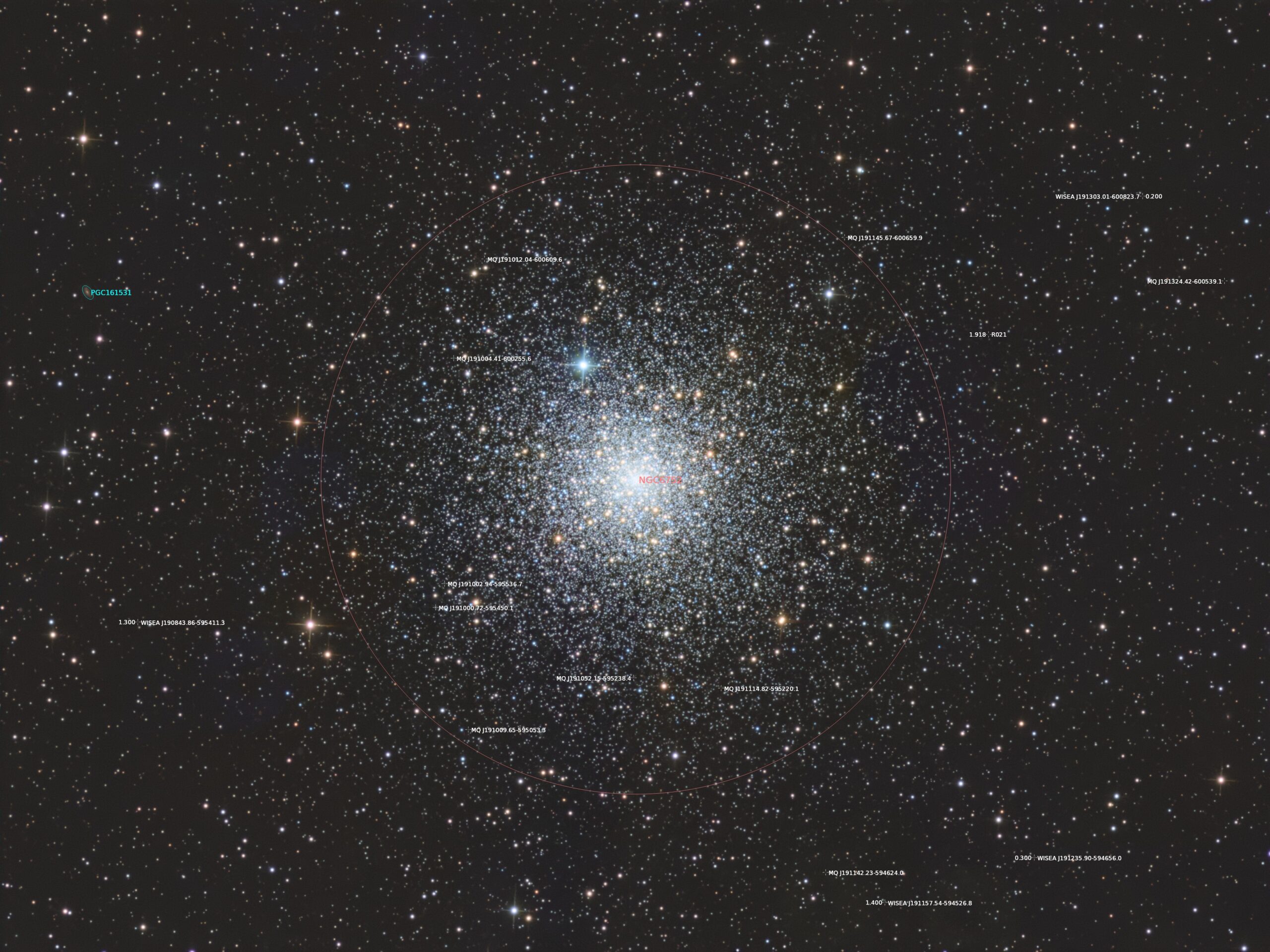
The image contains a remarkable number of quasars, many of which have been identified and annotated.
The images were taken with the following equipment:
| Location | Hakos, Namibia |
| Telescope | TS 12“ Newton-Astrograph |
| Focal length [mm] | 1391 |
| Focal ratio | 4,56 |
| Mount | 10Micron GM3000 |
| Camera | Lacerta DeepSkyPro2600 (mono) |
| Filter | R:G:B |
| Exposure time [min] | 20:18:20 |
| Resolution | 0,56″/px |
- Date: 2023
- Location: Hakos, Namibia
- Telescope/Lens: TS 12“ Newton-Astrograph
- Focal length [mm]: 1391
- Focal ratio: 4.56
- Mount: 10Micron GM3000
- Camera: Lacerta DeepSkyPro2600 (mono)
- Filter: RGB
- Exposure time [min]: 20:18:20
- Resolution: 0.56″/px



Leave a reply