

NGC 5078
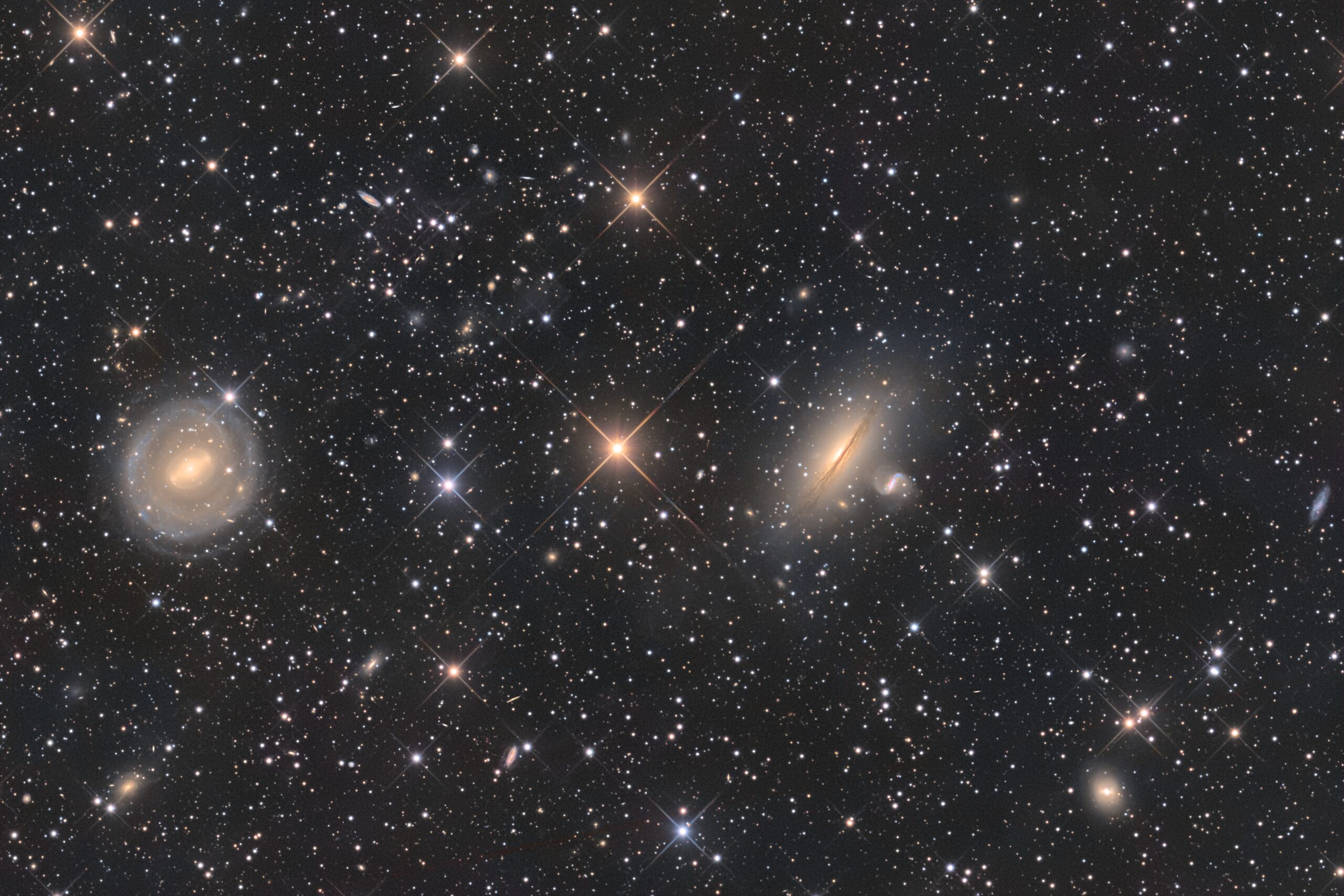
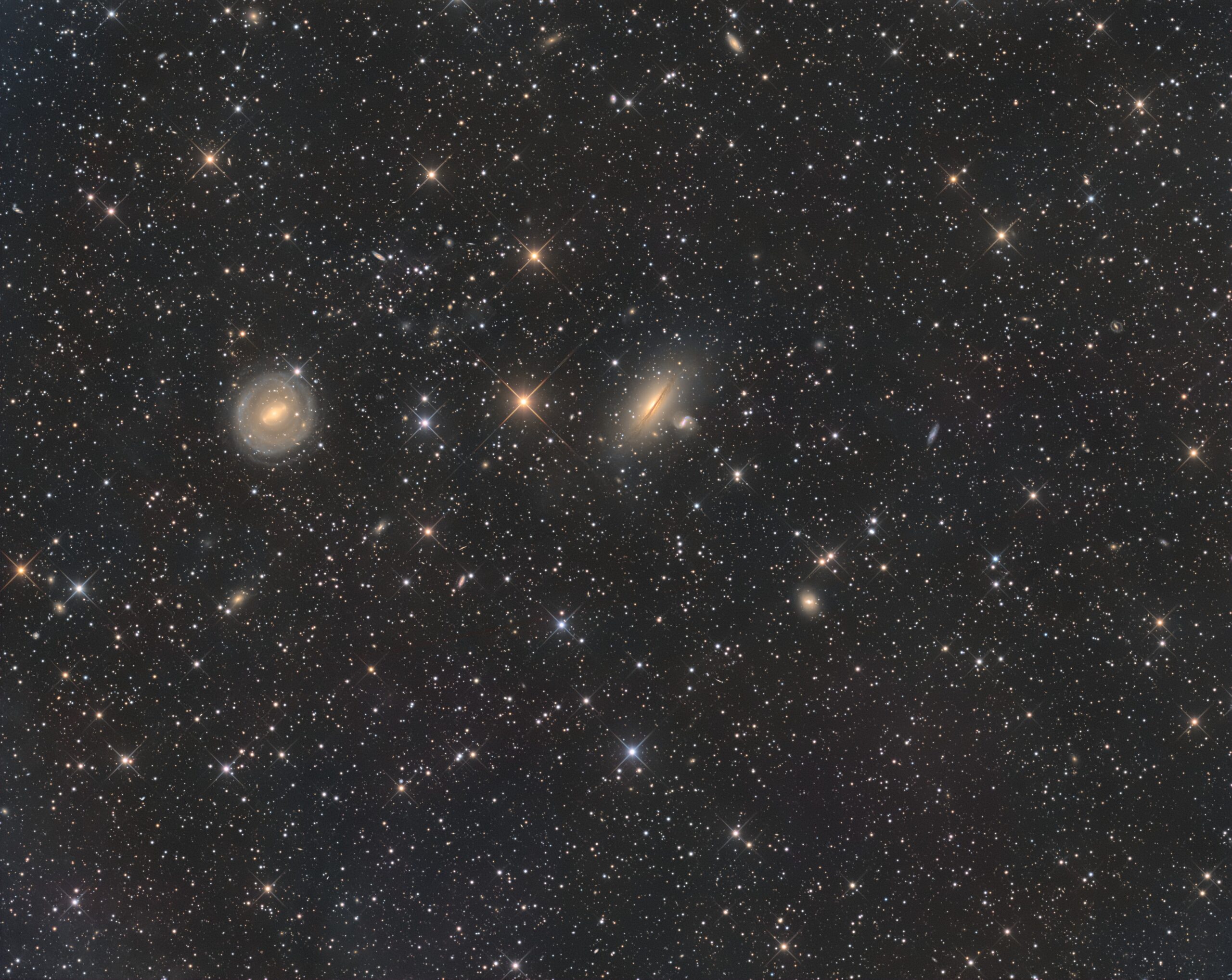
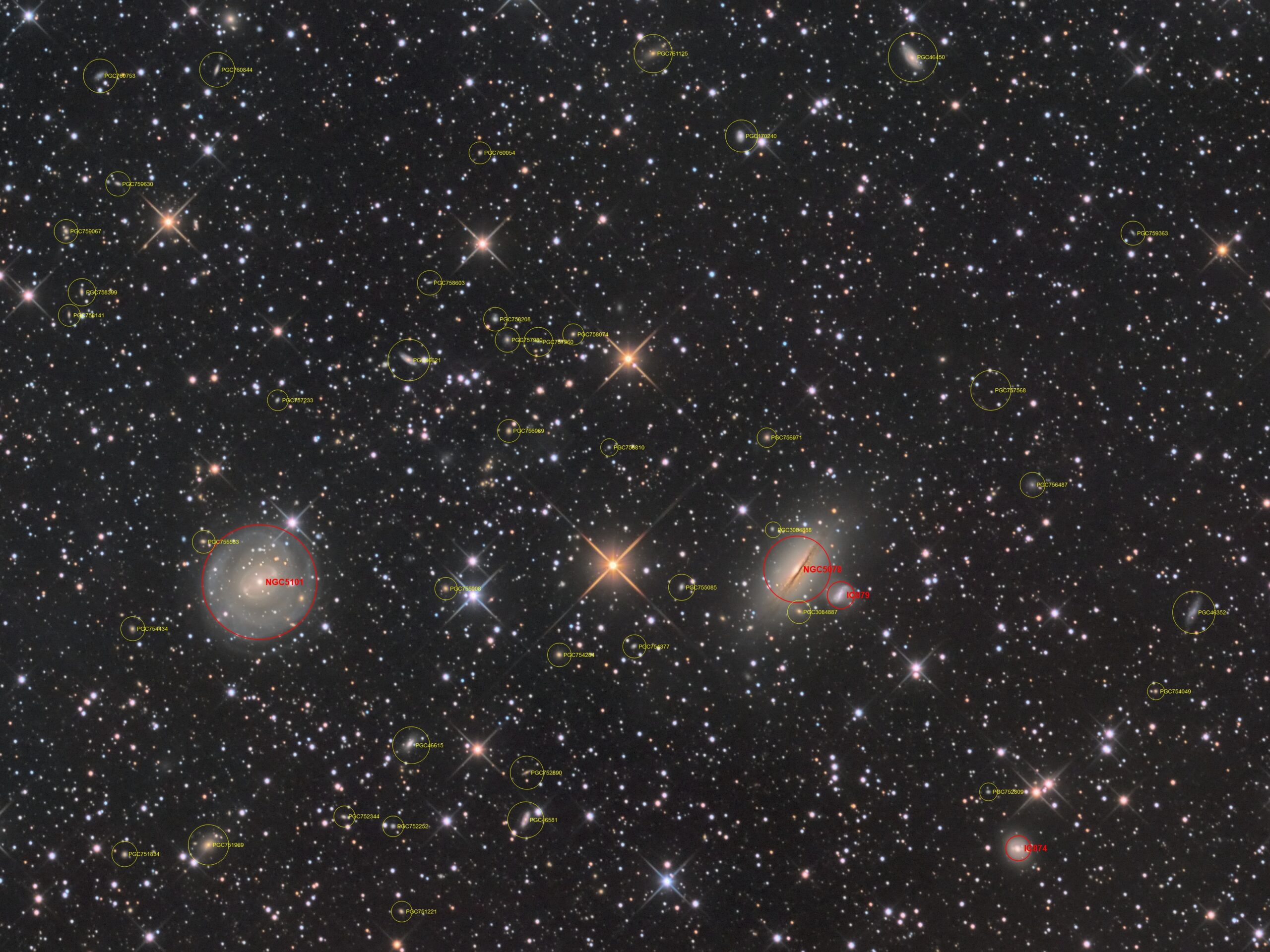
In 2017, during a stay at the astrofarm Tivoli in Namibia, I imaged the galaxy pair NGC 5078 and and NGC 5101. The pristine Namibian skies and excellent observing conditions provided an ideal opportunity to capture these southern galaxies in great detail. Deep exposures revealed not only the structure of the galaxies themselves but also a rich background populated by numerous distant galaxies.
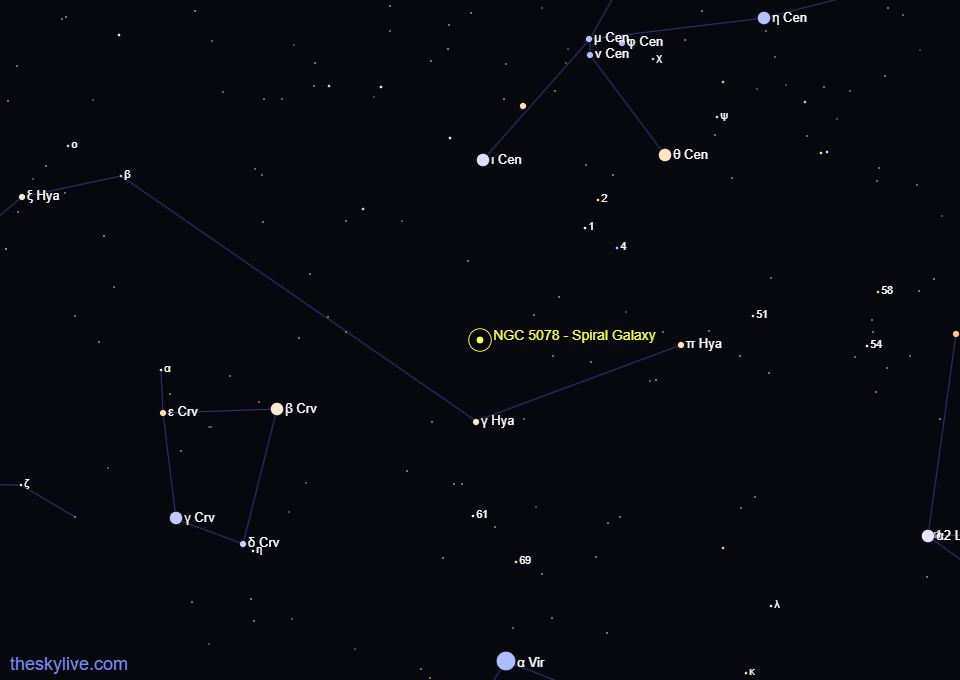
NGC 5078 is a large barred spiral galaxy located in the constellation Hydra at a distance of roughly 90 million light-years. It is the dominant member of the NGC 5078 Group, a small collection of galaxies bound together by gravity. The galaxy exhibits a bright central bulge surrounded by a complex disk of spiral arms threaded with dark dust lanes and numerous star-forming regions. Deep images often reveal subtle asymmetries and faint outer structures that may be the result of past gravitational interactions with neighboring galaxies.
The second major galaxy in the field, NGC 5101, is also a barred spiral galaxy but presents a very different appearance. Located at a distance of approximately 40–50 million light-years, it is seen at a lower inclination and displays a prominent central bar embedded within a large, smooth stellar disk. One of its most notable features is a well-defined inner ring structure, a characteristic often associated with barred galaxies. Such rings form when the bar redistributes gas within the galaxy, concentrating material in specific regions where star formation can occur more efficiently.
From a scientific perspective, the pair provides an interesting comparison between two different types of barred spiral galaxies. While NGC 5078 exhibits a more complex and active appearance with pronounced spiral structure and dust lanes, NGC 5101 appears smoother and more orderly. Studying such galaxies helps astronomers understand how bars influence the evolution of galactic disks, regulate star formation, and redistribute gas over cosmic timescales.
Deep observations reveal numerous H II regions within NGC 5078, highlighting areas of active star formation. In contrast, NGC 5101 contains a more evolved stellar population and exhibits less conspicuous star-forming activity, although its ring structures still contain younger stellar populations than the surrounding disk. Together, the two galaxies demonstrate the diversity of evolutionary paths that spiral galaxies can follow.
The surrounding field is rich in faint background galaxies, adding depth and scale to the image. Thanks to the dark skies of Namibia, many of these distant systems are visible despite lying hundreds of millions or even billions of light-years beyond the main targets.
The final image captures two beautiful southern galaxies with distinctly different morphologies and evolutionary histories. It showcases the intricate structure of NGC 5078 alongside the elegant ringed form of NGC 5101, making this field a particularly rewarding target for deep-sky astrophotography.
For the 2017data the calibration and registration, as well as the final image processing, were all done with PixInsight.
The images were taken with the following equipment:
- Date: 2017
- Location: Tivoli, Namibia
- Telescope: 12″ ASA Astrograph
- Focal length [mm]: 1076
- Focal ratio: 3.6
- Mount: ASA DDM85
- Camera: FLI Microline ML16200
- Filter: L:R:G:B
- Exposure time [min]: 200:50:40:45
- Resolution: 1.14″/px



Leave a reply