

NGC 4676 (The Mice) from my backyard and remote
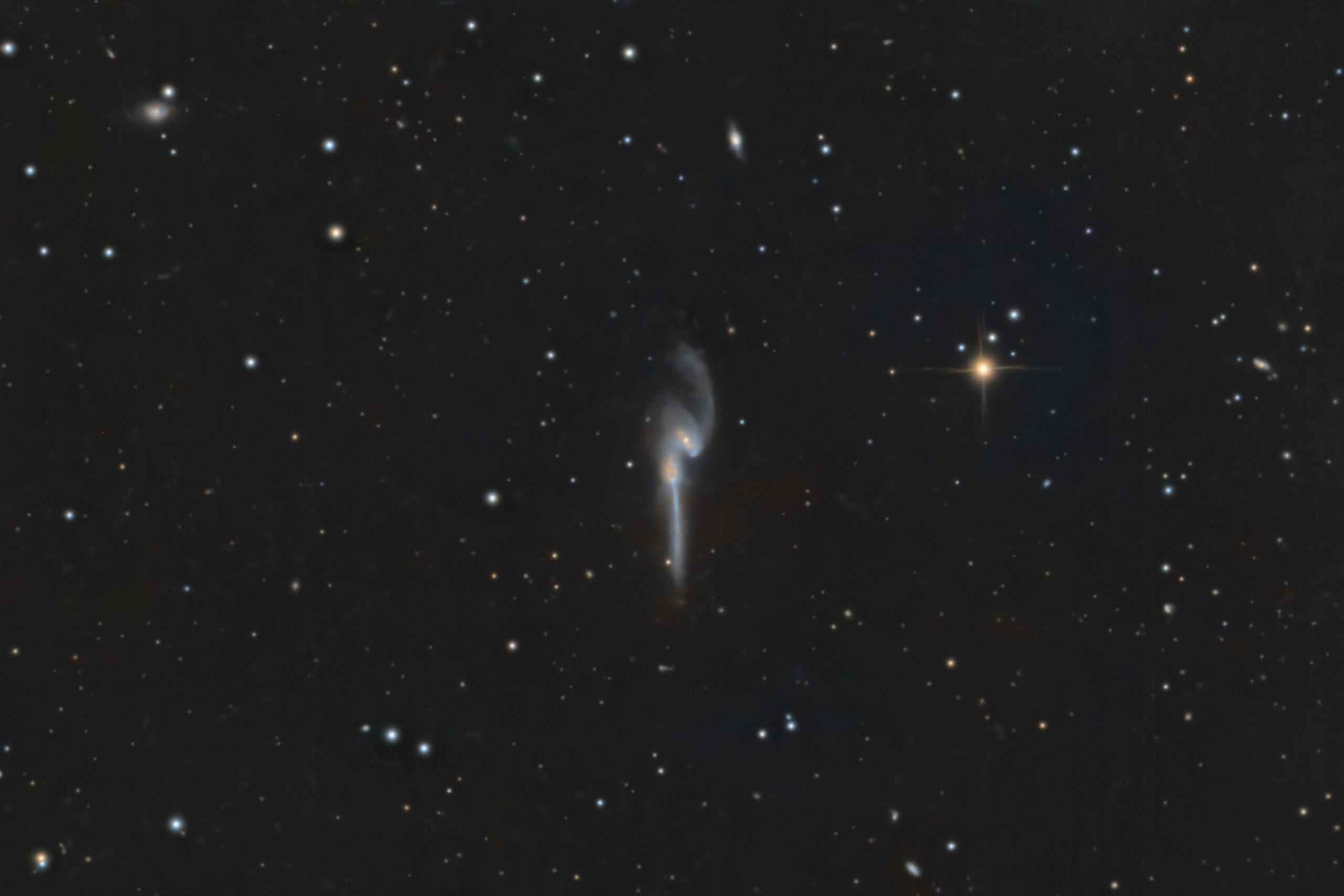
In 2012, I imaged the famous interacting galaxy pair NGC 4676 using my DSLR equipment from my backyard observatory. To improve the depth and reveal finer structural details, I later enhanced the image with luminance data acquired through Lightbuckets using a CCD camera at an observatory in Southern France. By combining my own color data with the higher-resolution monochrome luminance frames, I was able to create a final image that captured both the natural colors and the delicate tidal structures of this remarkable interacting system.
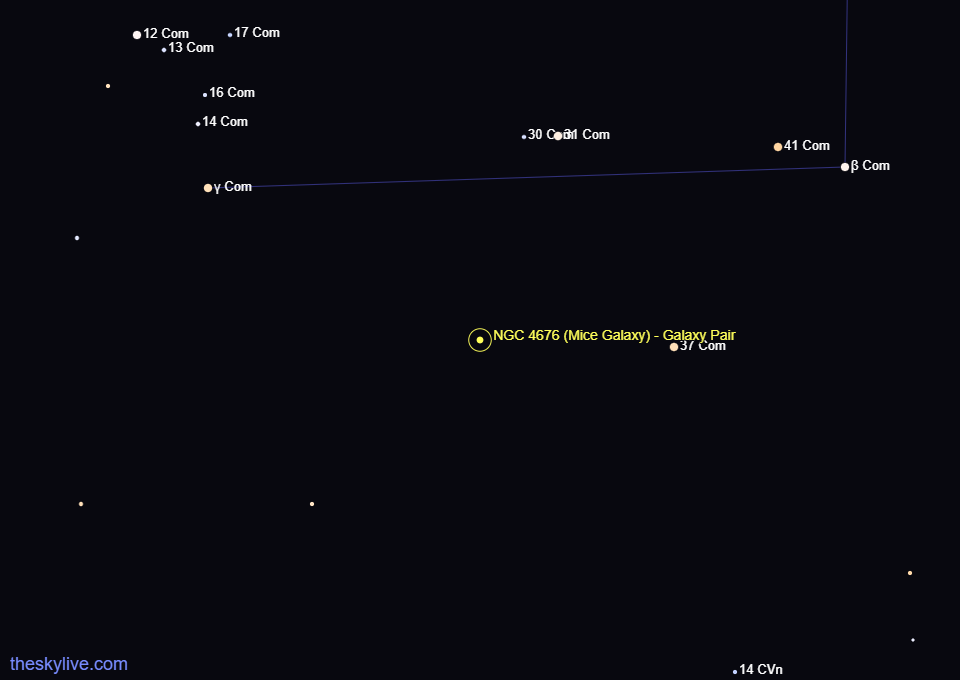
Located in the constellation Coma Berenices, the Mice Galaxies lie approximately 300 million light-years from Earth. The system consists of two spiral galaxies, designated NGC 4676A and NGC 4676B, which are currently undergoing a dramatic gravitational interaction. Their popular nickname originates from the long tidal tails extending behind the galaxies, resembling the tails of two mice.
The Mice Galaxies represent one of the most spectacular examples of a galactic collision in progress. During close encounters, the immense gravitational forces distort the stellar disks and pull streams of stars, gas, and dust far into intergalactic space. Computer simulations indicate that the galaxies are observed shortly after one of their closest approaches and will eventually merge into a single larger galaxy over the next several hundred million years.
Deep images reveal bright central regions, disturbed spiral arms, and the characteristic tidal tails stretching tens of thousands of light-years beyond the main bodies of the galaxies. These tails contain stars, gas clouds, and active star-forming regions created as the interaction compresses interstellar material. The collision has triggered enhanced star formation throughout both galaxies, producing numerous young star clusters and emission regions.
From a scientific perspective, the Mice Galaxies provide astronomers with an excellent laboratory for studying galaxy mergers and their role in cosmic evolution. Such interactions were much more common in the early universe and played a crucial role in the growth of today’s large galaxies. Observations of systems like NGC 4676 help researchers understand how mergers redistribute stars, gas, and dark matter while simultaneously triggering bursts of star formation.
The combination of DSLR color data from my backyard and deeper CCD luminance data from Southern France allowed the final image to reveal both the galaxies‘ subtle color variations and their faint tidal structures. The result showcases one of the most dramatic examples of galactic interaction visible in the night sky and provides a fascinating glimpse into the dynamic processes that shape galaxies over cosmic timescales.
Data calibration and registration and the final processing was done with PixInsight.
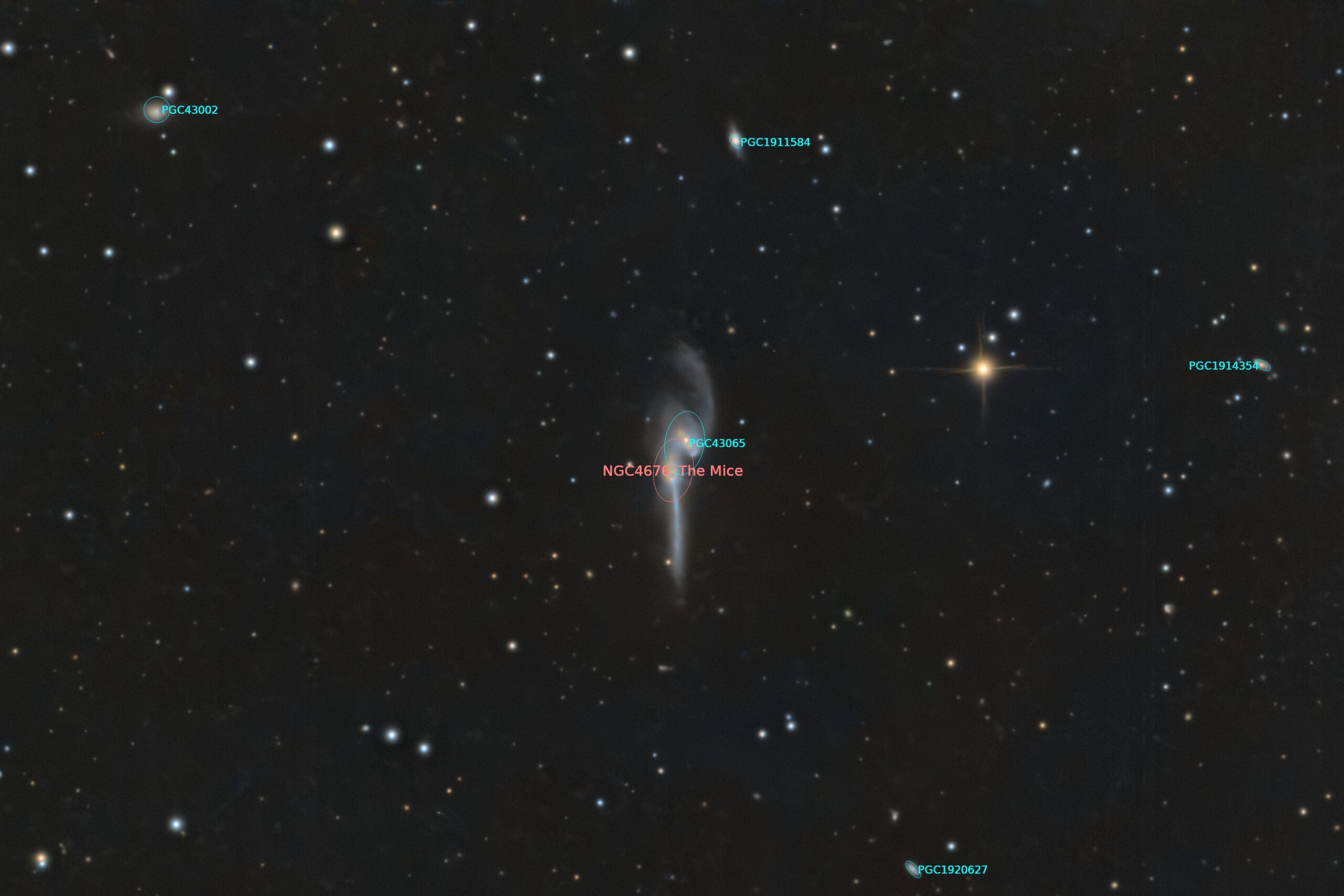
Here is an overview of the used equipment and the exposure times:
- Date: 2012
- Location: Krefeld
- Telescope/Lens: 10″ TS Newton – 12″ ASA Astrograph
- Focal length [mm]: 1140 – 1176
- Focal ratio: 4.5 – 3.6
- Mount: Skywatcher NEQ6 – ASA DDM85
- Camera: Canon 500Da – FL Microline 8300
- Filter: OSC – L
- Exposure time [min]: 215 – 120
- Resolution: 0.47″/px (Drizzle 2)



Leave a reply