

NGC 4631 from my own backyard
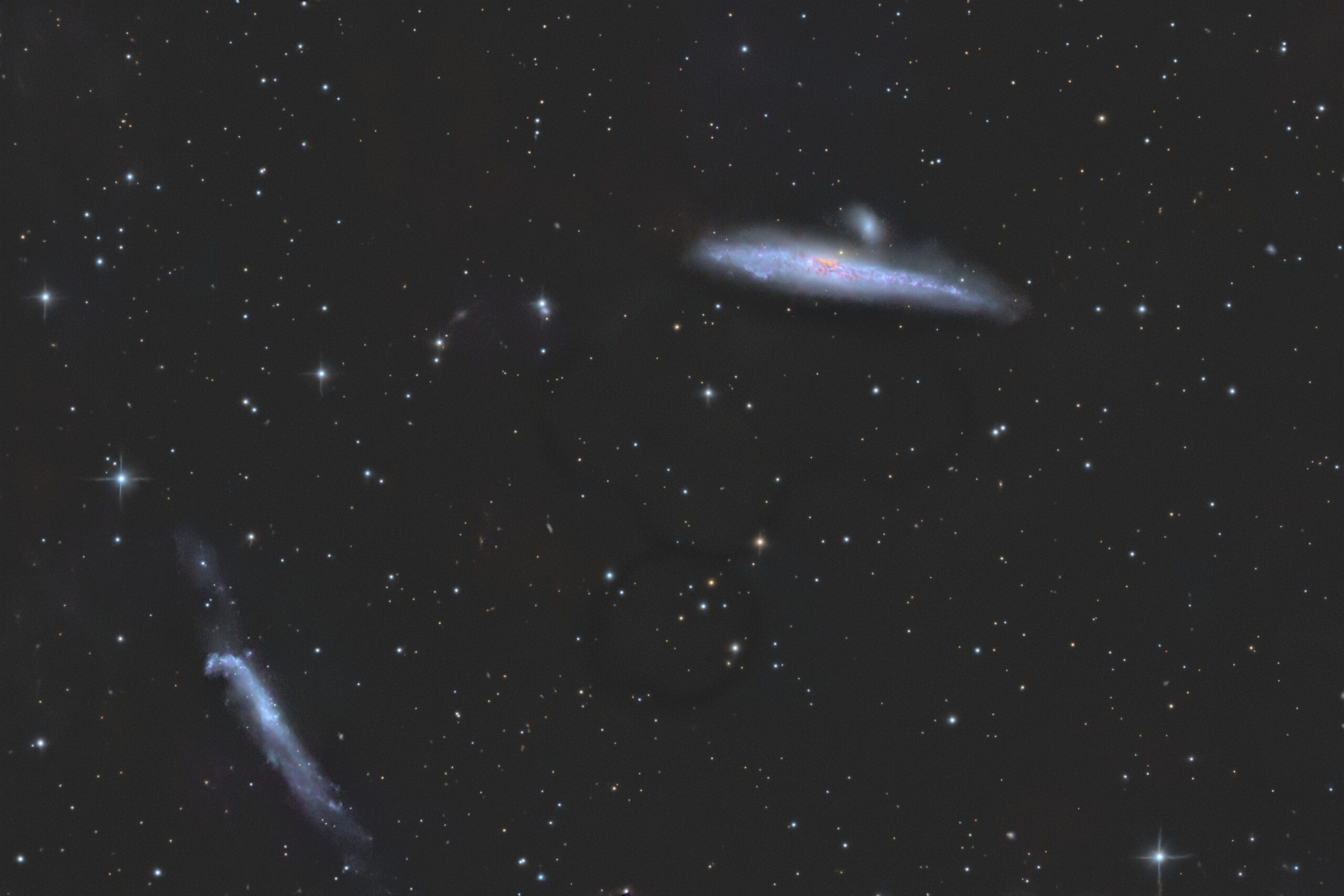
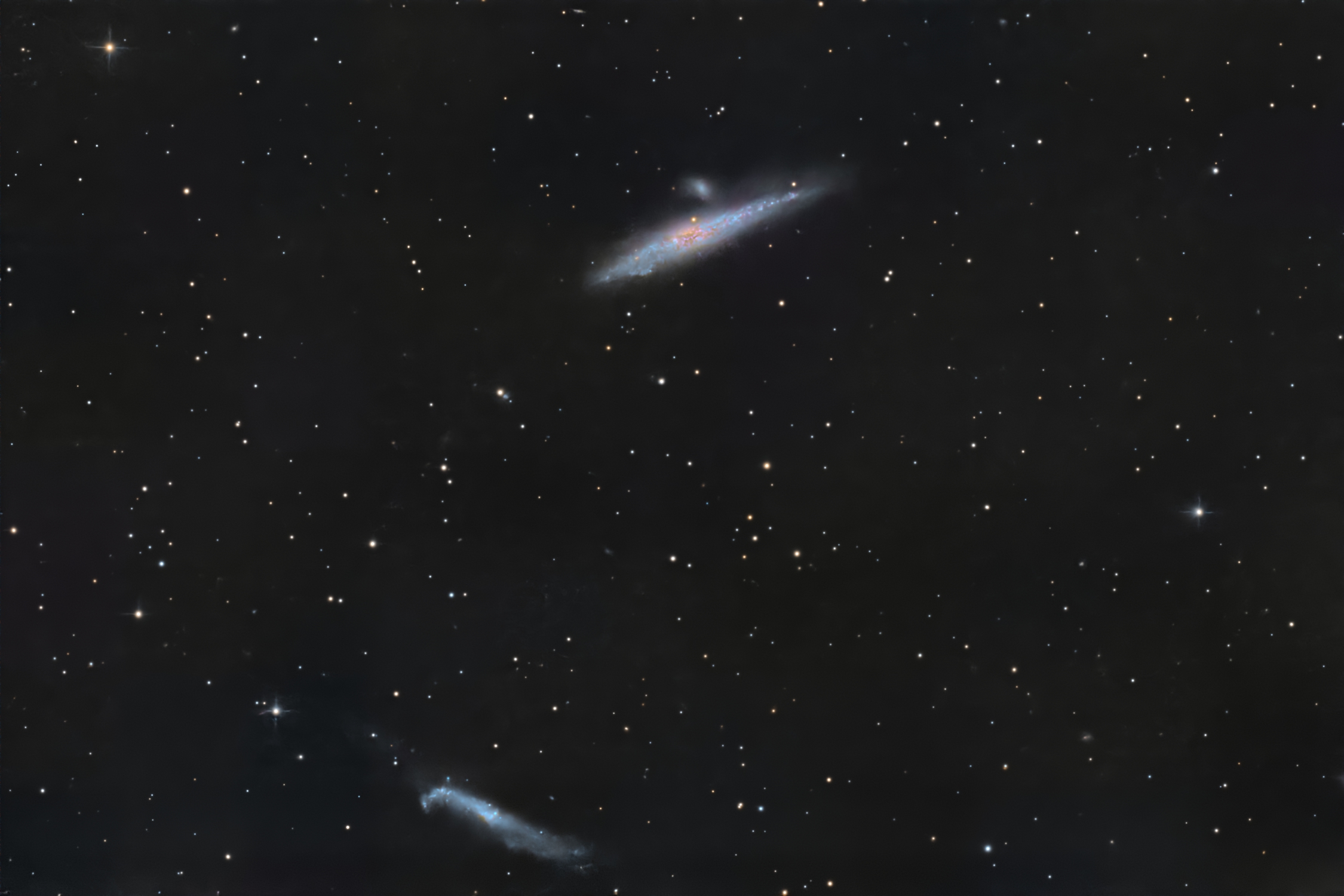
I imaged the galaxy pair NGC 4631 and NGC 4656 twice over the years. My first image was taken in 2010 using my DSLR equipment, while a second and significantly deeper image was acquired in 2013 using a CCD camera. The improved sensitivity and lower noise of the CCD system allowed much fainter structures to be recorded, revealing additional detail in both galaxies and their surrounding environment.
NGC 4631, commonly known as the Whale Galaxy, is located in the constellation Canes Venatici at a distance of approximately 25 million light-years. Viewed almost edge-on, it displays a highly elongated shape that resembles the profile of a whale. The galaxy is slightly larger than the Milky Way and is undergoing intense star formation, making it one of the most active nearby spiral galaxies. Deep images reveal dark dust lanes running along the disk, numerous bright star-forming regions, and a complex halo of ionized gas extending far above and below the galactic plane.
One of the most fascinating aspects of NGC 4631 is its interaction with neighboring galaxies, particularly NGC 4627, which appears projected near the Whale Galaxy, and the more distant NGC 4656. Gravitational interactions between these galaxies are believed to be responsible for the elevated star formation activity and the distorted gaseous structures observed around NGC 4631. Radio observations reveal enormous streams of neutral hydrogen connecting members of the group, providing evidence of past and ongoing interactions.
The second major galaxy in the field, NGC 4656, is known as the Hockey Stick Galaxy because of its distinctly bent and irregular appearance. Located at a similar distance, it has been significantly distorted by gravitational encounters, giving rise to its unusual shape. Deep images reveal patchy star-forming regions, dust clouds, and a disrupted stellar disk. Nearby lies NGC 4657, which was once considered a separate galaxy but is now generally regarded as part of the same disturbed system.
The field surrounding these galaxies is rich in faint background galaxies and diffuse structures, making it an especially rewarding target for deep imaging. Comparing the DSLR image from 2010 with the CCD image from 2013 clearly demonstrates the advantages of the newer camera technology. The CCD data reveal significantly more detail in the dust lanes, star-forming regions, and faint outer structures, while also providing a cleaner and deeper view of the surrounding galaxy group.
Together, NGC 4631 and NGC 4656 form one of the most visually interesting galaxy fields in the northern sky, showcasing the profound effects that gravitational interactions can have on galactic structure, star formation, and long-term evolution.
For the 2013 data the calibration and registration and the final processing was done with PixInsight. The result was as follows:
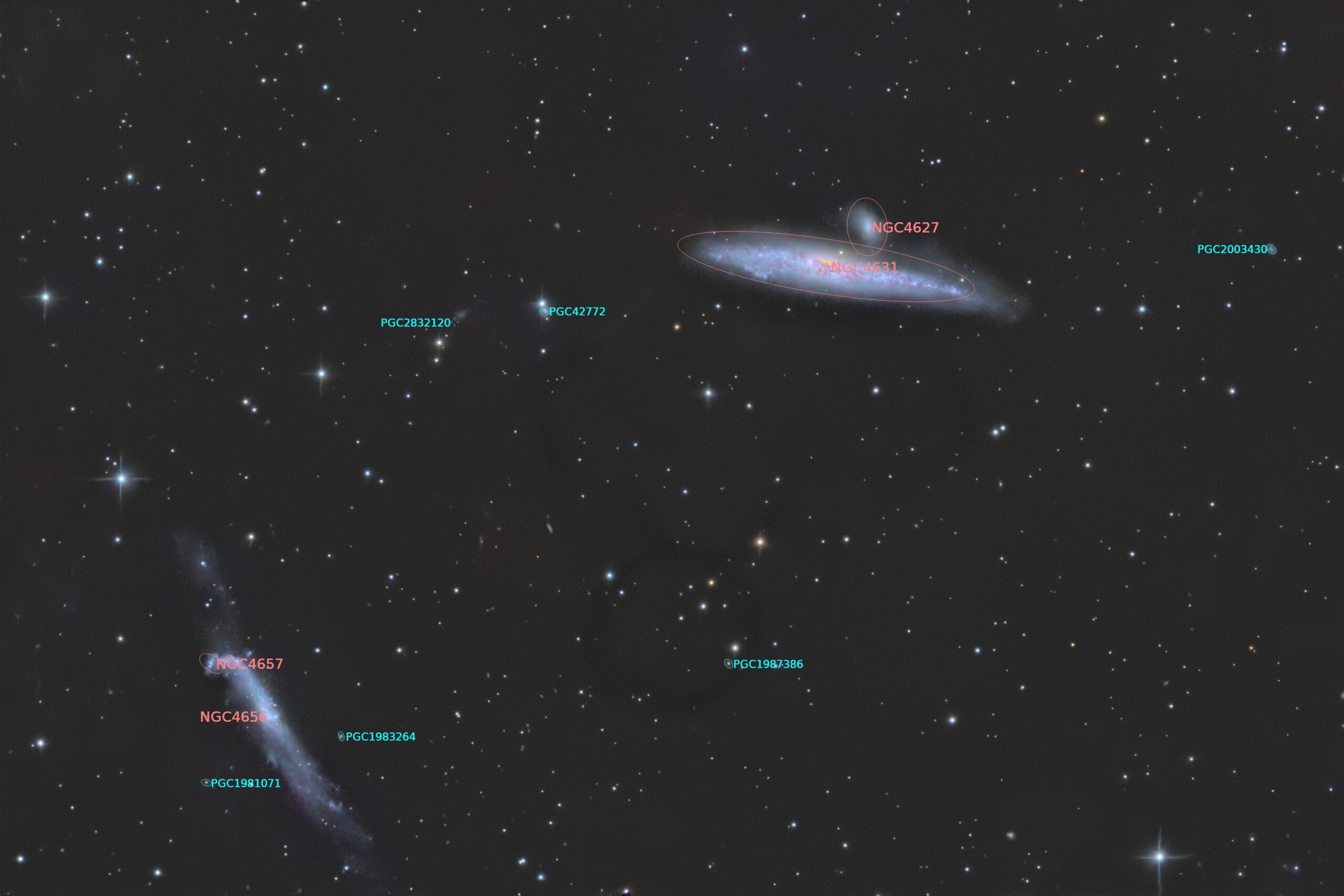
The images were taken with the following eqipment:
- Date: 2013
- Location: Krefeld
- Telescope: 8″ GSO Newton
- Focal length [mm]: 920 with Comacorrector
- Focal ratio: 4.6
- Mount: Losmandy G11
- Camera: Moravian 8300FW
- Filter: L:R:G:B
- Exposure time [min]: 165:60:60:60
- Resolution: 1.21″/px
For the 2010 data the calibration and registration and the final processing was done with PixInsight. The result was as follows:
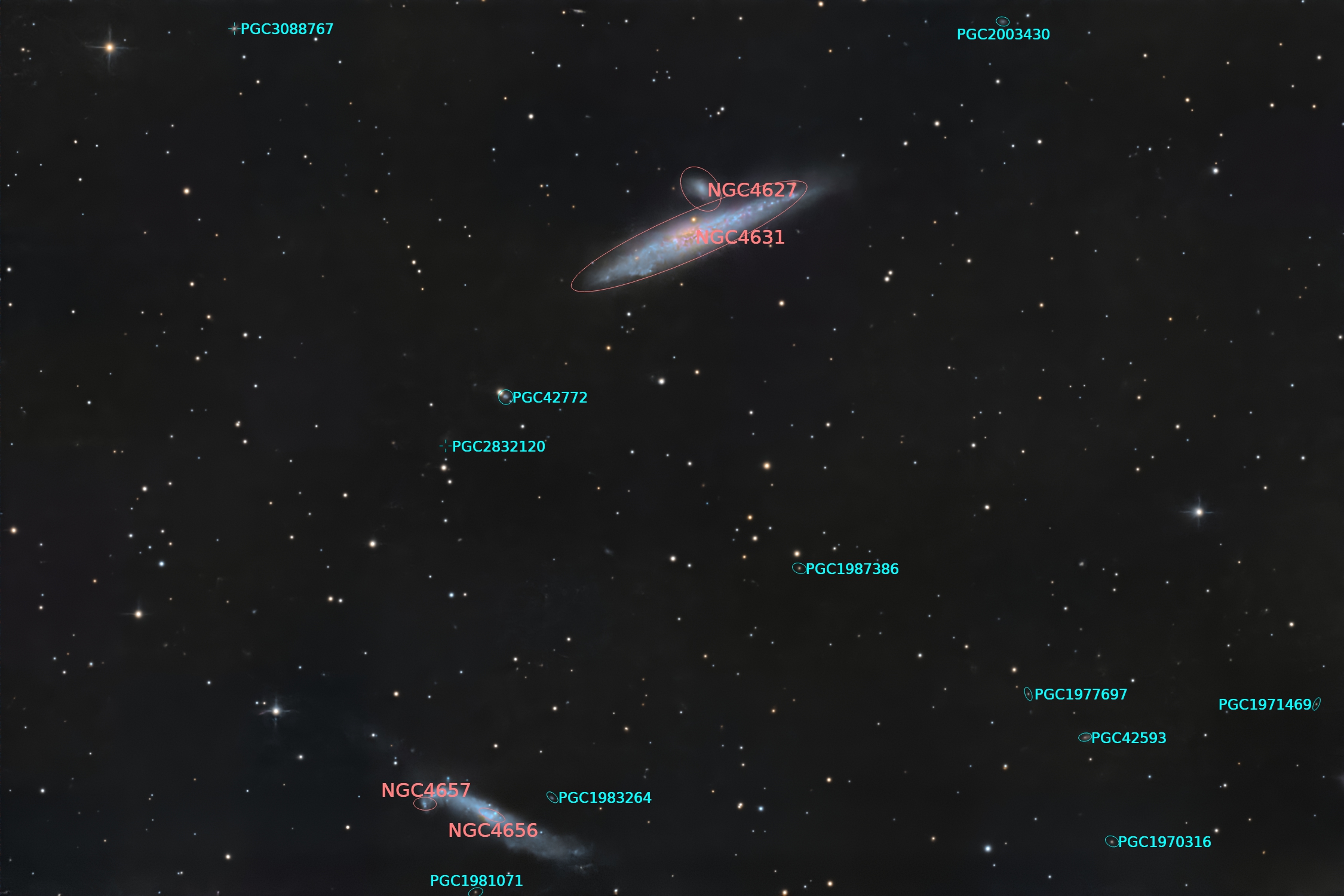
The images were taken with the following eqipment:
- Date: 2010
- Location: Krefeld
- Telescope: 8″ GSO Newton
- Focal length [mm]: 800
- Focal ratio: 4
- Mount: Skywatcher NEQ6
- Camera: Canon 300Da
- Filter:OSC
- Exposure time [min]: 178
- Resolution: 1.88″/px



Leave a reply