

NGC 4565 from my backyard
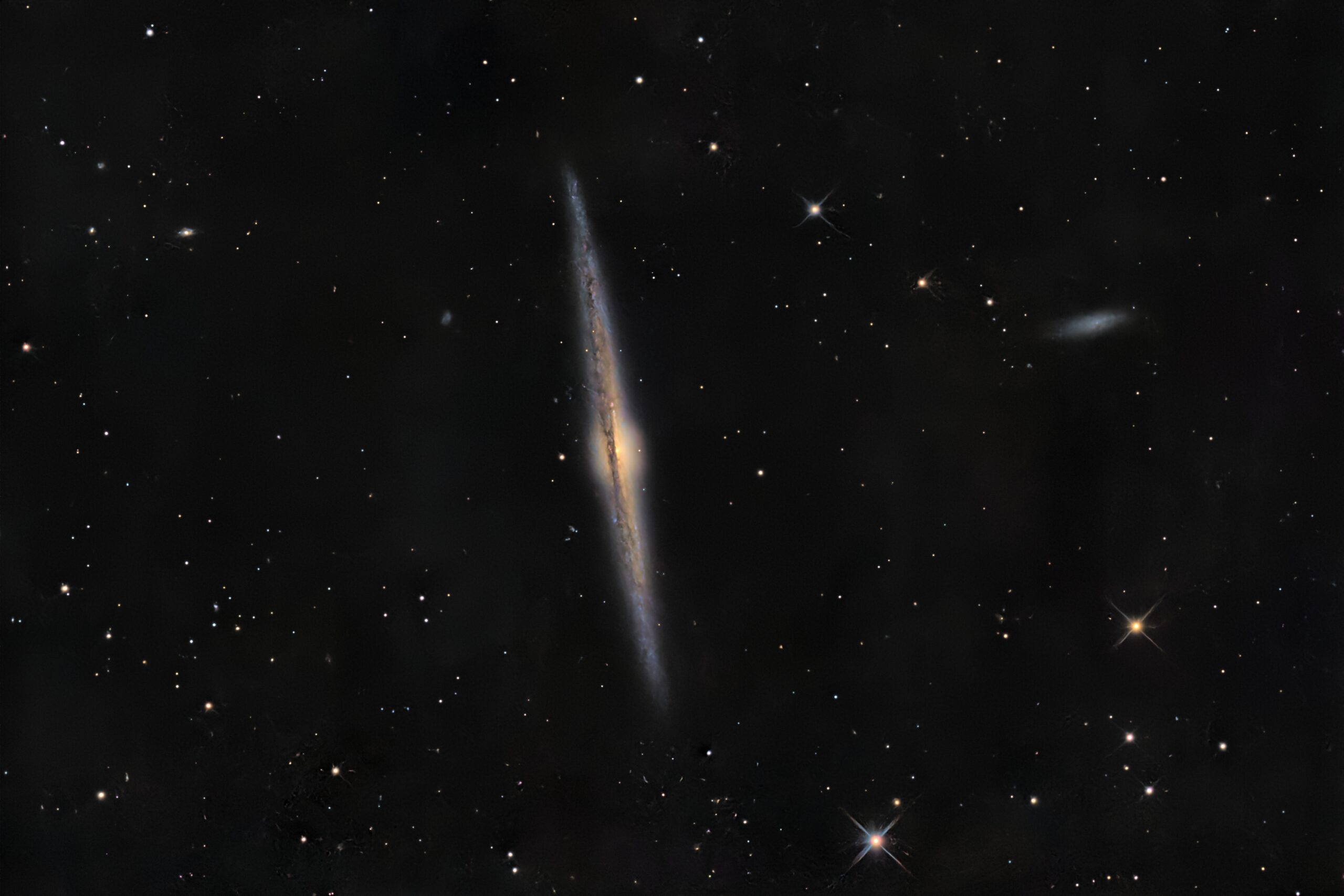
I imaged the edge-on spiral galaxy NGC 4565 twice over the years from my backyard observatory. My first image was taken in 2010 using a modified Canon 300D DSLR attached to an 8-inch Newtonian telescope. One year later, in 2011, I revisited the galaxy with a modified Canon 500D and a larger 10-inch Newtonian telescope, benefiting from both improved camera performance and increased aperture. The second dataset revealed noticeably finer detail in the galaxy’s dust lane and extended stellar disk, demonstrating the progress in both equipment and imaging techniques.
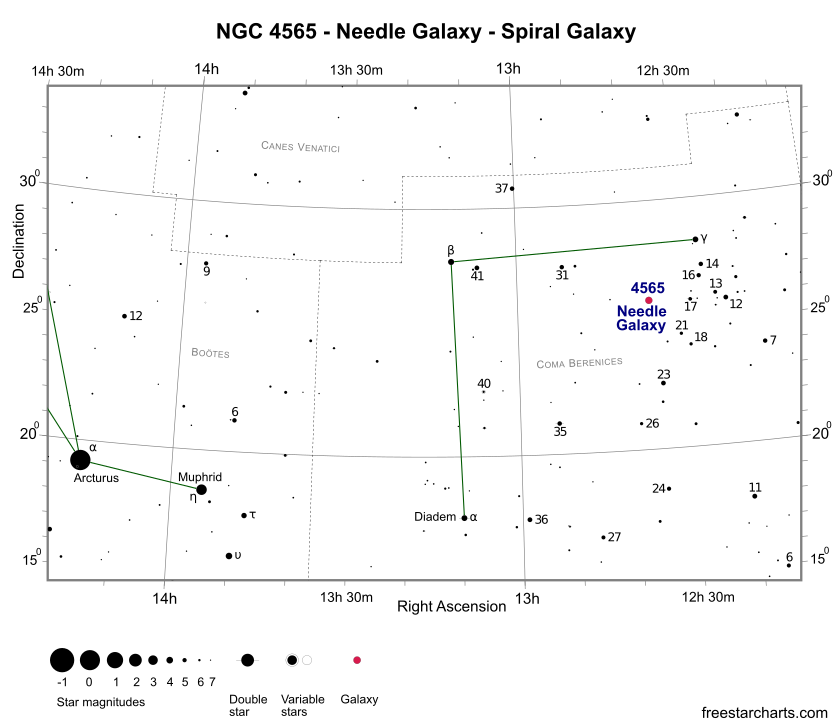
NGC 4565 is located in the constellation Coma Berenices at a distance of approximately 40 million light-years. It is one of the finest examples of an edge-on spiral galaxy visible from Earth and is commonly known as the Needle Galaxy because of its extremely thin and elongated appearance. With a diameter estimated at more than 100,000 light-years, it is comparable in size to our own Milky Way.
Viewed almost perfectly edge-on, NGC 4565 presents a spectacular profile dominated by a bright central bulge and a razor-thin galactic disk. One of its most striking features is the prominent dust lane running along the length of the disk, partially obscuring the galaxy’s central regions. This dust lane consists of vast clouds of interstellar gas and dust, the raw material from which new stars are formed.
From a scientific perspective, NGC 4565 is often regarded as one of the best external analogues of the Milky Way. Because our own galaxy is viewed from within, it is difficult to study its overall structure directly. NGC 4565 provides astronomers with an opportunity to examine a similar spiral galaxy from the outside, helping to improve our understanding of galactic disks, bulges, and dark matter halos.
Deep observations reveal that the galaxy possesses a large and extended stellar halo populated by old stars and globular clusters. Studies have also shown that NGC 4565 contains a relatively small central bulge compared with many other large spiral galaxies, providing important clues about its evolutionary history. The galaxy appears relatively undisturbed, suggesting that it has avoided major mergers for a significant fraction of its lifetime.
The field surrounding NGC 4565 is rich in faint background galaxies, adding depth and scale to the image. Careful processing of the DSLR data revealed not only the prominent dust lane and bright nucleus but also subtle extensions of the galactic disk fading into the surrounding darkness.
Comparing the images from 2010 and 2011 illustrates how improvements in equipment can enhance the visibility of fine structures within a galaxy. The larger telescope and newer camera used in 2011 allowed a more detailed view of one of the most elegant edge-on galaxies in the sky, making NGC 4565 a particularly rewarding target and a perennial favorite among astrophotographers.
For the 2011 data the Calibration and registration was done with DeepSkyStacker and the final processing was performed with PixInsight. The result was as follows:
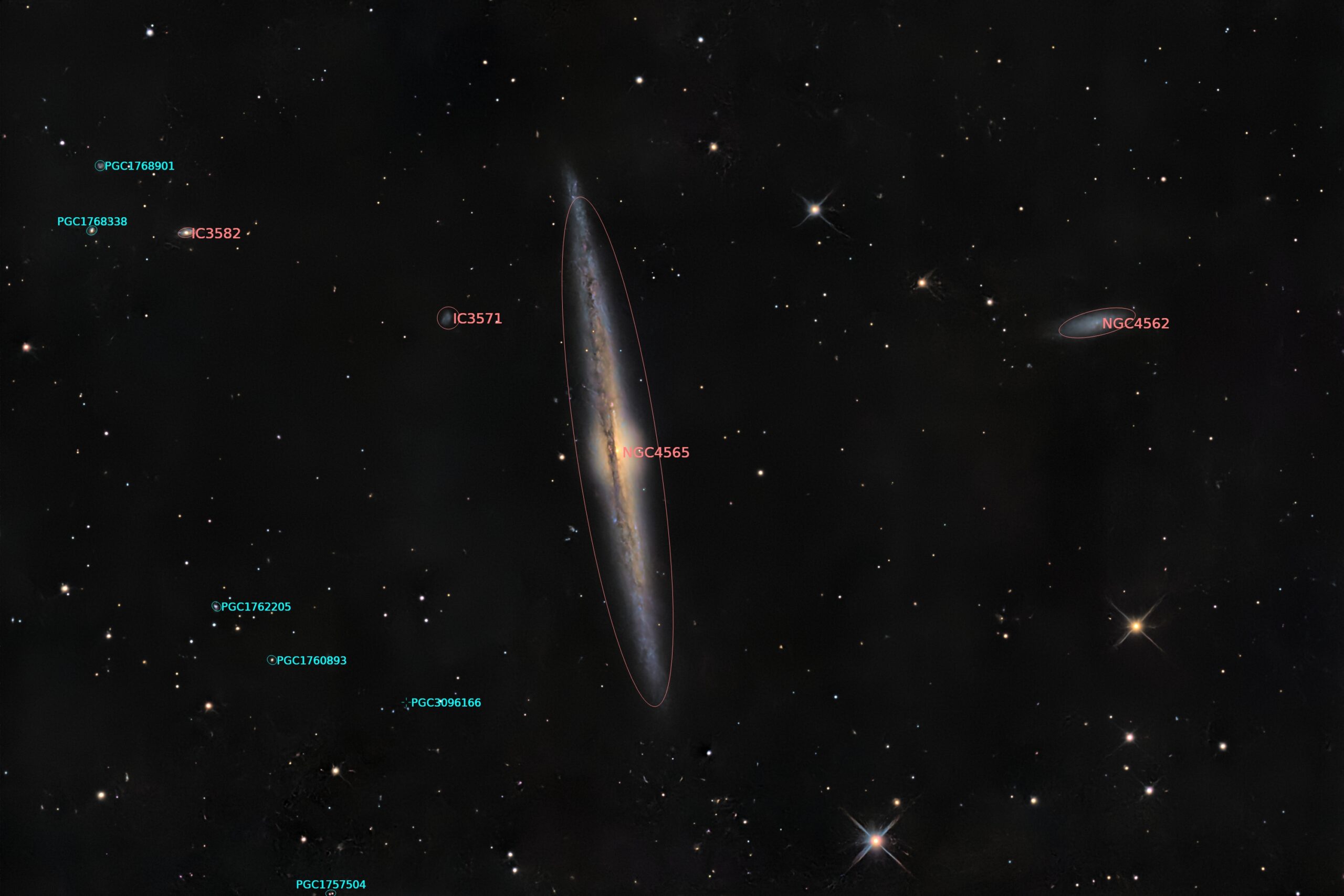
The images were taken with the following equipment:
- Date: 2011
- Location: Krefeld
- Telescope: 10″ Orion Newton
- Focal length [mm]: 1200
- Focal ratio: 4.8
- Mount: Skywatcher NEQ6 Synscan
- Camera: Canon 500Da
- Filter: OSC
- Exposure time [min]: 338
- Resolution: 0.72″/px
For the 2010 data the calibration, registration and the final processing was done with PixInsight. The result was as follows:

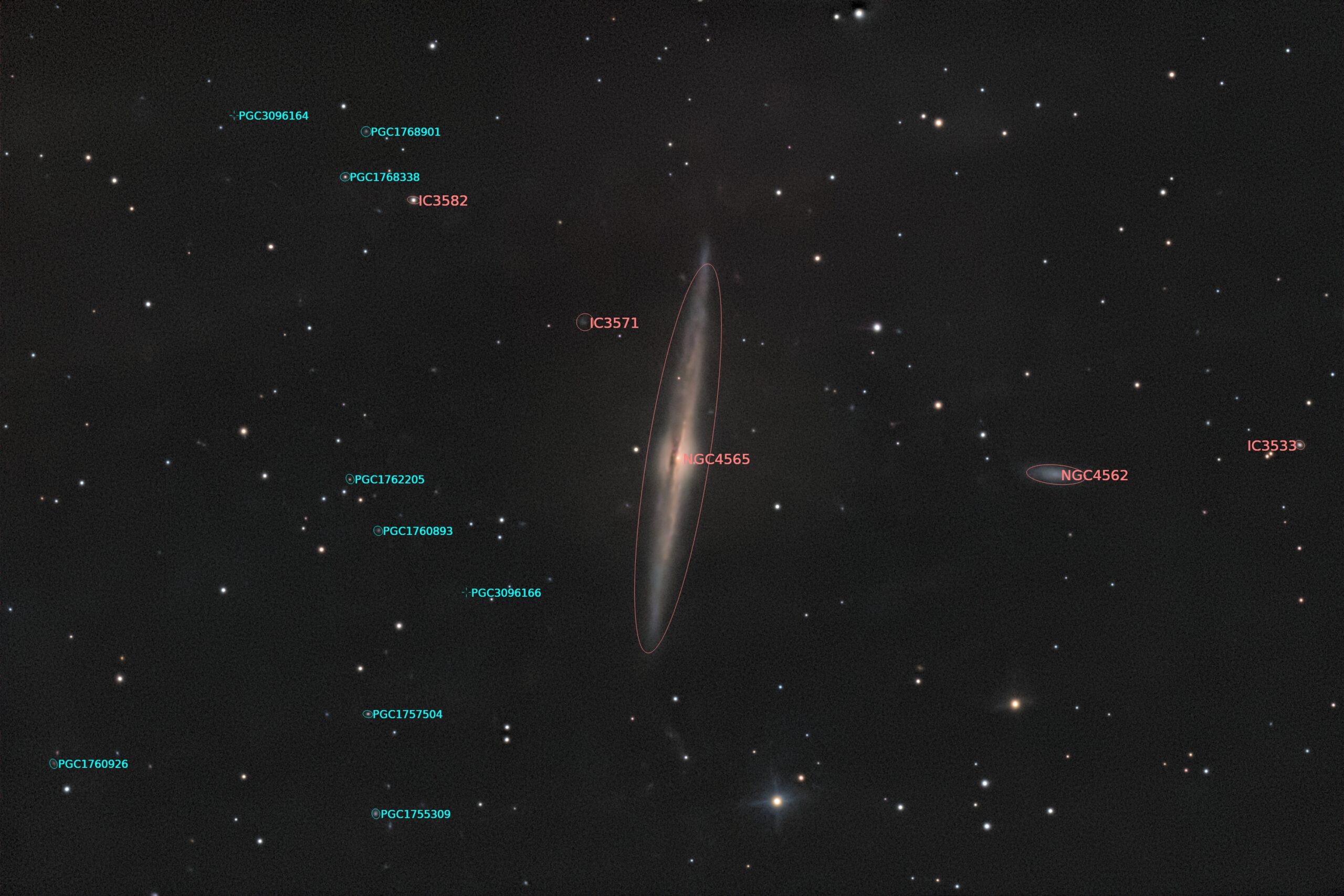
The images were taken with the following equipment:
- Date: 2010
- Location: Krefeld
- Telescope: 8″ GSO Newton
- Focal length [mm]: 800
- Focal ratio: 4
- Mount: Skywatcher NEQ6 Synscan
- Camera: Canon 300Da
- Filter: OSC
- Exposure time [min]: 229
- Resolution: 0.94″/px (Drizzle 2)



Leave a reply