

NGC 4372 from remote
From time to time, I obtain data sets from remote observatories around the world. One of my favorite providers is Telescope Live, which operates telescopes in locations such as Chile, Australia, and Spain. One of the datasets I received in 2021 featured the beautiful globular cluster NGC 4372, located in the constellation Musca.
NGC 4372 is one of the oldest and most intriguing globular clusters in the Milky Way. Located approximately 18,000–20,000 light-years from Earth, it resides in the outer regions of our galaxy and is estimated to be more than 12 billion years old. This immense age means that the cluster formed during the early history of the Milky Way, making it a valuable fossil record of the conditions that existed shortly after our galaxy began to take shape.
Unlike some of the more famous globular clusters such as Omega Centauri or 47 Tucanae, NGC 4372 appears somewhat irregular and less centrally concentrated. Deep images reveal a rich population of ancient stars spread across a relatively large area of the sky. The cluster contains hundreds of thousands of stars, most of which are old, metal-poor Population II stars that formed at a time when the universe contained far fewer heavy elements than it does today.
One of the most distinctive features of NGC 4372 is its location behind a complex foreground dust cloud belonging to the Milky Way. This interstellar dust partially obscures the cluster and creates striking dark lanes that cross the field. The contrast between the ancient cluster stars and the foreground dust structures gives the object a unique appearance rarely seen in other globular clusters. The dust also causes differential reddening, making some stars appear redder than others depending on the amount of intervening material along the line of sight.
From a scientific perspective, NGC 4372 has attracted considerable interest because of its extremely old stellar population and low metallicity. Studies of such clusters help astronomers understand the earliest stages of galactic formation and evolution. By analyzing the ages, chemical compositions, and motions of the cluster’s stars, researchers can gain insight into the processes that shaped the Milky Way more than ten billion years ago.
The cluster is also known to host a population of red giant stars and variable stars that provide valuable information about stellar evolution. Because all cluster members formed at roughly the same time and distance, globular clusters such as NGC 4372 serve as important laboratories for testing theoretical models of how stars evolve over billions of years.
The high-quality Telescope Live dataset allowed the dense stellar population of NGC 4372 and the remarkable foreground dust structures to be captured in exceptional detail. The resulting image showcases not only the beauty of one of the southern sky’s lesser-known globular clusters but also a fascinating interaction between ancient stars and the dusty interstellar medium of our own galaxy.
Data calibration and registration and the final processing was done with PixInsight. The result was as follows:
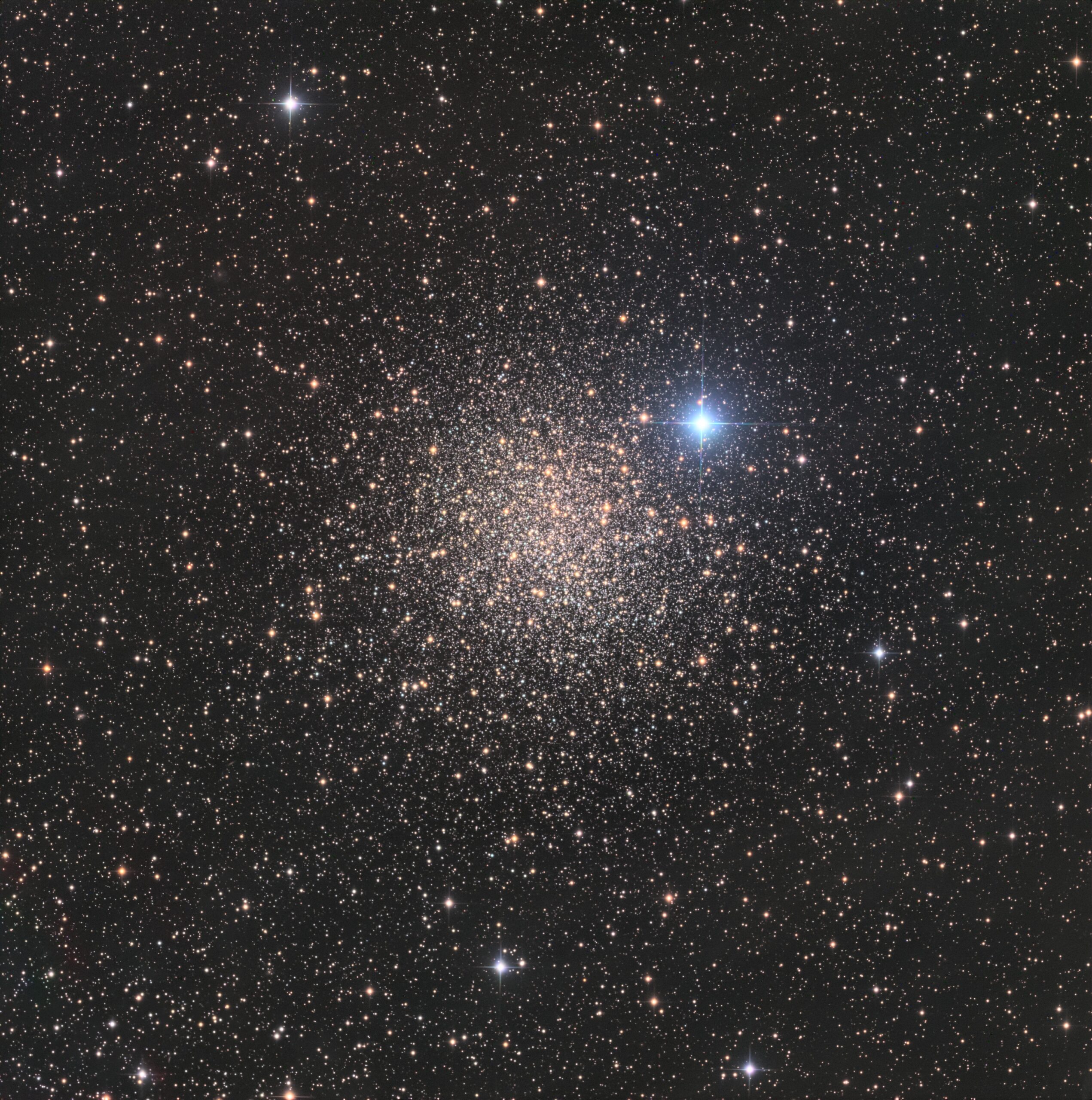
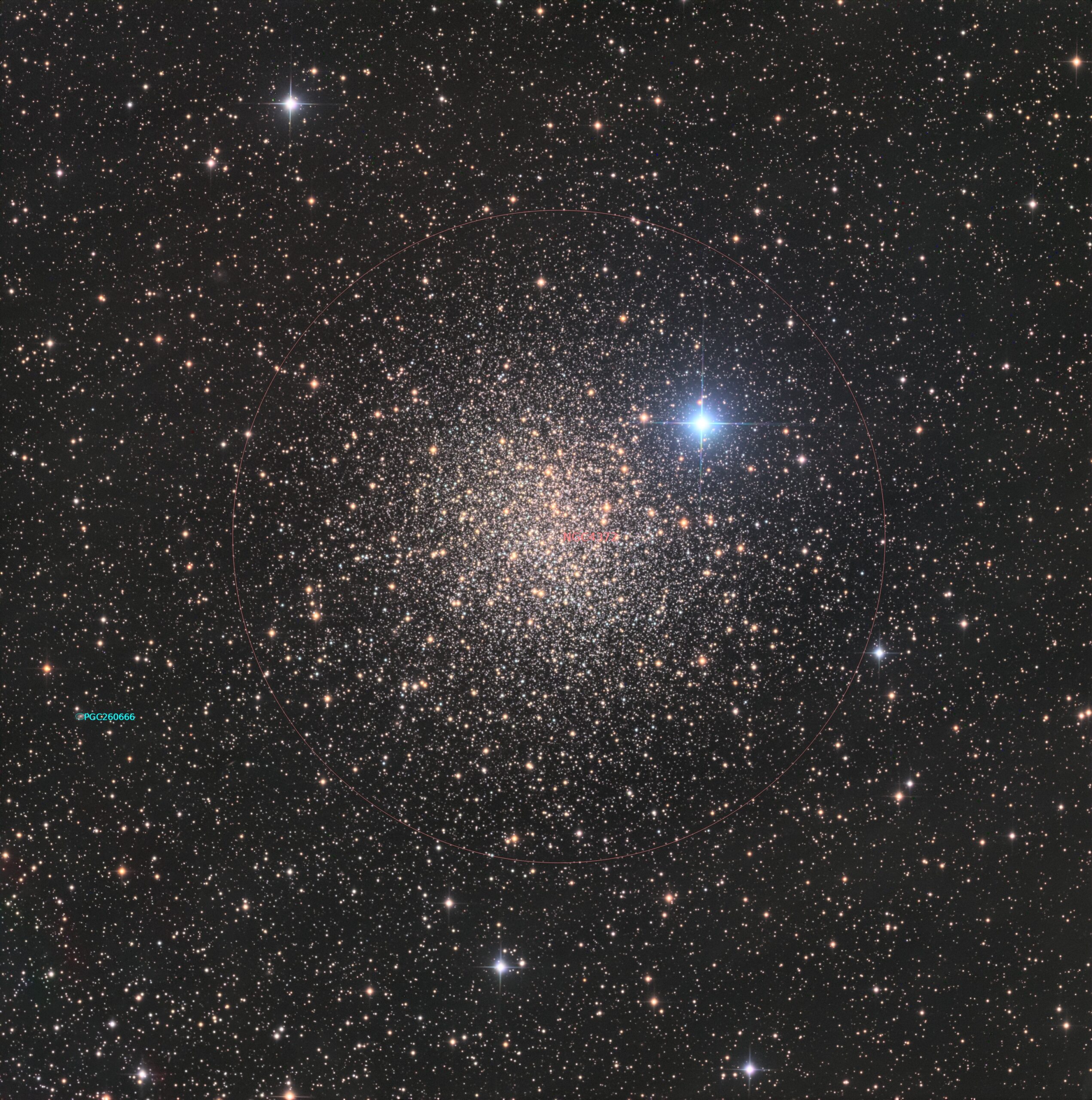
The images were taken with the following equipment (CHI-1 CCD, Telescope Live):
- Date: 2021
- Location: El Sauce Observatory, Chile
- Telescope/Lens: Planwave CDK24
- Focal length [mm]: 3900
- Focal ratio: 6.5
- Mount: Mathis MI-1000/1250
- Camera: FLI Proline 9000
- Filter: LRGB
- Exposure time [min]: 40:40:40:40
- Resolution: 0.62″/px



Leave a reply