

NGC 4236 from my backyard and „Sterntaucher“ observatory
I imaged the barred spiral galaxy NGC 4236 twice over the years, documenting both my growing experience in deep-sky imaging and the evolution of my equipment. My first image was acquired in 2015 from my backyard observatory using a CCD camera and RGB filters. Despite the challenges of imaging from a light-polluted location, the long exposures successfully revealed the galaxy’s elongated structure and its subtle star-forming regions.
In 2018, I revisited the object from my observatory in Krefeld using my dual-rig setup. High-resolution luminance data were captured with one telescope while simultaneous RGB color data were recorded with the second system. Combining these datasets into a final LRGB image significantly improved the visibility of the galaxy’s faint outer structure and enhanced the fine detail throughout its disk.
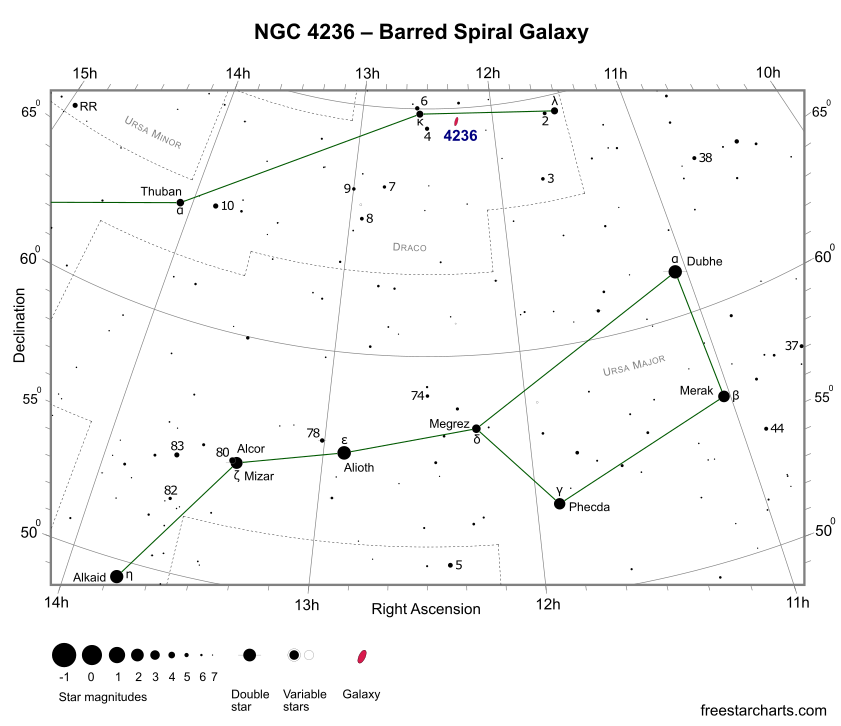
NGC 4236 is located in the constellation Draco at a distance of approximately 11 million light-years. It is one of the largest members of the Messier 81 Group, the nearby collection of galaxies dominated by Messier 81 and Messier 82. Although its linear diameter is comparable to that of the Milky Way, NGC 4236 has a much lower surface brightness, making it a surprisingly challenging target for astrophotography.
The galaxy is classified as a barred spiral galaxy and is viewed almost perfectly edge-on to its disk. Rather than exhibiting bright, well-defined spiral arms, NGC 4236 displays a loose and patchy structure with numerous scattered star-forming regions distributed along its elongated disk. Its central bar is relatively weak, and the galaxy lacks the prominent bulge seen in many larger spirals, giving it a distinctive, delicate appearance.
One of the most interesting characteristics of NGC 4236 is its ongoing but relatively modest rate of star formation. Numerous H II regions are scattered throughout the galaxy, marking locations where young, massive stars have recently formed. These bright nebulae contrast with the galaxy’s diffuse stellar disk and provide valuable information about the evolution of low-density spiral galaxies. Radio observations have also revealed a large reservoir of neutral hydrogen extending beyond the visible disk, providing the raw material for future generations of stars.
Because of its proximity, NGC 4236 has been studied extensively as a representative example of a low surface brightness spiral galaxy. Such galaxies evolve more slowly than grand-design spirals, converting their gas into stars at a relatively modest rate over billions of years. Understanding objects like NGC 4236 helps astronomers investigate how galaxy mass, gas content, and environment influence long-term galactic evolution.
Deep images also reveal numerous faint background galaxies scattered across the field, emphasizing the enormous depth of the universe beyond this nearby member of the M81 Group. The contrast between the diffuse foreground galaxy and these distant island universes adds further scientific and aesthetic interest to the image.
The images obtained in 2015 and 2018 beautifully illustrate the progress in both acquisition techniques and image quality. While the first RGB image successfully recorded the galaxy’s overall appearance, the later LRGB image produced with my dual-rig setup reveals considerably finer structural detail, demonstrating the advantages of combining high-resolution luminance data with simultaneous color imaging for faint deep-sky objects.
For the 2018 data the calibration, registration and the final processing was done with PixInsight. The result was as follows:
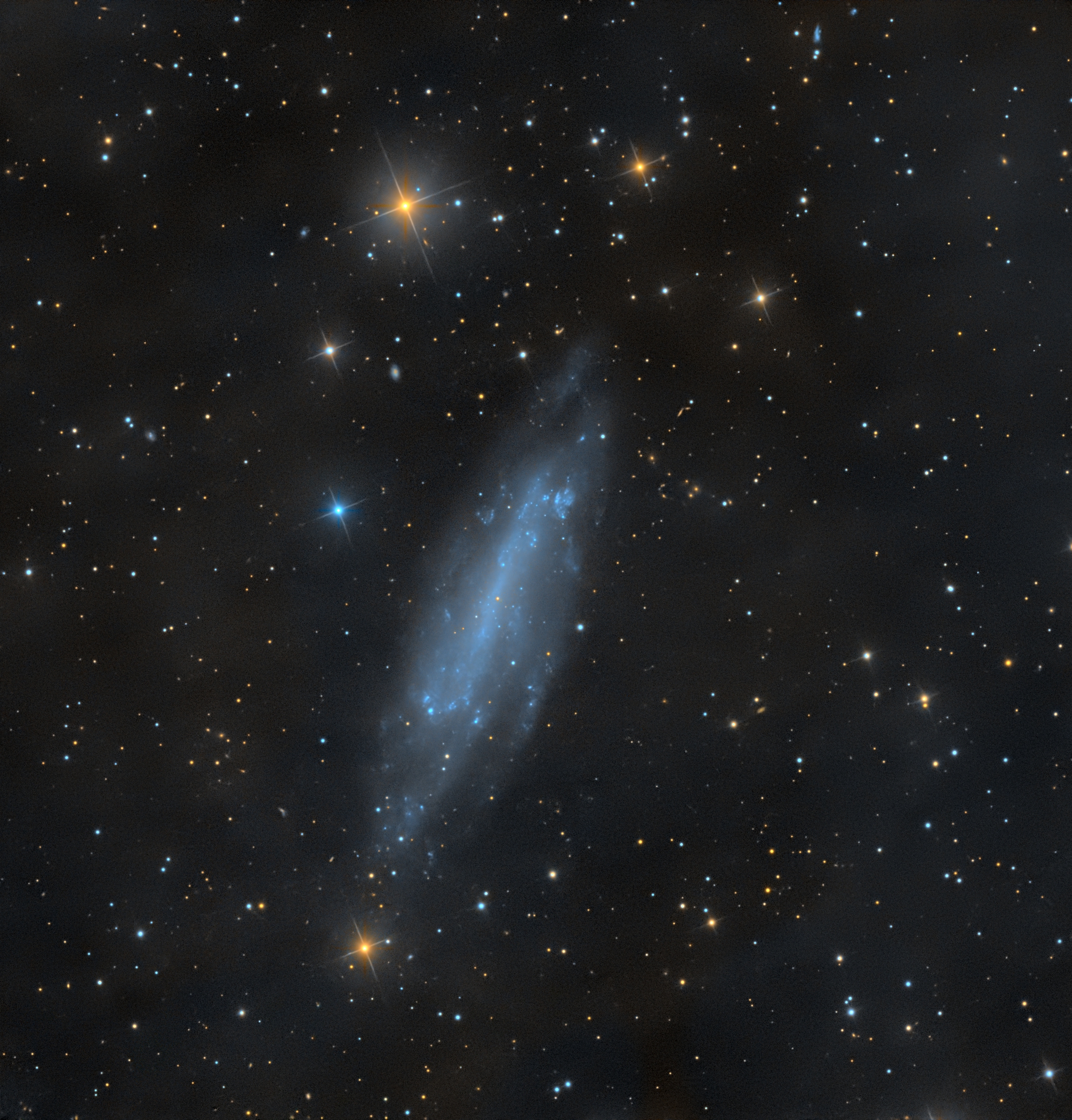
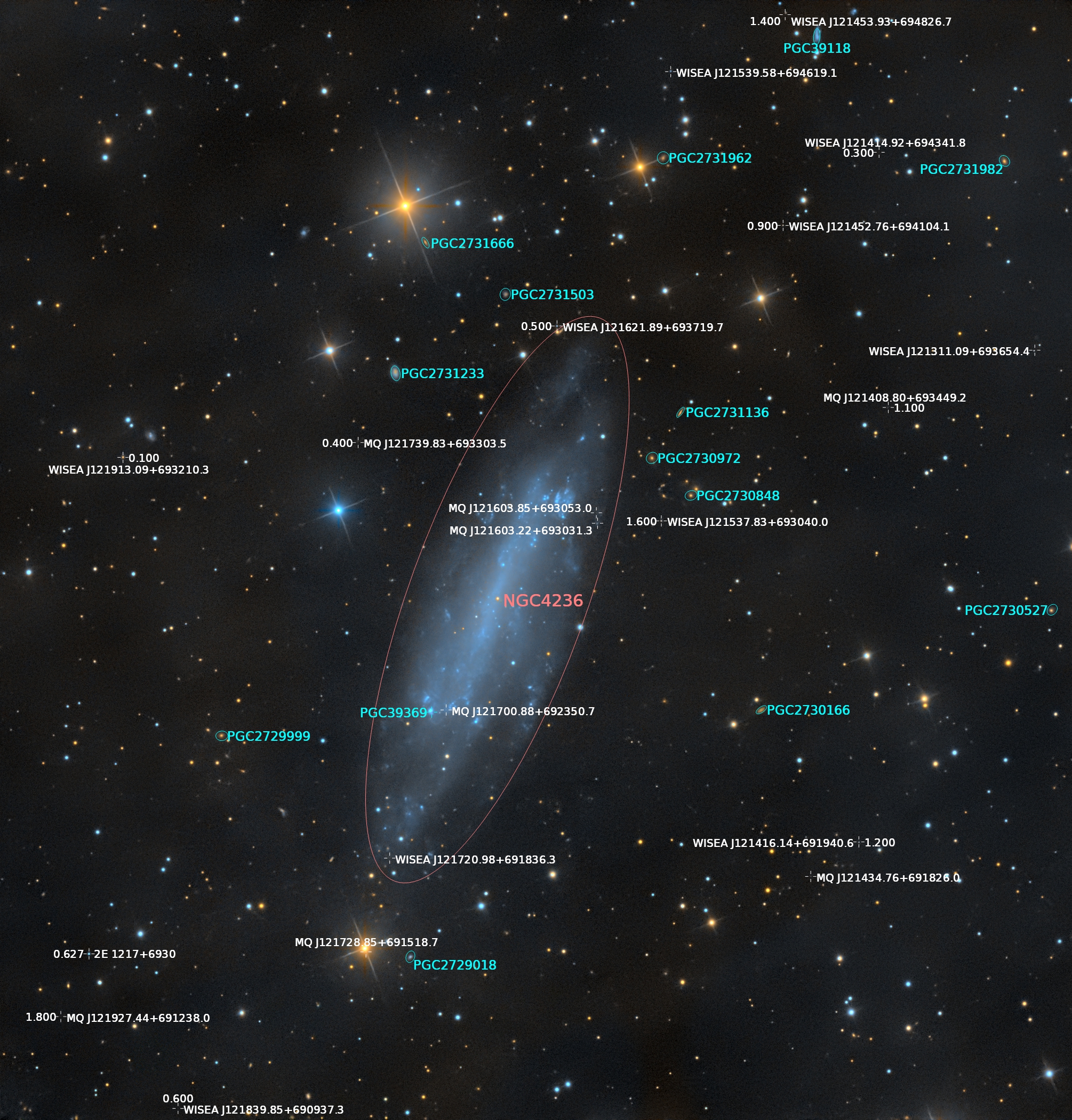
Here is an overview of the used equipment and the exposure times:
- Date: 2018
- Location: Krefeld
- Telescope/Lense: 10″ Newton ohne Namen – TS IS 65 Apo
- Focal length [mm]: 1000 – 420
- Focal ratio: 3.9 – 6.5
- Mount: Skywatcher EQ 8
- Camera: Moravian 8300 FW – QSI 583 WS
- Filter: L – R:G:B
- Exposure time [min]: 375 – 115:120:125
- Resolution: 1.11/px
For the 2015 data the calibration, registration and the final processing was done with PixInsight. The result was as follows:
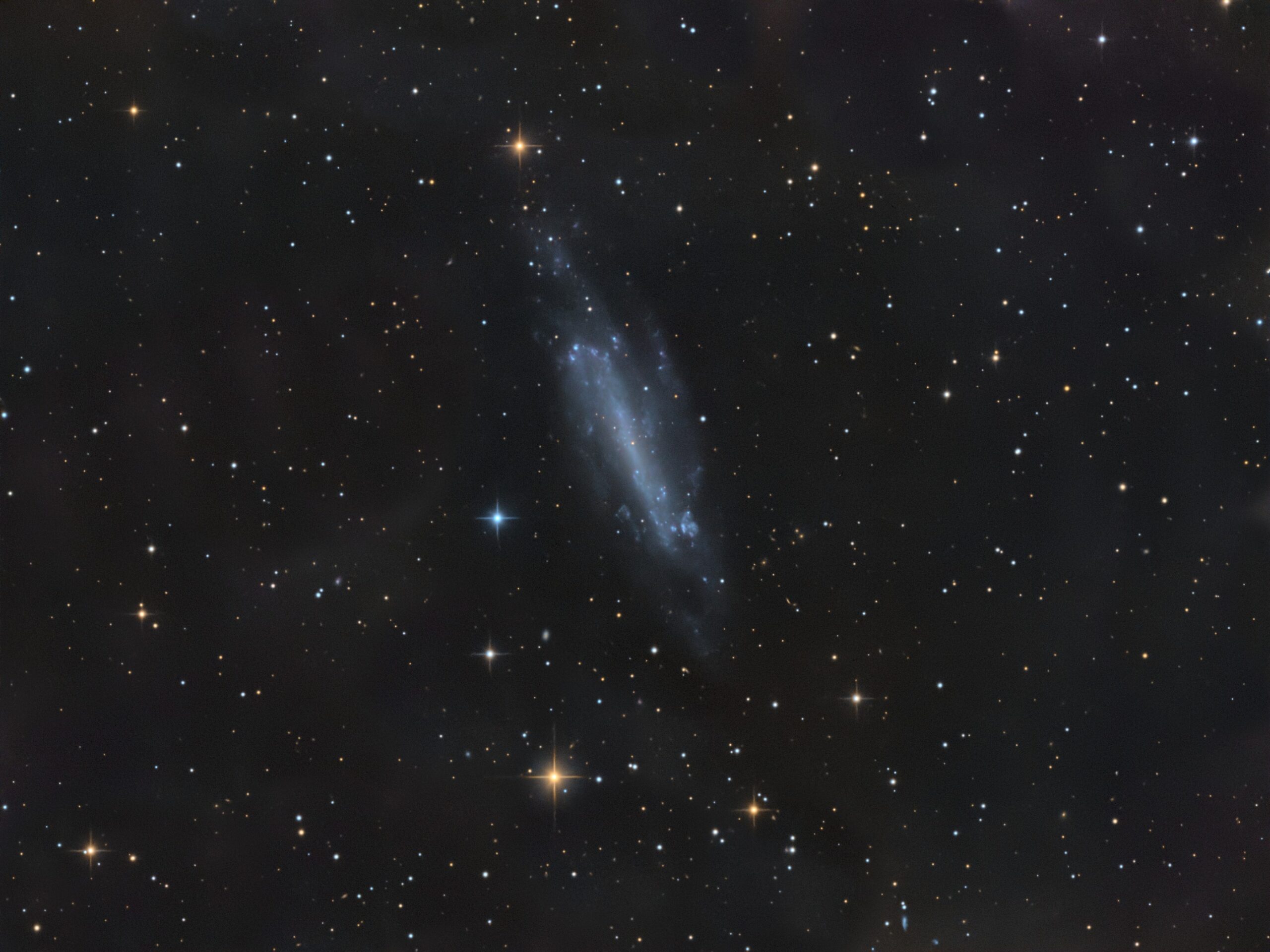
Here is an overview of the used equipment and the exposure times:
- Date: 2015
- Location: Krefeld
- Telescope/Lense: 10″ Newton ohne Namen
- Focal length [mm]: 1000
- Focal ratio: 3.9
- Mount: Losmandy G11
- Camera: Moravian 8300 FW
- Filter: R:G:B
- Exposure time [min]: 60:60:60
- Resolution: 1.11/px



Leave a reply