

NGC 4216 and other galaxies
I imaged the spiral galaxy NGC 4216 twice using very different imaging approaches. In 2022, during a stay at the astrofarm Tivoli in Namibia, I captured a wide-field image of NGC 4216 and the surrounding region. The excellent southern skies and wide field of view allowed not only the galaxy itself to be recorded in great detail but also many of the neighboring galaxies that populate this rich area of the Virgo Cluster.
In 2024, I received a second dataset of NGC 4216 from Telescope Live, acquired with a telescope in Chile. This dataset was taken with a significantly longer focal length, providing a much closer view of the galaxy and revealing finer details within its disk, dust lanes, and surrounding halo structures. An additional highlight of the image is the presence of the supernova SN 2024gy, which was discovered in 2024. Capturing such a transient event adds considerable scientific value to the image, documenting a stellar explosion in a galaxy approximately 55 million light-years away.
NGC 4216 is located in the constellation Virgo at a distance of approximately 55 million light-years. It is one of the brightest spiral galaxies in the Virgo Cluster and is classified as an edge-on barred spiral galaxy. Viewed from Earth at a high inclination, the galaxy displays a striking spindle-shaped appearance dominated by a bright central bulge and an extended disk crossed by prominent dust lanes.
One of the most fascinating aspects of NGC 4216 is its role as an example of galactic accretion and interaction within a dense cluster environment. Deep professional observations have revealed numerous faint stellar streams and tidal features surrounding the galaxy. These structures are thought to be the remnants of smaller satellite galaxies that have been gravitationally disrupted and absorbed over time. Such tidal streams provide direct evidence of the hierarchical growth of galaxies and offer valuable insight into how large galaxies assemble their mass.
The galaxy itself contains a rich system of dust lanes, subtle star-forming regions, and an extensive stellar halo. Because it is viewed nearly edge-on, its internal structure is particularly well suited for studying the distribution of stars and interstellar dust within spiral galaxies. The surrounding field is also rich in smaller Virgo Cluster members, many of which are visible in deep images and contribute to the scientific and visual interest of the region.
The combination of the wide-field Namibian image from 2022 and the higher-resolution Chilean dataset from 2024 provides a comprehensive view of NGC 4216, from its place within the Virgo Cluster down to the fine details of its galactic disk. Together, the images highlight both the beauty of this elegant spiral galaxy and the dynamic processes that continue to shape it through interactions and accretion over cosmic timescales.
For the Telescope Live data the calibration and registration and the final processing was done with PixInsight. The result was as follows:
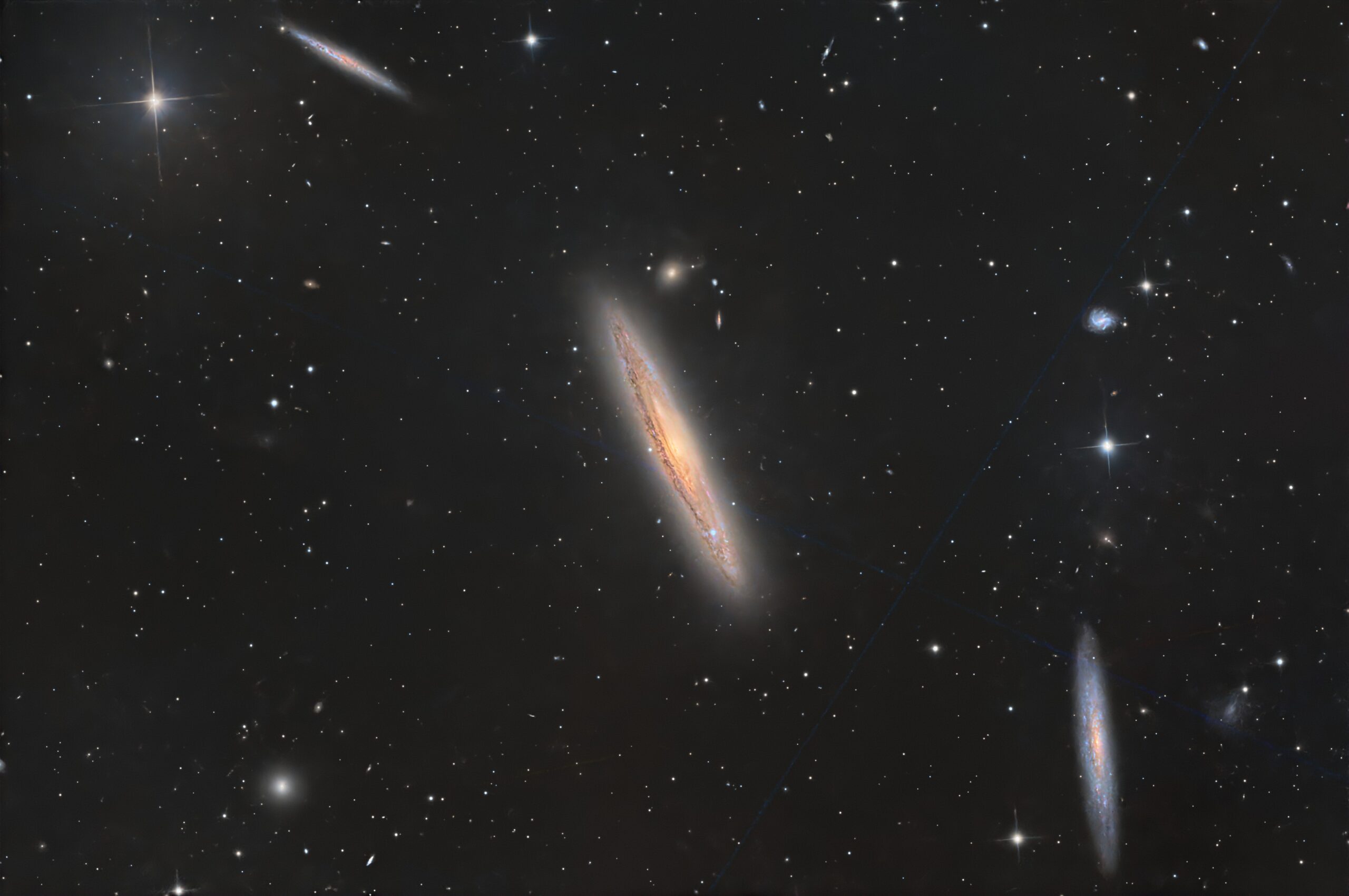
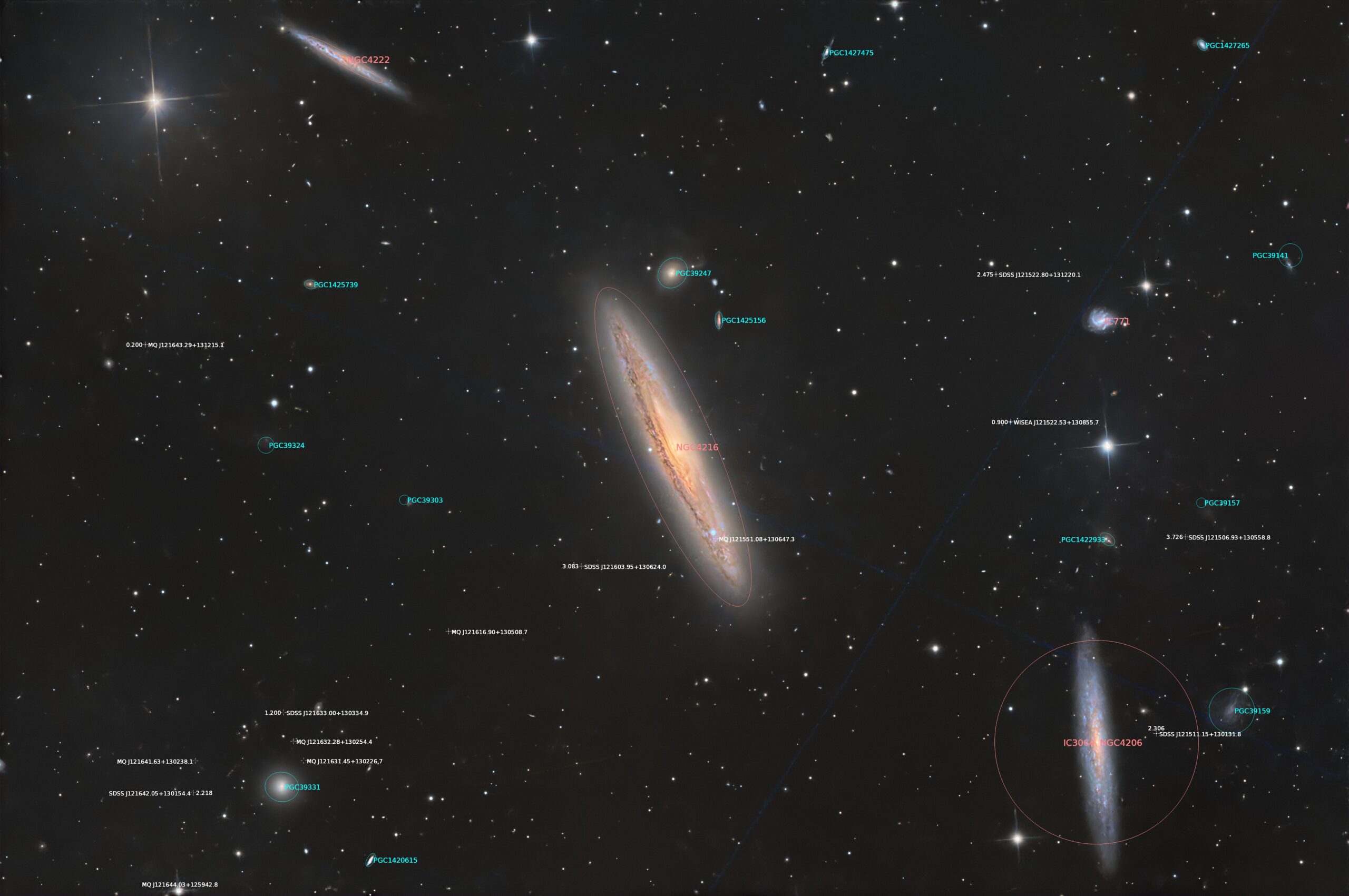
In this image were a lot of quasars. The most distant one (see annotation) is:
SDSS J121506.93+130558.8 with a redshift of 3.726 and an apparent magnitude of magv = 21.29
The images were taken with the following eqipment:
- Date: 2024
- Location: El Sauce Observatory, Chile
- Telescope: Planwave CDK24
- Focal length [mm]: 3962
- Focal ratio: 6.5
- Mount: Mathis MI-1000/1250
- Camera: QHY 600M Pro
- Filter: L:R:G:B
- Exposure time [min]: 15:15:15:15
- Resolution: 0.39″/px (2×2 binning)
For the 2022 data the calibration and registration and the final processing was done with PixInsight. The result was as follows:
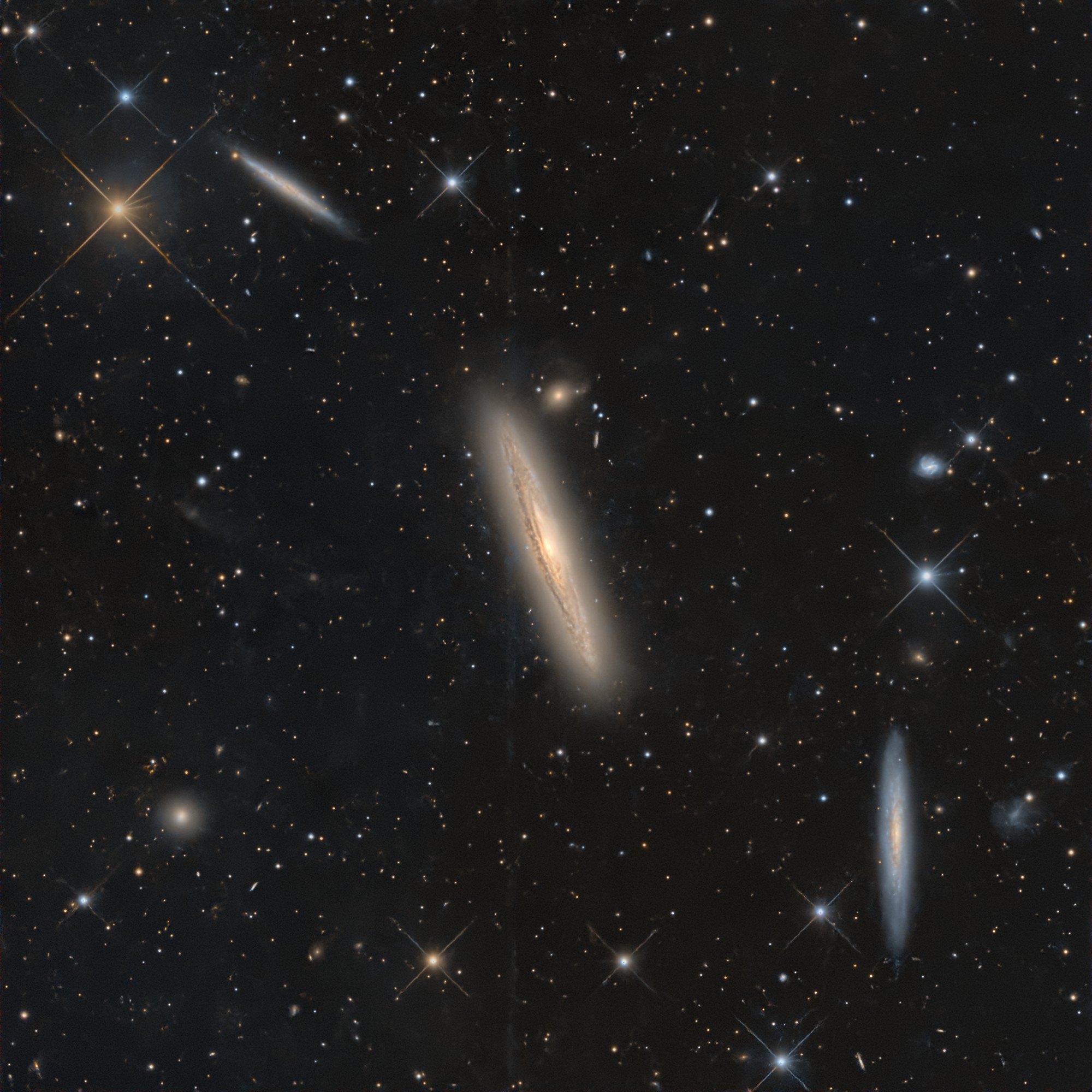
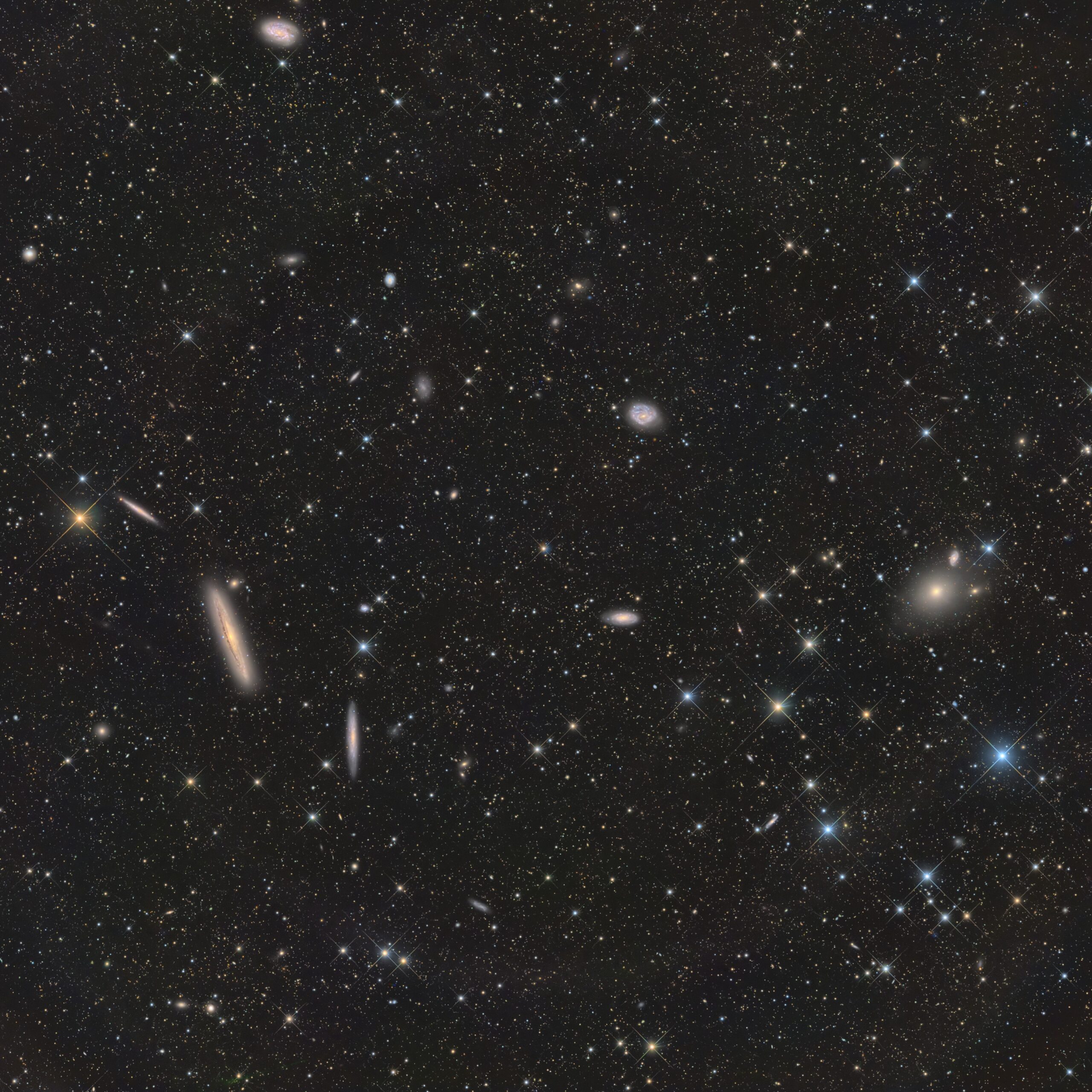
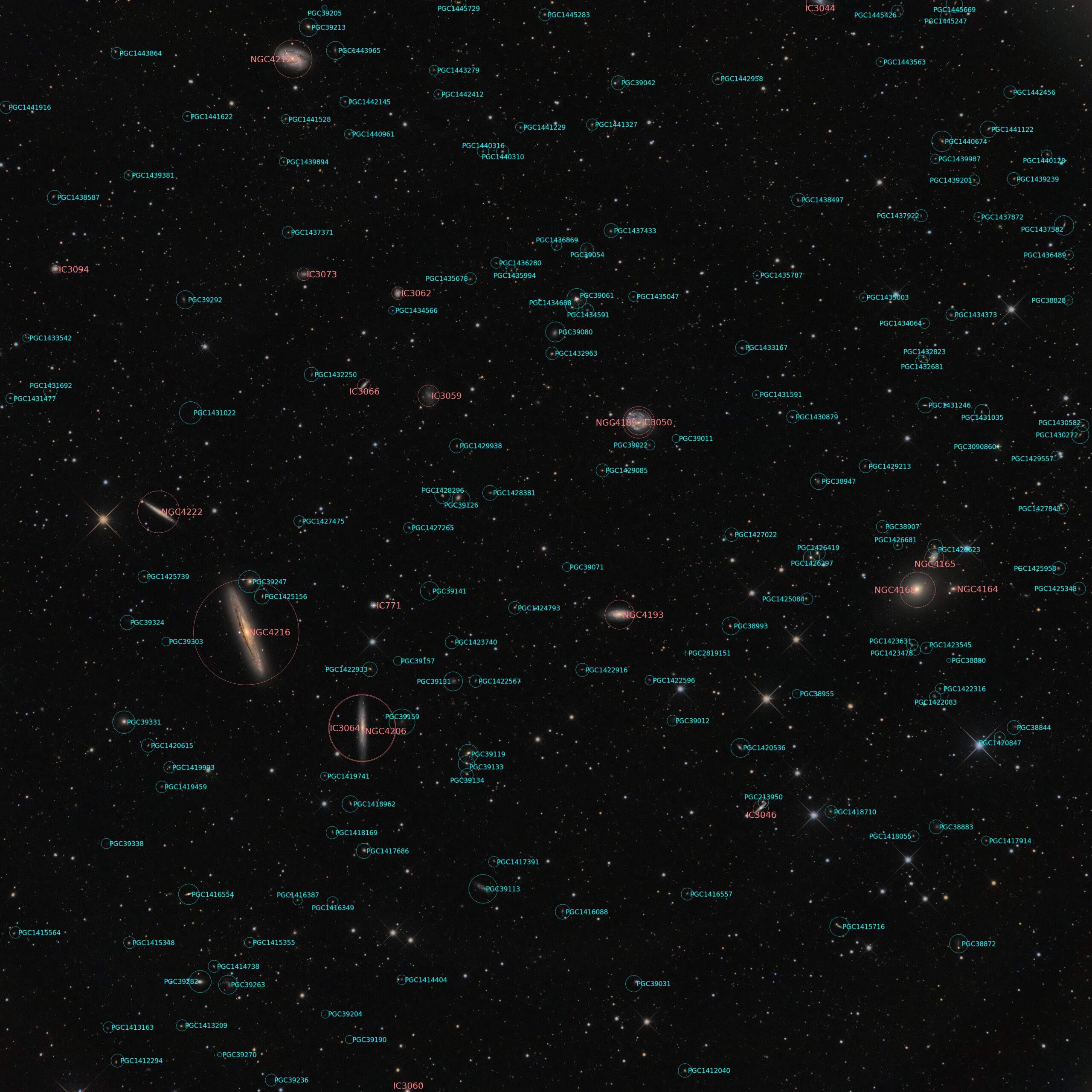
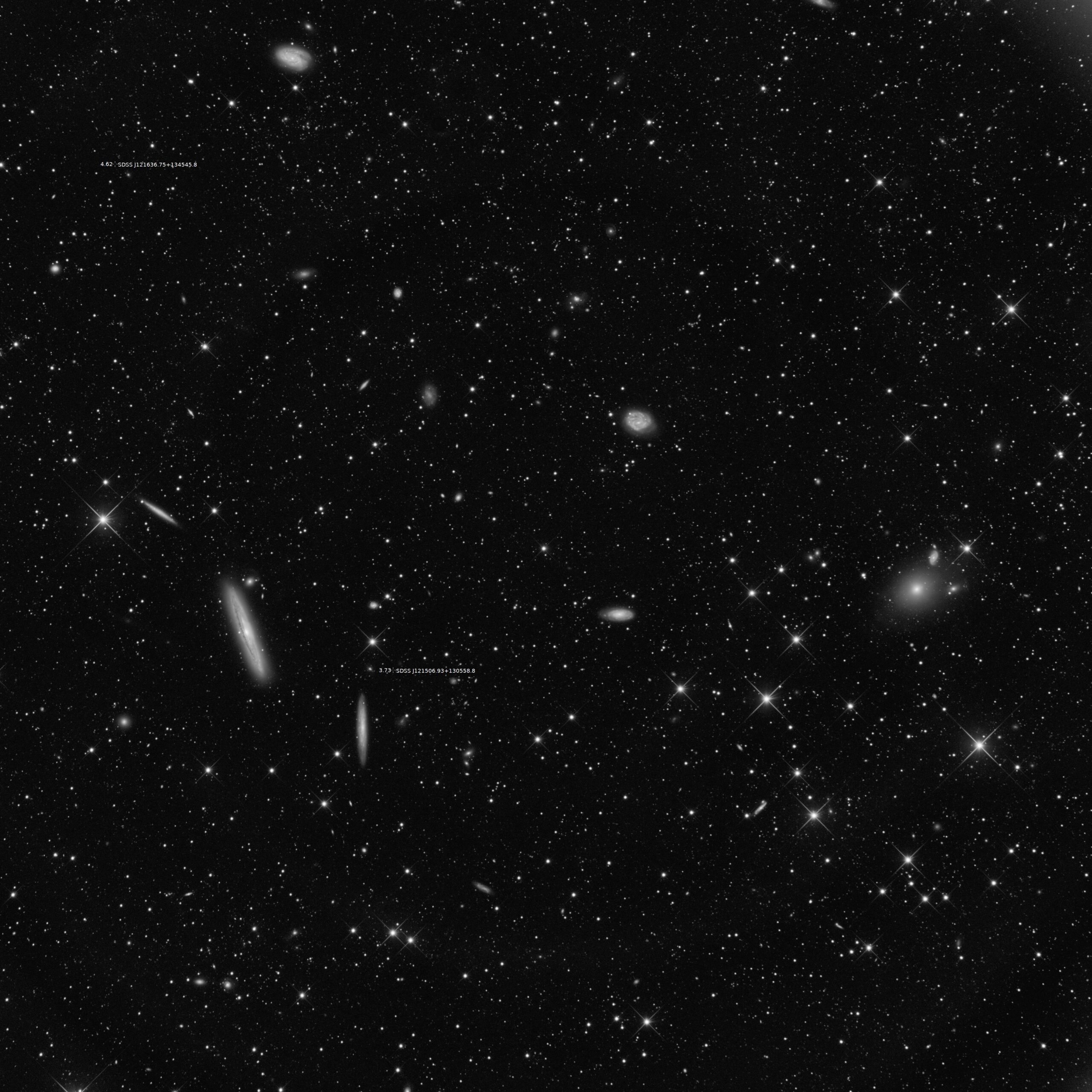
In this image were a lot of quasars. The two most distant ones (see annotation) are:
SDSS J121636.75+134545.7 with a redshift of 4.615 and an apparent magnitude of magv = 23.0
SDSS J121506.93+130558.8 with a redshift of 3.726 and an apparent magnitude of magv = 21.29
The images were taken with the following equipment:
- Date: 2022
- Location: Tivoli, Namibia
- Telescope: ASA 16″ Astrograph
- Focal length [mm]: 1440
- Focal ratio: 3.6
- Mount: ASA DDM85
- Camera: Moravian G4 16000
- Filter: L:R:G:B
- Exposure time [min]: 180:40:40:40
- Resolution: 1.29″/px



Leave a reply