

NGC 3953 from my own „Sterntaucher“ observatory
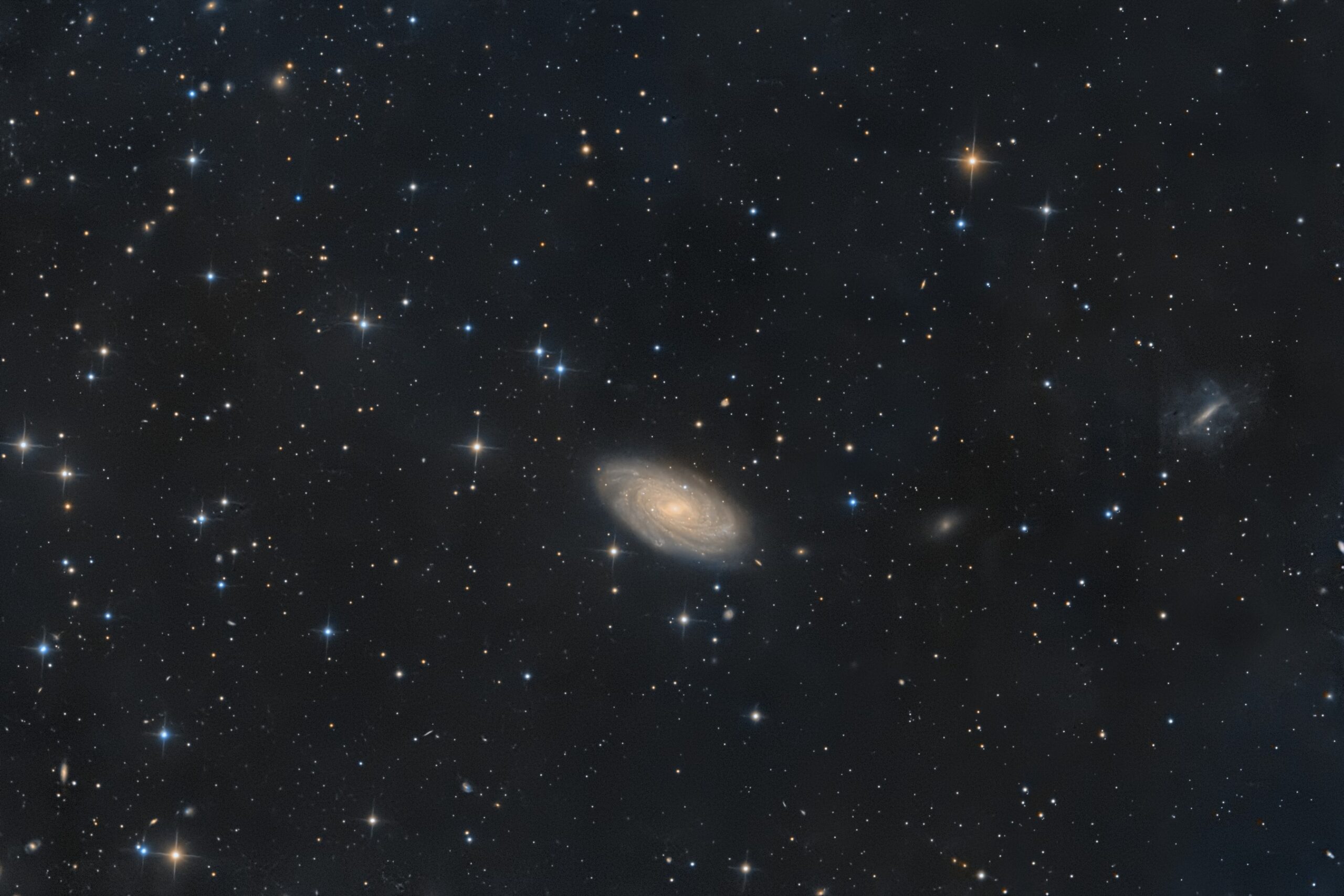
In 2022, I imaged the spiral galaxy NGC 3953 from my observatory in Krefeld using a dual-rig setup. The luminance data were captured with a higher-resolution optical system, while the RGB color information was recorded simultaneously with a second telescope. For the final LRGB image, the RGB data were carefully upscaled to match the resolution of the luminance frames, allowing the detailed structural information from the luminance channel to define the image while preserving accurate color from the RGB dataset.
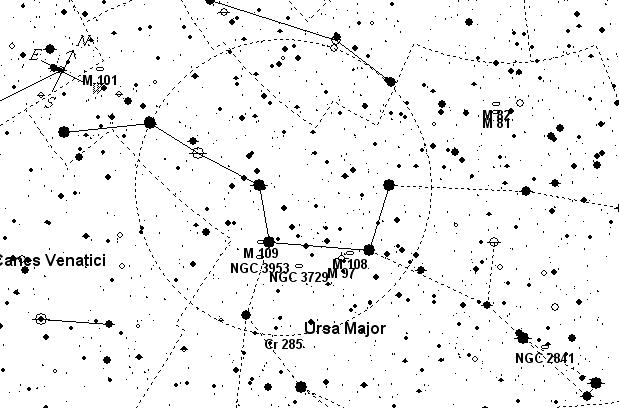
Scientifically, NGC 3953 is a prominent barred spiral galaxy located in the constellation Ursa Major, approximately 55 million light-years away. Classified as SBbc, it is one of the largest and brightest members of the M109 Group, a collection of galaxies gravitationally associated with the nearby spiral galaxy Messier 109.
NGC 3953 exhibits a bright central bar surrounded by a well-defined system of spiral arms that wind outward through the galactic disk. Deep images reveal an intricate network of dark dust lanes, numerous H II regions, and subtle star-forming complexes embedded within the arms. The contrast between the warm yellowish bulge and the bluish spiral arms creates a visually striking appearance that makes the galaxy a rewarding target for high-resolution imaging.
One of the most interesting scientific aspects of NGC 3953 is its role in studies of galactic dynamics and dark matter. Measurements of the galaxy’s rotation curve show that, like many spiral galaxies, the outer regions rotate faster than would be expected from the visible matter alone. This provides further evidence for the presence of a substantial dark matter halo surrounding the galaxy. The galaxy’s well-defined structure and relatively undisturbed appearance make it a valuable object for investigating how visible and dark matter contribute to the dynamics of spiral galaxies.
NGC 3953 is also notable for having hosted the supernova SN 2001dp, which was discovered in 2001. Such events contribute to the enrichment of the interstellar medium by dispersing heavy elements into the galaxy, providing material for future generations of stars and planetary systems.
Deep imaging often reveals faint extensions beyond the bright spiral arms, along with numerous distant background galaxies scattered across the field. The galaxy’s moderate inclination allows both the central bar and the spiral structure to be observed simultaneously, offering an excellent view of the internal architecture of a barred spiral system.
The combination of high-resolution luminance data and carefully upscaled RGB color information allowed the final LRGB image to capture both the delicate dust structures and the subtle color variations throughout the galaxy. The result highlights the intricate interplay between star formation, dust, and stellar populations within one of the most attractive spiral galaxies in Ursa Major.
Data calibration and registration and the final processing was done with PixInsight.
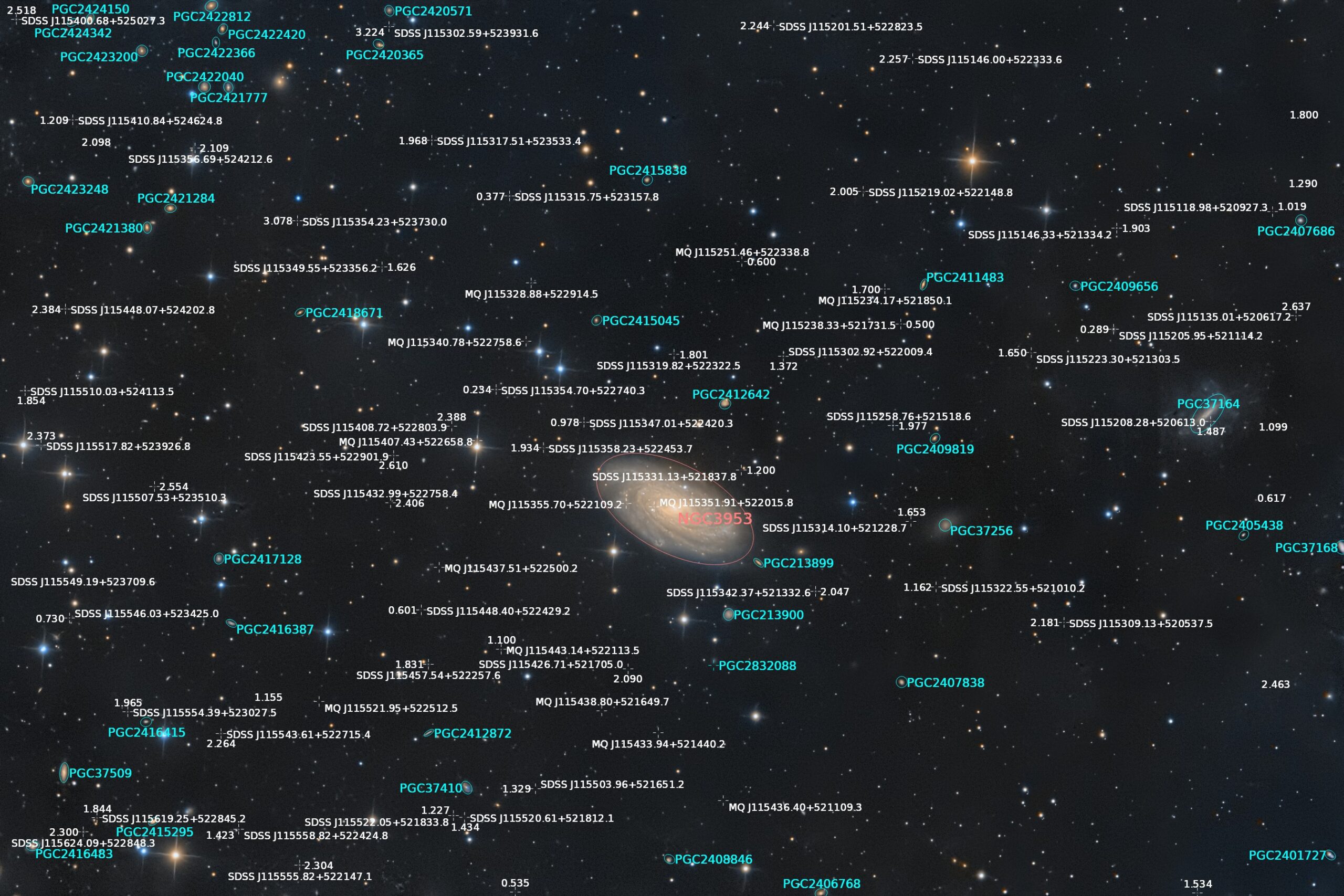
Here is an overview of the used equipment and the exposure times:
- Date: March 2022
- Location: Krefeld
- Telescope/Lens: 10″ Newton ohne Namen – TSQ-65ED Apo
- Focal length [mm]: 1000 – 420
- Focal ratio: 3.9 – 6.5
- Mount: Skywatcher EQ8
- Camera: QSI 583WS – Moravian G3 16200 FW
- Filter: L – RGB
- Exposure time [min]: 854 – 170:175:225
- Resolution: 1.11″/px – 2.95″/px



Leave a reply