

NGC 3532 (The Wishing Well Cluster)
In 2024, I processed a dataset of the beautiful open cluster NGC 3532 that was acquired at the VdS Remote Observatory in Hakos, Namibia, by Jan Beckmann. While the original observations were obtained by Jan, all calibration, registration, and final image processing were performed by me. The exceptional sky quality at Hakos and the high-quality instrumentation of the VdS observatory provided an excellent foundation for a detailed image of this remarkable star cluster.
This was not my first encounter with NGC 3532. In 2023, I had already received a dataset of the same object from Telescope Live, acquired with professional equipment in Australia. Having access to datasets from two premier southern hemisphere observing sites offered an interesting opportunity to compare both the imaging data and the different processing approaches that could be applied to this rich stellar field.
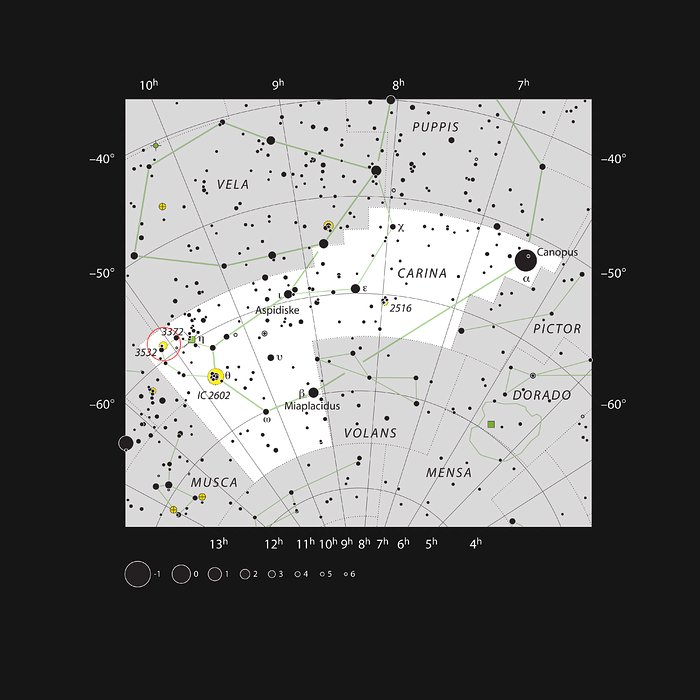
NGC 3532 is located in the constellation Carina at a distance of approximately 1,300 light-years. It is one of the brightest and most impressive open clusters in the southern sky and is often known as the Wishing Well Cluster. The nickname originates from its appearance in binoculars and small telescopes, where the numerous bright stars resemble silver coins glittering at the bottom of a wishing well.
The cluster is estimated to be around 300 million years old, making it significantly older than many of the young star clusters associated with nearby nebulae. It contains several hundred confirmed member stars spanning a wide range of masses and evolutionary stages. Deep images reveal a striking mixture of hot blue-white stars, yellow stars similar to our Sun, and several evolved orange and red giant stars that provide beautiful color contrast throughout the field.
From a scientific perspective, NGC 3532 is particularly important because it serves as an excellent laboratory for studying stellar evolution. Since all cluster members formed from the same molecular cloud at roughly the same time and distance, differences between the stars are primarily due to their masses. This allows astronomers to test theoretical models of stellar evolution with great precision. The cluster has also been used as a calibration target for photometric and astrometric studies because of its rich stellar population and relatively well-determined distance.
One of the most fascinating aspects of NGC 3532 is the extraordinary density of stars visible in deep images. The cluster lies against a rich Milky Way background, producing a field crowded with countless stars of varying brightness and color. Numerous faint background stars and distant stellar associations add further depth to the image, making it one of the most visually rewarding open clusters in the sky.
The datasets from both Telescope Live and the VdS Remote Observatory allowed the beauty and complexity of NGC 3532 to be captured in remarkable detail. The final image highlights the rich stellar population, subtle color variations, and dazzling concentration of stars that have made the Wishing Well Cluster a favorite target for observers and astrophotographers alike.
Data calibration and registration and the final processing was done with PixInsight. The result was as follows:
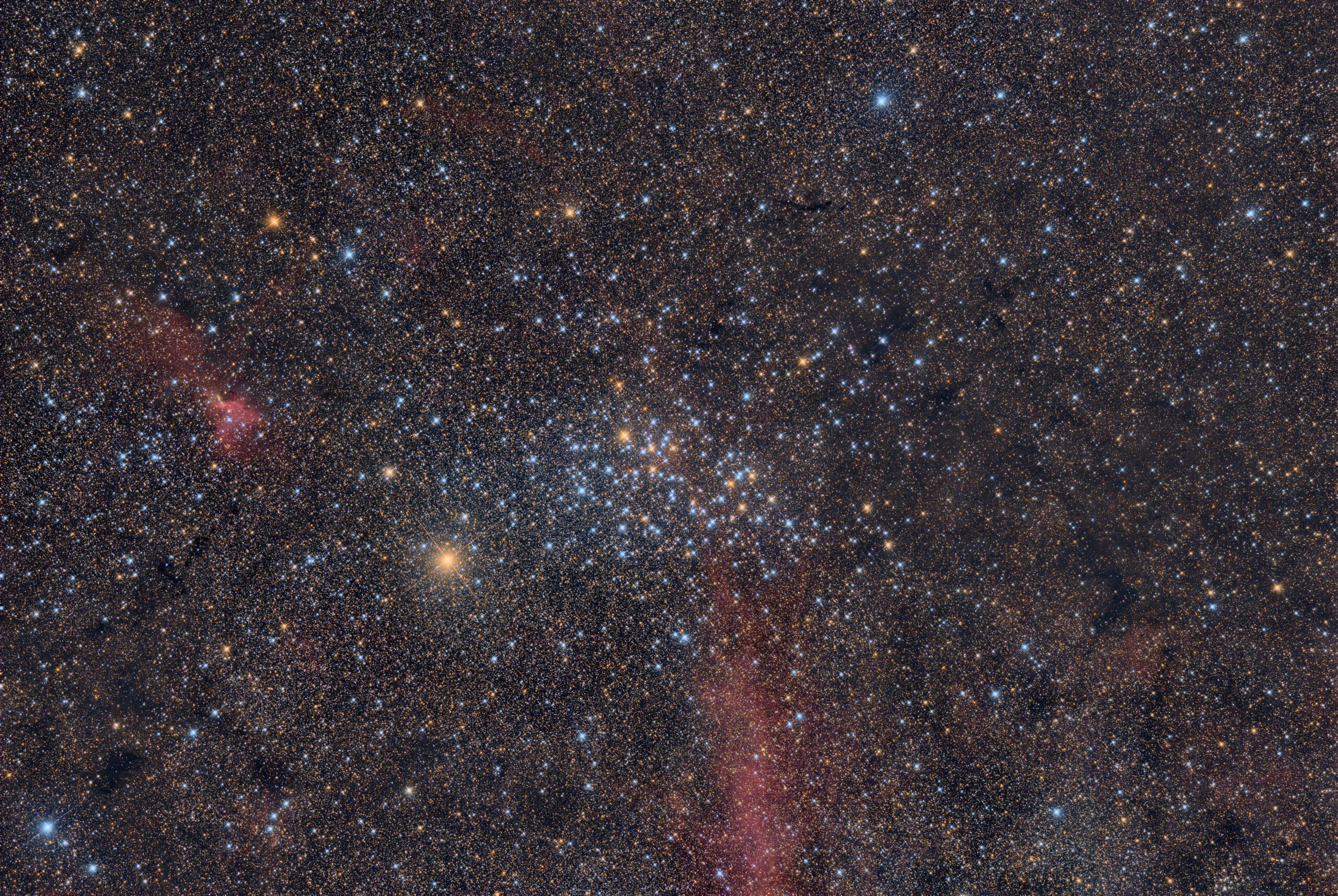
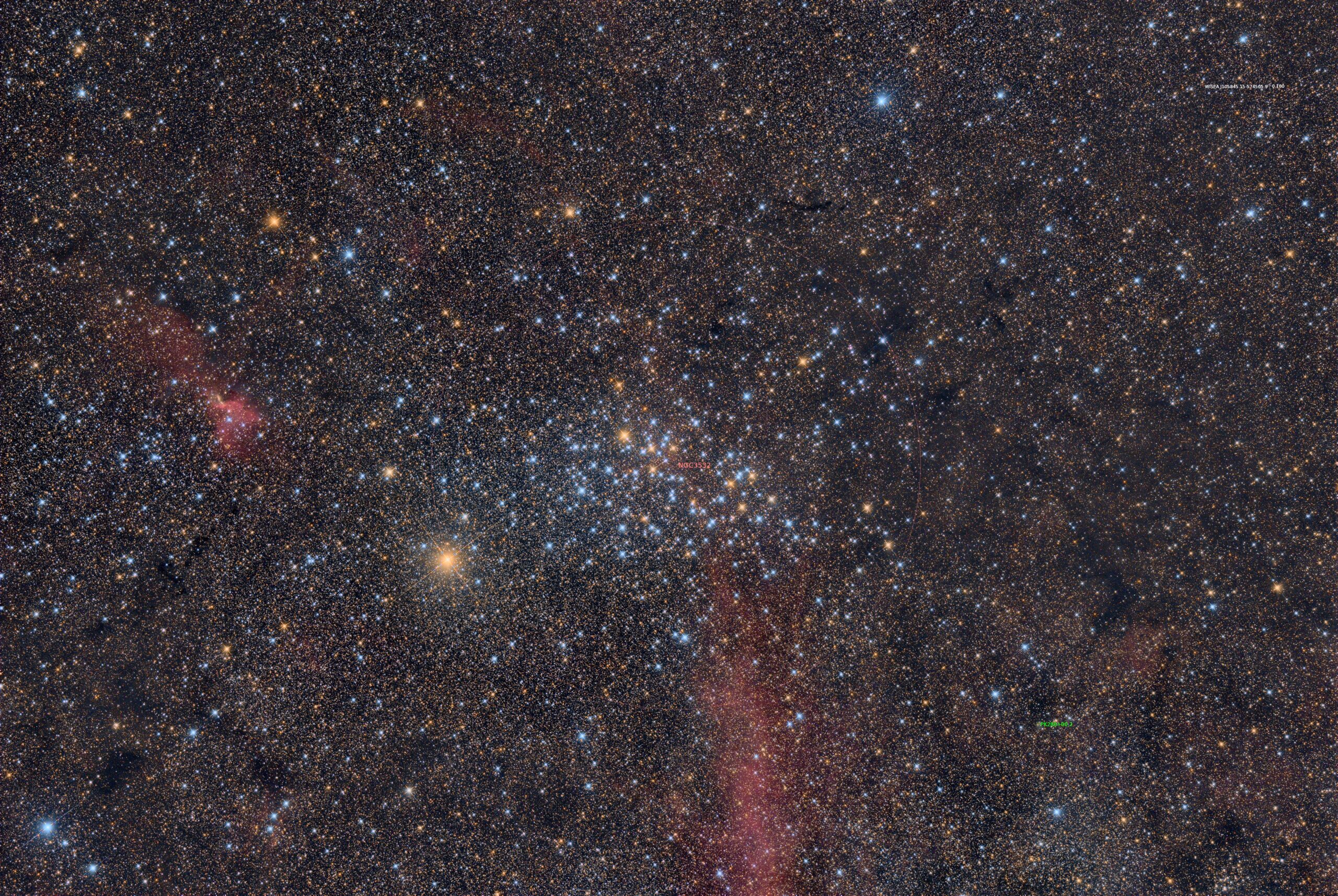
The images were taken with the following equipment:
- Date: 2024
- Location: Hakos, Namibia
- Telescope/Lens: Takahashi Epsilon 160D
- Focal length [mm]: 530
- Focal ratio: 3.3
- Mount: 10Micron GM 3000
- Camera: Lacerta 2600C
- Filter: OSC
- Exposure time [min]: 39
- Resolution: 1.45″/px
For the 2023 data the calibration and registration and the final processing was done with PixInsight. The result was as follows:
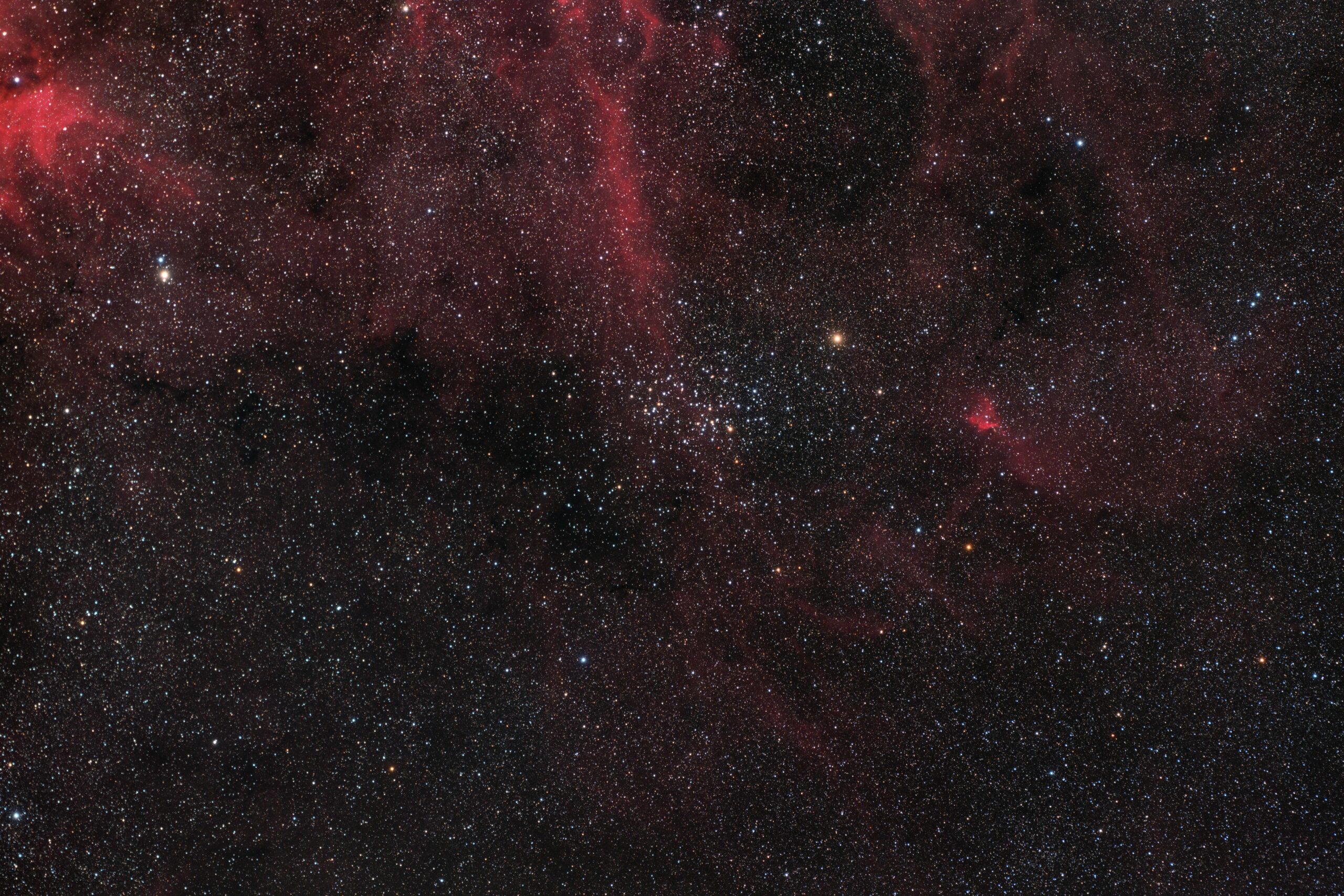
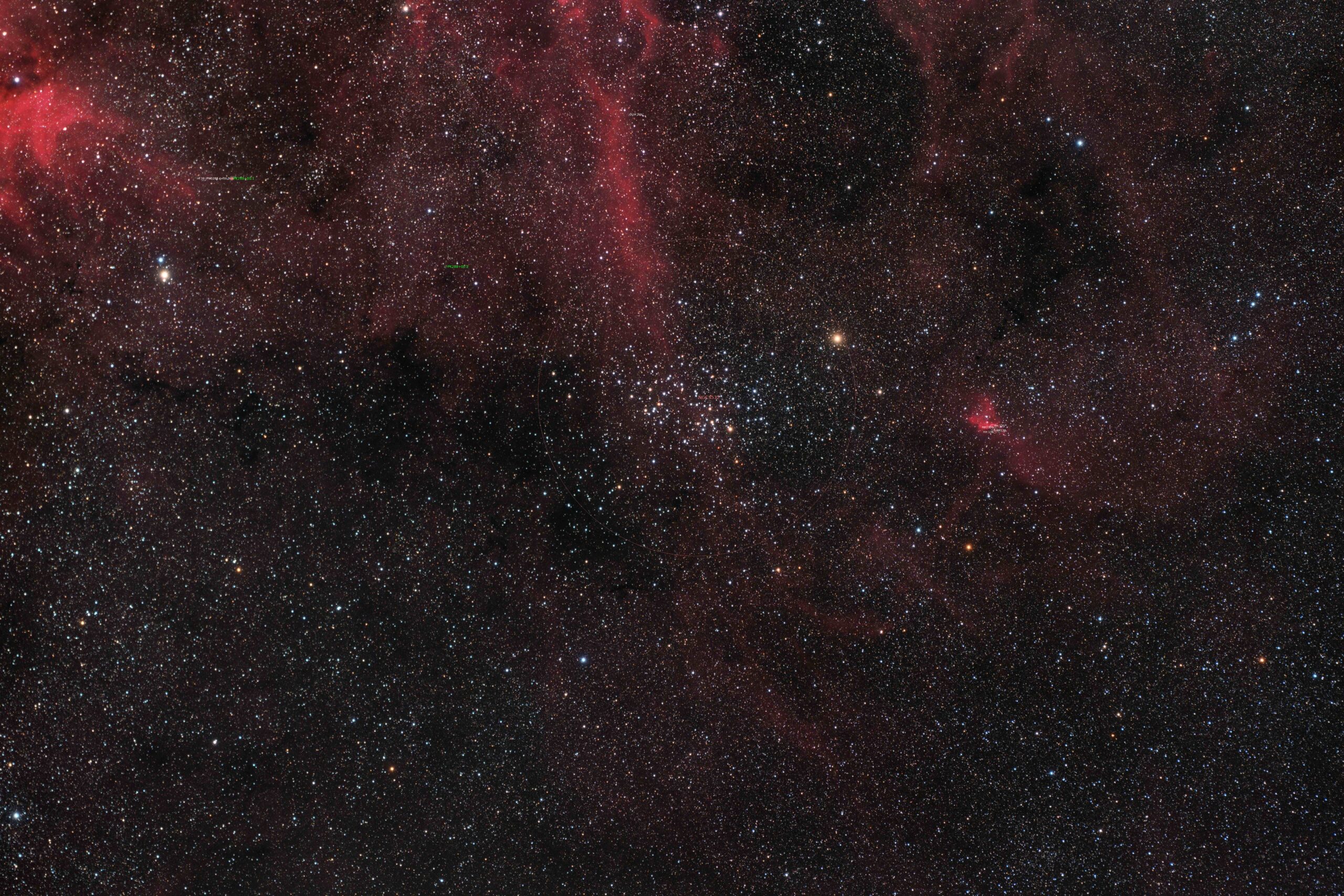
NGC 3532 annotated
The images were taken with the following equipment (AUS-2 CCD, Telescope Live):
- Date: 2023
- Location: Heaven’s Mirror Observatory, Australia
- Telescope/Lens: Takahashi FSQ-106ED
- Focal length [mm]: 390
- Focal ratio: 3.6
- Mount: Paramount MX+
- Camera: QHY 600M Pro
- Filter: L:R:G:B:Hα
- Exposure time [min]: 12:12:12:12:30
- Resolution: 1.46″/px



Leave a reply