

NGC 3372 (Eta-Carina-Nebula)
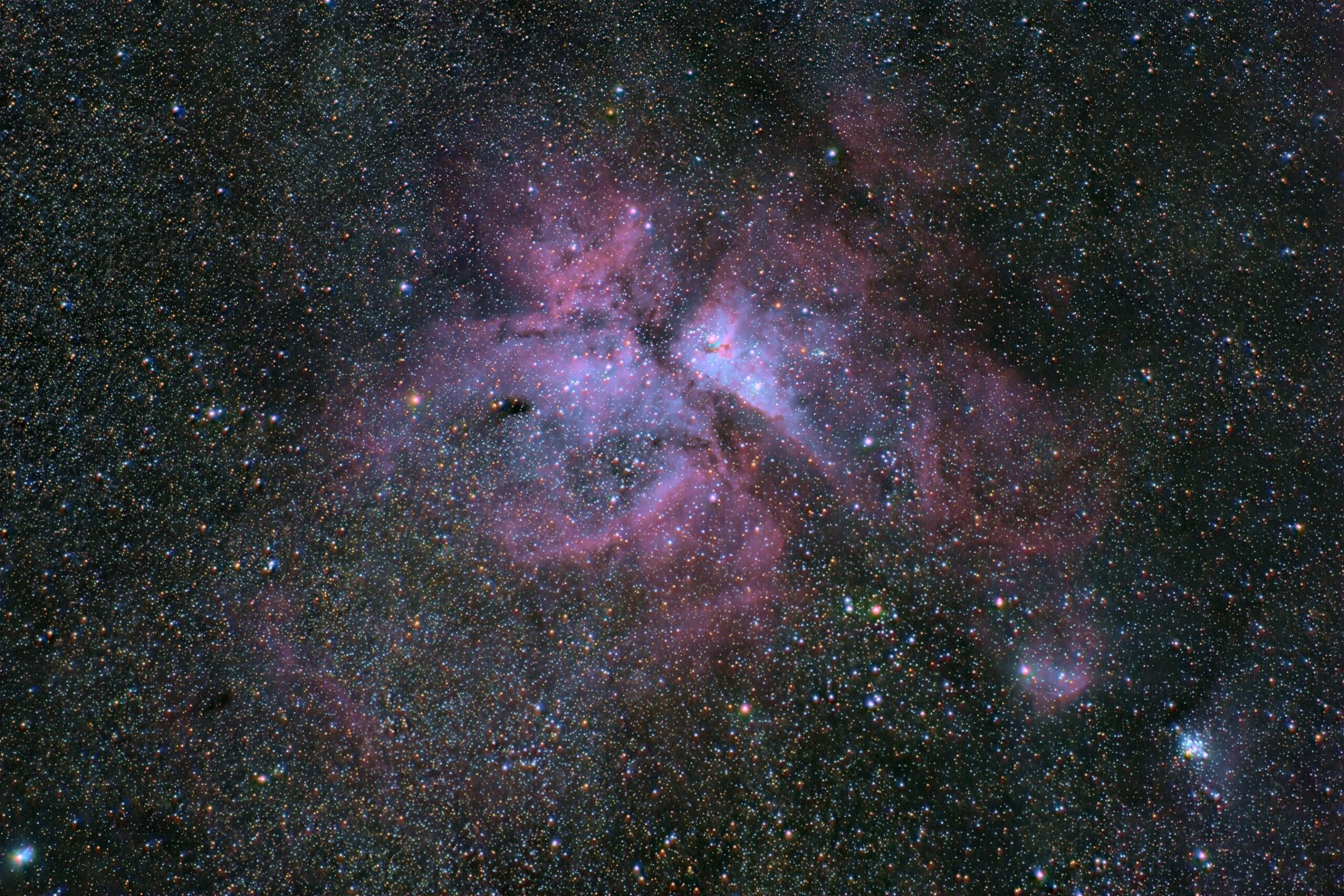
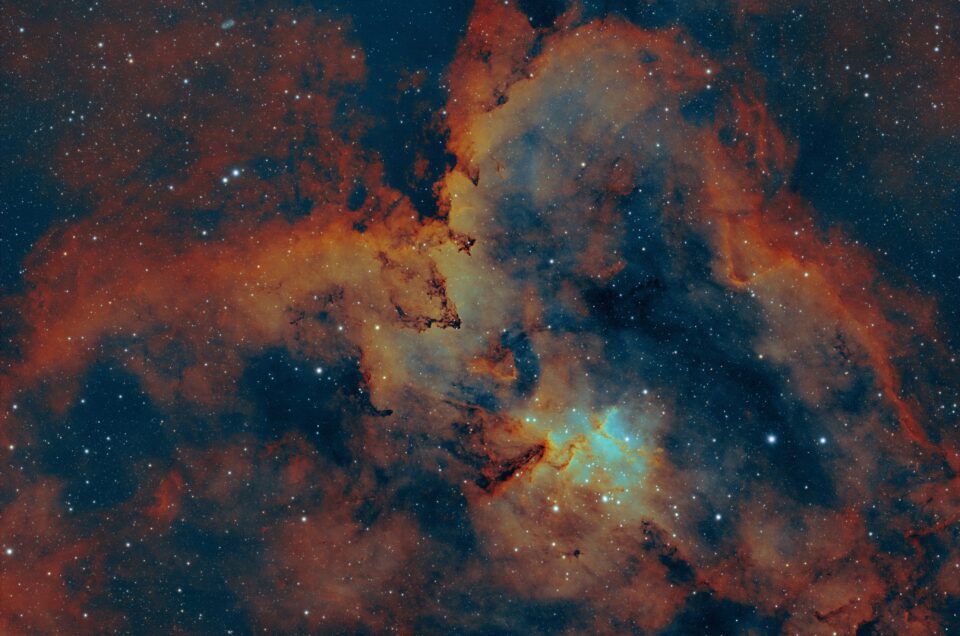
I imaged NGC 3372 three times over the years, each time during a stay at the astrofarm Tivoli in Namibia under the magnificent southern skies. My first image was taken in 2006 using a simple telephoto lens and a modified DSLR camera. In 2008, I returned to the object with the same camera but equipped with a wide-angle lens, allowing me to capture a much larger portion of the surrounding nebula and the rich Milky Way star fields. The most recent image was acquired in 2015, when I used a telephoto lens together with a CCD camera to create a detailed HRGB image, combining hydrogen-alpha data with broadband RGB exposures.
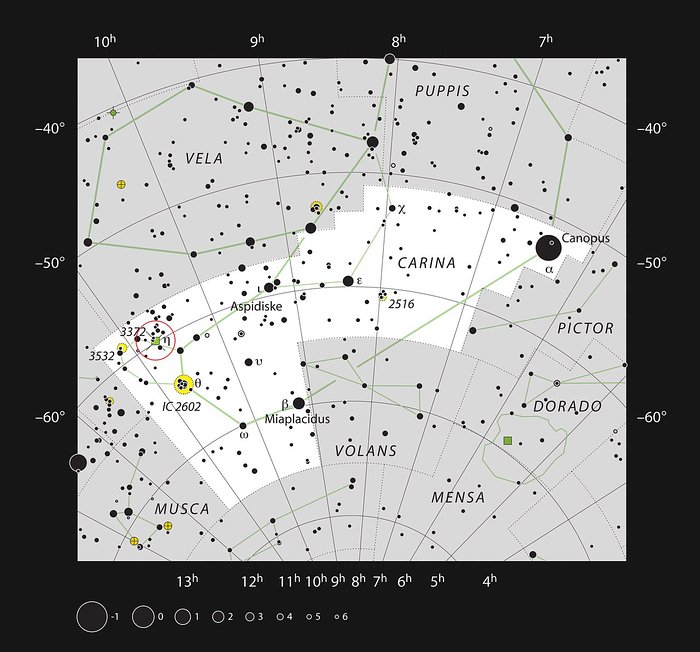
The Carina Nebula is one of the largest and most active star-forming regions in the Milky Way. Located approximately 7,500 light-years away in the constellation Carina, it spans more than 300 light-years and contains vast clouds of glowing hydrogen, dark dust lanes, young star clusters, and numerous massive stars. Its enormous size and brightness make it one of the most spectacular nebulae in the entire sky.
At the heart of the nebula lies the extraordinary stellar system Eta Carinae, one of the most massive and luminous stars known. Eta Carinae is famous for its dramatic outburst during the nineteenth century, when it briefly became one of the brightest stars in the sky. The star is believed to be nearing the end of its life and is expected to explode as a supernova or even a hypernova sometime in the astronomical future. Surrounding Eta Carinae is the remarkable Homunculus Nebula, formed from material ejected during its giant eruption.
The Carina Nebula also contains several young star clusters, including Trumpler 14, Trumpler 15, and Trumpler 16. These clusters host numerous hot O-type stars whose intense ultraviolet radiation and stellar winds sculpt the surrounding gas into pillars, cavities, shock fronts, and intricate filamentary structures. Deep images reveal dark dust clouds silhouetted against the glowing hydrogen background, providing dramatic evidence of ongoing star formation.
From a scientific perspective, NGC 3372 serves as a nearby laboratory for studying the birth and evolution of massive stars. The region contains stars in virtually every stage of formation and evolution, from dense molecular clouds and protostars to evolved supergiants. The powerful stellar winds and radiation emitted by these stars continuously reshape the nebula and influence future generations of star formation.
Comparing my images from 2006, 2008, and 2015 illustrates not only the extraordinary beauty of the Carina Nebula but also my own progression in astrophotography. From a simple DSLR and telephoto lens to a dedicated CCD-based HRGB image, each version revealed more of the nebula’s immense complexity, making NGC 3372 one of the most rewarding southern-sky objects I have ever photographed.
The data calibration, registration and final processing was done with PixIsight. The result is shown below:
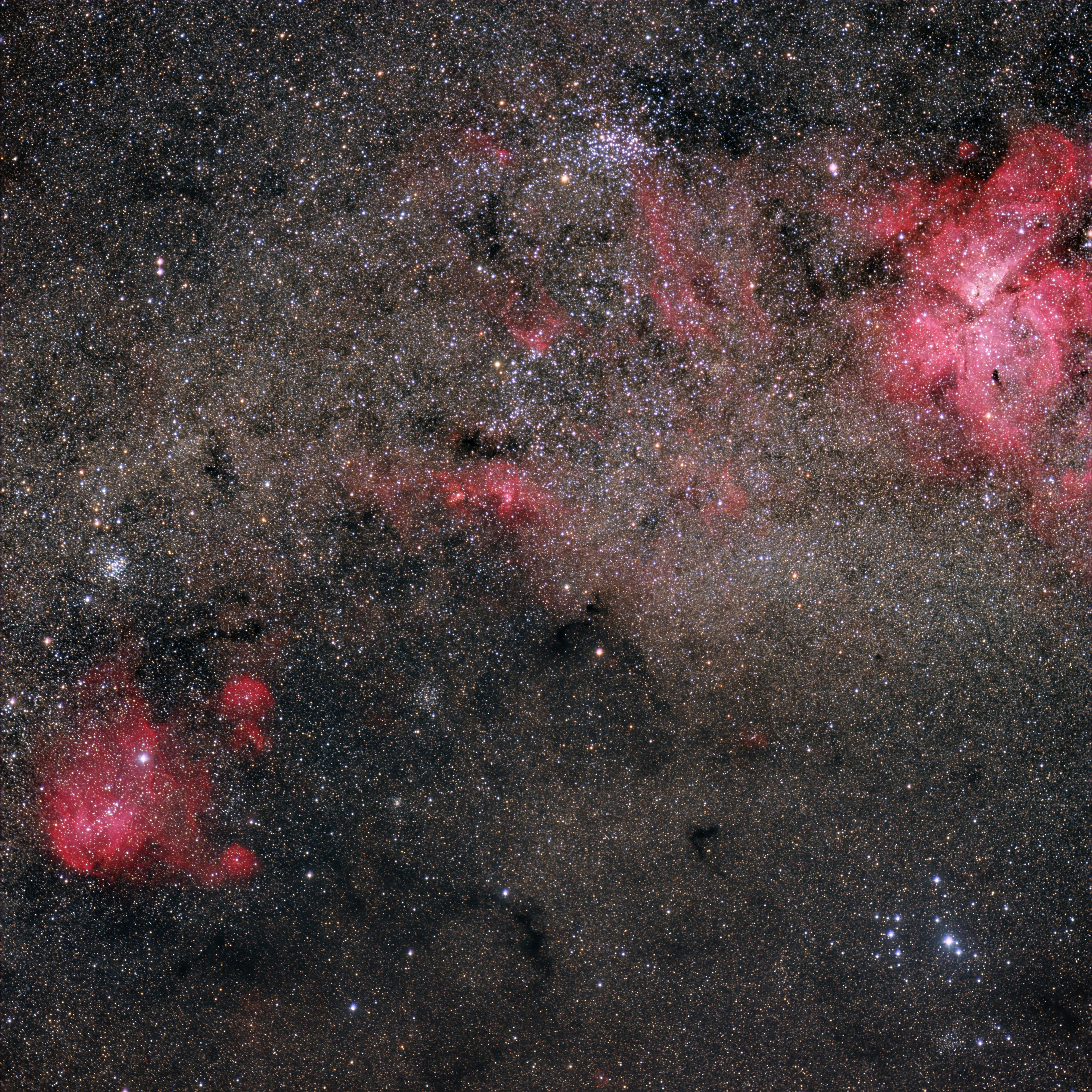
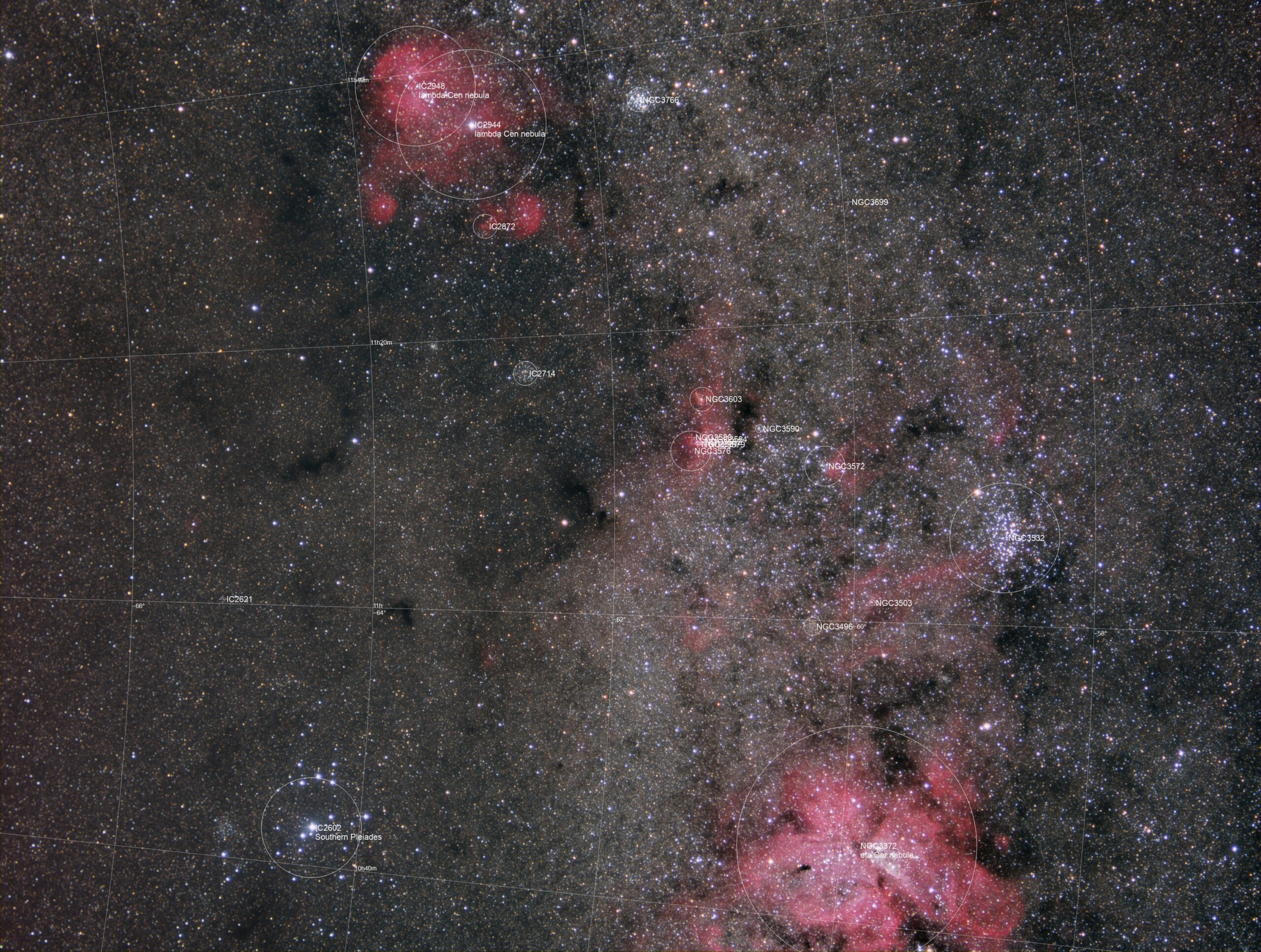
The images were taken with the following equipment:
- Location: Tivoli, Namibia
- Telescope/Lens: Canon 24-105
- Focal length [mm]: 105
- Focal ratio: 4
- Mount: Losmandy G11
- Camera: Moravian FW8300
- Filter: Hα:R:G:B
- Exposure time [min]: 60:60:60:40
- Resolution: 11.27″/px
for the 2008 data the calibration and registration was done with DeepSkyStacker and the final processing was done with PixInsight. The result was as follows:
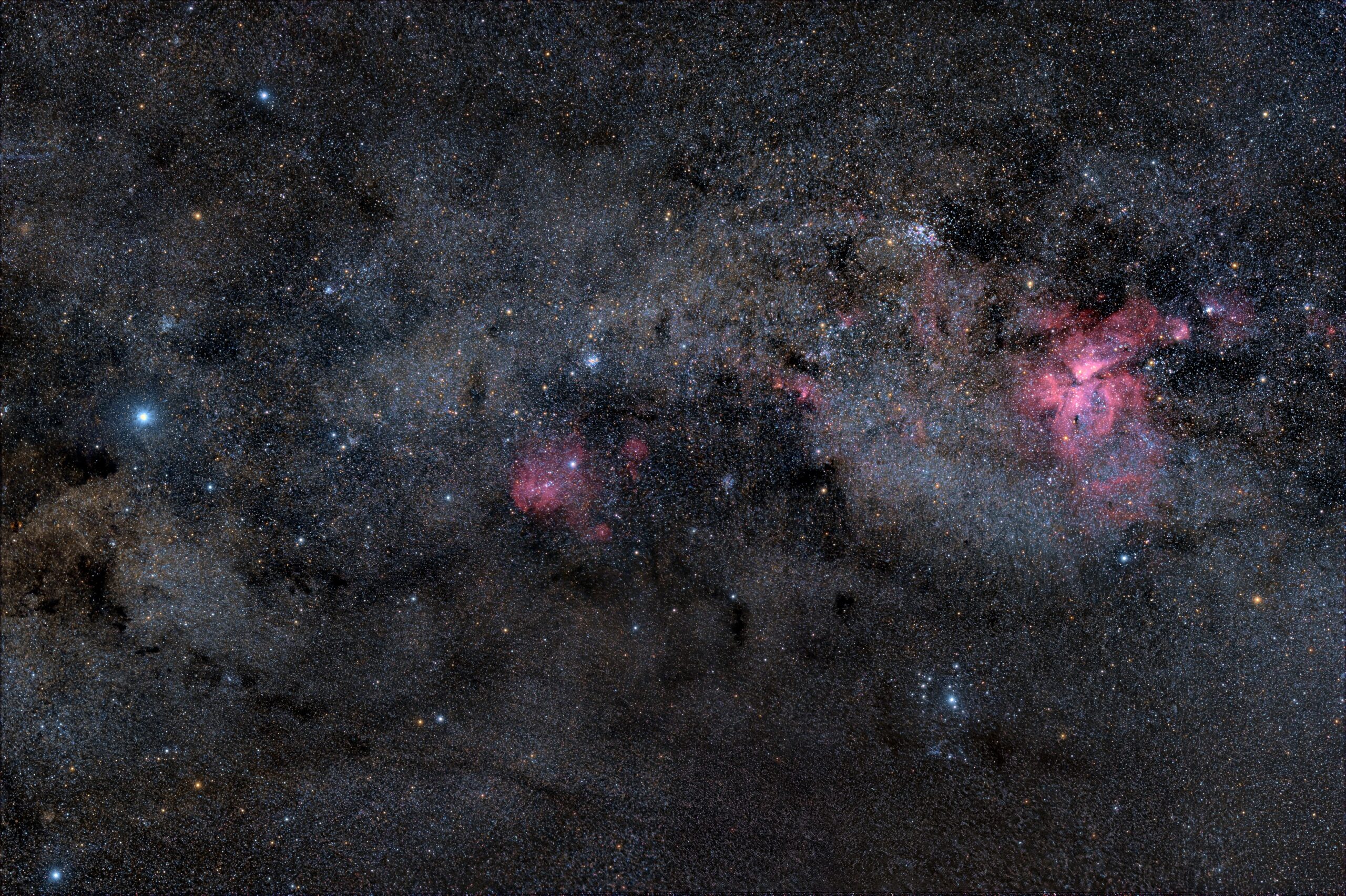
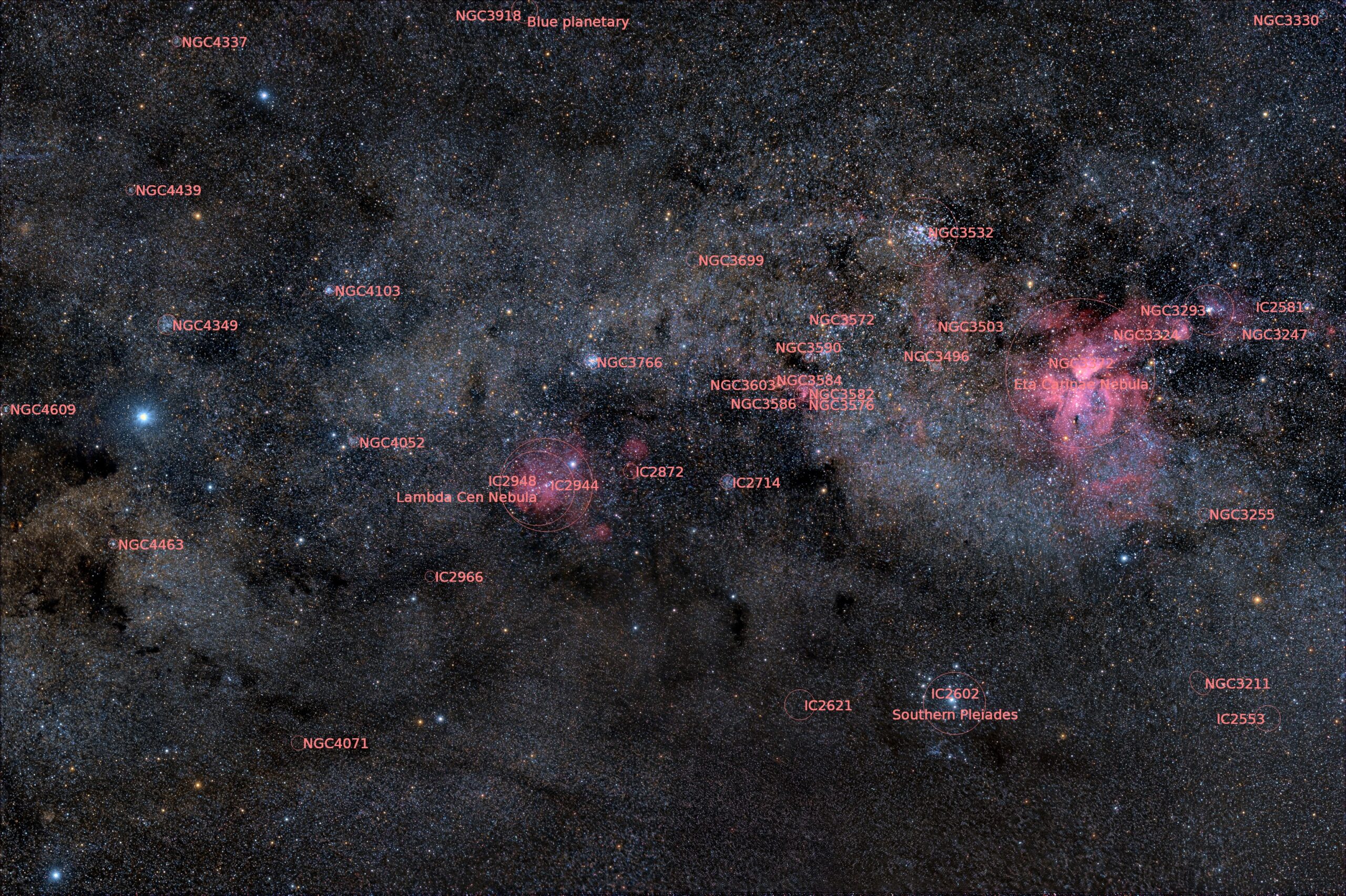
The images were taken with the following equipment:
- Date: 2008
- Location: Astrofarm Tivoli, Namibia
- Telescope/Lens: Tamron 28-300
- Focal length [mm]: 70
- Focal ratio: 7.1
- Mount: Vixen Atlux
- Camera: Canon 300 Da
- Filter: OSC
- Exposure time [min]: 64
- Resolution: 21.21″/px
For the 2006 data the calibration and image regisration was done with DeepSkyStacker, the final processing was done with PixInsight.
The result was as follows:
The images were taken with the following equipment:
- Date: 2006
- Location: Astrofarm Tivoli, Namibia
- Telescope, Lens: Rubinar
- Focal length [mm]: 500
- Focal ratio: 5.6
- Mount: Vixen Atlux
- Camera: Canon 300 Da
- Filter: OSC
- Exposure time [min]: 16
- Resolution: 4.84″/px



Leave a reply