

NGC 3293
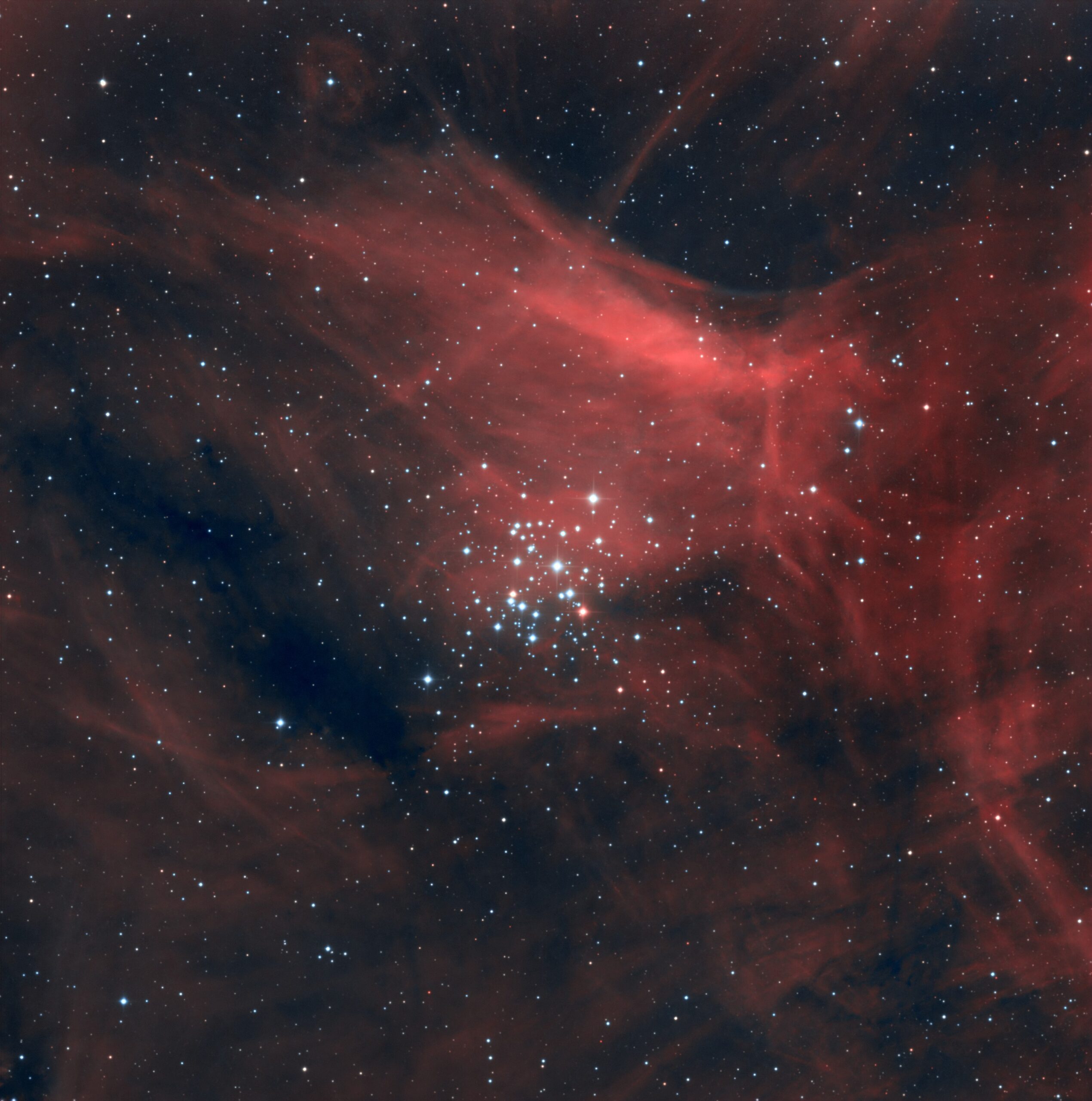
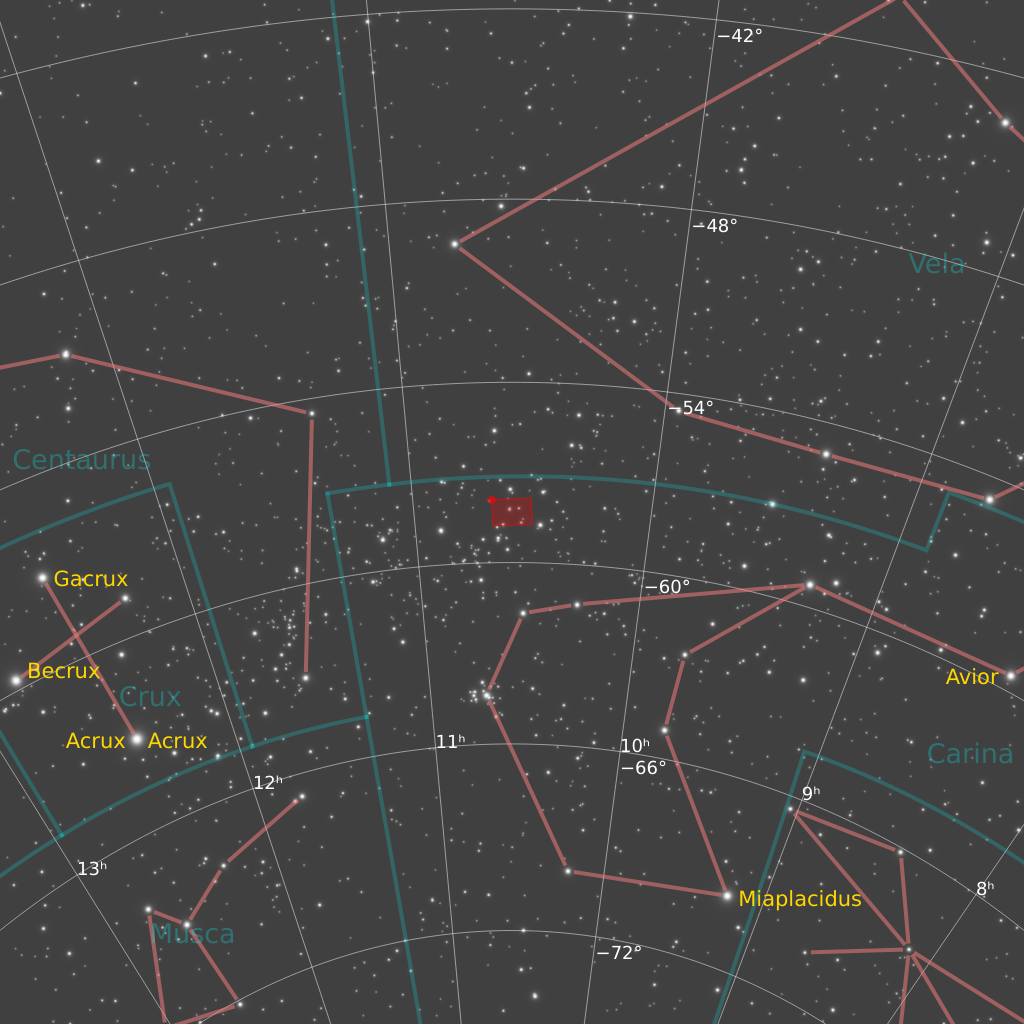
From time to time, I obtain data sets from remote observatories around the world. One of my favorite providers is Telescope Live, which operates telescopes in locations such as Chile, Australia, and Spain. One of the datasets I received in 2021 featured the beautiful open cluster NGC 3293, located in the constellation Carina.
NGC 3293 is one of the finest young open clusters in the southern Milky Way. Situated at a distance of approximately 8,000–9,000 light-years, it lies within the rich stellar fields of the Carina spiral arm, one of the most active star-forming regions of our galaxy. The cluster is estimated to be only about 8 to 12 million years old, making it a relatively young stellar system on astronomical timescales. The study of NGC 3293 continues to provide valuable insights into stellar evolution.
The cluster contains a rich population of hot, luminous blue giant and main-sequence stars, many of which were formed from the same giant molecular cloud. Because of their youth, these stars have not yet had time to disperse into the general stellar population of the Milky Way. Their intense radiation illuminates the surrounding interstellar medium and contributes to the complex network of nebulae found throughout the Carina region.
NGC 3293 is often associated with the nearby Carina Nebula complex, although it lies somewhat apart from the most famous structures surrounding Eta Carinae. Deep images reveal not only the dense concentration of bright cluster stars but also numerous fainter members extending outward from the core. The cluster contains several evolved giant stars whose reddish and orange colors contrast beautifully with the dominant blue stellar population.
From a scientific perspective, NGC 3293 is an important laboratory for studying stellar evolution. Because all of its stars formed at roughly the same time and are located at approximately the same distance from Earth, differences in their appearance are primarily caused by differences in mass rather than age. Astronomers use clusters such as NGC 3293 to test models of stellar evolution and to determine how stars of different masses develop over time.
The field surrounding NGC 3293 is particularly rich, containing countless Milky Way background stars and subtle traces of interstellar dust. Deep observations reveal a remarkable range of stellar colors, from hot blue stars to cooler yellow and red giants, producing a visually striking image. The high-quality Telescope Live dataset allowed for detailed processing of both the bright cluster core and the surrounding star field, resulting in a rich and colorful portrait of one of the southern sky’s most beautiful young open clusters.
Data calibration and registration and the final processing was done with PixInsight. The result was as follows:
The images were taken with the following equipment (CHI-1 CCD, Telescope Live):
- Date: 2021
- Location: El Sauce Observatory, Chile
- Telescope/Lens: Planwave CDK24
- Focal length [mm]: 3900
- Focal ratio: 6.5
- Mount: Mathis MI-1000/1250
- Camera: FLI Proline 9000
- Filter: Hα:[OIII]:[SII]
- Exposure time [min]: 280:280:290
- Resolution: 0.62″/px



Leave a reply