

NGC 2264 (Conus Nebula) from my backyard and remote
In 2007, I imaged the young stellar region NGC 2264 from my backyard using my DSLR equipment. Even under suburban skies, the object already showed its remarkable combination of emission nebulae, reflection nebulosity, and embedded star clusters. At the time, capturing the faint structures surrounding the brighter regions was a challenging but rewarding task with DSLR technology.
In 2020, I also received a high-quality dataset of NGC 2264 from Telescope Live, acquired in Chile with a 50 cm telescope and a CCD camera. The large aperture and excellent observing conditions provided exceptionally deep and detailed data, revealing subtle dust structures and faint outer nebulosity with far greater clarity than was possible in my earlier DSLR image.
A few years later, in 2023, I received another modern dataset of the same object from Telescope Live, this time recorded with equipment in Australia. Together, these remote datasets offered the opportunity to compare different generations of instrumentation and observing locations while further refining the final processing of this fascinating region.
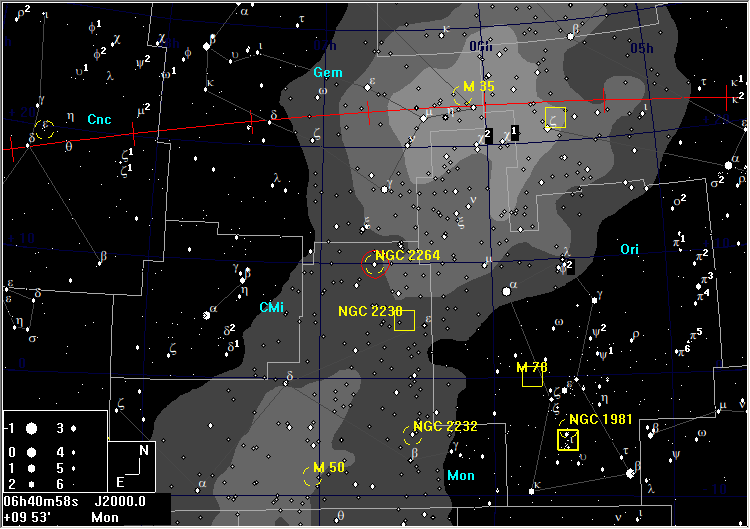
Scientifically, NGC 2264 is a complex and highly active star-forming region located in the constellation Monoceros, roughly 2,300–2,600 light-years away. The designation includes several famous deep-sky objects, most notably the Cone Nebula and the Christmas Tree Cluster. The region contains numerous young stars, protostars, and dense molecular clouds still actively forming new stellar systems.
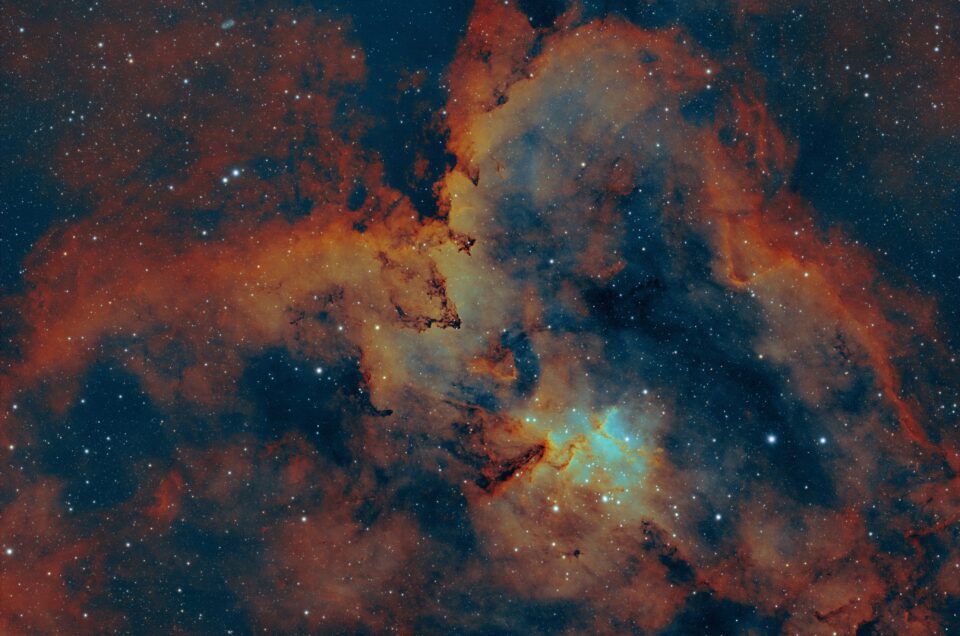
The Cone Nebula itself is a dark column of cold molecular gas and dust sculpted by intense ultraviolet radiation and stellar winds from nearby massive stars. Surrounding emission regions glow strongly in hydrogen-alpha light, while bluish reflection nebulosity traces dust illuminated by young hot stars. Deep images reveal an intricate network of filaments, cavities, and dust lanes shaped by stellar feedback processes.
Comparing the 2007 DSLR image with the professional Telescope Live datasets from 2020 and 2023 beautifully illustrates the evolution of astrophotography technology over nearly two decades. The newer CCD and CMOS data provide dramatically improved depth, resolution, and signal quality, revealing the extraordinary complexity of this nearby stellar nursery in remarkable detail.
Data calibration and registration and the final processing of the 2023 data was done with PixInsight.
The result was as follows:
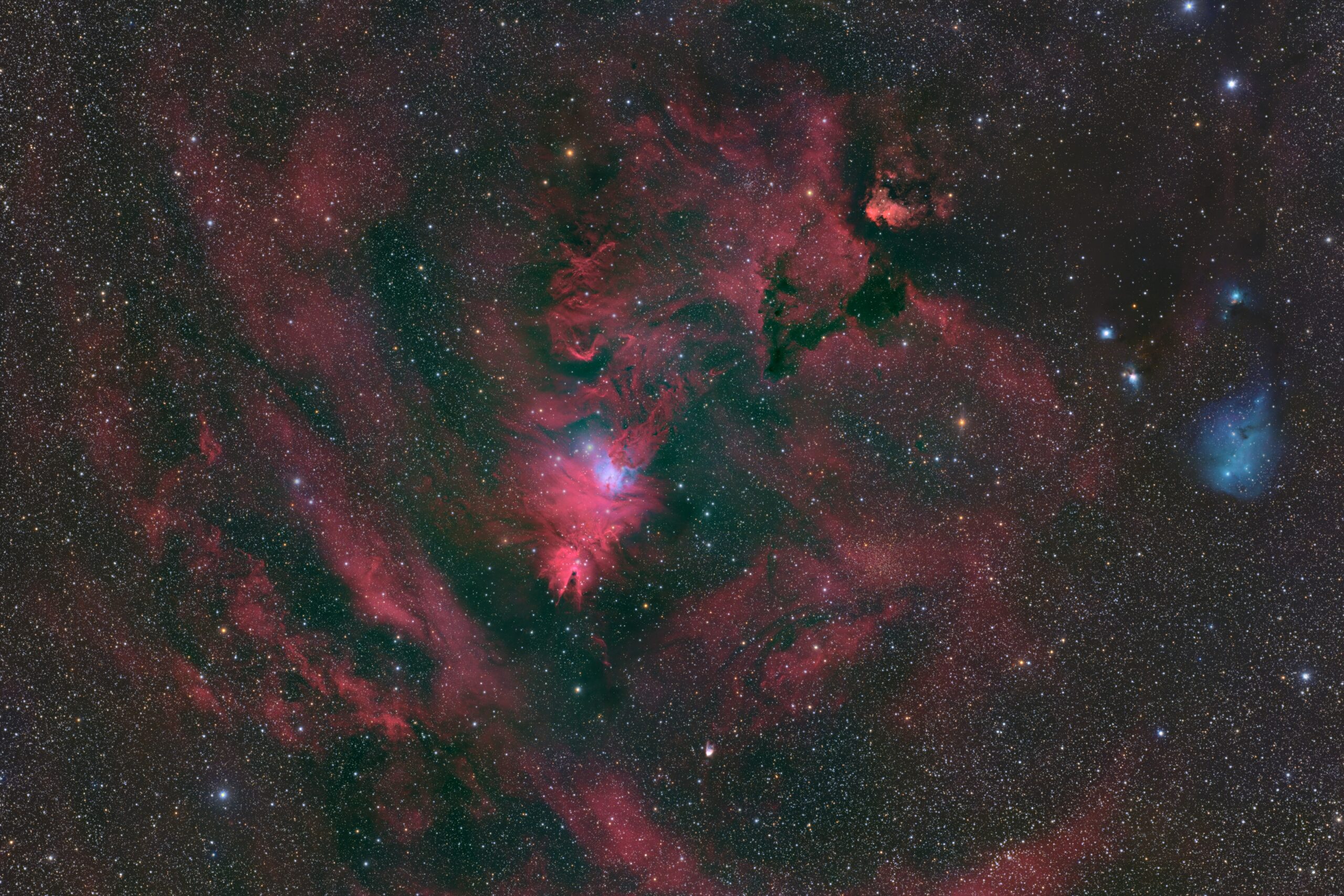
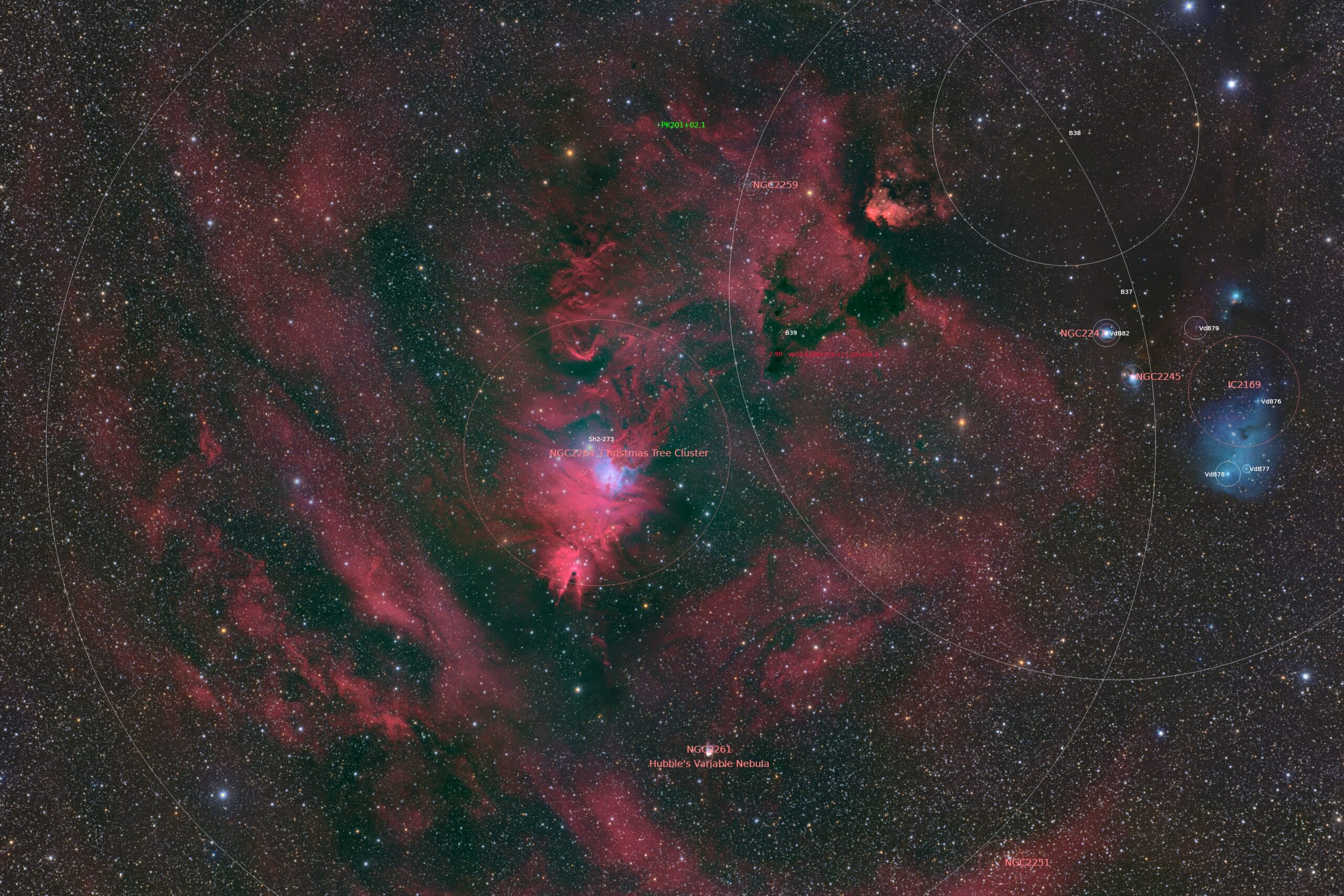
The images were taken with the following equipment:
- Date: 2023
- Location: Spain
- Telescope/Lens: FSQ 106
- Focal length [mm]: 390
- Focal ratio: 3.6
- Mount: Paramount MX+
- Camera: QHY 600M Pro
- Filter: Hα:L:R:G:B
- Exposure time [min]: 170:30:50:50:50
- Resolution: 2.02″/px
Data calibration and registration and the final processing of the 2020 data was done with PixInsight.
The result was as follows:
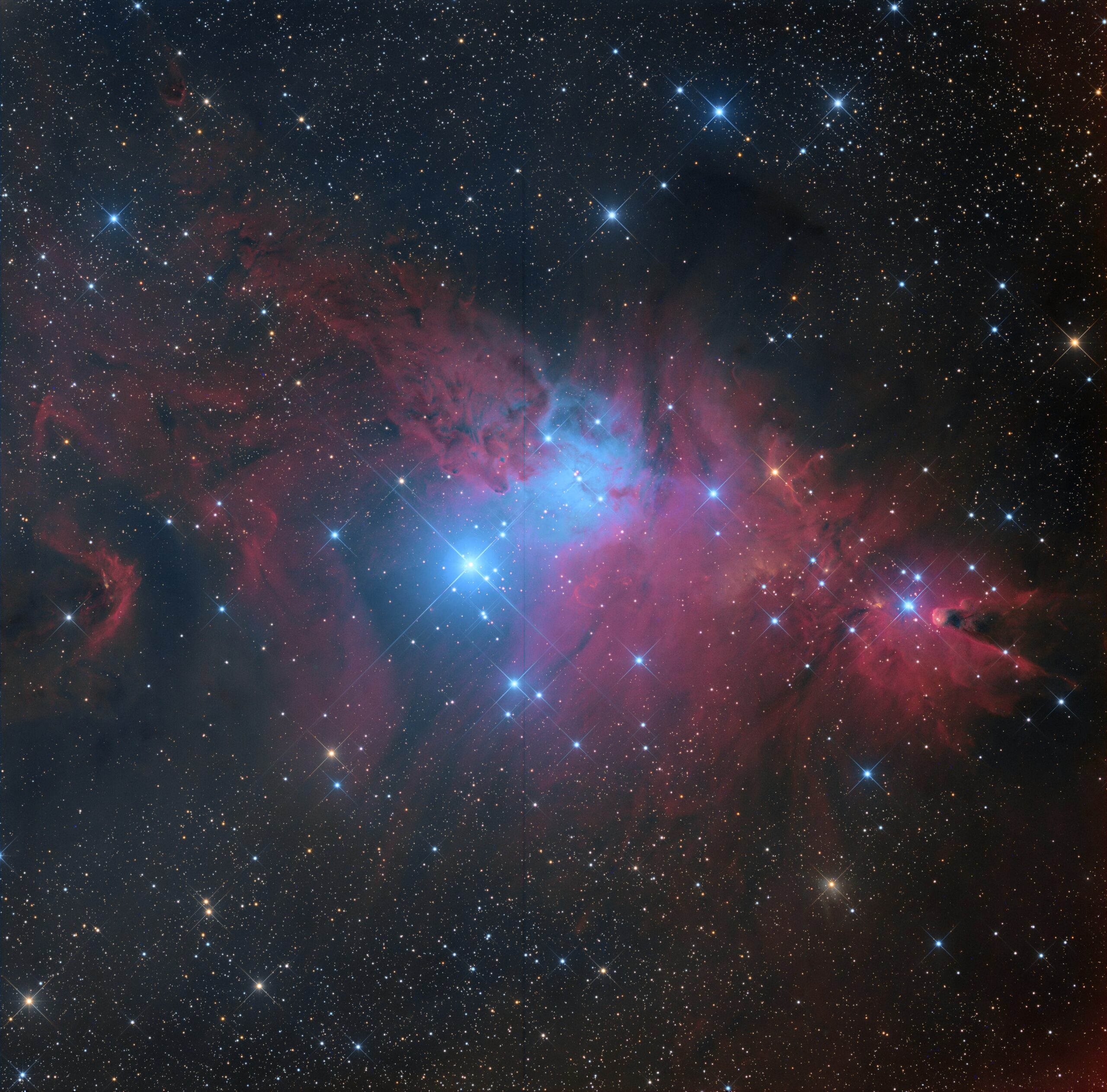
The images were taken with the following equipment:
- Date: 2020
- Location: Chile
- Telescope/Lens: ASA 500 N
- Focal length [mm]: 1900
- Focal ratio: 3.8
- Mount: ASA DDM 85
- Camera: FLI Proline 16803
- Filter: L:R:G:B
- Exposure time [min]: 20:20:20:5
- Resolution: 0.95″/px
For the 2007 data the calibration and registration was done with DeepSkyStacker, while the final processing was performed with PixInsight. The result was as follows:
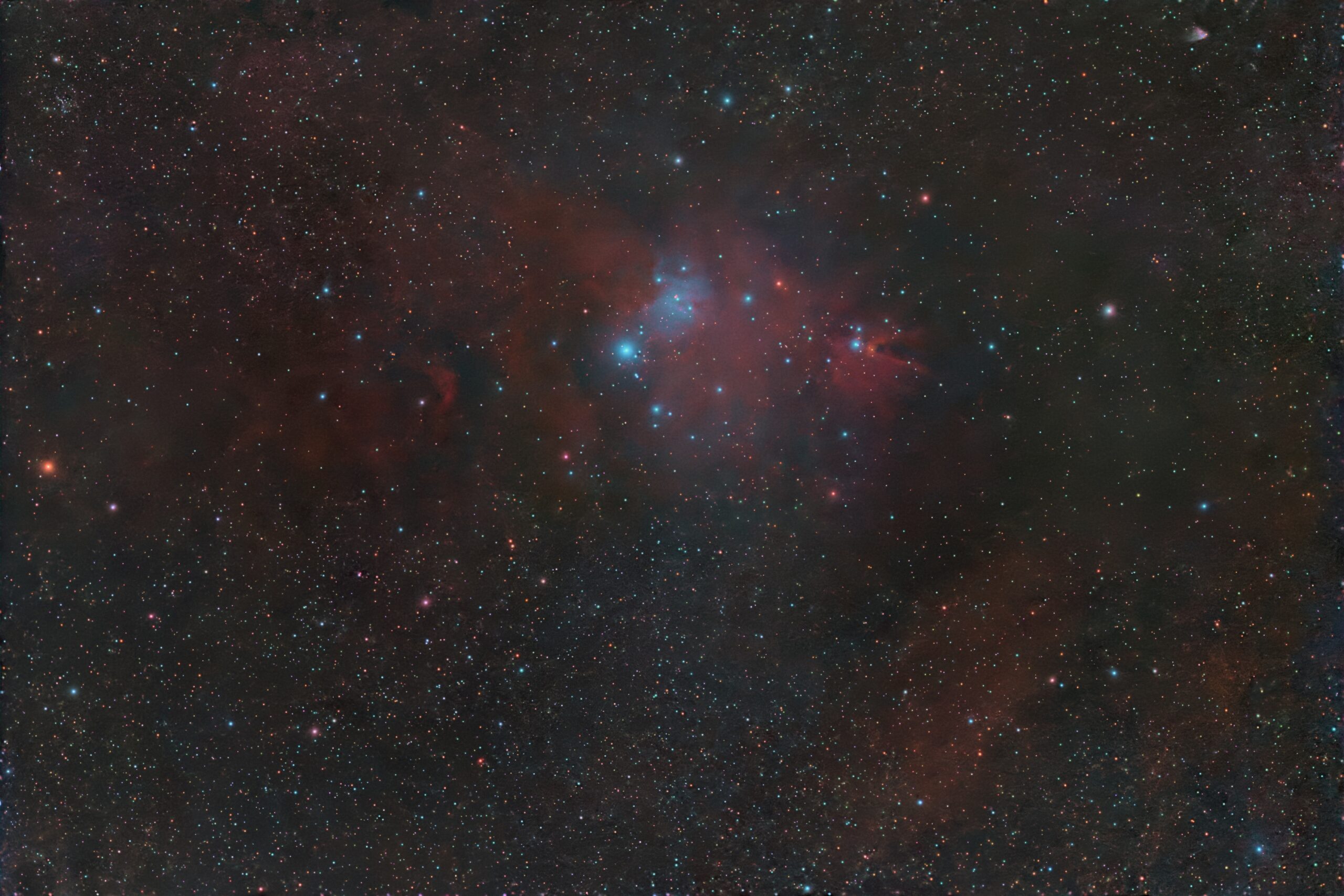
The images were taken with the following equipment:
- Date: 2007
- Location: Krefeld
- Telescope/Lens: Pentax 75
- Focal length [mm]: 500
- Focal ratio: 6.7
- Mount: Vixen GPDX
- Camera: Canon 300 Da
- Filter: OSC
- Exposure time [min]: 65
- Resolution: 3.04″/px



Leave a reply